- Published on
Manus Metagloves Pro Haptic: Closing the Feedback Loop for Humanoid Teleoperation
One tap, and our reporting appears more often in your Google Top Stories. It makes a real difference to a small newsroom.


Your guide
Rich Robinson
Jee Chee Ren · Executive tour
See China’s AI and robotics ecosystem first-hand.
Six days exploring AI, robotics and advanced manufacturing.
With Rich Robinson, Clinical Professor of Entrepreneurship at Peking University
Beijing · Guangzhou · Shenzhen
29 November–4 December 2026
Referral partnership · We earn a commission on referred bookings.
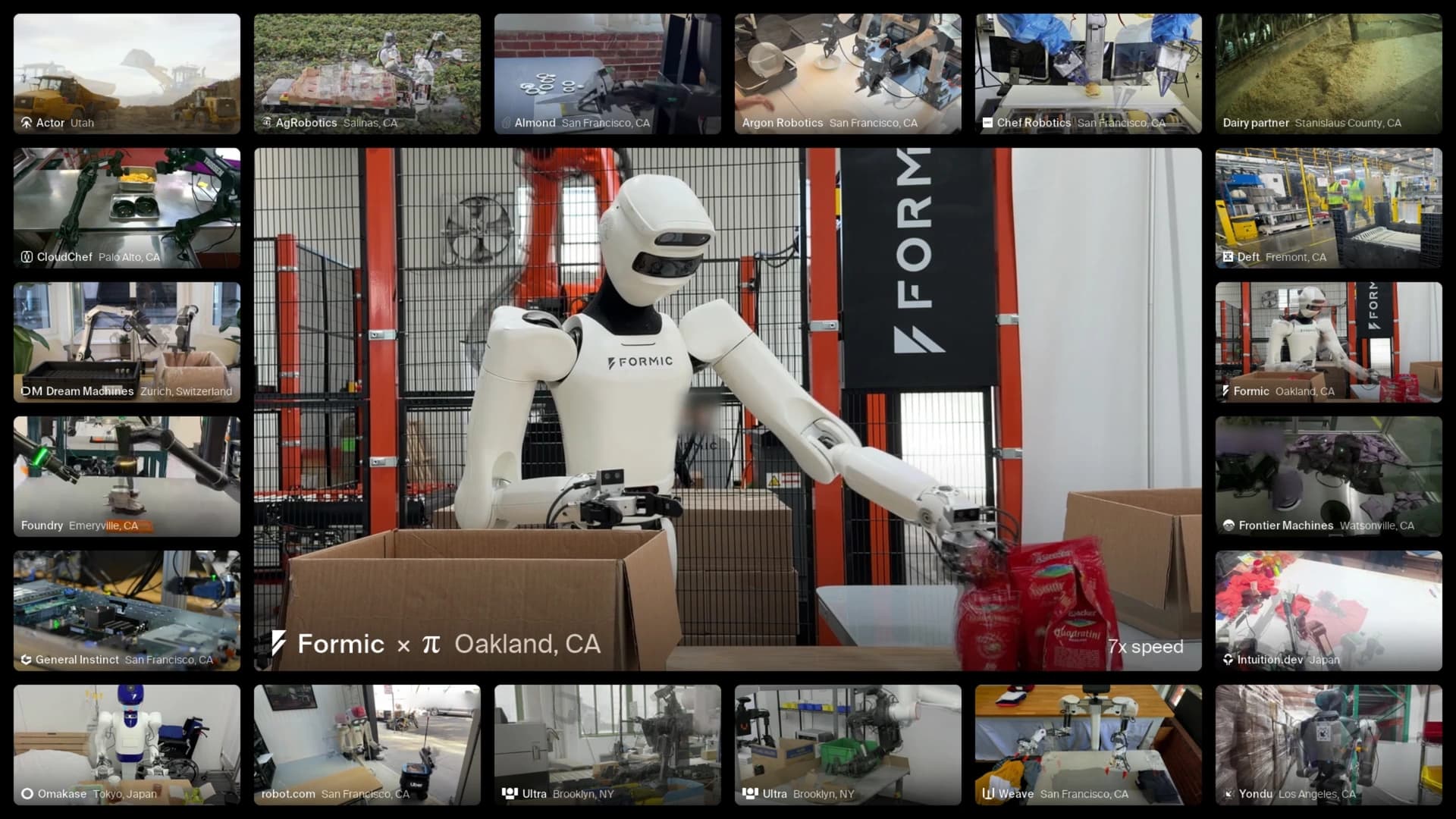
Dutch-based Manus has officially expanded its professional lineup with the Metagloves Pro Haptic, a device that signals a significant shift in how we capture human dexterity for robotic applications. While the company built its reputation in the motion capture (mocap) and VR gaming sectors, this new iteration is explicitly targeted at the growing "Embodied AI" and humanoid teleoperation markets.
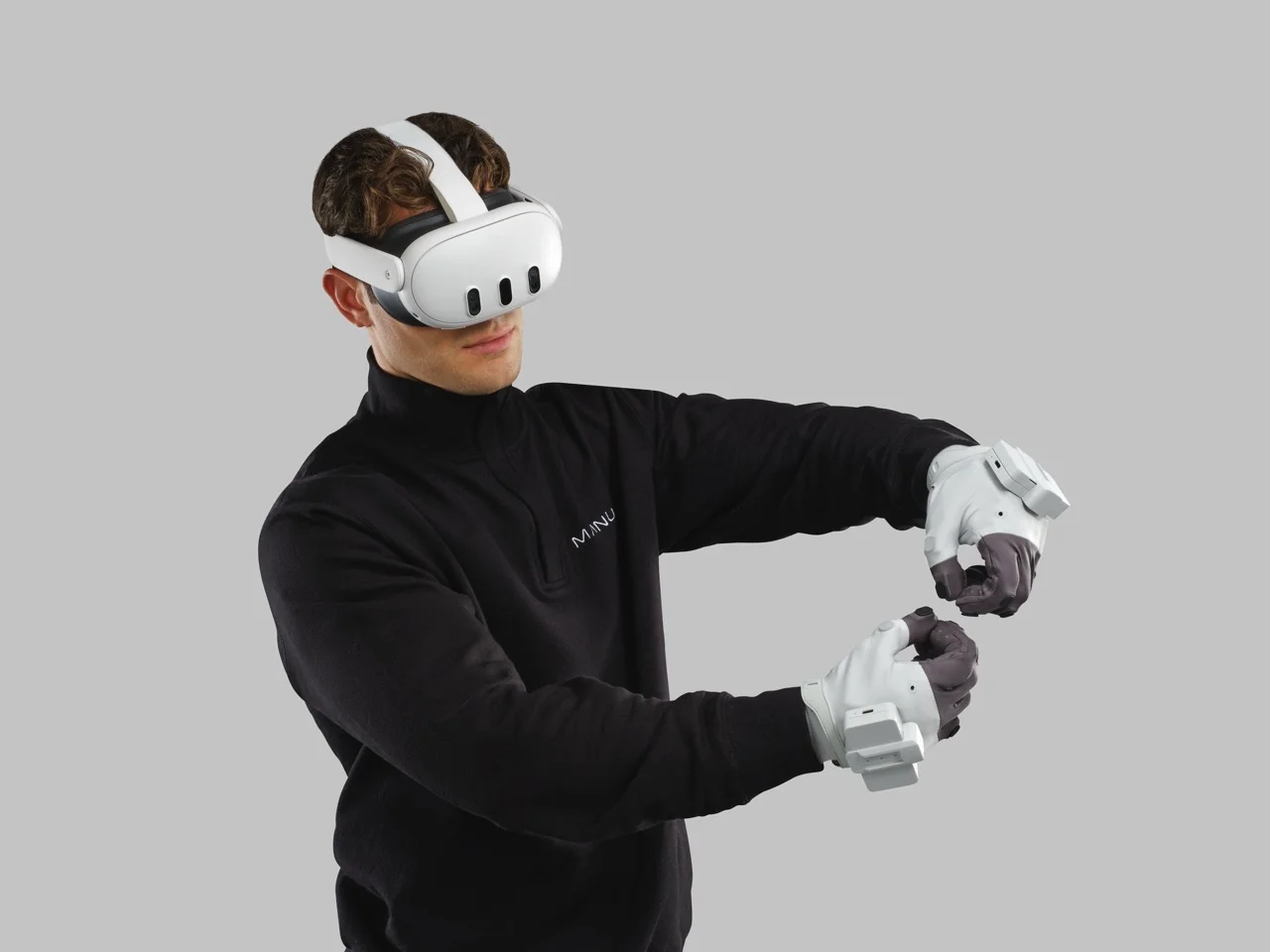
At the core of the Metagloves Pro Haptic is Electromagnetic Field (EMF) tracking technology. Unlike camera-based systems that suffer from occlusion—where a finger "disappears" if it is blocked from the lens's view—or Inertial Measurement Units (IMUs) that are prone to positional drift over time, the EMF system uses a central transmitter to create a localized field. Receivers embedded in the fingertips measure changes in this field to provide millimeter-level accuracy.
The result is a digital twin of the human hand with 25 degrees of freedom (DoF). For robotics researchers, this level of detail is critical; capturing the subtle movements of the metacarpals and the precise orientation of the fingertips is the "ground truth" data needed to train neural networks for dexterous manipulation.
The "Numb Hand" Problem and Data Fidelity
The integration of haptic feedback in the Metagloves Pro Haptic addresses one of the most significant bottlenecks in humanoid development: the quality of training data. While traditional VR teleoperation allows a human to "see" through a robot’s eyes, the operator’s hands remain digitally "numb."
The weekly humanoid robotics briefing
One email a week: the launches, funding and research that mattered, with context from Humanoids Daily.
Read recent issues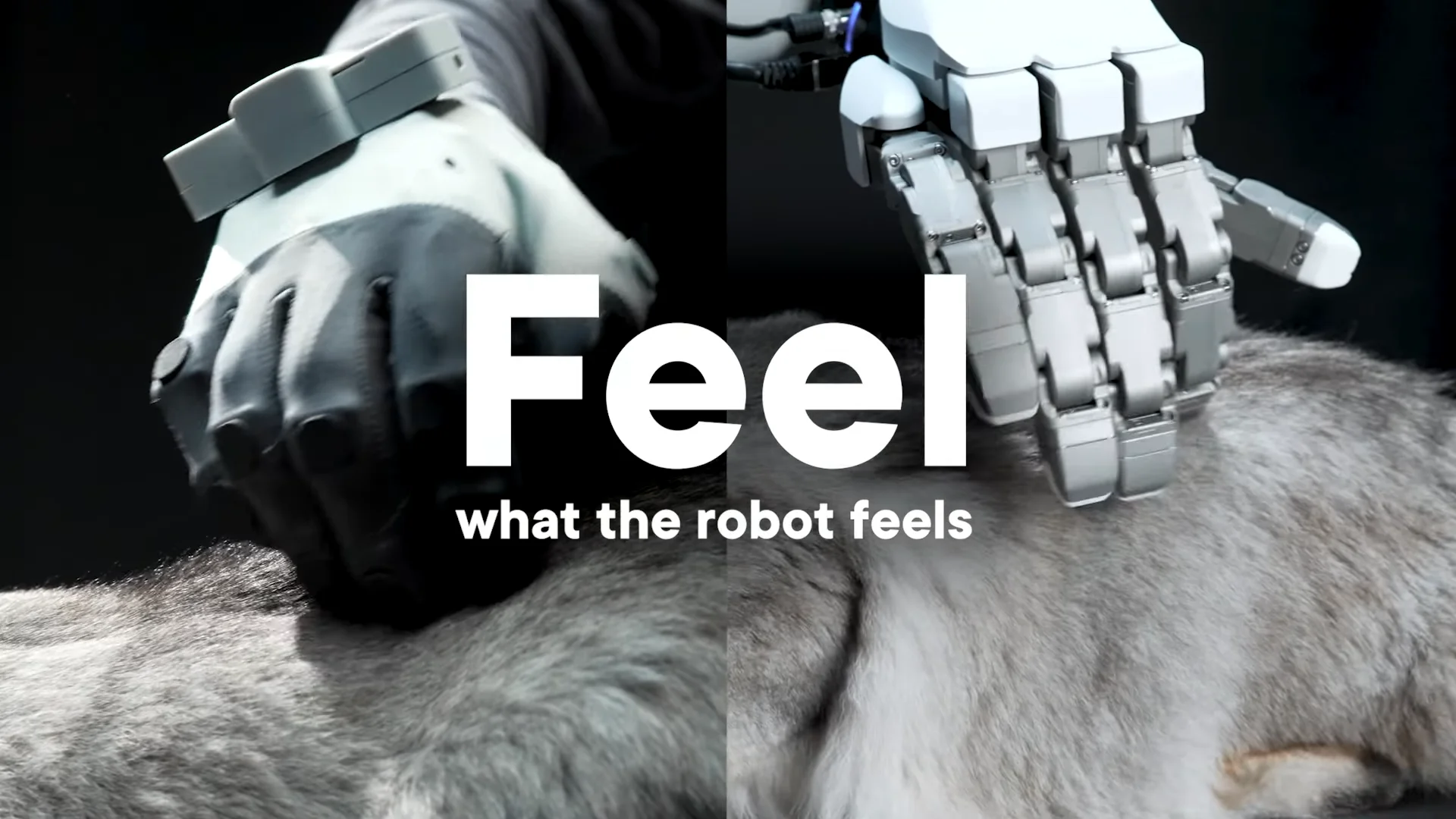
This lack of tactile intuition creates a physics problem known as a failure of force closure. As Tony Zhao, co-founder of Sunday Robotics, recently noted in an interview with No Priors, VR teleoperation can be a "dead end" for high-fidelity data collection. Without feeling resistance, an operator might accidentally apply "infinite force" to soft or fragile objects, leading to datasets that teach robots to be clumsy or destructive.
By providing tactile cues through vibrotactile actuators, the Manus system allows operators to perceive the moment of contact and the nuances of grip pressure. This "closes the loop" in sensory-motor control. For Embodied AI models, this means the training data contains fewer "impossible" physics interactions and more precise examples of how to handle delicate tasks.
In the race to scale humanoid fleets, the industry is shifting from simply collecting more data to collecting better data. As Manus pivots toward being a "data capture" company rather than just a hardware vendor, the Metagloves Pro Haptic could serve as a critical bridge.
Modular Design for Industrial Workflows
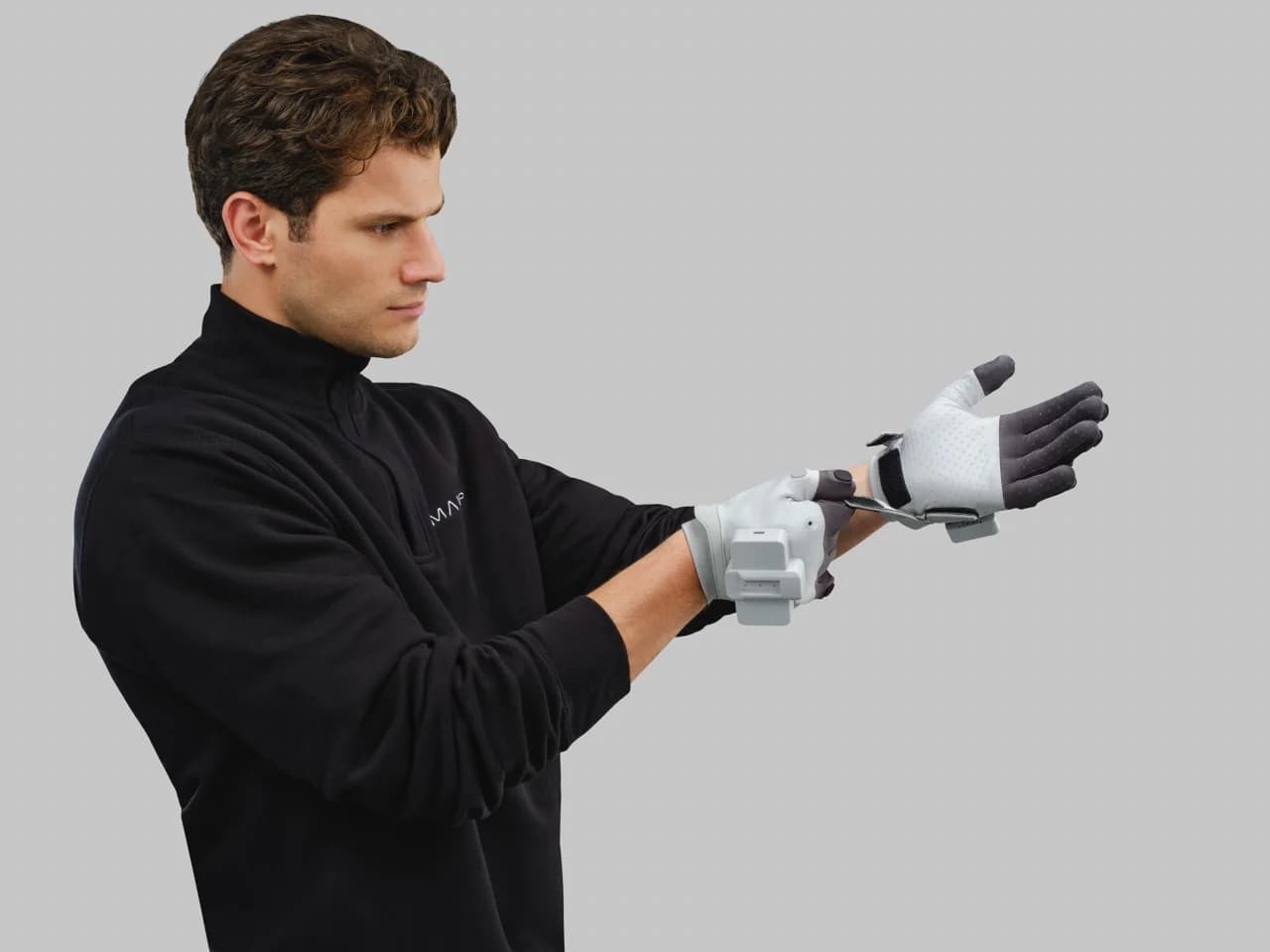
Manus has opted for a modular hardware approach to address the practicalities of a research or industrial environment. The system consists of:
- The Haptic Top Module: A detachable unit containing all the electronics, sensors, and connectivity.
- The Sensor Glove: A washable, textile glove available in different sizes.
This design allows for a "one module, many users" workflow. Since the expensive electronics are contained in the detachable unit, different team members can use their own personally sized (and hygienic) gloves without requiring a full $4,500+ investment for every individual.
The gloves are designed for continuous use, featuring swappable batteries that last approximately three hours per charge and an optional USB-C power connection for 24/7 operation.
Navigating the "Meta" Confusion
The timing of this release comes amid a peculiar bit of naming friction in the industry. While Meta (formerly Facebook) recently acquired a Singapore-based AI startup called Manus.ai for a reported $2 billion, the Dutch company Manus (manus-meta.com) remains independent.
Founded in 2014, the Dutch team has been using the name and the "Manus Meta" branding for a decade—predating Facebook's pivot to the metaverse. The Dutch Manus remains focused on the hardware and data layer of robotics, rather than the general-purpose AI agents developed by its Singaporean namesake.
Analysis: The Data-First Approach
In a recent interview, company leadership noted that they are increasingly moving toward "selling data more than selling gloves." This is a savvy move in the current robotics climate.
While vision-based tracking (using cameras to estimate hand pose) is cheaper, it lacks the precision and reliability required for complex tasks. By providing a drift-free, haptic-capable system, Manus is positioning itself as a possible key player in the data acquisition phase of robotics development.
The Metagloves Pro Haptic are currently available for order, though Manus has not listed a fixed public price, opting for a "Request a Quote" model.
Share this article
Read next
- Published on
- Reading time
- 3 min read
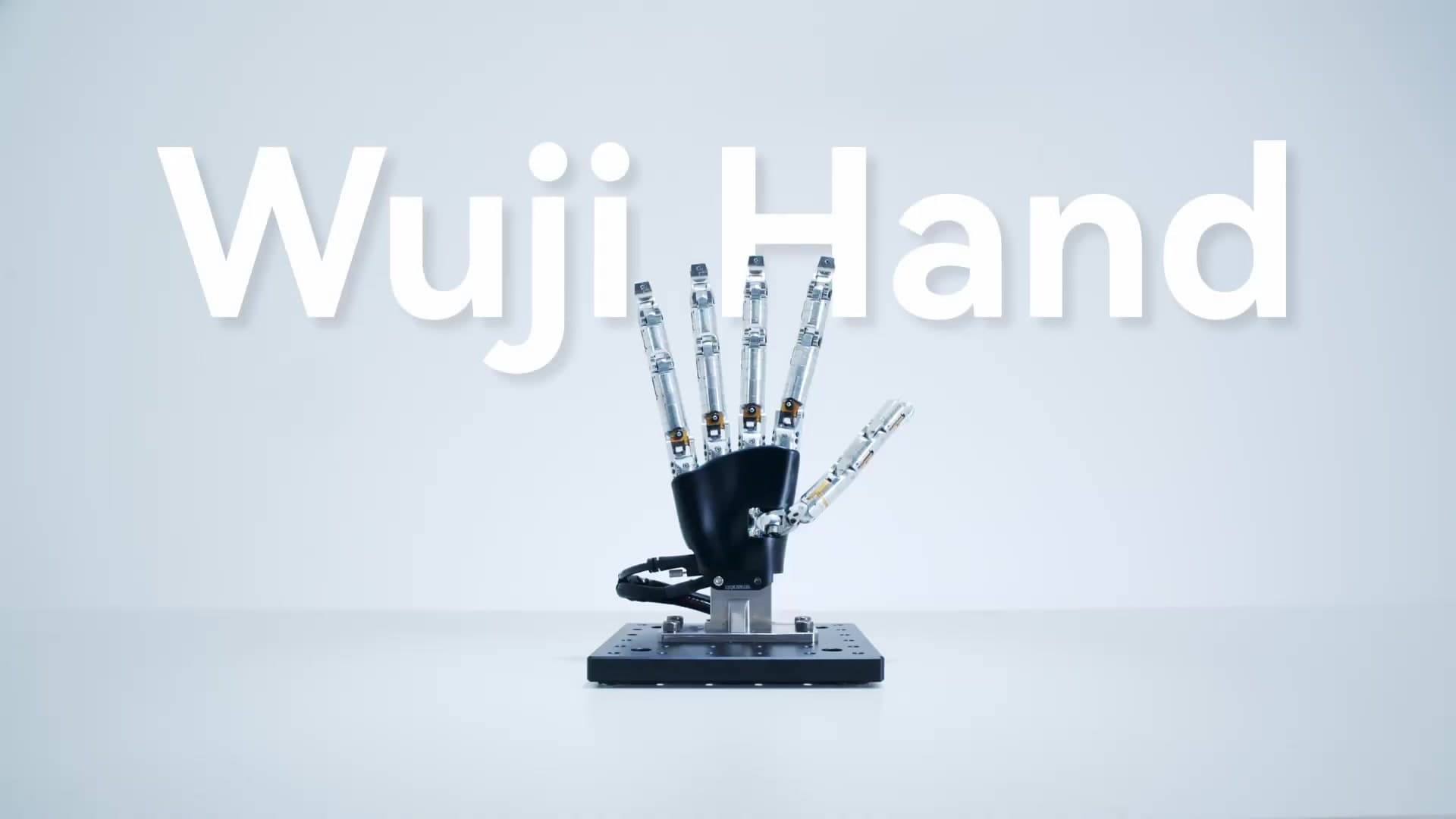
Wuji Tech Reveals High-Dexterity Robotic Hand for Humanoid Applications
- Published on
- Reading time
- 5 min read
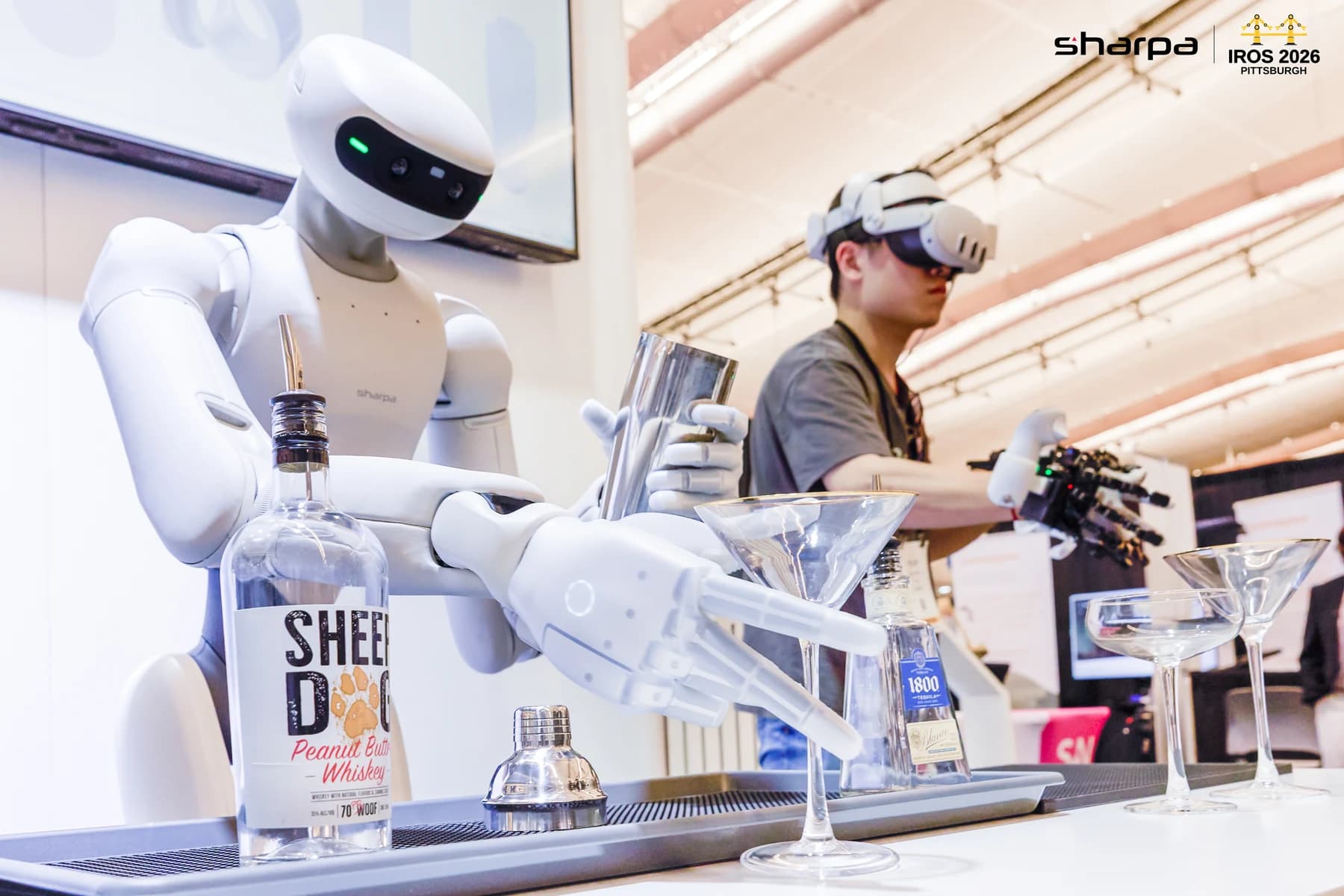
Sharpa Launches D01 Robot, W02 Hand and AE01 Haptic Glove at IROS 2026
- Published on
- Reading time
- 3 min read
Unitree Unveils Human-Sized Robot Hand Starting at $6,500
- Published on
- Reading time
- 4 min read
The Dexterity Debate: Roboticists Clash Over the Future of Humanoid Hands-On Work
- Published on
- Reading time
- 4 min read
Experts Weigh In on Wuji Tech’s Robotic Hand: A “Remarkably Robust” Direct-Drive Contender
- Published on
- Reading time
- 3 min read
UPS Reportedly Exploring Humanoid Robots from Figure AI for Logistics Tasks


The weekly humanoid robotics briefing
One email a week: the launches, funding and research that mattered, with context from Humanoids Daily.
Read recent issues