- Published on
Deployment Year One: AGIBOT Unveils Massive Fleet and AI Model Stack at APC 2026
One tap, and our reporting appears more often in your Google Top Stories. It makes a real difference to a small newsroom.


Your guide
Rich Robinson
Jee Chee Ren · Executive tour
See China’s AI and robotics ecosystem first-hand.
Six days exploring AI, robotics and advanced manufacturing.
With Rich Robinson, Clinical Professor of Entrepreneurship at Peking University
Beijing · Guangzhou · Shenzhen
29 November–4 December 2026
Referral partnership · We earn a commission on referred bookings.
- AGIBOT declared 2026 as "Deployment Year One," signaling a strategic pivot from showcasing technical capabilities to delivering measurable ROI in real-world workflows.
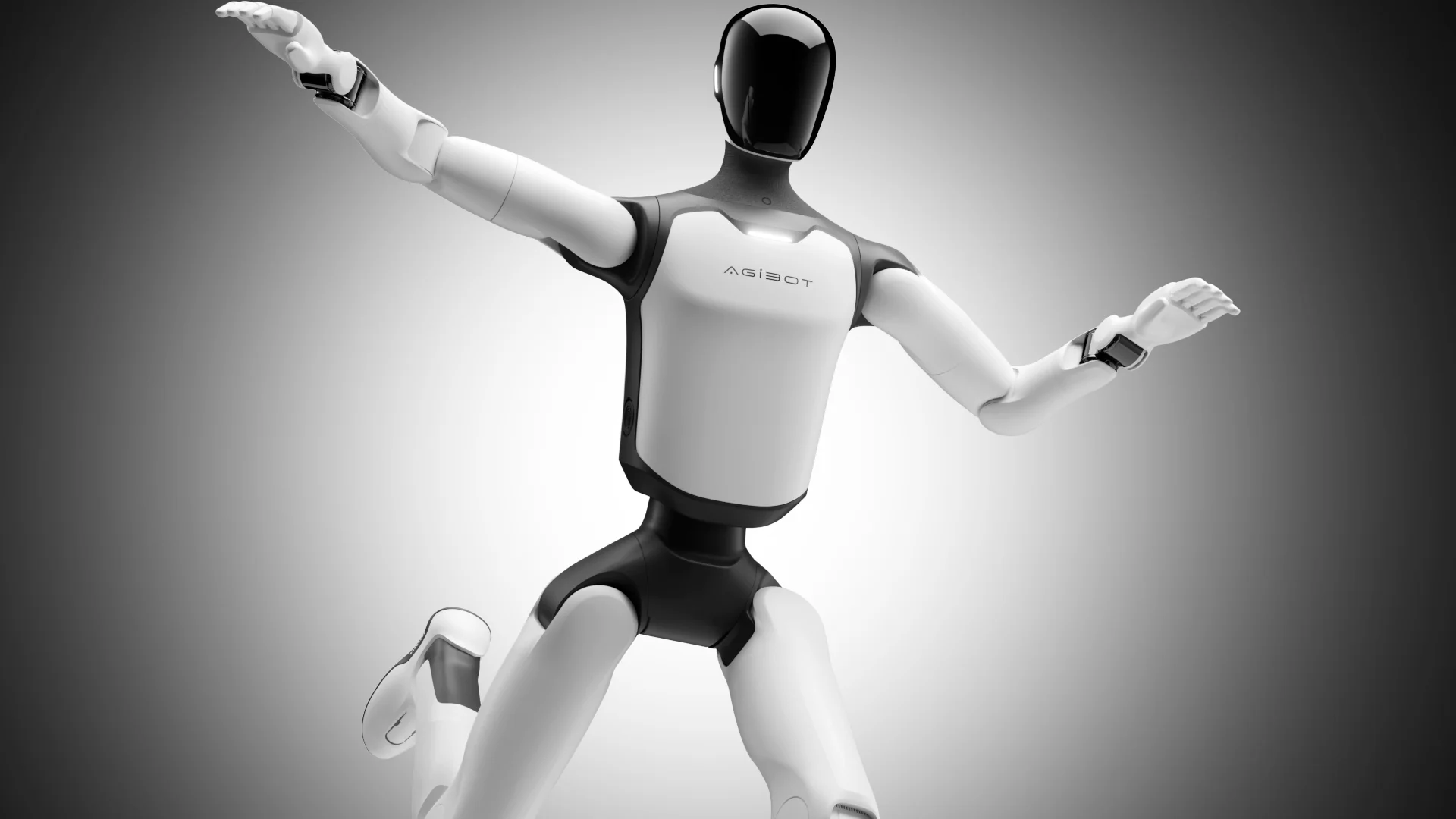
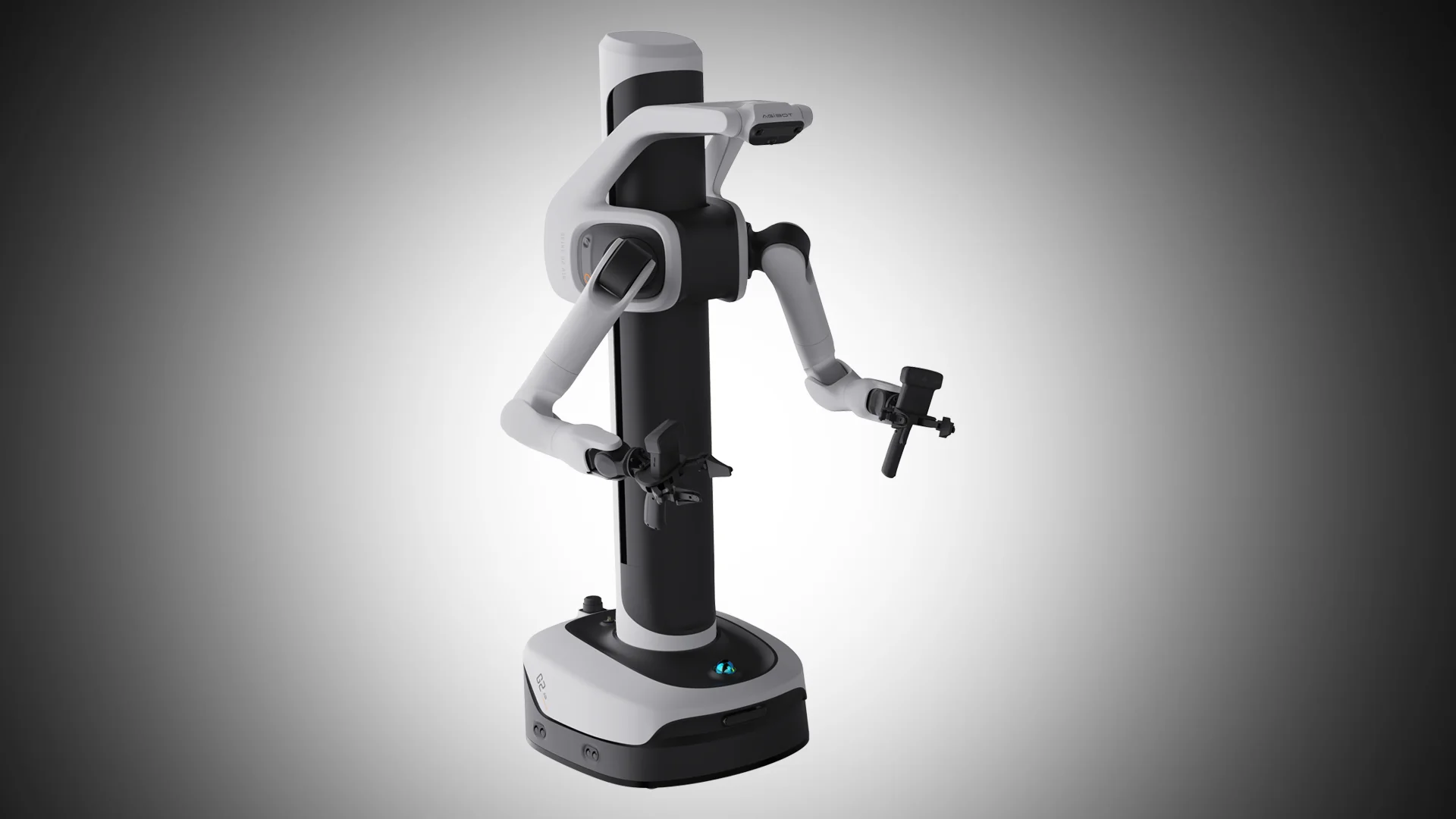
- The company unveiled five new hardware platforms, including the A3 humanoid, the D2 Max all-terrain quadruped, and the specialized G2 Air mobile manipulator.
- Eight foundational AI models were introduced under the "One Robotic Body, Three Intelligences" architecture, spanning locomotion, manipulation, and multimodal interaction.
- AGIBOT announced it surpassed the 10,000-robot production milestone in March 2026, reinforcing its status as a leader in large-scale manufacturing.
- The new AIMA ecosystem was launched as an open-stack architecture to lower the barrier for third-party developers to build and deploy embodied AI applications.
SHANGHAI, China — The narrative of the "humanoid bubble" faced a significant challenge today as AGIBOT took the stage at its 2026 Partner Conference (APC 2026). Moving past the spectacle of robot-led galas and martial arts teasers, AGIBOT CEO Edward Deng formally declared 2026 as "Deployment Year One."
The conference served as a massive data dump for the industry, featuring the simultaneous launch of five robotic platforms and eight foundational AI models. This "full-stack" approach aims to bridge the persistent gap between laboratory performance and the unpredictable constraints of a live production line.
Beyond the Demo: The L1-L5 Capability Framework
In a move clearly inspired by the automotive industry’s SAE levels for autonomous driving, AGIBOT formalized a five-level capability framework for embodied AI. The company claims its current systems have achieved Level 3 (L3) across locomotion and task intelligence, characterized by high-dynamic mobility and scenario-level autonomy.
This framework provides a much-needed benchmark for an industry often criticized for inflating shipment numbers. By AGIBOT’s definitions, the industry is now transitioning from L2 (teleoperation and skill-level assistance) to L3, where robots begin to operate as reliable, autonomous units within real-world workflows.
The weekly humanoid robotics briefing
One email a week: the launches, funding and research that mattered, with context from Humanoids Daily.
Read recent issuesHardware for Every Scenario: Humanoids, Quadrupeds, and Grippers
The hardware announcements at APC 2026 suggest that AGIBOT is betting on a diverse "mixed-fleet" strategy rather than a single universal form factor.
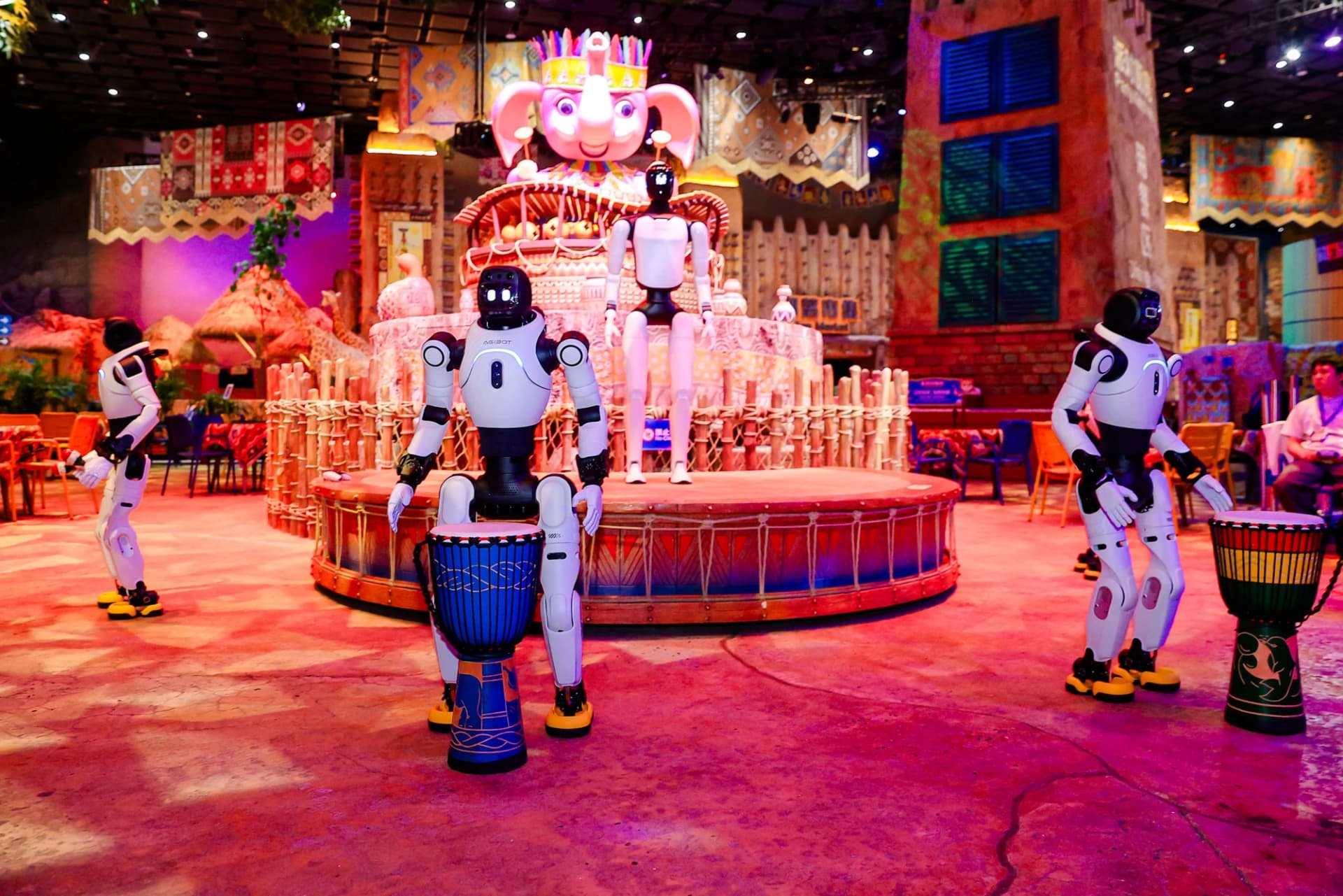
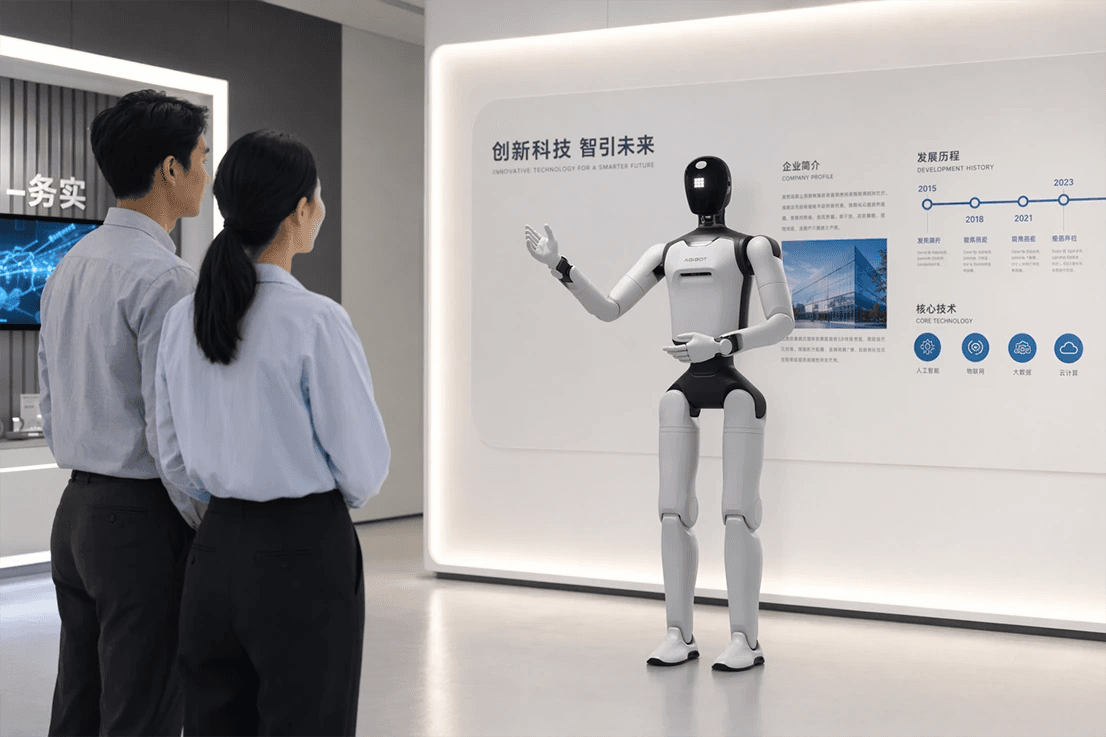
- The A3 Humanoid: Standing 173 cm tall, the A3 is a high-performance platform featuring a power-to-weight ratio of 0.218 kW/kg. It is designed for interactive environments, boasting 10-hour endurance and a 10-second battery swap capability.
- G2 Air: A compact, single-arm mobile manipulator optimized for "human-in-the-loop" operations. It is specifically designed to function in narrow spaces (sub-800 mm) and includes a unified data collection workflow to capture real-time training data during manual operation.
- D2 Max: Billed as the world’s first all-terrain L3 autonomous quadruped, the D2 Max is targeted at mission-critical security and industrial inspection tasks.
- OmniHand 3 Ultra-T: A next-generation dexterous hand featuring a 22+3 DOF tendon-driven system and 3D tactile sensing, aimed at matching human-level precision in industrial assembly.
The Software Engine: "One Body, Three Intelligences"
The hardware is supported by AGIBOT's new "One Robotic Body, Three Intelligences" architecture. This stack unifies eight foundational models into a closed-loop system:
- Locomotion Intelligence: Powered by the Behavioral Foundation Model (BFM) and Generative Control Foundation Model (GCFM), which allow robots to learn human-like movements from short videos and improvise actions based on text or audio prompts.
- Manipulation Intelligence: This pillar relies on the GO-2 (VILLA) model, which uses Action Chain-of-Thought to translate high-level reasoning into motor commands. This is supplemented by the Genie Sim 3.0 platform for rapid sim-to-real transfer.
- Interactive Intelligence: The new WITA Omni model is a robot-native, multimodal system that unifies vision, speech, and gestures, moving away from the "stitching together" of separate language and vision modules.
Scaling to 10,000 and Beyond
AGIBOT confirmed it rolled out its 10,000th robot in March 2026, a milestone that underscores its staggering manufacturing acceleration. Unlike previous years where these units might have been destined for research labs, the company highlighted active deployments with partners like Longcheer Technology, where G2 robots are already operating on live tablet production lines.
To support this scale, AGIBOT launched AIMA (AI Machine Architecture), an open technology system including the Link-U OS. This is a clear attempt to position AGIBOT as the "Android of Robotics," providing the infrastructure for a global community of developers to build scenario-specific applications.
As the conference concluded, the message from Shanghai was clear: the era of the "technical showcase" is over. For AGIBOT, the success of embodied AI will no longer be measured by a backflip in a lab, but by the stability of a 24/7 autonomous production shift.
Share this article
Read next
- Published on
- Reading time
- 3 min read
IDC Puts H1 Humanoid Shipments Near 25,000, With AGIBOT Leading
- Published on
- Reading time
- 4 min read
AGIBOT Says 100 X2 Humanoids Are Working Across 100 ASD Retail Stores
- Published on
- Reading time
- 5 min read
AGIBOT Has Built 20,000 Robots—Twice Its March Total
- Published on
- Reading time
- 4 min read
AGIBOT Brings 300-Plus Robots to Chimelong Theme Park
- Published on
- Reading time
- 3 min read
AGIBOT Says A3 Ultra Is Going to Work in Hotels, Shops and Metro Inspection
- Published on
- Reading time
- 7 min read
AGIBOT Open-Sources GE-Act 2.0, Challenging Unitree in the Open Embodied AI Race

The weekly humanoid robotics briefing
One email a week: the launches, funding and research that mattered, with context from Humanoids Daily.
Read recent issues