- Published on
Video: MirrorMe Unveils Bolt, the World’s Fastest Humanoid at 10 m/s
One tap, and our reporting appears more often in your Google Top Stories. It makes a real difference to a small newsroom.

Supported by RoboStrategySupport for Humanoids Daily comes from RoboStrategy
Sponsored
Investing involves risk, including possible loss of principal. Read the prospectus before investing.
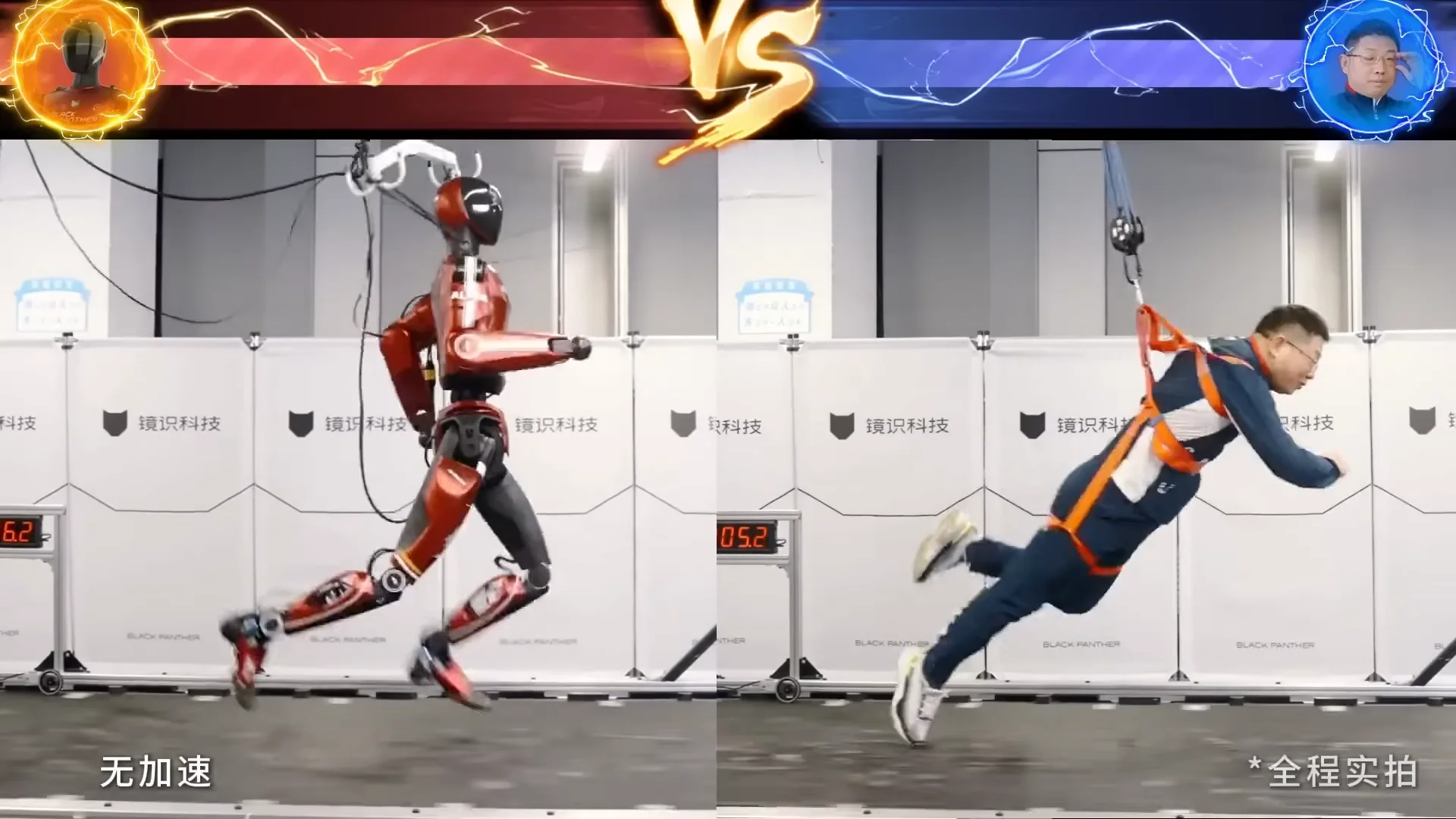
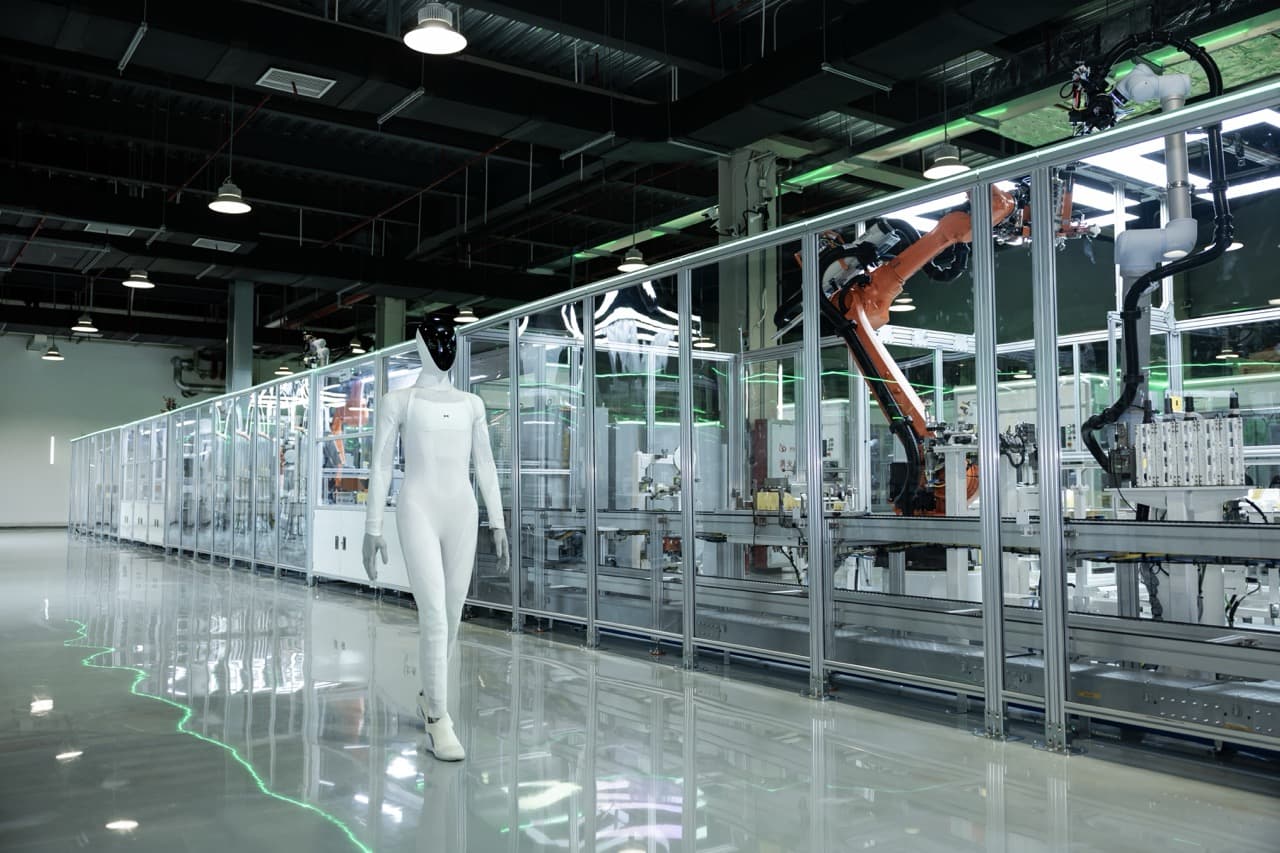
The race for bipedal speed has a new, blistering frontrunner. On February 2, 2026, Shanghai-based robotics startup MirrorMe Technology officially unveiled Bolt, a full-sized humanoid robot that achieved a peak running speed of 10 meters per second (m/s)—roughly 22.4 mph—in real-world testing.
The announcement marks a paradigm shift in robotic locomotion. While previous industry leaders were celebrating milestones in the 3.3 to 4.0 m/s range, Bolt has effectively doubled those benchmarks, bringing robotic sprinting within striking distance of elite human athletes.
A New Benchmark for Velocity
Standing 175 cm tall and weighing 75 kg, Bolt is designed to mimic ideal human proportions while pushing the mechanical limits of bipedal stability. In a demonstration video released by the company, Bolt was pitted against MirrorMe’s founder, Wang Hongtao, in a side-by-side treadmill race. While the human runner eventually reached his physical limit, the robot maintained a steady stride, with the speedometer topping out at the 10 m/s mark.
Technically, Bolt’s speed is driven by a high-cadence strategy rather than a massive stride length. Analysis of the footage shows the robot utilizing extremely fast leg turnover to compensate for strides that are shorter than those of a human sprinter. To achieve this, MirrorMe reportedly redesigned the robot's joints and rebuilt its power system from the ground up to sustain the high-torque demands of such rapid movement.
The weekly humanoid robotics briefing
One email a week: the launches, funding and research that mattered, with context from Humanoids Daily.
Read recent issuesStacking Up the Competition
Bolt’s 10 m/s sprint creates a significant gap between MirrorMe and other major players in the space. For context, the industry landscape just months ago looked very different:
- Tesla Optimus: Recently reached a personal record of approximately 2.7 m/s (6 mph).
- RobotEra L7: Claims speeds of up to 4.0 m/s (8.9 mph).
- Unitree H1: Previously held records at 3.3 m/s (7.4 mph).
At its current peak velocity, Bolt could theoretically complete a 100-meter dash in exactly 10 seconds. This would not only surpass the shuttle runs recently demonstrated by Figure 03 but would place the robot just behind the world-record pace of its namesake, Usain Bolt, whose peak speed reached 12.42 m/s during his 2009 record run.
From Quadruped Roots to Bipedal Success
The team behind Bolt, which originates from Zhejiang University, has a long history of prioritizing high-velocity motion. MirrorMe first gained international attention with its Black Panther II quadruped, which was recorded running a 100-meter sprint in 13.17 seconds during a televised broadcast in 2025.
The transition from four legs to two represents a massive engineering hurdle in dynamic balance. While a quadruped like the Black Panther II can reach speeds of 13.4 m/s, maintaining stability on two legs at 10 m/s requires significantly more sophisticated locomotion control and flight-phase management.
Beyond the Record
MirrorMe insists that the pursuit of the "fastest" title is a byproduct of their broader goal: creating "super-species" robots that possess human-level motion perception and athletic performance. The company envisions Bolt serving as a "steel sparring partner" for professional athletes, providing a consistent, high-speed pacer that can push human limits in real-time training.
While the treadmill demonstration is a controlled environment, MirrorMe claims Bolt has reached these speeds in "real-world tests" outside the laboratory. Whether the robot can maintain this velocity on the varied terrain of a marathon course—where stability issues often lead to stumbles—remains to be seen.
Share this article
Read next
- Published on
- Reading time
- 4 min read
AGIBOT Brings 300-Plus Robots to Chimelong Theme Park
- Published on
- Reading time
- 4 min read
XPENG Lines Up Humanoid Suppliers Ahead of Year-End Production Target
- Published on
- Reading time
- 3 min read
Beijing Sets Humanoids a Rescue Challenge for October
- Published on
- Reading time
- 4 min read
XPENG’s IRON Remembers Car Buyers in New Interaction Demo
- Published on
- Reading time
- 3 min read
Unitree Unveils Human-Sized Robot Hand Starting at $6,500
- Published on
- Reading time
- 4 min read
PrimeBOT Launches Personal Robots at 19,999 Yuan, Betting on Apps and Companionship

The weekly humanoid robotics briefing
One email a week: the launches, funding and research that mattered, with context from Humanoids Daily.
Read recent issues