- Published on
Reflex Robotics to Build Latin America’s First Humanoid Robot Factory in Mexico
One tap, and our reporting appears more often in your Google Top Stories. It makes a real difference to a small newsroom.

Supported by RoboStrategySupport for Humanoids Daily comes from RoboStrategy
Sponsored


Investing involves risk, including possible loss of principal. Read the prospectus before investing.

Reflex Robotics, the New York-based startup aiming to commoditize general-purpose automation, has announced plans to establish a major manufacturing footprint in Nuevo León, Mexico. The move marks the first humanoid robot manufacturing plant in Latin America and signals an aggressive shift from prototyping to industrial-scale production for the MIT-founded company.
The announcement, made by Nuevo León Governor Samuel García during a trade visit to New York, highlights the region's growing status as a "nearshoring" hub for advanced manufacturing. The facility is expected to create over 2,000 jobs, ranging from high-precision assembly roles to AI and robotics engineering positions.
A Hub for Remote Operations
Beyond simple assembly, the Nuevo León site is designed to function as a strategic operational node. Teams at the facility will monitor and remotely control humanoid units deployed in factories across the United States. This "human-in-the-loop" strategy is central to Reflex’s value proposition, allowing human operators to intervene via teleoperation when autonomous systems encounter edge cases or complex tasks.
This approach addresses a common hurdle in the industry: the "hallucination" or failure of AI models in unpredictable physical environments. By leveraging lower labor costs in Mexico for remote monitoring, Reflex aims to maintain high reliability for its U.S. clients while keeping its service fees competitive.
The weekly humanoid robotics briefing
One email a week: the launches, funding and research that mattered, with context from Humanoids Daily.
Read recent issues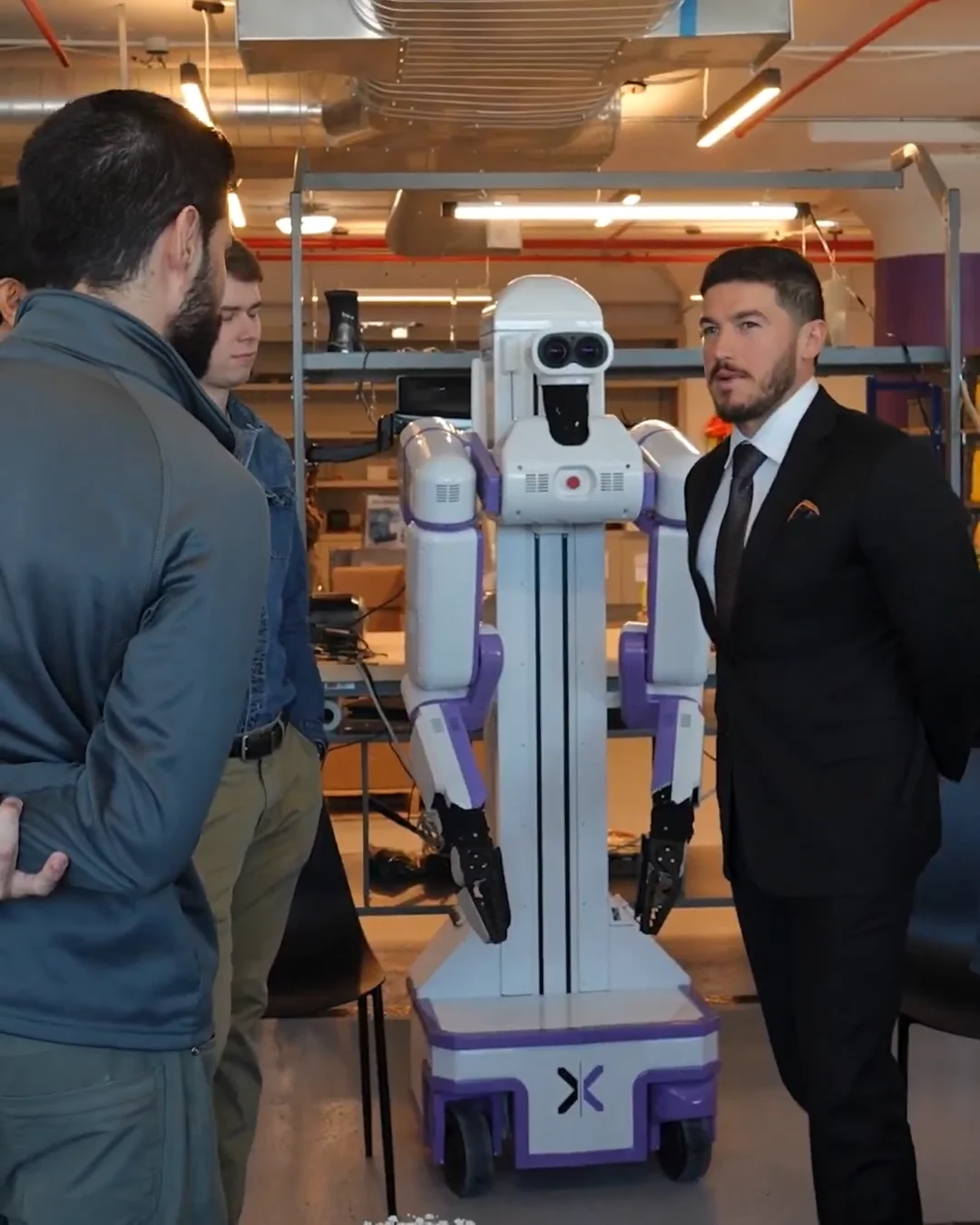
Redefining the Form Factor for Cost
While competitors like Tesla and Figure famously focus on bipedal movement, Reflex has taken a more pragmatic—and potentially cheaper—path. Their robots utilize a wheeled base instead of legs, a design choice the company claims reduces bill-of-material costs by 2x to 3x and extends battery life to over 16 hours.
Reflex asserts that its robots cost roughly 20x less than most other humanoids currently on the market. Estimates place the hardware cost as low as $10,000 per unit, a price point intended to offer a one-year return on investment (ROI) for logistics and warehouse operators.
Scaling After the Pilot Phase
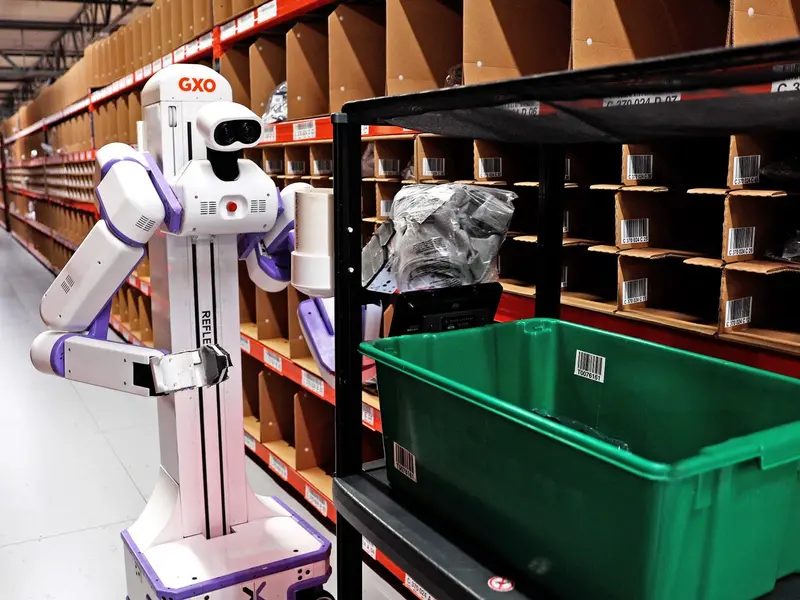
The expansion into Mexico follows a period of rapid growth and real-world testing. Reflex was highlighted last year for its participation in GXO Logistics’ multi-vendor humanoid trials, where its robots were tasked with moving materials alongside bots from Locus Robotics.
To support this scaling, the company recently:
- Raised $7 million in seed funding led by Khosla Ventures.
- Signed a lease for a 17,000-square-foot office and R&D space in San Francisco’s SoMa neighborhood to tap into the West Coast talent pool.
The Road Ahead for Humanoid Manufacturing
The decision to manufacture 100% of the components in Nuevo León is an ambitious attempt to localize a complex supply chain that typically relies on specialized parts from China or Europe.
While industry giants continue to refine the walking mechanics of bipedal machines, Reflex is betting that a cheaper, wheeled, human-assisted robot is the faster path to widespread warehouse adoption.
Share this article
Read next
- Published on
- Reading time
- 3 min read
GXO Tests Humanoid Workforce: Logistics Giant Pilots Robots from Agility, Apptronik, and Reflex
- Published on
- Reading time
- 5 min read
Tesla App Contains Optimus Gen 3 Renders—Here’s What They Show
- Published on
- Reading time
- 5 min read
1X Aims to Ship 50,000 Robots—But Keeping Them Working Is the Test
- Published on
- Reading time
- 4 min read
Agility’s Digit 5 Reveal Includes a Wheeled Robot Concept
- Published on
- Reading time
- 4 min read
Rhoda Tests Whether Scaling Web-Video Pretraining Makes Robots Better at Real Work
- Published on
- Reading time
- 8 min read
Uncaged: Agility CEO Peggy Johnson and Co-Founder Jonathan Hurst Detail Digit 5 Architecture, AI Stack, and Supply Chains


The weekly humanoid robotics briefing
One email a week: the launches, funding and research that mattered, with context from Humanoids Daily.
Read recent issues