- Published on
Boston Dynamics Gives Atlas Four-Finger Hands Built for Tools and AI Training
One tap, and our reporting appears more often in your Google Top Stories. It makes a real difference to a small newsroom.

Boston Dynamics has unveiled new hands for Atlas, increasing each hand's degrees of freedom from seven to 13 and adding a more dexterous opposable thumb. The four-finger design is intended to move the humanoid beyond grasping objects toward manipulating them within its hands and operating tools.
- Atlas's new hands have four fingers and 13 degrees of freedom, up from seven in the previous design.
- Directly actuated joints and tactile sensors support manipulation, while the hardware is designed for accurate simulation and reinforcement learning.
- Boston Dynamics deliberately omitted a fifth finger to limit cost, size and potential failure points.
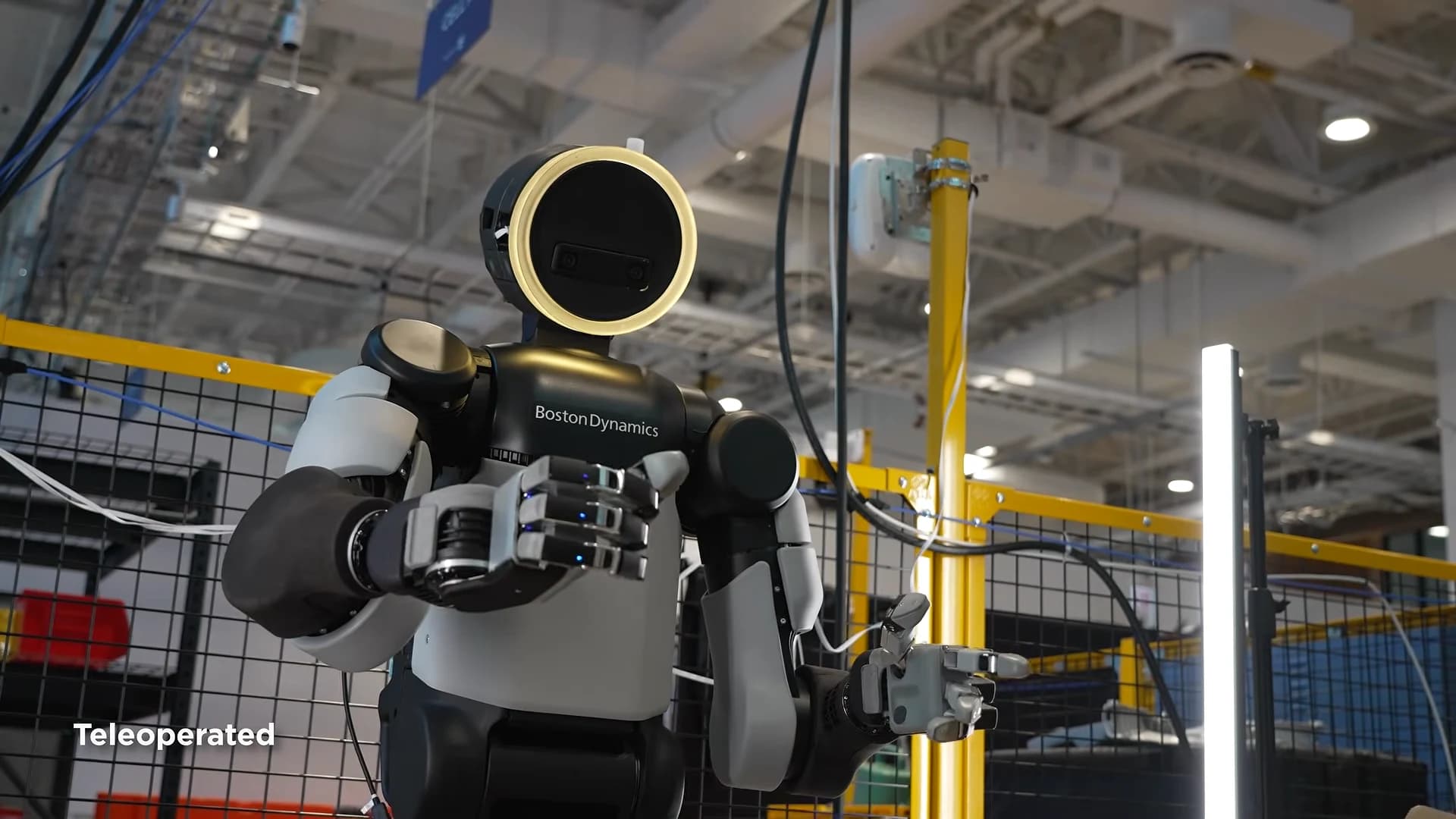
In its technical explanation, Boston Dynamics frames the design around competing requirements: dexterity, strength, ruggedness, sensing, repairability and manufacturing cost. The result is roughly the size of a large human hand, intended to fit human-scale tools and workspaces.
The accompanying video identifies the new hand as GR3, succeeding the seven-degree-of-freedom GR2. The engineers explain that the object-reorientation exercises are intended to develop skills relevant to tool use and assembly.
Four fingers, with a more capable thumb
The thumb has four degrees of freedom; each of the other three fingers has three. The fingers can spread apart, while the thumb can move along and across them to support different pinches, three-point grasps and tool grips.
The weekly humanoid robotics briefing
One email a week: the launches, funding and research that mattered, with context from Humanoids Daily.
Read recent issuesBoston Dynamics says the configuration enables in-hand reorientation, recovery when an object slips and gripping tools while pressing their triggers. Its examples include drills and powered torque drivers. Dense pressure sensors cover the fingertips and palm.
The joints use a single actuator type, with encapsulated hardware and no fragile cables crossing joints. The company says it has retained strength comparable to the previous hand, referencing Atlas carrying a loaded mini-fridge weighing more than 100 pounds. That example describes the robot's carrying capability, not a separately specified payload for each hand.
Why no pinky? Boston Dynamics says the team experimented with taping their own ring and little fingers together to assess the practical loss. A fifth finger would add three actuators, along with cost, volume and additional failure opportunities. The team chose four.
Designed to learn in simulation
Alberto Rodriguez, Atlas's director of AI and robot behavior, described the new hands as combining strength for work with simplicity for manufacturing. Simulation fidelity is another central design requirement.
Boston Dynamics argues that human demonstrations help capture task context, but fast manipulation also requires rapid feedback and force regulation. It therefore sees reinforcement learning in simulation as an essential complement to imitation.
The video also connects backdrivability to durability: a finger joint that can move under an external force can yield during an impact, helping protect its gearbox. That is an engineering rationale, rather than a published impact-test rating.
The rigid-drive, backdrivable mechanism is designed to make physical behaviour easier to model. Training can vary friction, motor characteristics, object shapes and disturbances before policies transfer to hardware. Boston Dynamics reports promising initial transfer results using actuator feedback, but does not provide a broad task-success benchmark.
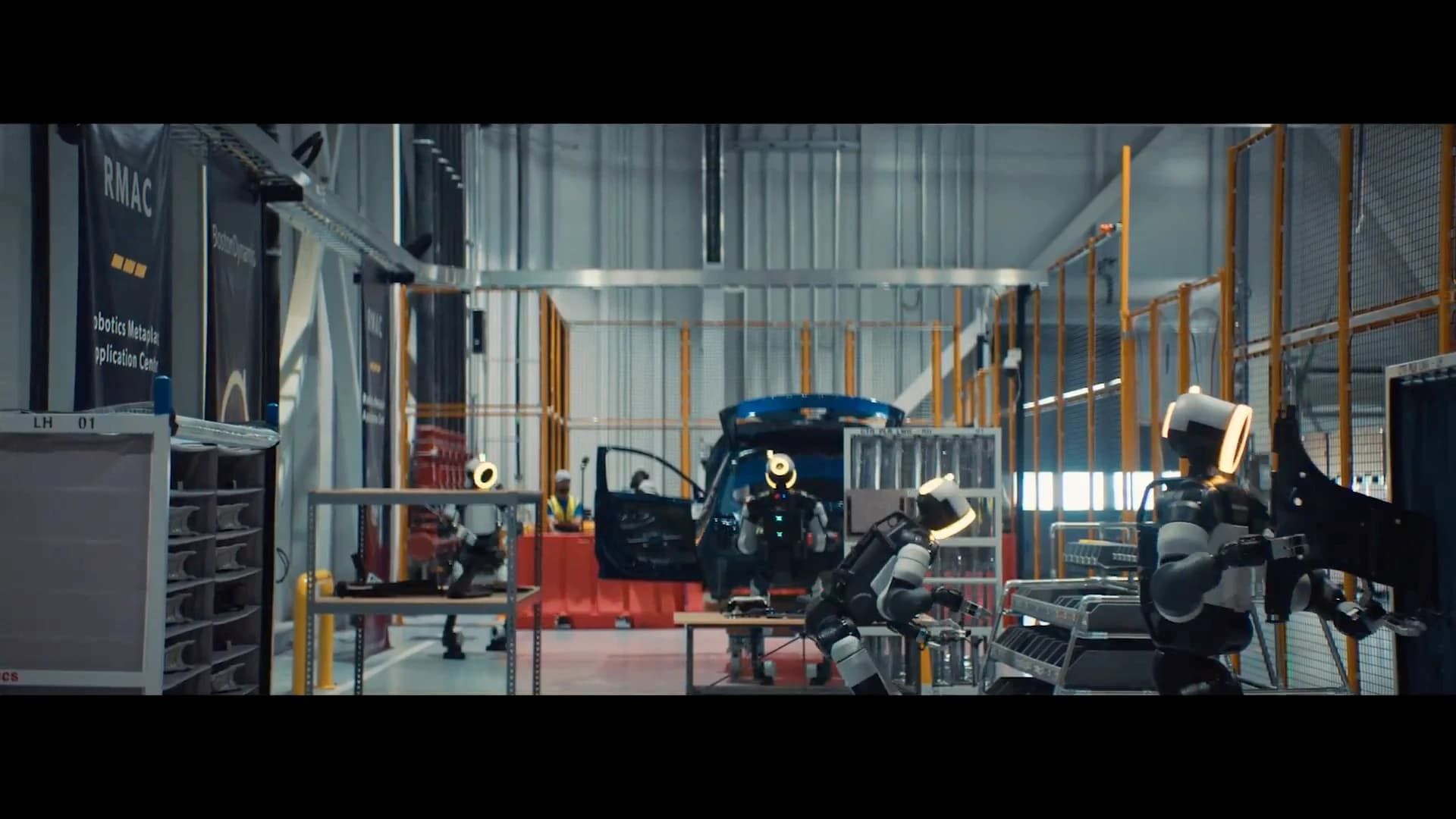
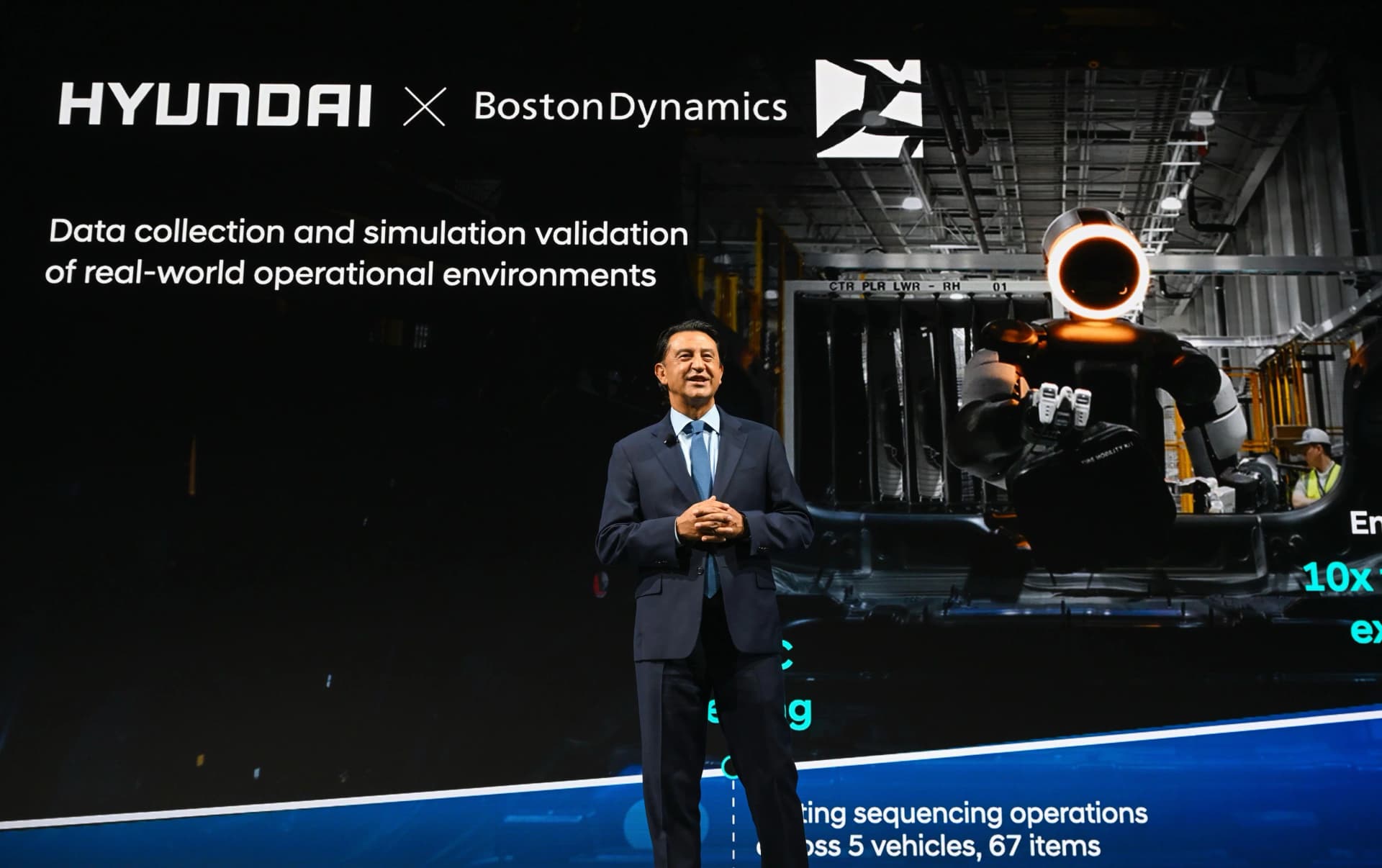
The announcement follows the company's recent film showing Atlas at Hyundai's Metaplant facilities. The new hands address a practical part of that industrial ambition: holding a part is one requirement; adjusting it, recovering a grip or operating a tool introduces a different level of control. The next test is how reliably those capabilities carry into sustained work.
In the video, Trevor Ablett, Research scientist at BD, captures the complexity of the design: “The multi-fingered hand is like a whole mini-robot when you think about the number of joints and the number of motors in there.”
Share this article
Read next
- Published on
- Reading time
- 4 min read
Boston Dynamics Makes Its Case for Atlas and a Two-Year Payback Target
- Published on
- Reading time
- 7 min read
Hyundai Says Atlas Will Not Replace Workers — One Day After Settling a Strike Over Exactly That
- Published on
- Reading time
- 4 min read
Hyundai to Take Full Ownership of Boston Dynamics in $325 Million SoftBank Buyout
- Published on
- Reading time
- 4 min read
The Production Pivot: Leadership Exodus and Internal Pressure at Boston Dynamics
- Published on
- Reading time
- 4 min read
The Blueprint for a Bipedal Workforce: Kia Details Atlas Deployment Roadmap
- Published on
- Reading time
- 5 min read
Form as Function: Boston Dynamics Details the Industrial Design Logic Behind the Production Atlas
The weekly humanoid robotics briefing
One email a week: the launches, funding and research that mattered, with context from Humanoids Daily.
Read recent issues