- Published on
Brett Adcock Says Figure 04 Will Be Figure’s Biggest Hardware Leap
One tap, and our reporting appears more often in your Google Top Stories. It makes a real difference to a small newsroom.

Supported by RoboStrategySupport for Humanoids Daily comes from RoboStrategy
Sponsored
Investing involves risk, including possible loss of principal. Read the prospectus before investing.
- Brett Adcock describes four chapters for humanoids: capable hardware, end-to-end autonomy, scaling intelligence, and manufacturing.
- He says Figure is entering the intelligence-scaling stage, where he expects more data and compute to expand robot capabilities.
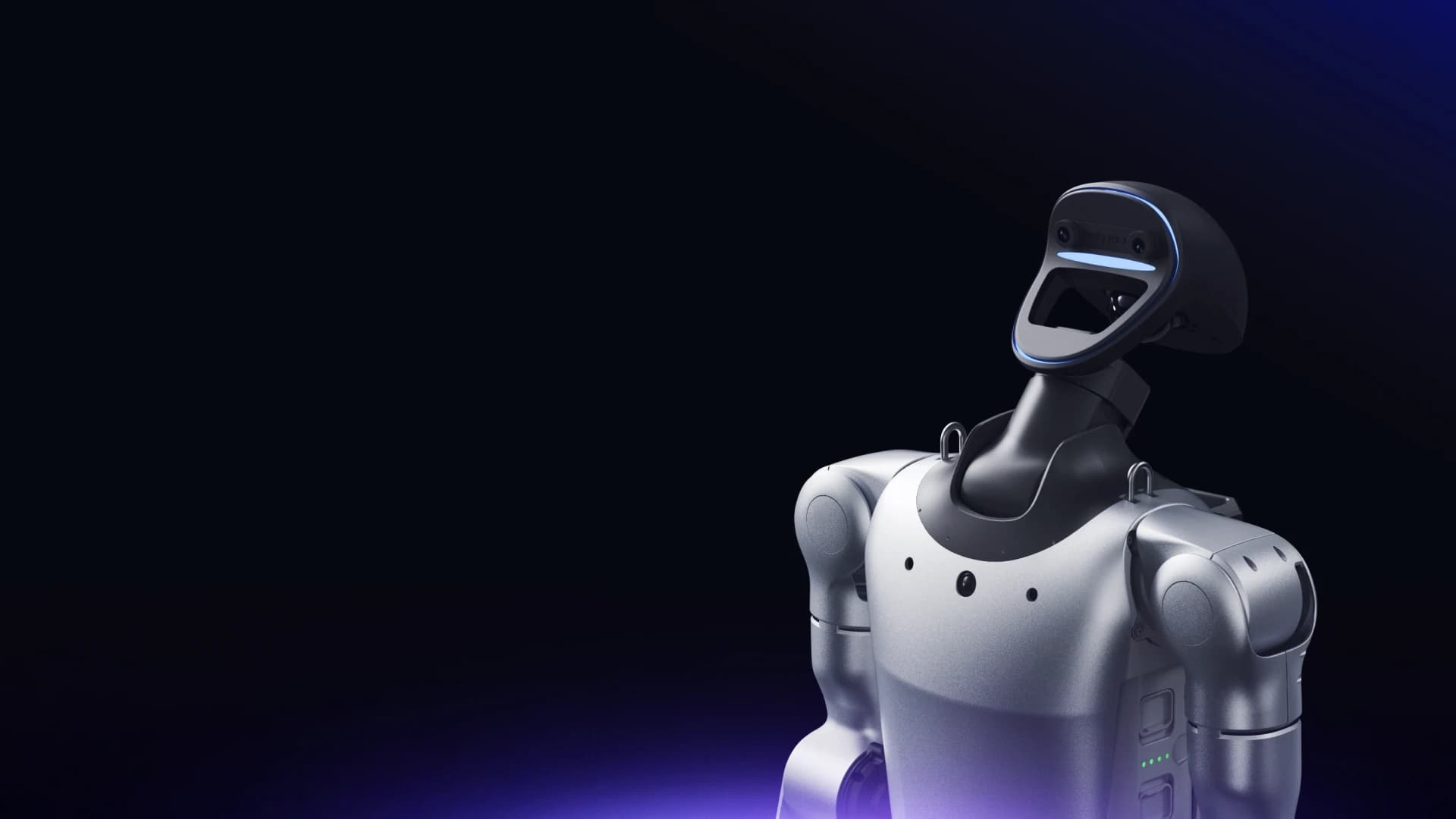
- Adcock calls the planned Figure 03-to-04 transition the company’s biggest hardware leap, but gives no reveal date or specifications.
- He also acknowledges that Helix 2.5 has not yet delivered his broader ambition for long-duration autonomous work in arbitrary homes.
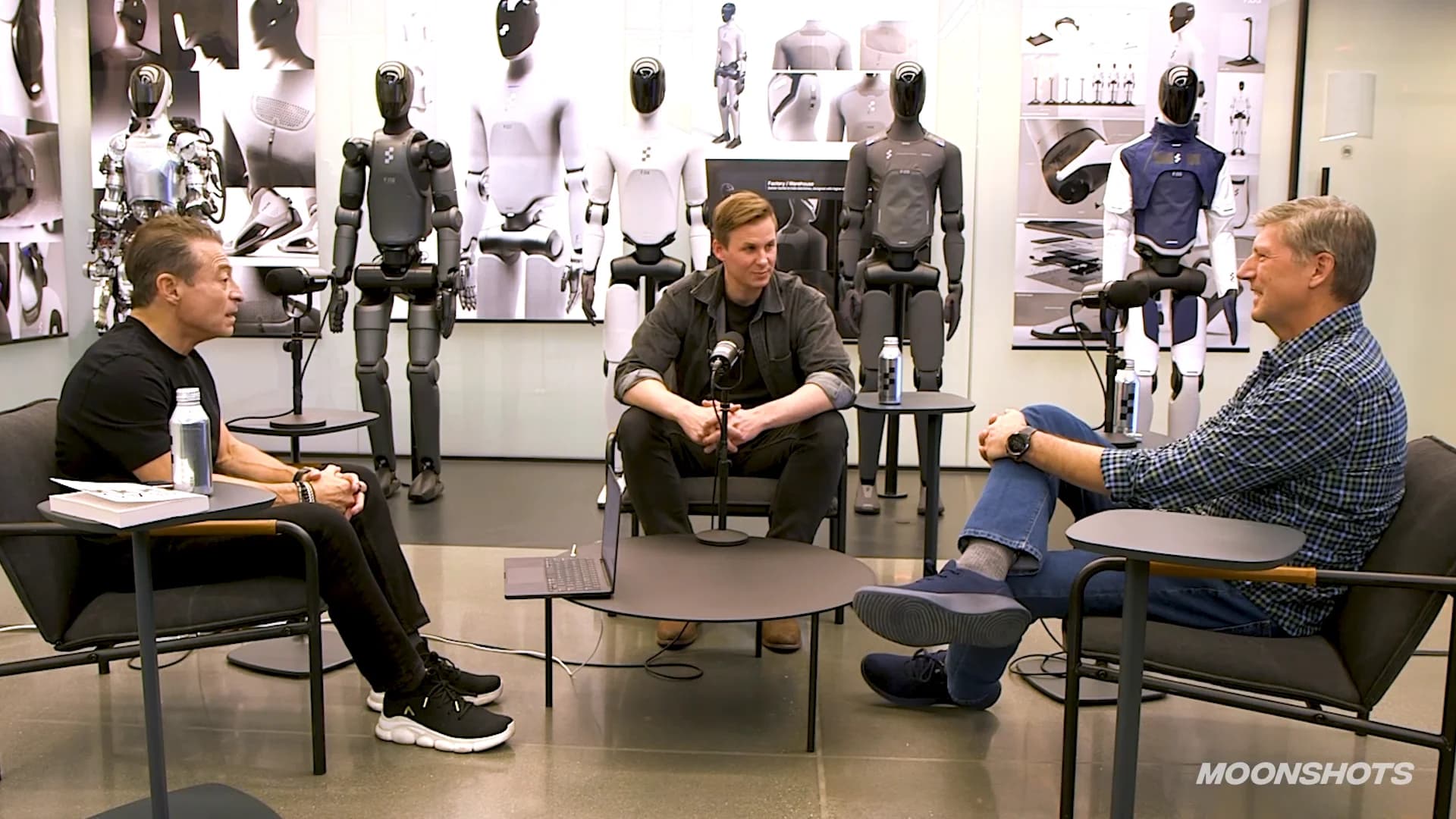
Disclosure: RoboStrategy, which hosted this interview, is a sponsor of Humanoids Daily.
Brett Adcock says Figure 04 will represent the largest hardware improvement between generations in Figure’s history. But in a livestream following the Helix 2.5 reveal, his broader argument was about what must happen before manufacturing humanoids at scale makes sense.
Speaking on RoboStrategy’s September 17 livestream, the Figure CEO laid out a four-stage roadmap: build the machine, make it autonomous, scale its intelligence, and then scale production. His thesis is that the first two depend on difficult engineering breakthroughs, while the latter two can increasingly be accelerated with capital.
Four chapters, two different kinds of bottleneck
Adcock developed the framework during the opening part of his appearance, beginning around 17:31 in the stream:
The weekly humanoid robotics briefing
One email a week: the launches, funding and research that mattered, with context from Humanoids Daily.
Read recent issues- Hardware: A humanoid must combine the necessary torque, speed, runtime, dexterity and range of motion with acceptable weight and cost.
- AI autonomy: The control system must turn observations and commands into sustained, coordinated action without a human directing each movement.
- Intelligence: The robot must perform more useful behaviors, more successfully, across a wider range of situations. Adcock sees data and compute as the principal constraints once the architecture works.
- Manufacturing: Production must grow alongside useful capability, rather than outrunning it.
His distinction is not that hardware or autonomy require no money. It is that financing alone cannot substitute for an engineering team that has solved those problems. Once the learning architecture is working, he argues, spending on data, training and production can have a more predictable effect.
“You can’t put manufacturing ahead of any of those three chapters,” he said. The practical implication is straightforward: factory capacity has limited value if the robots coming off the line cannot reliably do work customers need.
Adcock places Figure near the beginning of the intelligence-scaling chapter. That is his assessment of the company’s position, rather than an independently established milestone or a universal roadmap for the industry.
What Helix 2.5 does—and does not—show
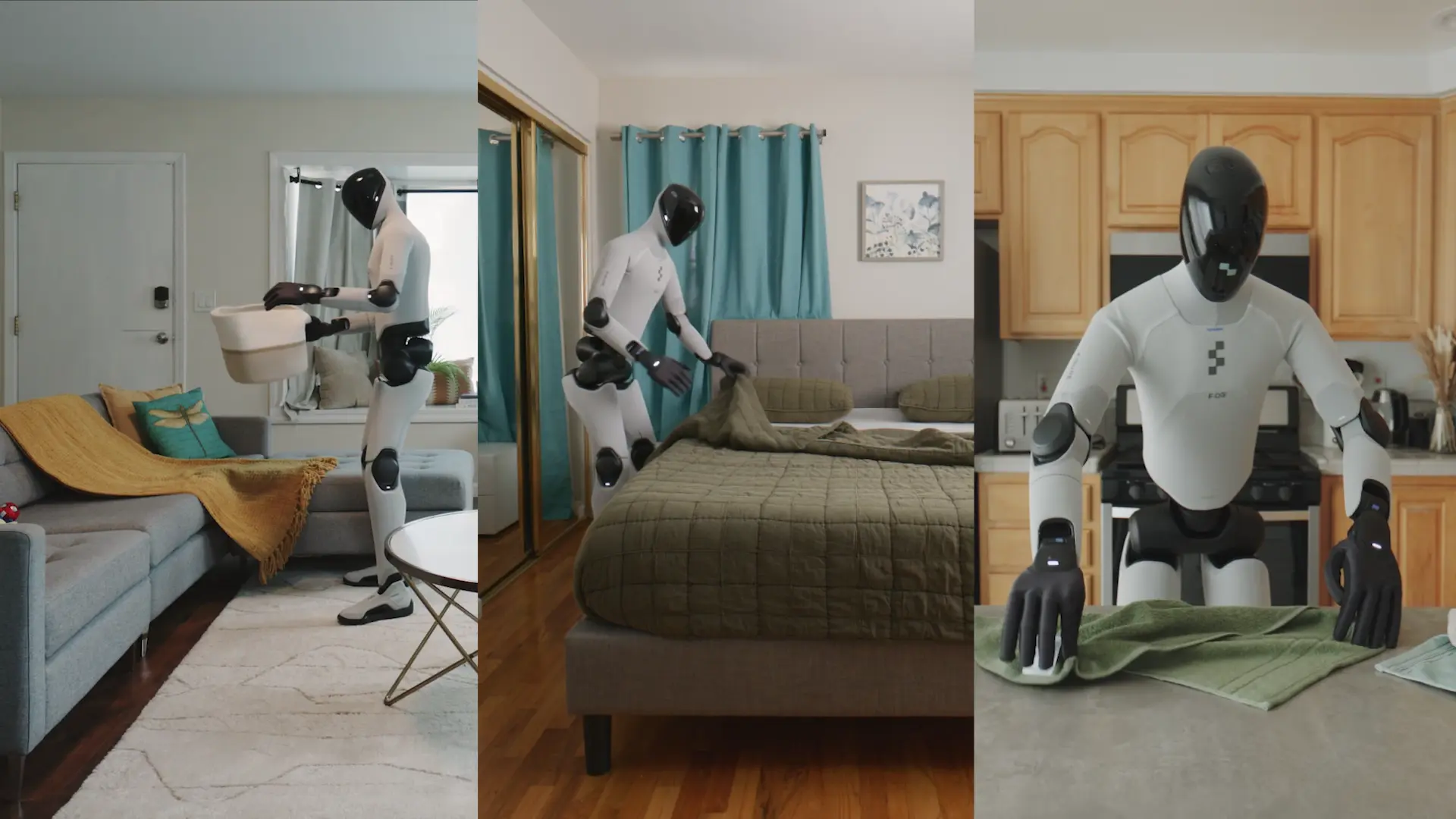
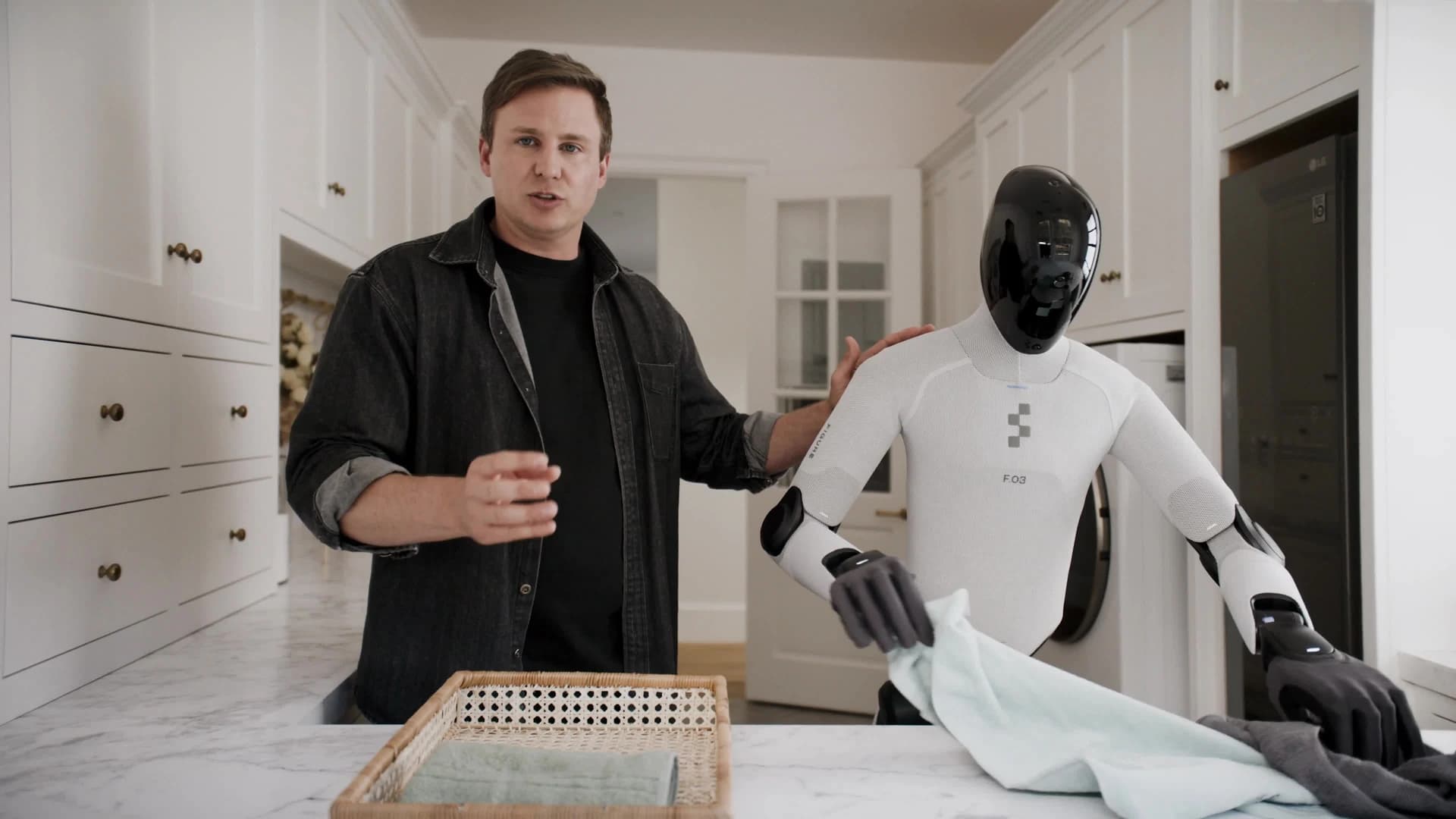
The interview followed Figure’s Helix 2.5 announcement, which reported 237 successful full-task trials out of 420 across 30 unseen homes. The evaluation covered bed making, towel folding and tidying toys, with the behaviors learned elsewhere.
Asked how many tasks the robot could now generalize, Adcock brought the discussion back to those three evaluated behaviors. He described the exercise as a structured test of how performance changes with more pretraining data. Index is Figure’s project to collect recordings of people performing real-world tasks, building a dataset for training its robot AI. The wide variety of human activities shown in that footage should therefore not be mistaken for a list of demonstrated robot capabilities.
He also said his best-case ambition for the year had been to put a robot in a home doing long-horizon autonomous work, while acknowledging that this release had not yet reached that goal. The qualification separates progress on defined chores from a machine that can independently manage an open-ended household workload.
Figure 04: a bigger promise, still awaiting a reveal
When the conversation turned to hardware at roughly 47 minutes, Adcock initially declined to give an update, then offered an emphatic preview.
“The gap between three and four would be the largest gap you’ve ever had,” he said, comparing Figure’s successive generations. He again described Figure 04 as an “iPhone one moment” for humanoids and attributed the redesign to lessons from running Figure 03 extensively.
This extends the message behind Figure 04’s previously announced design lock. It does not establish what the new robot can do: Adcock supplied no measured improvements in weight, payload, runtime, dexterity or cost, and no public unveiling date. Scott Walter also clarified that he had not seen the new machine during his visit.
Adcock’s enthusiasm is newsworthy as a statement of intent. The size of the claimed leap will only become assessable when Figure shows the hardware and publishes results.
Why Figure built its own data supply
Adcock also offered a revealing explanation for Index: Figure first tried buying training data from outside suppliers, but found the quality inadequate for its needs and brought collection in-house. “We went out and bought a bunch of stuff and it was just crap,” he said during the discussion beginning around 33:07. He did not name the suppliers or provide a comparative evaluation of their datasets.
His explanation went beyond the volume of footage. Useful recordings require the right sensors, a close match to what the robot can observe and how it can move, and processes for cleaning data and detecting fraud. Index is Figure’s attempt to control those requirements as well as expand supply.
That connects with the broader trend explored in our UMI Effect feature: companies such as Sunday and X Square are designing human-operated collection devices around the robot hardware that will learn from them. Their approaches differ from Index, but underline a shared challenge: turning human demonstrations into data a robot can actually use.
For the growing market of robotics-data suppliers, Adcock’s account raises a practical question: how well does a dataset improve the buyer’s robot? Hours collected alone cannot answer it, and Figure’s experience with unnamed vendors does not settle the quality of third-party data more broadly.
The investment thesis behind the roadmap
Adcock linked his intelligence-scaling argument to Index’s human-data collection effort and Figure’s Nscale compute agreement. He reiterated the $3.5 billion compute commitment and described a hoped-for expansion toward $6 billion, rather than announcing a separate completed deal.
The bet is that broader human experience will translate into more capable robots, allowing manufacturing to grow with demand for useful work. Helix 2.5 provides an initial, bounded test of that thesis. Figure 04 adds a hardware promise whose evidence is still to come.
Share this article
Read next
- Published on
- Reading time
- 4 min read
The "iPhone 1 Moment": Figure 04 Reaches Full Design Lock
- Published on
- Reading time
- 6 min read
Figure’s Helix 2.5 Takes on Chores in 30 Unseen Homes
- Published on
- Reading time
- 5 min read
BMW Reflections: Why the Spartanburg Pilot Succeeded and Why Figure 02 Had to Die
- Published on
- Reading time
- 4 min read
The End of C++: Brett Adcock on Helix 02 and Figure’s Path to "Room-Scale" Autonomy
- Published on
- Reading time
- 3 min read
The Dishwasher Wars: Figure Fires Back at Sunday Robotics with Glassware Demo
- Published on
- Reading time
- 5 min read
From Pixels to Torque: Figure Unveils Helix 02 and the Era of Whole-Body Autonomy
The weekly humanoid robotics briefing
One email a week: the launches, funding and research that mattered, with context from Humanoids Daily.
Read recent issues