- Published on
Unitree’s Stock Slump Puts China’s Robot IPOs Under Scrutiny
One tap, and our reporting appears more often in your Google Top Stories. It makes a real difference to a small newsroom.

Supported by RoboStrategySupport for Humanoids Daily comes from RoboStrategy
Sponsored
Investing involves risk, including possible loss of principal. Read the prospectus before investing.
- Unitree traded at 469.80 yuan on September 15, about 44% below its debut close and 57% below its opening price, though still more than triple its IPO offer price.
- Reports of closer scrutiny of Chinese robotics IPOs focus on sustainable revenue, profitability and technological innovation.
- Slower approvals are a risk, not a confirmed wave of postponements. The reporting reviewed does not establish that specific companies have rescheduled their listings because of new restrictions.
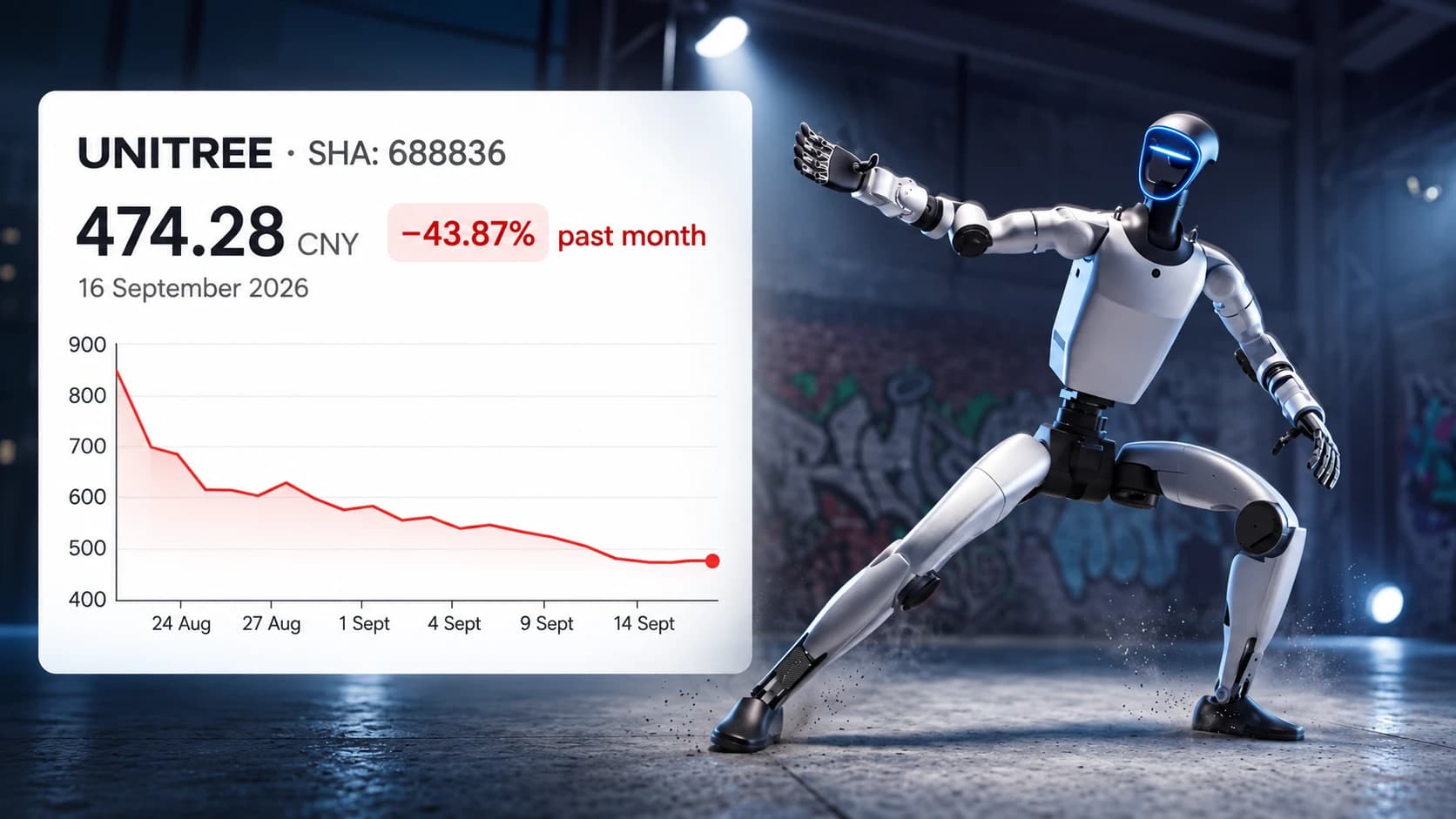
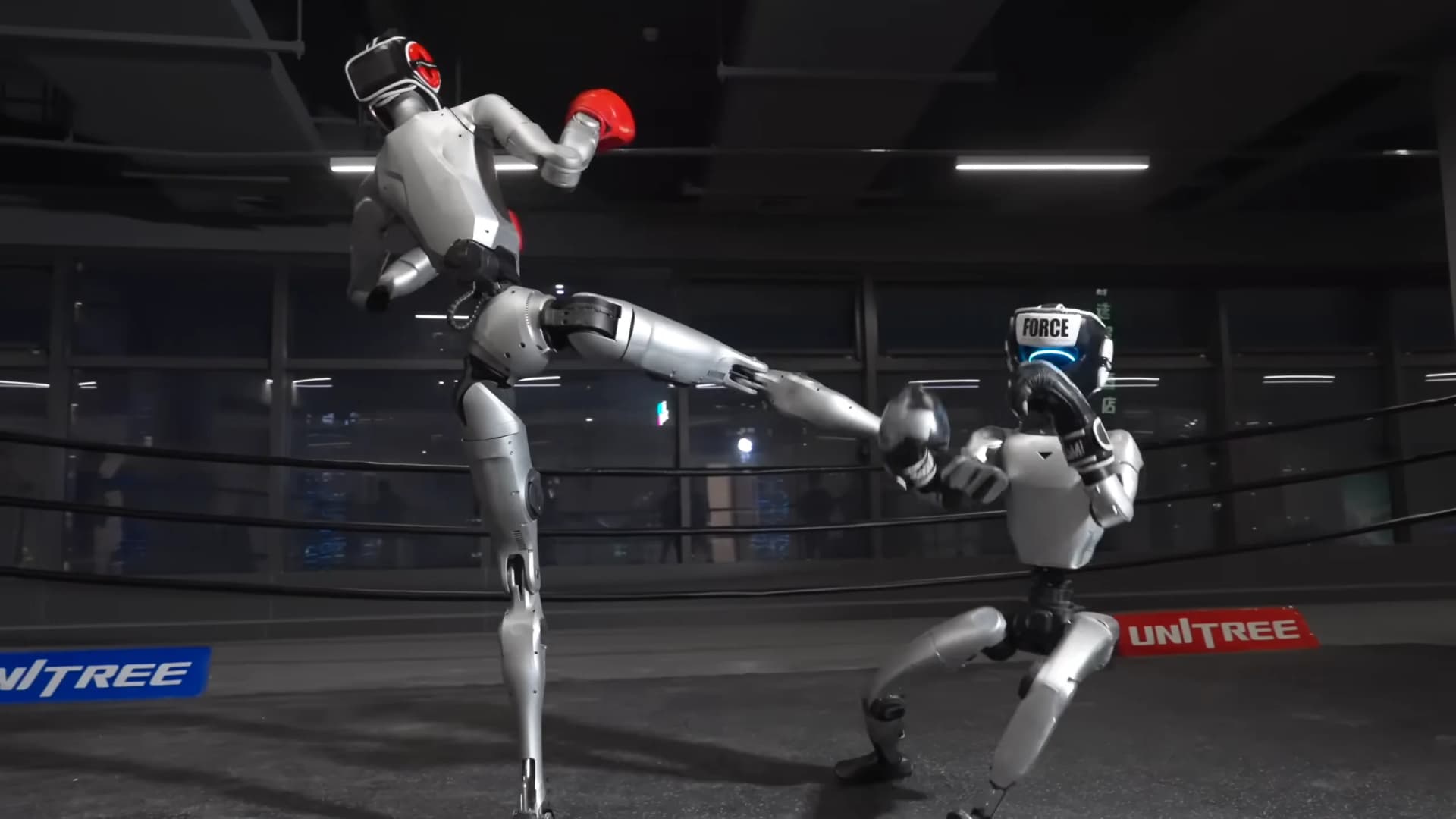
Less than a month after Unitree’s shares surged more than 600% at their Shanghai debut, much of that initial premium has disappeared. The reversal is raising a question for the robotics companies waiting to follow it onto public markets: how much commercial proof will investors and regulators now demand?
South China Morning Post reported on September 15 that Unitree traded at 469.80 yuan, down approximately 44% from its first-day close. The report linked the decline to expectations of closer scrutiny of other humanoid robot IPO applicants.
From a spectacular debut to a prolonged retreat
The starting point matters. Unitree’s August 19 offer price was 150.80 yuan. Shares opened at 1,100 yuan and finished the session at 845 yuan, according to Associated Press’s debut coverage. The Shanghai Stock Exchange’s August newsletter records a 460.34% listing-day gain.
Against those benchmarks, the September 15 price represents:
The weekly humanoid robotics briefing
One email a week: the launches, funding and research that mattered, with context from Humanoids Daily.
Read recent issues| Comparison | Change to 469.80 yuan |
|---|---|
| IPO offer price: 150.80 yuan | Up 211.5% |
| August 19 opening price: 1,100 yuan | Down 57.3% |
| August 19 closing price: 845 yuan | Down 44.4% |
Percentage changes calculated from the reported prices; the September 15 quote is the figure reported by SCMP, not a live price.
The retreat had already become pronounced by early September. The Paper reported on September 2 that shares had fallen below 550 yuan intraday, half their opening price. By September 11, its reporting carried by Eastmoney put the stock below 490 yuan and its market capitalization below 200 billion yuan.
That is a substantial reversal, but it has not erased the IPO premium. Investors who received shares at the offer price and those who bought at the opening price have experienced very different outcomes.
A growing business with a demanding valuation
The correction also comes as Unitree’s growth slows. Citing its listing announcement, The Paper reported first-half revenue of 1.152 billion yuan, up 48.54%, while net profit excluding non-recurring items fell 19.34% to 244 million yuan. Unitree therefore remained profitable even as its adjusted earnings declined.
SCMP put its September 15 valuation at about 190 billion yuan, equivalent to 347 times estimated earnings, versus 118 times for the STAR Market. The newspaper quoted Daiwa analyst Kelvin Lau questioning whether its fundamentals justified that premium and highlighting its dependence on research and education applications.
Our earlier coverage of Unitree’s IPO preparations described the capital being sought to expand its technology and manufacturing capabilities. The subsequent share-price decline measures how investors value the business; it does not mean the company has lost an equivalent amount of cash from its balance sheet.
Tougher scrutiny does not yet mean confirmed postponements
The regulatory story predates SCMP’s article. Reuters reporting on September 9, citing The Information, described informal guidance to some investment banks and institutions on robotics listings. The reported concerns included recurring revenue, narrowing losses and substantive innovation. Reuters said the regulator had not responded to its request for comment.
That attribution matters: Reuters was relaying The Information’s account, rather than independently confirming a published new rule.
Separate interviews by Yicai, published September 14, added nuance. One investment banker described the emphasis on IPO quality as longstanding rather than a new tightening. Others pointed to immature commercialization and scrutiny extending beyond humanoids to unprofitable applicants more broadly.
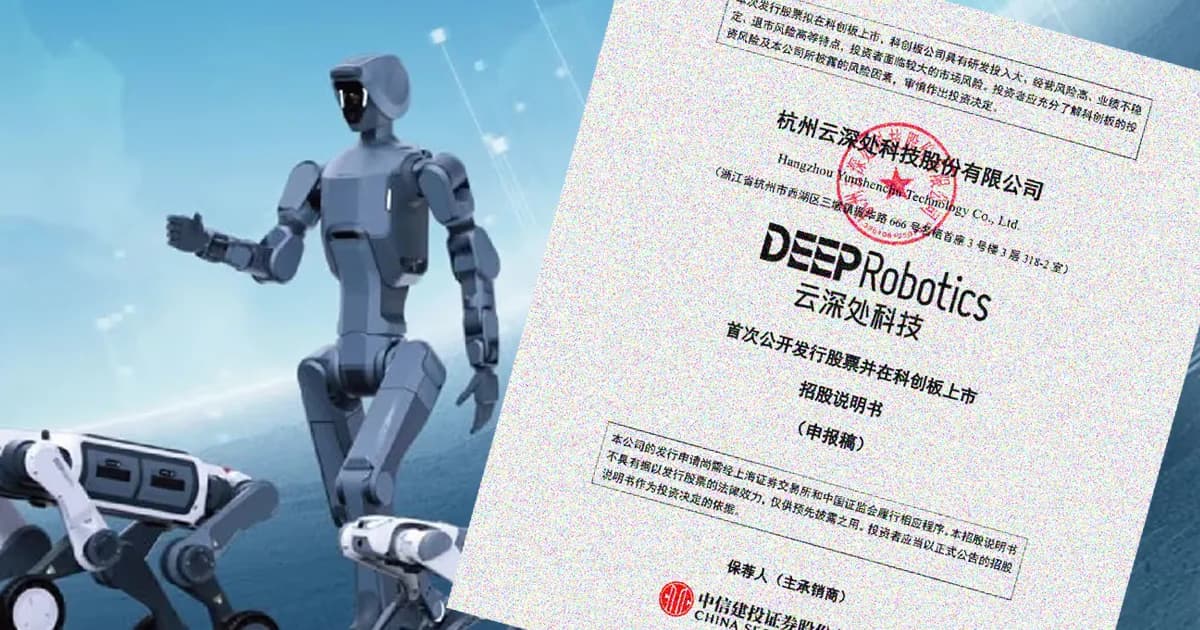
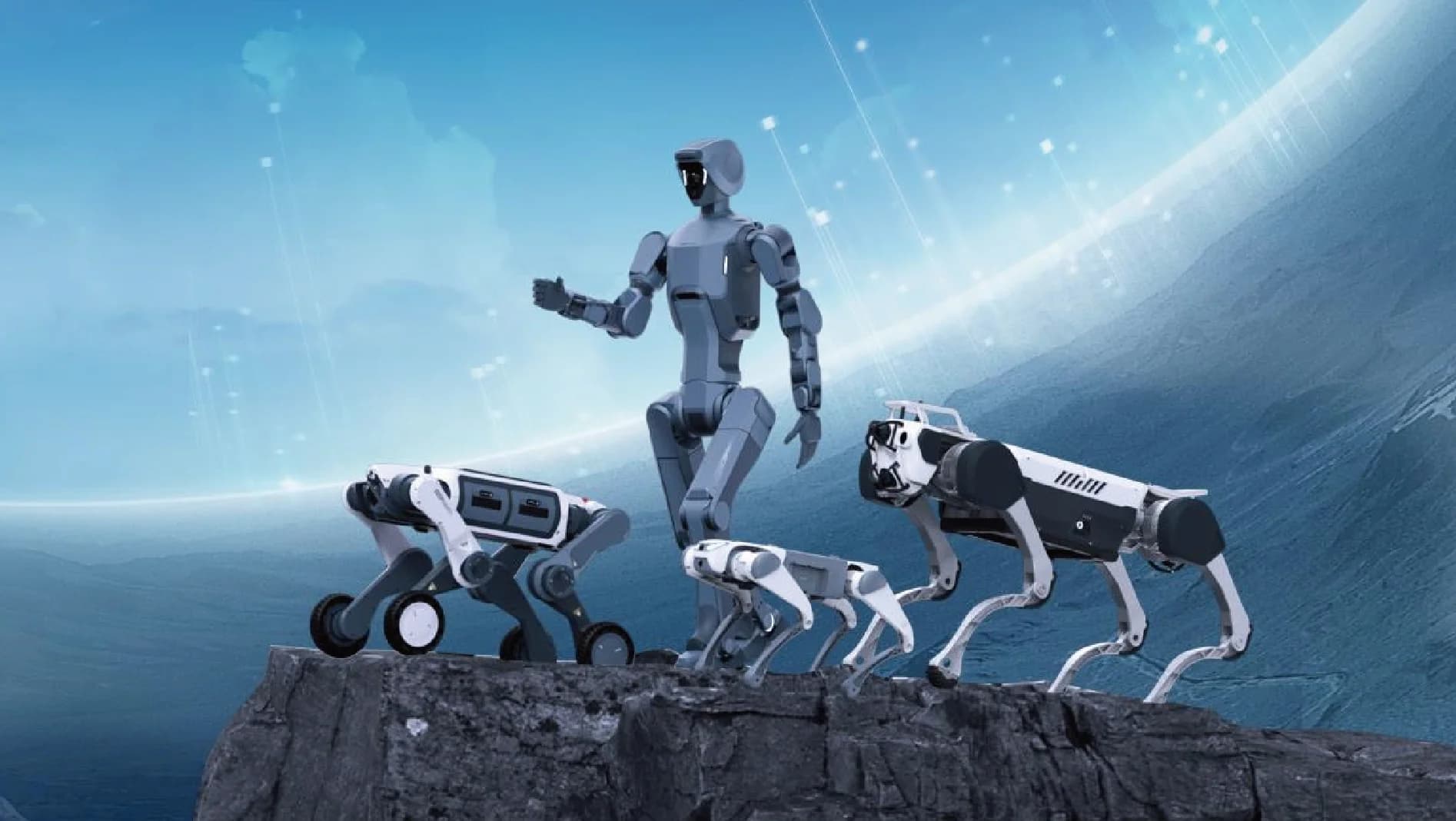
Yicai reported that Deep Robotics and Leju remained in the inquiry stage entered in May, while Dobot had passed its listing committee review on July 22 but had not yet submitted registration materials. Those statuses do not, by themselves, establish policy-driven postponements.
The applicants also differ financially. Deep Robotics made a profit in 2025 but reported first-half margin pressure; Leju and Dobot remained loss-making. Treating all three as equivalent humanoid startups obscures those differences.
Closer scrutiny could lengthen fundraising timetables, particularly for companies still trying to demonstrate repeatable customer demand. For now, the evidence supports a more demanding path to listing—not a confirmed halt to China’s robot IPO pipeline.
Share this article
Read next
- Published on
- Reading time
- 6 min read
Global Humanoid Shipments Surpass 22,000 in H1 2026 as AGIBOT Leads and Form-Factor Debates Intensify
- Published on
- Reading time
- 4 min read
Morgan Stanley Survey: Chinese Companies Want Humanoids, But the Products Aren't Ready
- Published on
- Reading time
- 5 min read
Deep Robotics Files for $367M STAR Market IPO Following First Profitable Year
- Published on
- Reading time
- 4 min read
Deep Robotics Secures $68M in Series C to Fuel Humanoid and ‘Embodied AI’ Push
- Published on
- Reading time
- 3 min read
Global Times Reports on China's Accelerated Push in AI and Humanoid Robotics
- Published on
- Reading time
- 4 min read
State Grid’s $995 Million Bet: 8,500 Robots to Spearhead "Deployment Year One" in Energy
The weekly humanoid robotics briefing
One email a week: the launches, funding and research that mattered, with context from Humanoids Daily.
Read recent issues