- Published on
Deep Robotics Showcases Agile, Firefighting DR02 Humanoid in Dynamic New Demo
One tap, and our reporting appears more often in your Google Top Stories. It makes a real difference to a small newsroom.


Your guide
Rich Robinson
Jee Chee Ren · Executive tour
See China’s AI and robotics ecosystem first-hand.
Six days exploring AI, robotics and advanced manufacturing.
With Rich Robinson, Clinical Professor of Entrepreneurship at Peking University
Beijing · Guangzhou · Shenzhen
29 November–4 December 2026
Referral partnership · We earn a commission on referred bookings.
- Deep Robotics released a new video showing its DR02 humanoid running on uneven terrain, jumping over obstacles, and carrying fire extinguishers.
- The company claims the robot has "enhanced payload capacity and obstacle-crossing capabilities" geared toward real-world industrial applications.
- This demonstration of bipedal agility follows the company's recent filing for a $367.4 million IPO on the STAR Market.
- While the hardware performance is impressive, Deep Robotics faces stiff competition from local rivals like Unitree, which recently secured its own IPO approval.
Deep Robotics is eager to prove that its hardware is evolving just as rapidly as its financial ambitions. The Hangzhou-based robotics firm recently released a compelling new video demonstration (watch it at the end of this article) of its DR02 humanoid on X (formerly Twitter) and YouTube, showcasing significant advancements in the robot's dynamic mobility and practical utility.
The video features the bipedal machine navigating uneven, grassy terrain at a run and cleanly jumping over physical obstacles. Demonstrating its focus on hazardous industrial environments, the DR02 is also shown equipped with a bright red fire extinguisher strapped to its back. Other segments of the demo highlight the robot successfully walking up and down concrete stairs and performing what appears to be inspection and maintenance work on high-voltage electrical infrastructure.
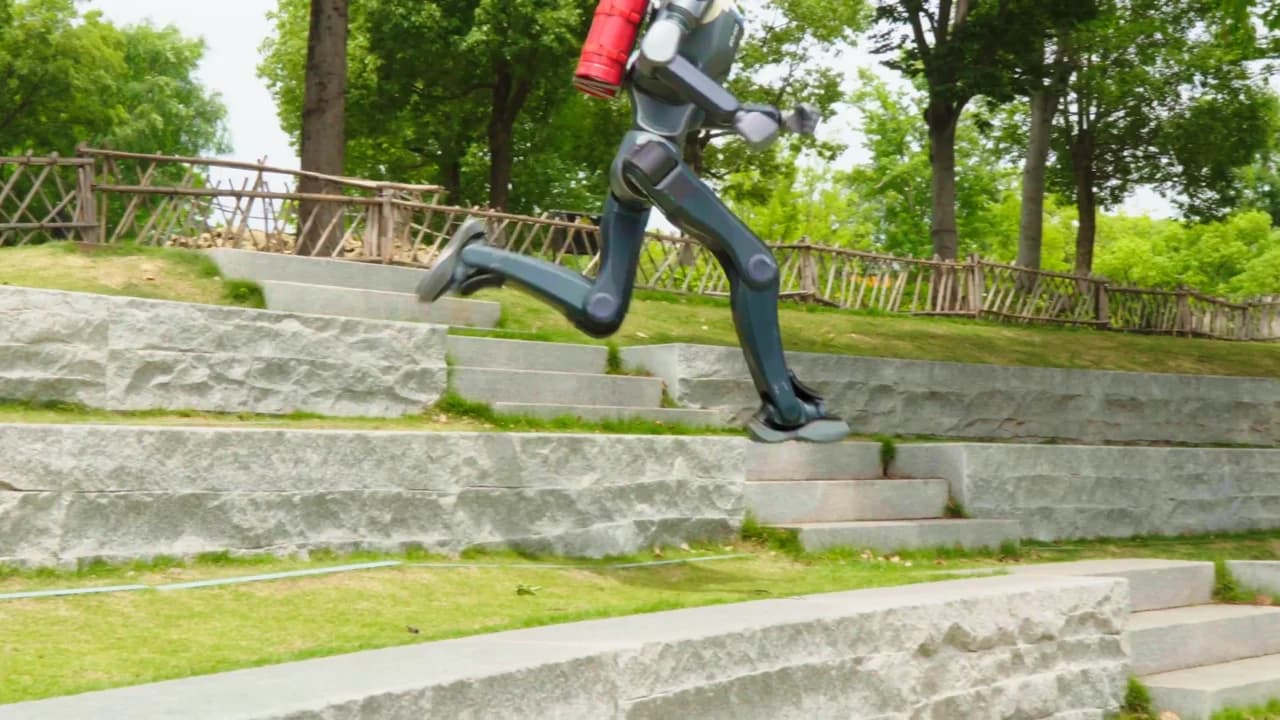
Accompanying the footage, the company stated: "Performance Upgraded. Possibilities Expanded. Our DR02 humanoid robot continues to evolve with enhanced payload capacity and obstacle-crossing capabilities, unlocking greater potential for real-world industry applications !"
Pushing the Hardware Baseline
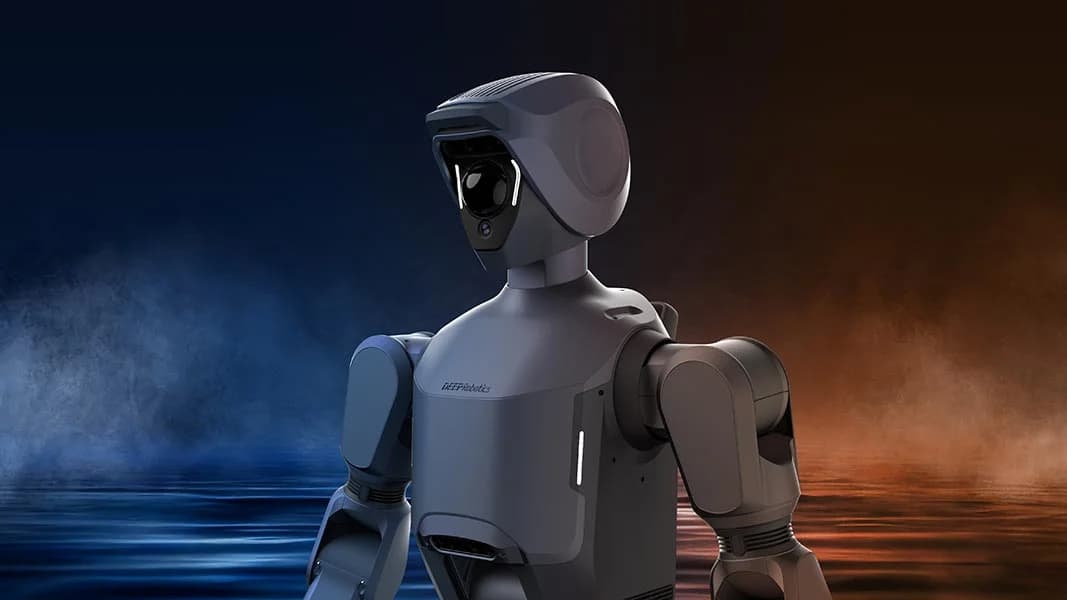
The DR02 is not a pristine, indoor-only laboratory prototype. When Deep Robotics first unveiled the robot in October 2025, the company heavily emphasized its durability, touting an IP66 waterproof and dustproof rating. The machine was designed to operate in extreme conditions, boasting an operational temperature range of -20°C to 55°C.
The weekly humanoid robotics briefing
One email a week: the launches, funding and research that mattered, with context from Humanoids Daily.
Read recent issuesAt its initial launch, the 175cm-tall robot was rated for a 20kg total payload—10kg per arm—and a walking speed of 1.5 m/s. The new claims of "enhanced payload capacity," paired with footage of the robot sprinting and jumping with a fire extinguisher, suggest that Deep Robotics has been aggressively iterating on the DR02's actuators and balance control systems over the past eight months.
Strategic Timing in a Saturated Market
The release of this highly capable demonstration is hardly coincidental. Deep Robotics is currently navigating a pivotal transition from a venture-backed startup to a publicly traded entity.
Late last month, the Shanghai Stock Exchange accepted the company's application for an initial public offering on the STAR Market, where it aims to raise CNY 2.5 billion (approximately $367.4 million). This follows a milestone year for the company, which reported its first-ever net profit of $4.2 million on $49.6 million in revenue in 2025.
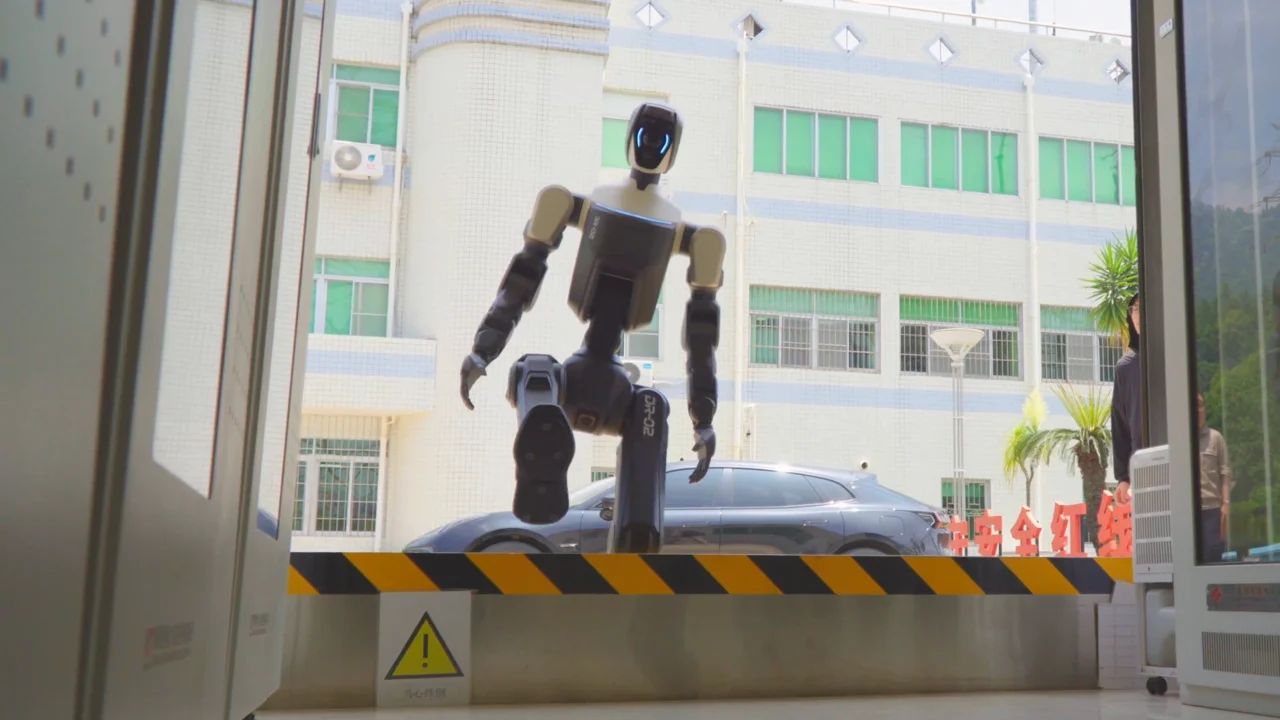
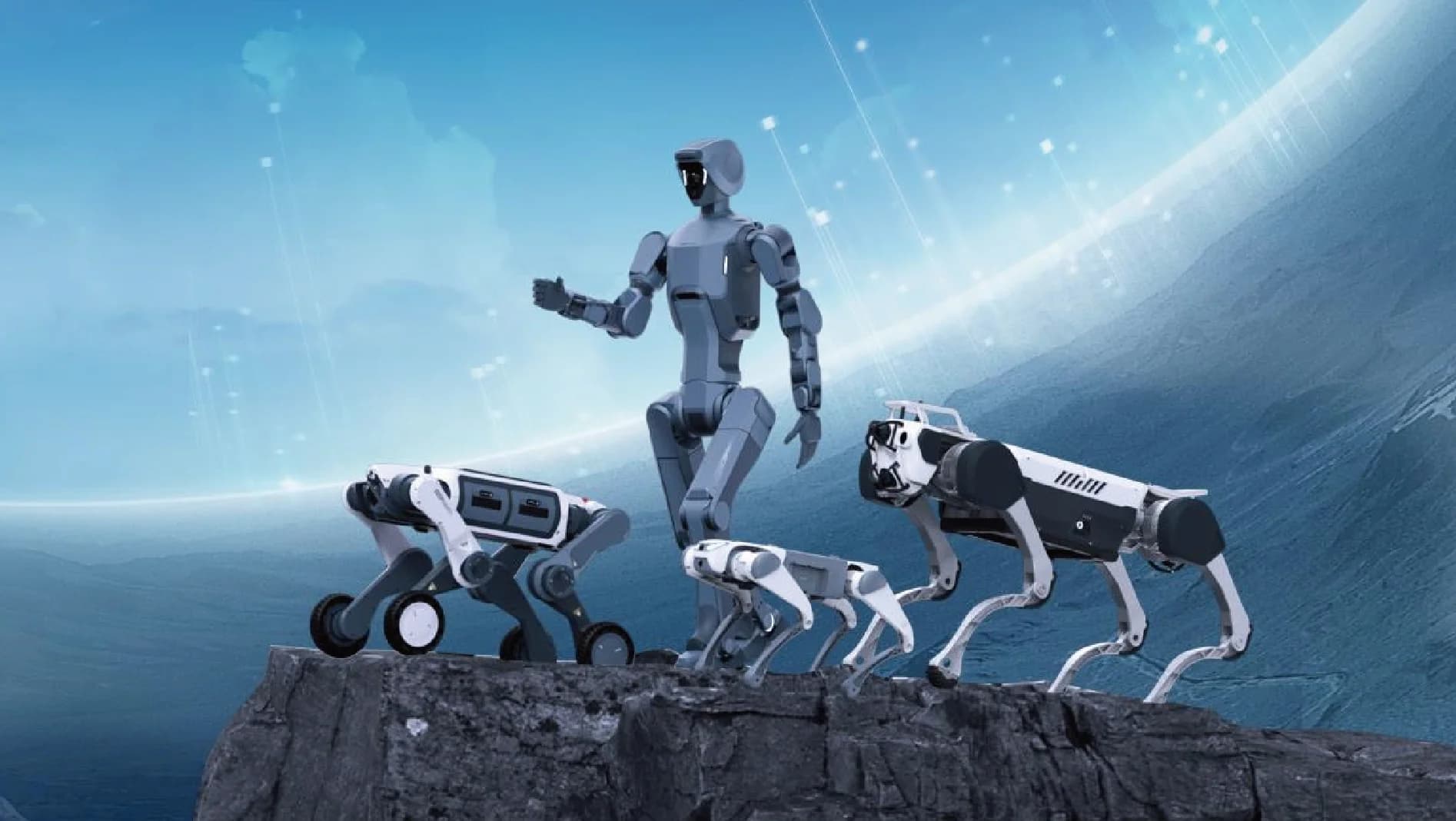
However, that profitability was largely driven by the company's established, highly successful line of quadruped "robot dogs" utilized in power grid inspections and emergency response. Transitioning to the generalized humanoid sector requires massive capital expenditure. The funds from the anticipated IPO, along with a $68 million Series C secured in December 2025, are heavily earmarked for embodied AI algorithms, large models, and scaling the manufacturing of new form factors like the DR02.
The visual flex of the DR02's parkour-like abilities also serves as a necessary competitive signal. The Chinese robotics sector is currently experiencing a massive capitalization wave. Just days ago, on June 1, 2026, rival firm Unitree Robotics secured fast-track approval for its own STAR Market IPO, seeking to raise roughly $620 million.
While dynamic videos of robots running and jumping are impressive indicators of mechatronic engineering and whole-body control, the true test for the DR02—and the broader humanoid industry—remains autonomy. The gap between scripted, remote-controlled physical feats and autonomous, AI-driven reasoning in unstructured, high-voltage environments is vast. As Deep Robotics courts public market investors, proving that the DR02 has the "brains" to match its newly upgraded "brawn" will be its most critical challenge.
Share this article
Read next
- Published on
- Reading time
- 5 min read
Deep Robotics Files for $367M STAR Market IPO Following First Profitable Year
- Published on
- Reading time
- 4 min read
State Grid’s $995 Million Bet: 8,500 Robots to Spearhead "Deployment Year One" in Energy
- Published on
- Reading time
- 4 min read
Deep Robotics Secures $68M in Series C to Fuel Humanoid and ‘Embodied AI’ Push
- Published on
- Reading time
- 3 min read
Deep Robotics Joins IPO Rush, Capping Quadruped Success with Humanoid Ambition
- Published on
- Reading time
- 2 min read
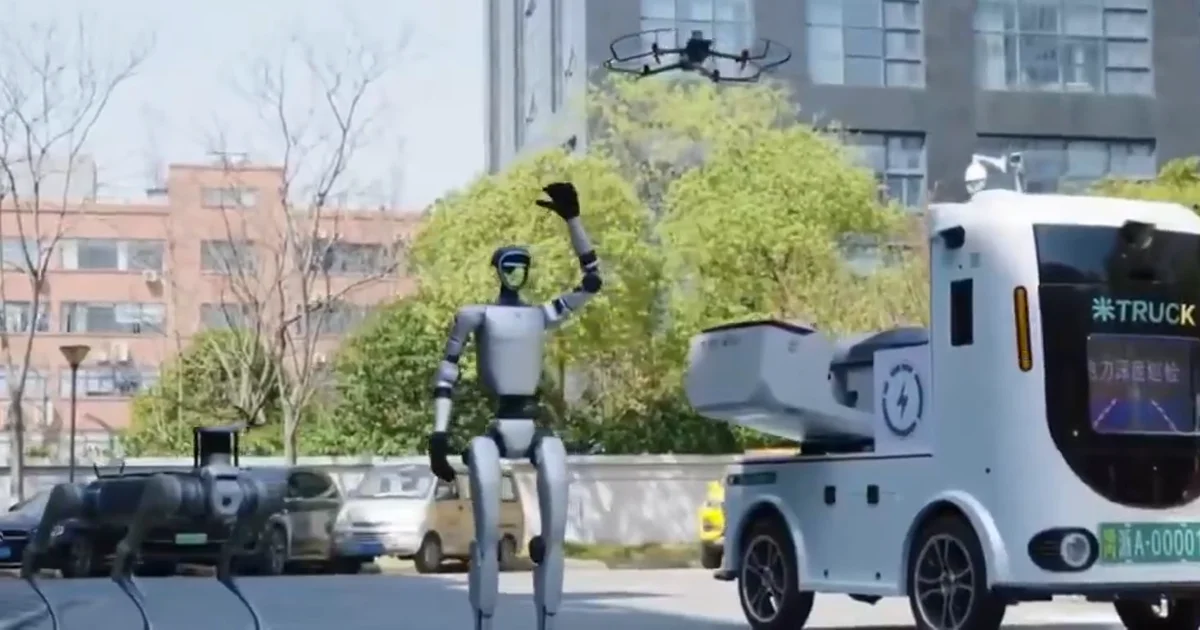
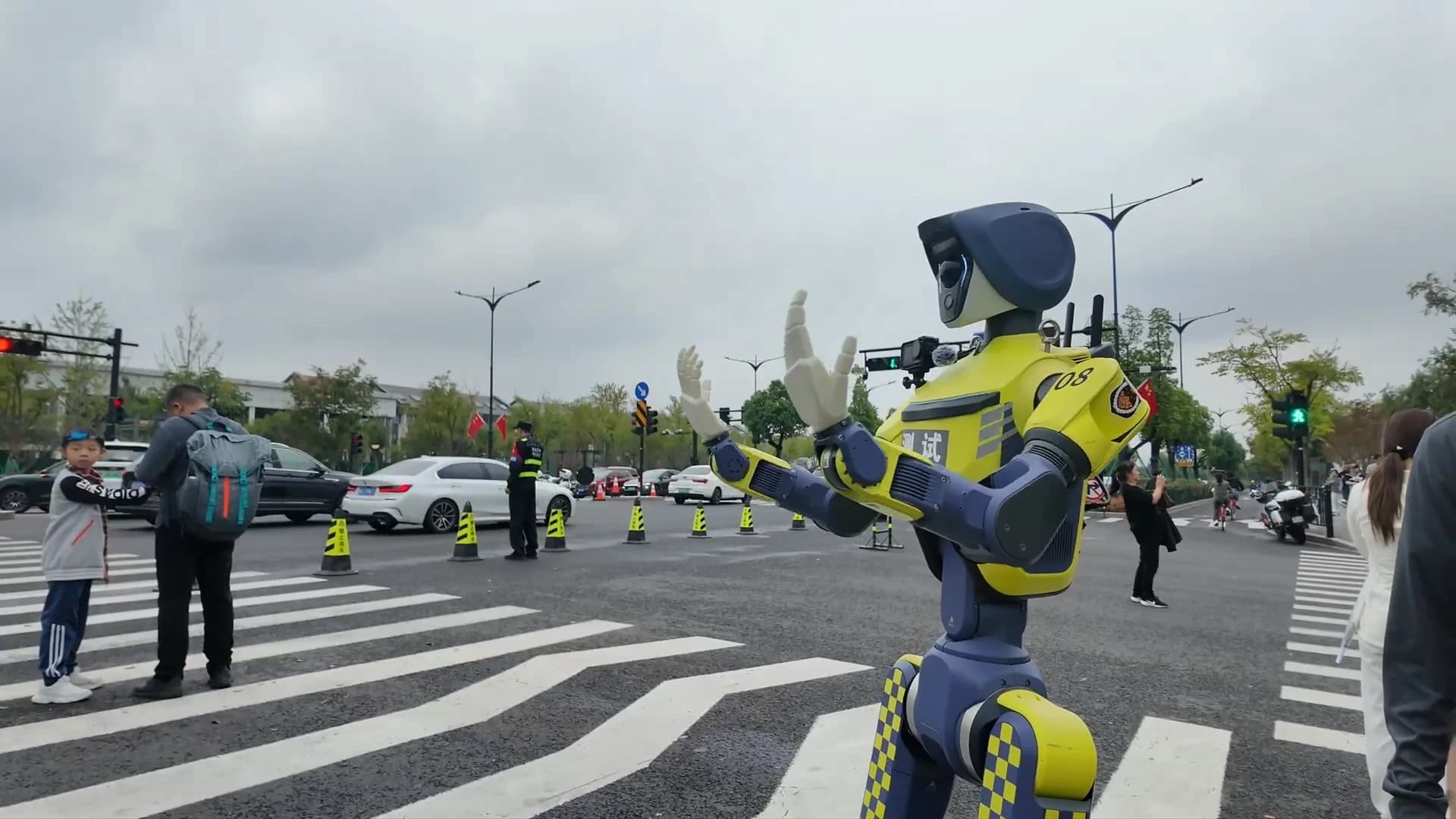
Deep Robotics Tests IP66-Rated DR02 on Traffic Duty in the Rain
- Published on
- Reading time
- 5 min read
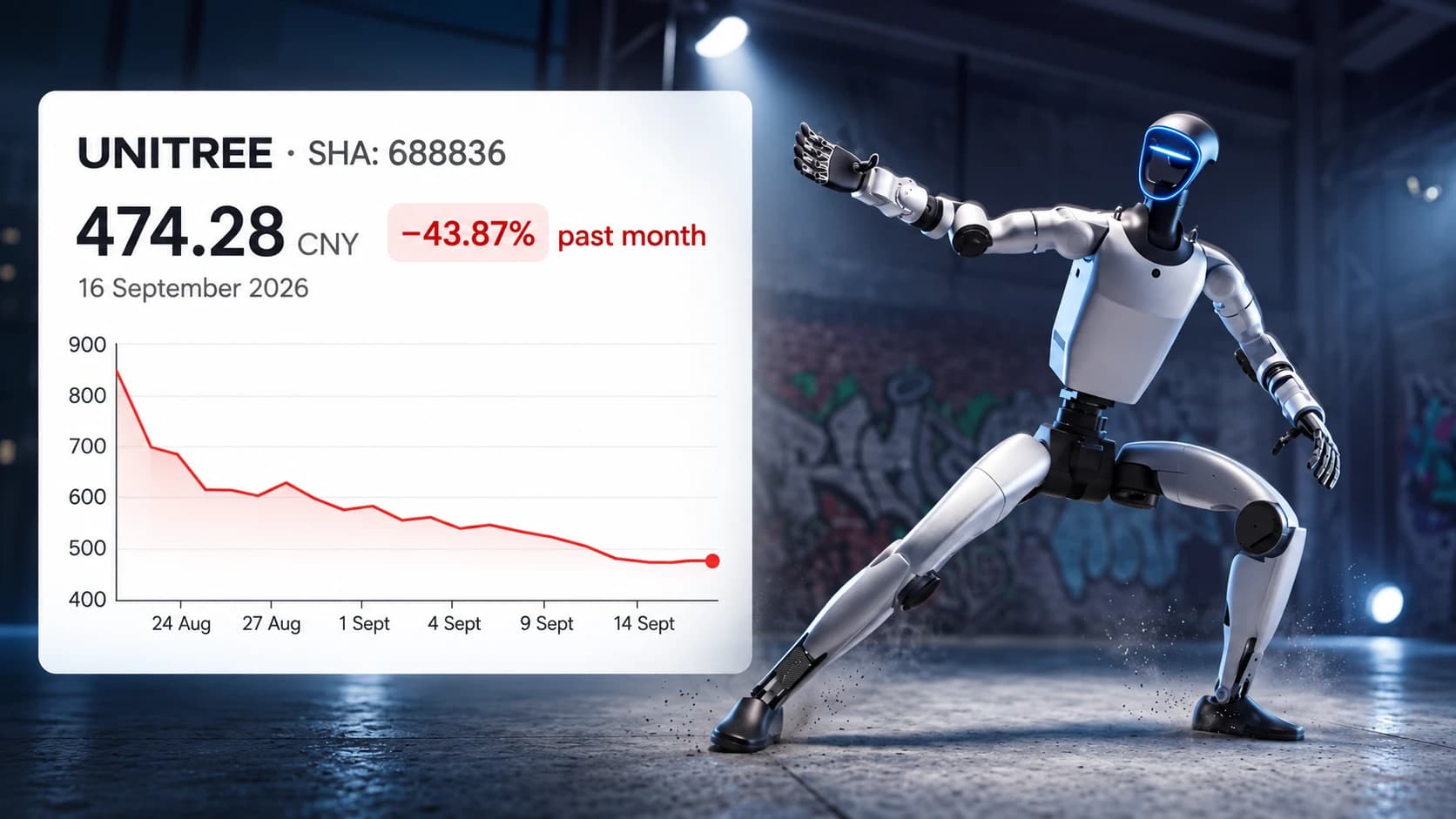
Unitree’s Stock Slump Puts China’s Robot IPOs Under Scrutiny

The weekly humanoid robotics briefing
One email a week: the launches, funding and research that mattered, with context from Humanoids Daily.
Read recent issues