- Published on
EngineAI Joins the Manufacturing Race: One Humanoid Every 15 Minutes at New Shenzhen Base
One tap, and our reporting appears more often in your Google Top Stories. It makes a real difference to a small newsroom.

- EngineAI has officially commissioned its Intelligent Manufacturing Base in Shenzhen's Nanshan District, claiming a production rate of one humanoid robot every 15 minutes.
- This aggressive throughput is heavily supported by the company's recent $200 million Series B funding, which brought manufacturing titan Luxshare Precision onto its cap table.
- A newly released factory video emphasizes on-site, unedited reality ("No AIGC. No CGI"), directly addressing past controversies over the authenticity of its high-impact T800 marketing.
- The company is targeting a "ten-thousand-level large-scale delivery capacity," a goal that aligns with its previously stated roadmap to deliver 4,000 to 5,000 units in 2026.
The humanoid robotics sector is rapidly transitioning from a battle of dynamic agility demos to a grueling war of factory throughput. EngineAI, a robotics firm recently bolstered by massive industrial investment, has officially commissioned its Intelligent Manufacturing Base in the Nanshan District of Shenzhen.
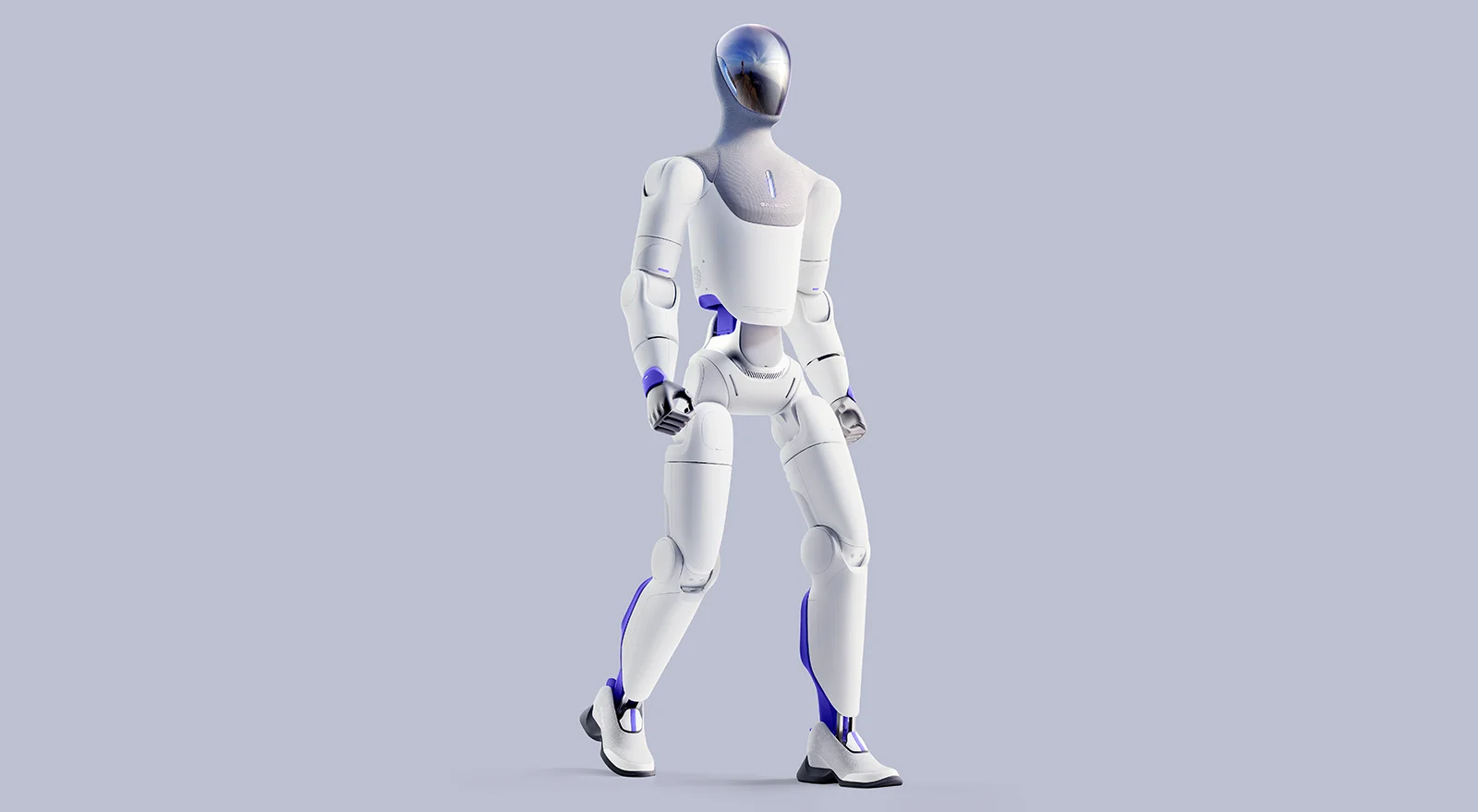
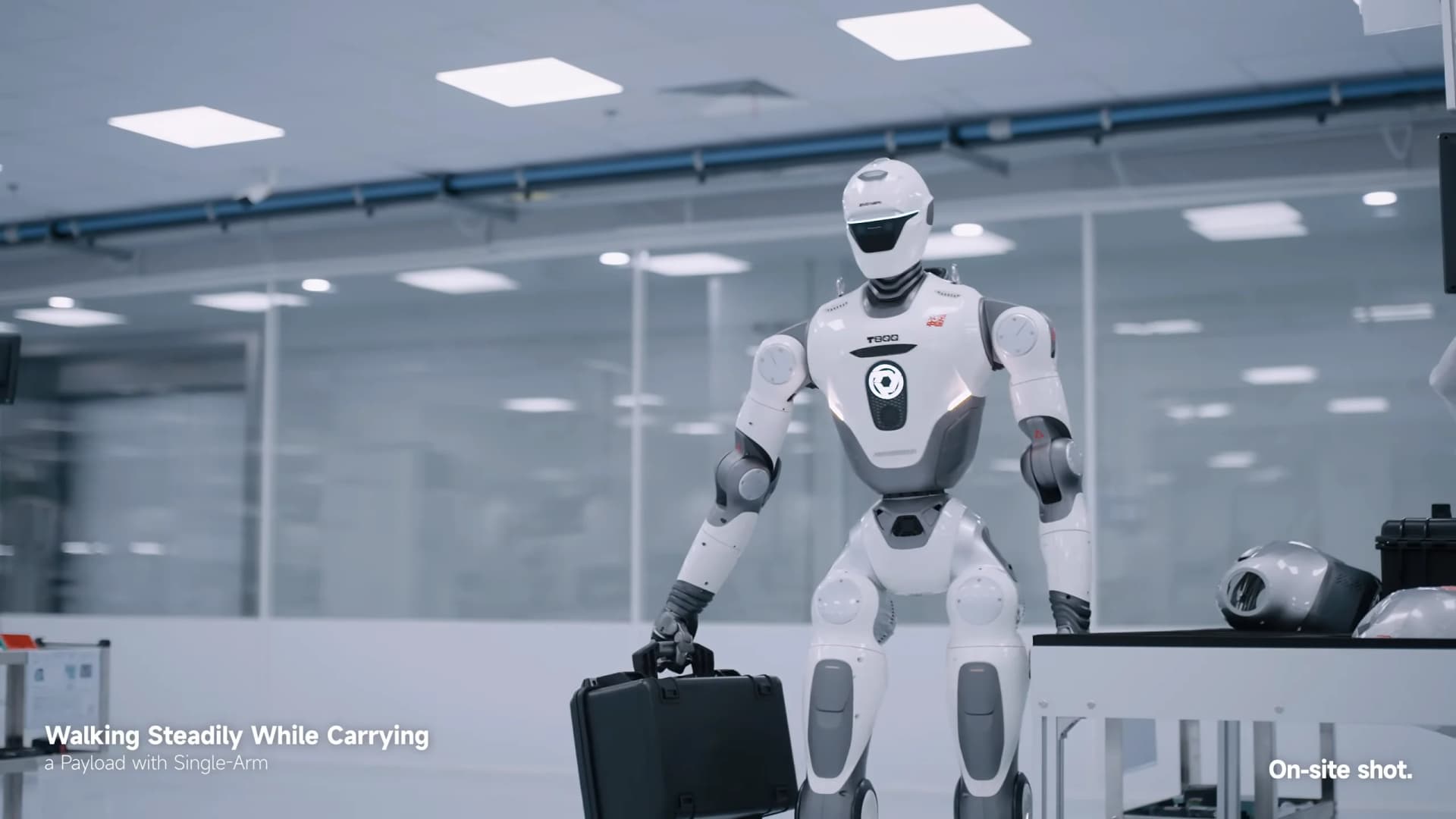
To mark the occasion, the company released a dramatic video documenting its "Factory Building Uplifting" demonstration project. The footage shows the first batch of T800 and PM01 humanoids rolling off the production line.

The "Ten-Thousand-Level" Sprint & The Luxshare Advantage
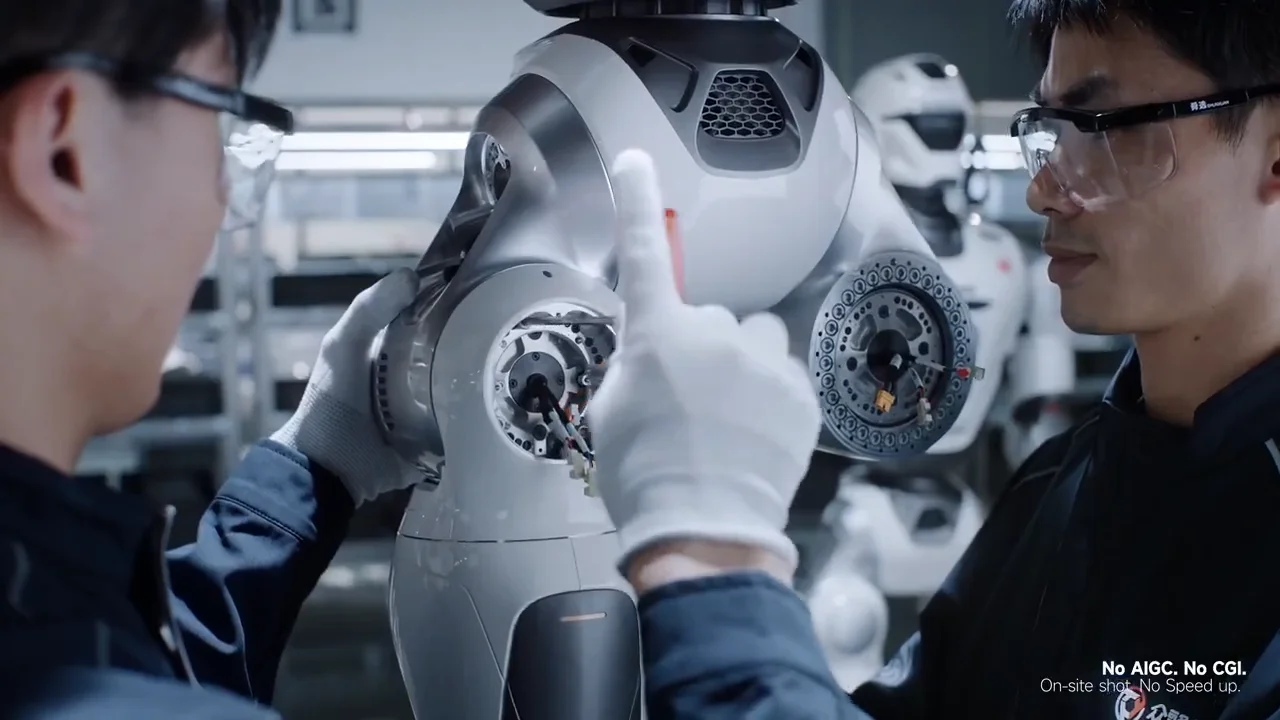
The newly released footage provides a detailed look at EngineAI's integrated, closed-loop manufacturing process. Both human technicians and traditional robotic arms are seen working in tandem to assemble joints, dispense industrial adhesives, and conduct intricate wiring.
According to the on-screen overlays, this intelligent manufacturing upgrade has boosted production efficiency by 40%. The result is a bold claim: one complete humanoid robot rolling off the line every 15 minutes.
The weekly humanoid robotics briefing
One email a week: the launches, funding and research that mattered, with context from Humanoids Daily.
Read recent issuesWhile such numbers might have seemed impossible for the startup a year ago, they are directly contextualized by EngineAI's recent $200 million Series B funding. That round was co-led by Luxshare Precision, a massive electronics manufacturer and key Apple supplier. By leveraging Luxshare's supply chain expertise, EngineAI is aggressively bridging the gap between prototyping and mass production. The company has already set a target to deliver between 4,000 and 5,000 units in 2026, aiming for what the new video calls a "ten-thousand-level large-scale delivery capacity."
Proving the Process: Battling the CGI Ghosts
Perhaps the most notable element of EngineAI's announcement is its defensive posture regarding the footage itself. Throughout the video, a persistent text overlay reminds viewers: "No AIGC. No CGI. On-site shot. No Speed up."
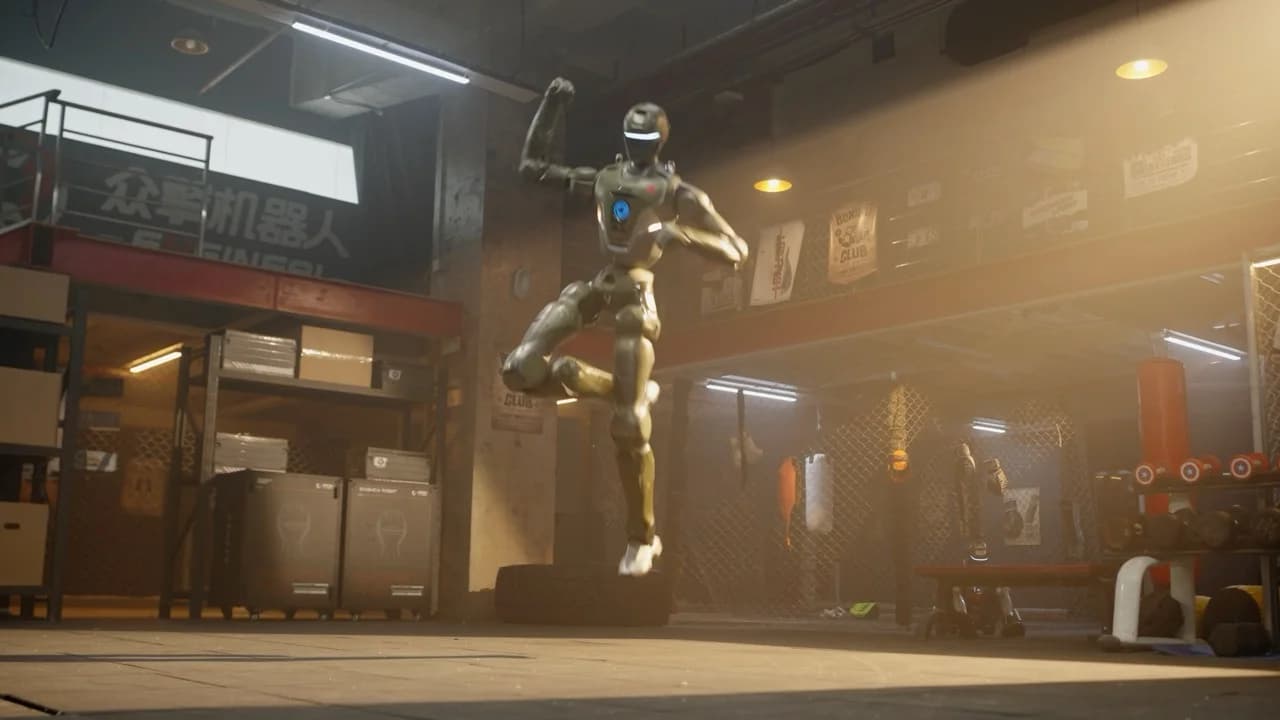
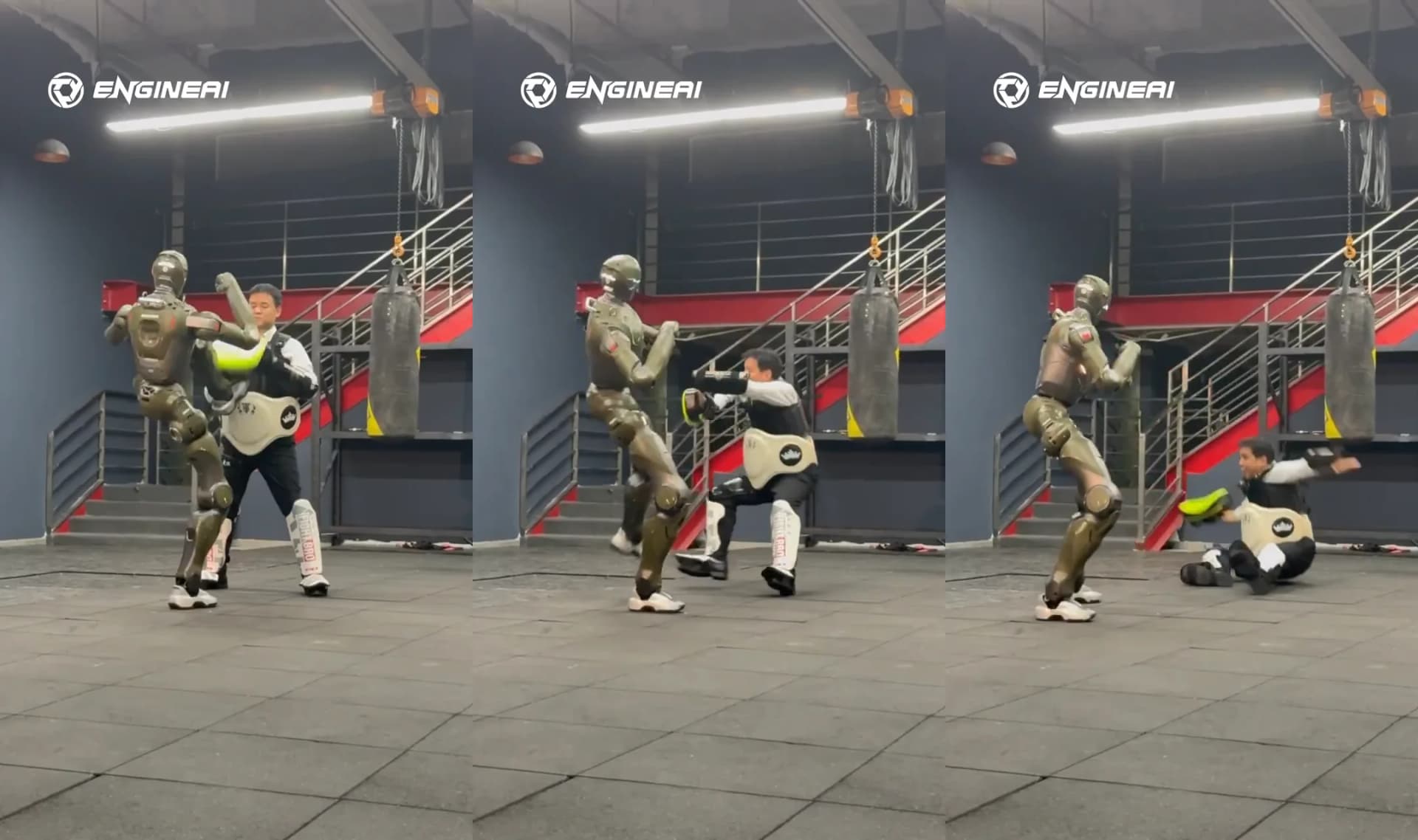
This is a direct response to the intense scrutiny the company has faced since officially unveiling the T800 as an "action movie star". When the T800 was first shown performing flying kicks, the cinematic quality led to widespread accusations of visual effects trickery. In response, EngineAI was forced to release raw behind-the-scenes footage , and the CEO even took the extraordinary step of acting as a human punching bag to prove the machine's 450 N·m joint torque was real.
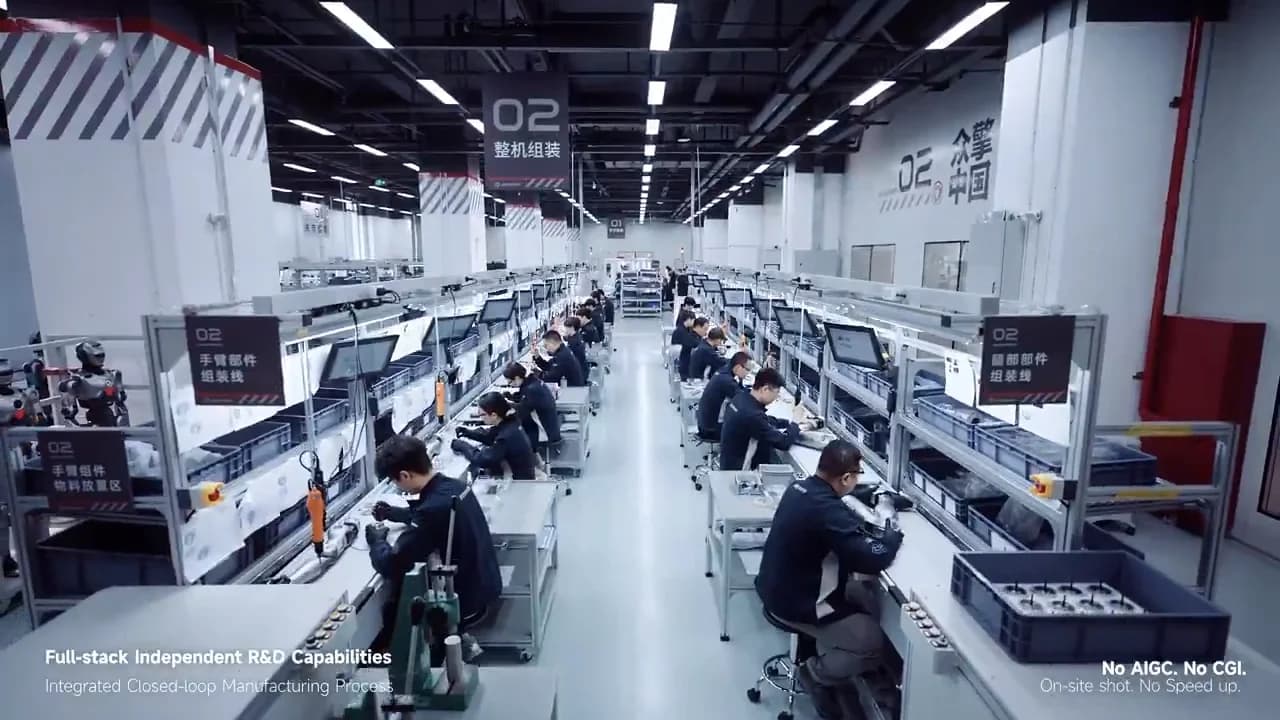
Now, in an industry saturated with slick marketing sizzle reels, EngineAI is pivoting to total transparency. The company emphasizes full-chain capabilities—spanning R&D, manufacturing, quality control, and delivery. Before a T800 or PM01 leaves the facility, it reportedly undergoes 79 full-dimensional quality inspections and 46 simulated working condition tests.
The Expanding Global Battleground
The commissioning of the Honghualing Base adds fuel to what has become a high-stakes "numbers war" in the humanoid sector. Chinese firms like Unitree and UBTECH have been publicly sparring over shipment leads, while AGIBOT recently claimed it passed the 10,000-unit milestone.
Simultaneously, American competitors are making their own factory floor flexes. Figure recently reported a 24x throughput increase, and 1X is aggressively pushing its vertically integrated Hayward factory.
With pre-orders for the T800 starting at a highly competitive $25,000, EngineAI is proving that the race to commoditize humanoid hardware is accelerating. The narrative has fundamentally shifted: the question is no longer whether a humanoid can do a backflip, but whether its manufacturer can consistently build it every 15 minutes without fail.
Share this article
Read next
- Published on
- Reading time
- 4 min read
Brawlers or Builders? EngineAI’s T800 Navigates the Split Between Factory Work and Combat Sports
- Published on
- Reading time
- 3 min read
EngineAI Secures $200 Million Series B as Manufacturing Giant Luxshare Joins the Cap Table
- Published on
- Reading time
- 4 min read
EngineAI Opens Global Registration for URKL: The $1.4 Million Race for Humanoid Supremacy
- Published on
- Reading time
- 4 min read
EngineAI Details URKL League: A $1.4 Million Gold Belt and the Future of Bipedal Brawling
- Published on
- Reading time
- 3 min read
Arena Ready: EngineAI Slates URKL Debut Following CES Launch and State Endorsement
- Published on
- Reading time
- 4 min read
EngineAI CEO Takes a Kick from T800 Robot to Settle CGI Debates
The weekly humanoid robotics briefing
One email a week: the launches, funding and research that mattered, with context from Humanoids Daily.
Read recent issues