- Published on
Figure AI Pops Champagne as Autonomous Marathon Crosses 200 Hours Without Hardware Failure
One tap, and our reporting appears more often in your Google Top Stories. It makes a real difference to a small newsroom.


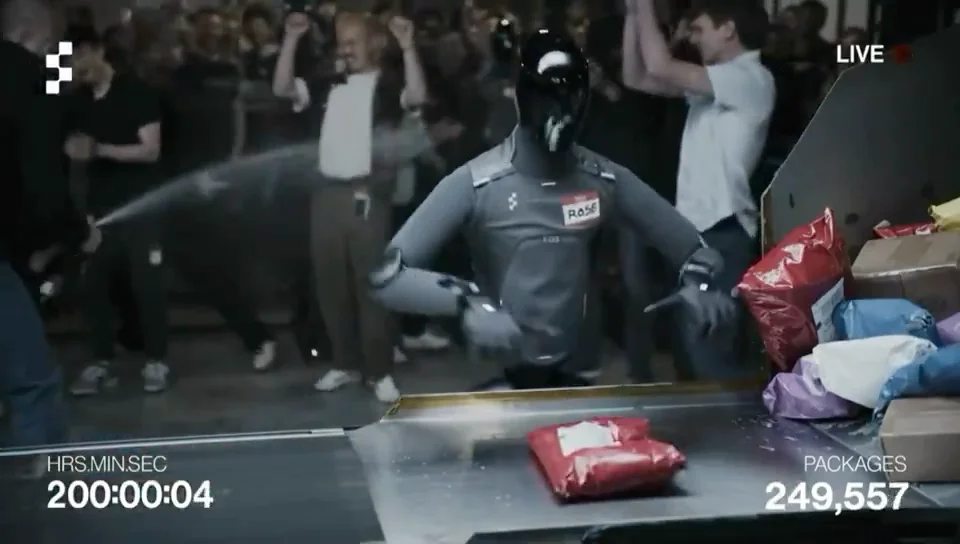
- Figure AI has officially concluded its unedited, autonomous livestream at the 200-hour mark, processing nearly 250,000 packages.
- CEO Brett Adcock confirmed the 200-hour run experienced zero hardware failures, a massive mechanical milestone for the Figure 03 fleet.
- The historic run started as a simple 8-hour challenge response before escalating into a gruelling man-versus-machine battle.
The high-stakes transparency experiment unfolding at Figure AI's Sunnyvale headquarters has finally come to an end, and it did so in spectacular fashion.
When CEO Brett Adcock originally promised an 8-hour unedited livestream of the company’s humanoid robots working a logistics line, it was meant to be a direct response to a social media challenge from industrial automation veteran Dr. Scott Walter. Walter had challenged the industry to prove humanoids could survive an 8-hour shift at human speeds without intervention.
Figure didn't just accept the challenge—they blew past it by a factor of twenty-five.
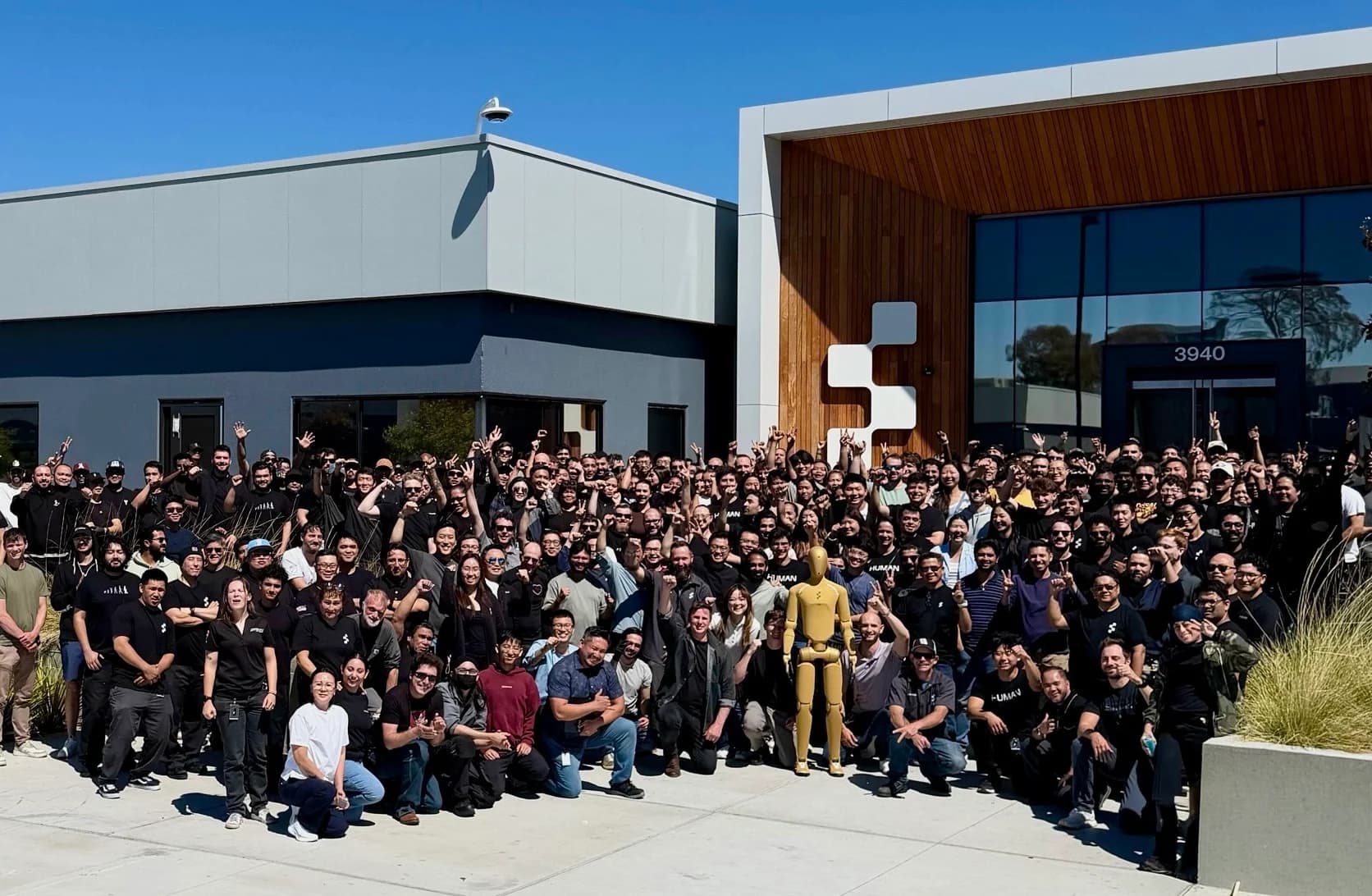
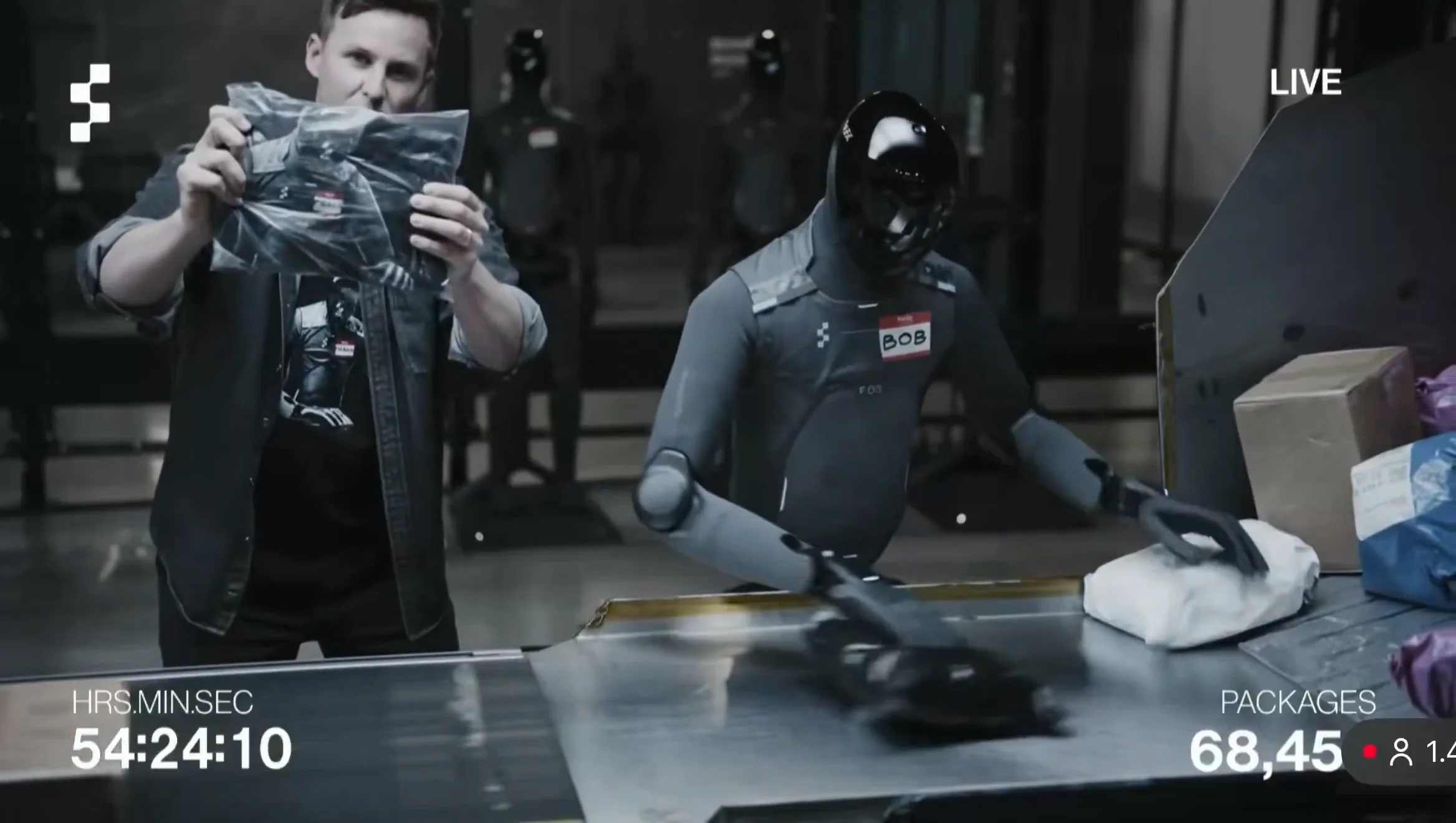
As the on-screen clock ticked over to the 200-hour mark, the Figure team gathered behind the active workstation to celebrate, popping champagne as their charcoal-grey robot, wearing a name tag reading "ROSE", continued to sort packages. The final tally on the livestream dashboard? A staggering 249,560 packages processed.
The weekly humanoid robotics briefing
One email a week: the launches, funding and research that mattered, with context from Humanoids Daily.
Read recent issuesTaking to X (formerly Twitter) to mark the occasion, Adcock posted: "We just wrapped what began as an 8-hour challenge - and it ran for 200 hours without a failure. Shoutout to the team for the hardcore engineering behind F.03 and the robust Helix models powering it."
What "Without a Failure" Actually Means
For automation veterans, the phrase "without a failure" carries a very specific weight. As Adcock has clarified in previous milestones, this refers to the robot's hardware and its core autonomy stack. Over the course of 200 continuous hours, none of the Figure 03 robots suffered a catastrophic mechanical breakdown or a system-halting crash.
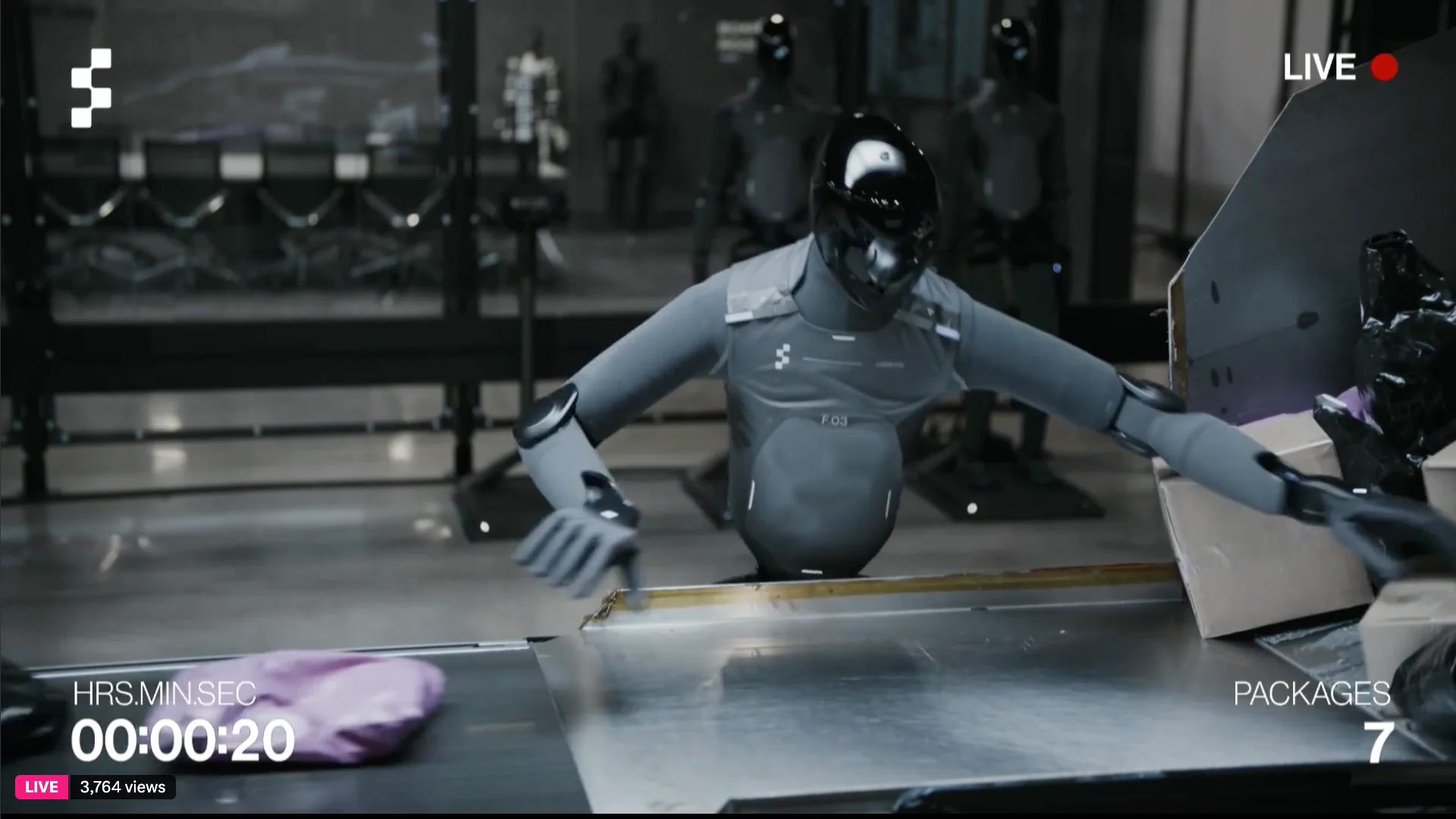
To pull this off, Figure relied on an autonomous fleet rotation protocol. Whenever a robot's roughly four-hour battery life ran low, it would seamlessly swap out with another unit and walk to a wireless charging dock built into its feet.
Was the sorting 100% flawless? Not exactly. The "Software 2.0" approach, driven entirely by the Helix-02 neural network computing actions from raw camera pixels, still has its quirks. Viewers who stayed glued to the feed noted occasional edge-case errors, such as packages falling off the belt or items failing to be oriented perfectly.
But an occasional dropped box is a "package failure," not a "robot failure". Human workers drop boxes too. Speaking of human workers, let's not forget the company intern, Aime, who raced against the machines earlier in the stream. While Aime barely won his 10-hour sprint, he walked away with blistered fingers and a heavily fatigued forearm. The robots, on the other hand, kept sorting for another 190 hours without a single complaint.
The $39 Billion Flex
For a startup currently valued at $39 billion, this 200-hour marathon serves as the ultimate proof of concept. The hardware has proven it can physically survive the grueling repetition of a massive logistical shift.
Sure, flipping boxes is a relatively narrow validation of generalized AI. But by demonstrating unprecedented mechanical reliability and an autonomy stack that can run for over a week straight, Figure has sent a very clear, highly carbonated message the era of continuous, multi-day humanoid labor isn't a futuristic concept anymore. It's already happening.
Share this article
Read next
- Published on
- Reading time
- 6 min read
Figure CEO Brett Adcock Claims Humanoids Are Already Delivering ROI Amid Severe Labor Shortages
- Published on
- Reading time
- 4 min read
Stepping Up: Figure 03 Achieves Autonomous Ladder Climbing, Reigniting the Bipedal Debate
- Published on
- Reading time
- 4 min read
A Golden Milestone: Figure Manufactures Its 1,000th Figure 03 Humanoid
- Published on
- Reading time
- 5 min read
Man vs. Machine: Figure AI Intern Edges Out Humanoid Fleet in 10-Hour Sorting Challenge
- Published on
- Reading time
- 8 min read
Beyond the 60-Hour Mark: Figure AI’s Endurance Marathon Signals Playbook for Figure 4 and Supply Chain Independence
- Published on
- Reading time
- 4 min read
Live Now: Figure 03 Hits Blistering 2.6-Second Throughput in 8-Hour Unedited Shift


The weekly humanoid robotics briefing
One email a week: the launches, funding and research that mattered, with context from Humanoids Daily.
Read recent issues