- Published on
From High Seas to High Streets: China’s Humanoid Gig Economy Takes Off
One tap, and our reporting appears more often in your Google Top Stories. It makes a real difference to a small newsroom.

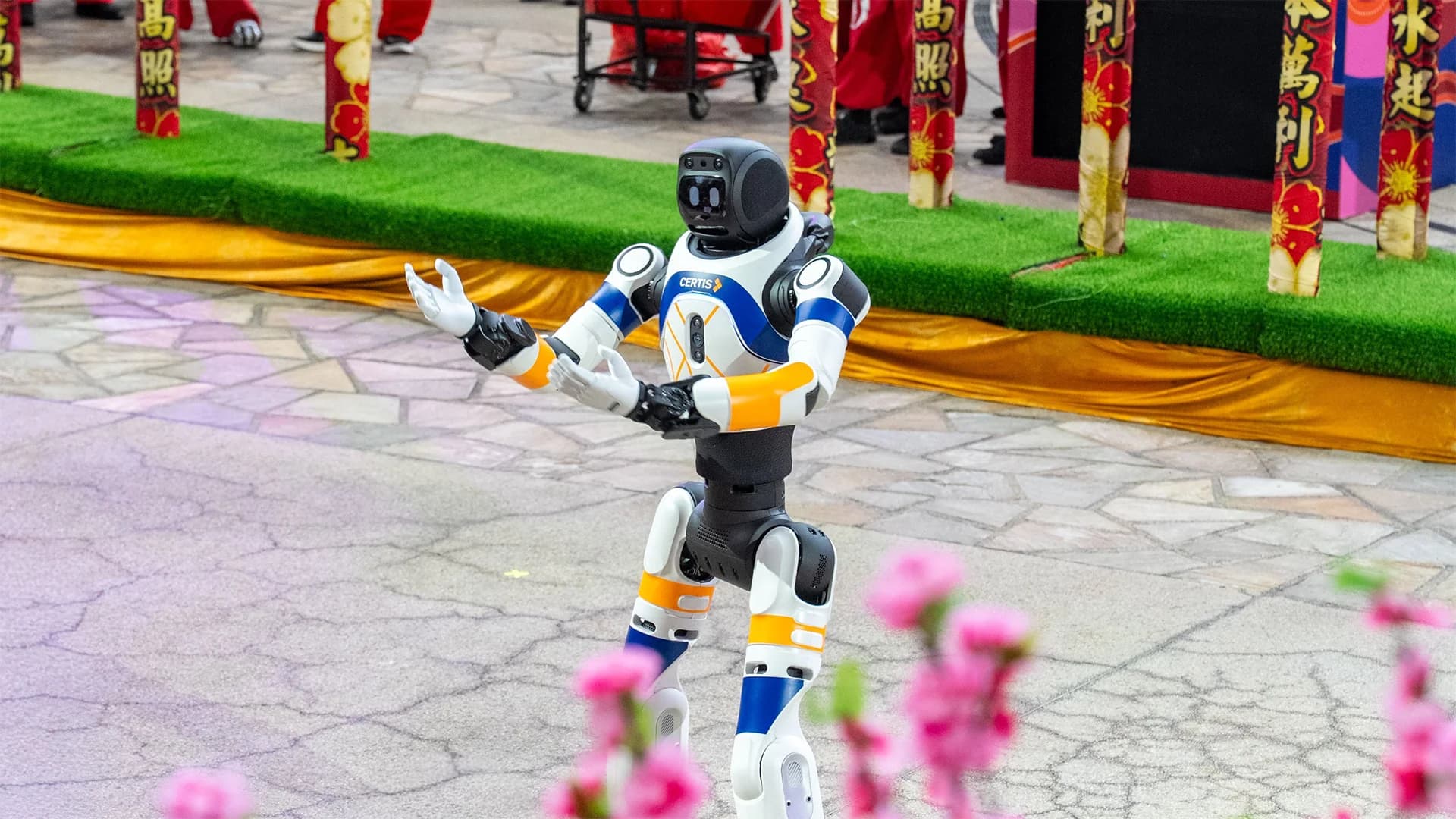
Following the recent news that MSC Cruises has enlisted Unitree humanoids for shipboard entertainment, the broader humanoid market in China is signaling a shift from technical demonstrations to active commercialization. New reports from Wuhan and Shanghai suggest that the industry is no longer waiting for "general purpose" utility to arrive; instead, it is building a "robot gig economy" and specialized retail infrastructure to generate immediate revenue.
The Humanoid Gig Economy
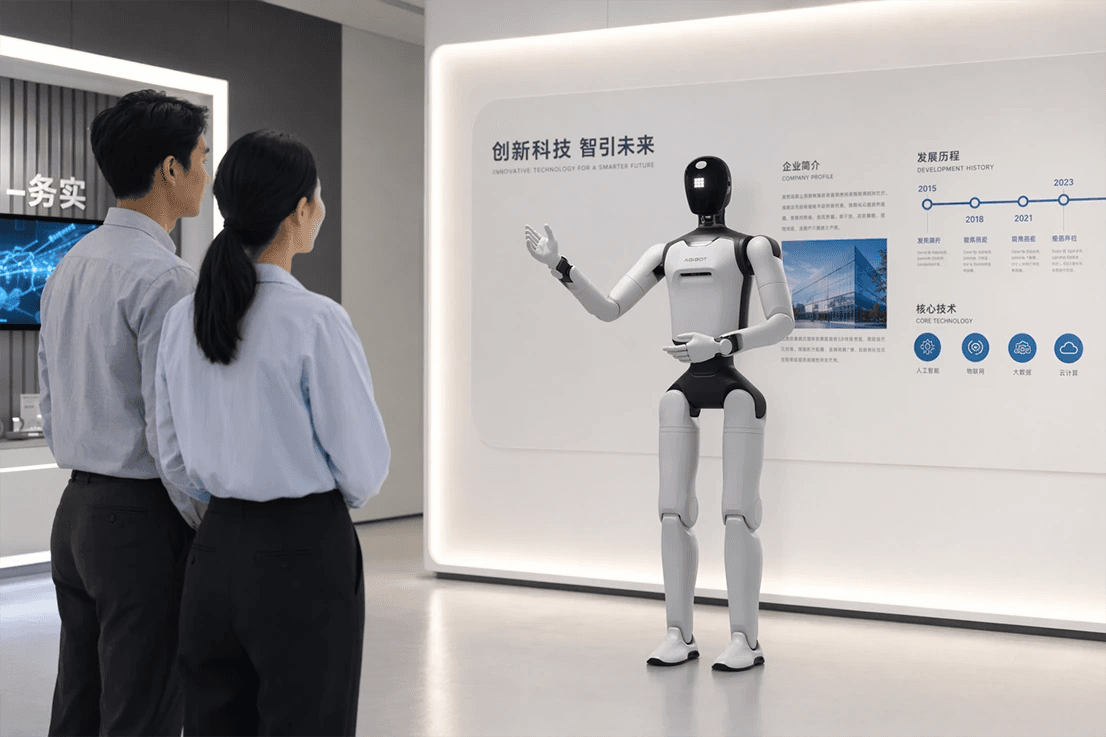
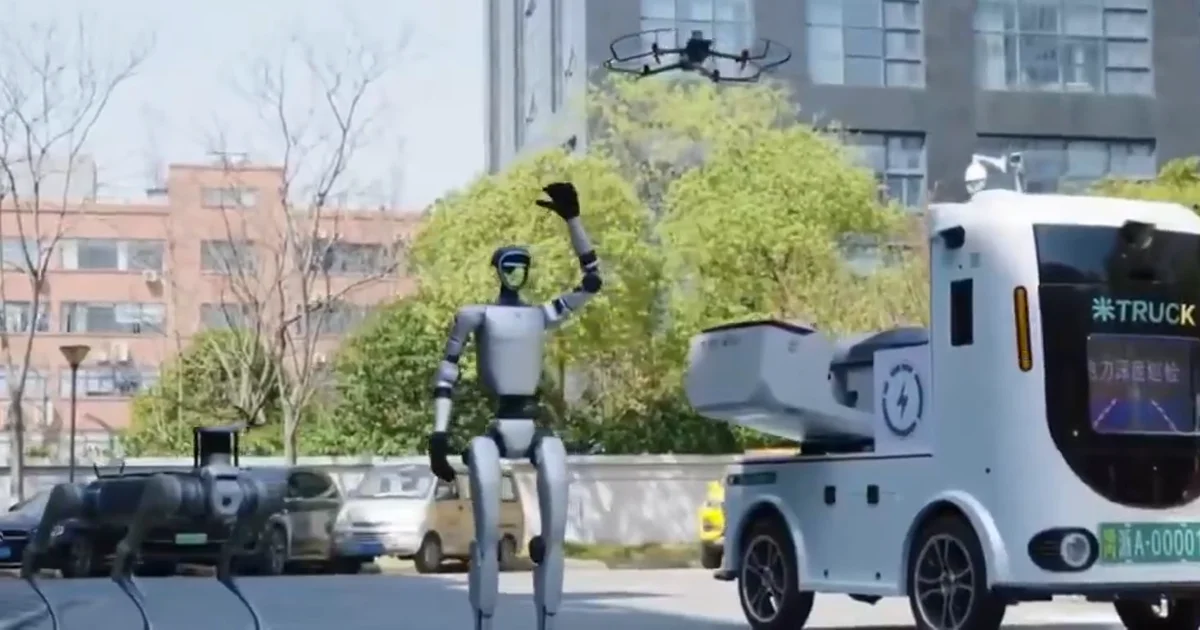
A significant driver of this commercial shift is the emergence of specialized rental platforms. Robotics firm AgiBot, in collaboration with Flycode and Shanghai Electric Leasing, has launched an ecosystem alliance focused on short-term humanoid rentals. This model targets commercial events, corporate gatherings, and cultural celebrations, allowing businesses to "hire" robots for specific "gigs" rather than committing to permanent ownership.
According to industry data, the rental market is already showing traction:
- Pricing & Accessibility: A "festive celebration bundle" is priced at approximately 2,500 yuan ($358.87) daily, including two humanoid robots and a robotic dog.
- Platform Growth: Since its launch on December 22, 2025, the AgiBot-supported platform has attracted over 160,000 registered users, with daily orders stabilizing at over 200.
- Service Standardization: Rentals typically include an on-site technical operator to support the deployment, lowering the technical barrier for small and medium-sized businesses.
This "robot-as-a-service" approach is bolstered by software like AgiBot’s LinkCraft, which allows non-technical users to choreograph performances by simply uploading video of human movements. Industry projections estimate that China's humanoid rental market could reach 10 billion yuan by 2026.
The weekly humanoid robotics briefing
One email a week: the launches, funding and research that mattered, with context from Humanoids Daily.
Read recent issuesWatch AgiBot's introduction to LinkCraft below:
Retail Evolution: The 7S Store
While rentals dominate the event space, the retail landscape is evolving through the "7S" store model. In Wuhan’s "Optics Valley," the Hubei Humanoid Robot Innovation Center has opened China’s first 7S humanoid store, adapting the automotive 4S concept (Sales, Service, Spare parts, Survey) by adding Solution, Show, and School functions.
In its first two months of operation, the Wuhan store reported:
- Foot Traffic: Approximately 18,000 visits from locals and tourists.
- Revenue: Cumulative revenue of nearly 615,000 yuan ($88,600), driven by both sales and commercial rentals.
- Product Range: The store stocks 17 different models, with prices ranging from 149 yuan for entry-level kits to over 700,000 yuan ($100,000+) for industrial-grade machines.
The "School" component of the 7S model aims to address the industry's talent gap, providing training for over 1,000 participants, including professional maintenance technicians and youth interested in robotics programming.
Strategic Consolidation Amid the "Numbers War"
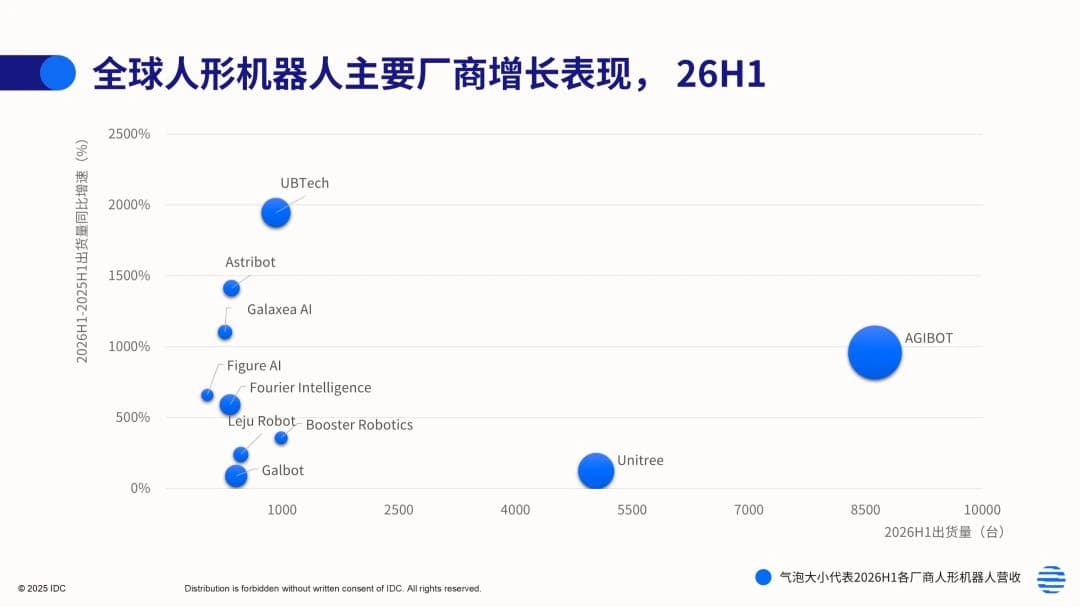
This move toward retail and rental infrastructure comes as manufacturers like AgiBot and Unitree engage in a high-stakes war for shipment dominance. While Unitree has claimed a lead by reporting 5,500 "pure humanoid" shipments in 2025, AgiBot’s "mixed-fleet" strategy—which includes wheeled platforms like the Genie G-Series—has allowed it to penetrate a wider variety of sectors including education and data collection.
Analysts note that the pivot toward entertainment and short-term gigs is a pragmatic response to the current "utility gap." While humanoids may not yet be ready for complex, unstructured factory labor, their "spectacle value" provides a clear ROI for commercial clients. As Zhang Lihua of Fudan University observes, the industry is shifting from pursuing purely general-purpose machines toward scenario-specific capabilities that can survive in a commercially sustainable market today.
Share this article
Read next
- Published on
- Reading time
- 3 min read
IDC Puts H1 Humanoid Shipments Near 25,000, With AGIBOT Leading
- Published on
- Reading time
- 3 min read
AGIBOT Says A3 Ultra Is Going to Work in Hotels, Shops and Metro Inspection
- Published on
- Reading time
- 5 min read
AGIBOT Deepens European Push at IFA 2026 with TÜV Rheinland Certification and Tekpoint Retail Alliance
- Published on
- Reading time
- 5 min read
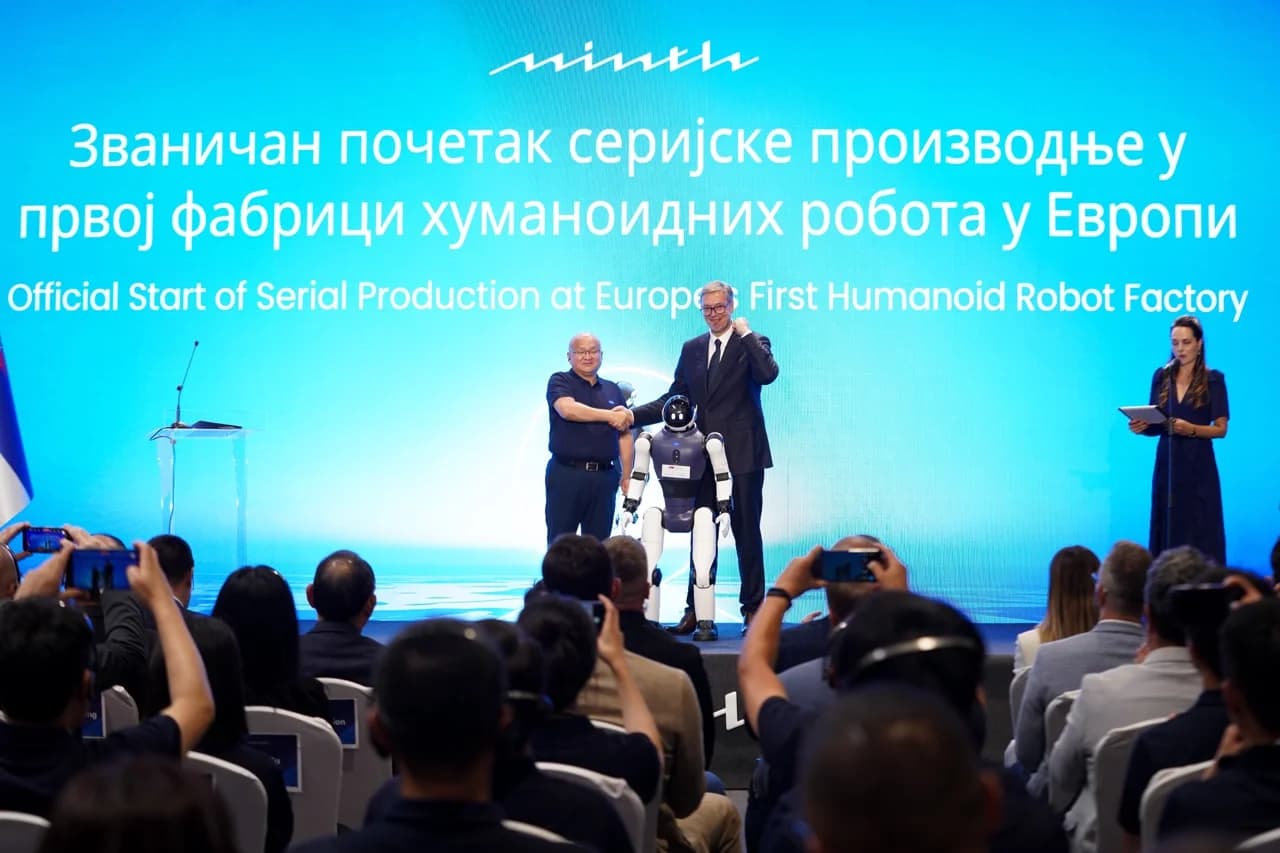
Minth Group and AGIBOT Launch Europe’s First Humanoid Mass Production Line in Serbia
- Published on
- Reading time
- 5 min read
AGILINK Hits Unicorn Status: AGIBOT’s Dexterous Hand Spin-off Raises Hundreds of Millions
- Published on
- Reading time
- 4 min read
State Grid’s $995 Million Bet: 8,500 Robots to Spearhead "Deployment Year One" in Energy
The weekly humanoid robotics briefing
One email a week: the launches, funding and research that mattered, with context from Humanoids Daily.
Read recent issues