- Published on
Kinetix AI Unveils KAI: A 115-DoF Humanoid Aiming for "Physical Intelligence"
One tap, and our reporting appears more often in your Google Top Stories. It makes a real difference to a small newsroom.


Your guide
Rich Robinson
Jee Chee Ren · Executive tour
See China’s AI and robotics ecosystem first-hand.
Six days exploring AI, robotics and advanced manufacturing.
With Rich Robinson, Clinical Professor of Entrepreneurship at Peking University
Beijing · Guangzhou · Shenzhen
29 November–4 December 2026
Referral partnership · We earn a commission on referred bookings.
- Kinetix AI (also known as Kai Robotics) launched KAI, a humanoid with 115 degrees of freedom
- The platform features a 36-DoF dexterous hand and a full-body tactile skin system with 18,000 sensors capable of detecting 0.1N of pressure.
- KAI is powered by semi-solid-state battery technology, similar to the energy solutions being pursued by XPENG Robotics.
- The company utilizes a unique "first-person" data strategy via the KAI Halo, a head-mounted device used to capture human movement and environment data.
On April 26, 2026, Shenzhen-based startup Kinetix AI (also operating as Kai Robotics) held its "GIFTED" press conference to unveil KAI, a full-sized humanoid robot designed to bridge the gap between mechanical automation and human-centric service.

Record-Breaking Kinematics and Dexterity
The most striking technical specification of the KAI platform is its 115 degrees of freedom (DoF) across the entire body. For context, contemporary rivals typically operate with 20 to 45 DoF. This high degree of articulation allows for a range of motion that closely mimics human flexibility, including specific capabilities such as:
- Shoulder movement: -20° to 0° lifting and -15° to 0° embracing.
- Torso flexibility: Waist bending from -15° to 75°.
- Cervical range: Neck rotation from -15° to 50°.
The robot’s hands are equally ambitious, featuring 36 DoF per hand (22 active and 14 passive joints). The passive joints act as mechanical buffers that allows the hand to conform to objects and absorb impacts without immediate computational overhead—a feat that the company says is a critical safety feature for domestic use.
Sensors and Safety: Feeling the World
To ensure safe operation in unconstrained environments, KAI is wrapped in a synthetic tactile skin containing 18,000 "tactels" or sensing points. This system allows the robot to detect forces as light as 0.1N, enabling "haptic-aware manipulation."
The weekly humanoid robotics briefing
One email a week: the launches, funding and research that mattered, with context from Humanoids Daily.
Read recent issuesSafety is further bolstered by the use of a 1.7kWh semi-solid-state battery. This choice mirrors recent trends in the Chinese robotics sector, including developments at XPENG Robotics, as semi-solid-state chemistry significantly reduces the risk of thermal runaway compared to traditional lithium-ion packs.

The KAI World Model and Data Strategy
Intelligence for the robot is driven by the KAI World Model, a closed-loop system consisting of Base, Action, and Evaluation modules. According to the company, KAI uses this architecture to predict environmental changes and assess the safety and stability of its own "candidate trajectories" before execution.
To solve the industry-wide "data bottleneck," Kinetix AI introduced the KAI Halo, a lightweight, head-mounted terminal. Human operators wear the device during their daily routines, capturing first-person video, poses, and environmental point clouds. They claim that this "first-person experience" provides a more diverse and natural dataset than traditional motion-capture setups.
Share this article
Read next
- Published on
- Reading time
- 3 min read
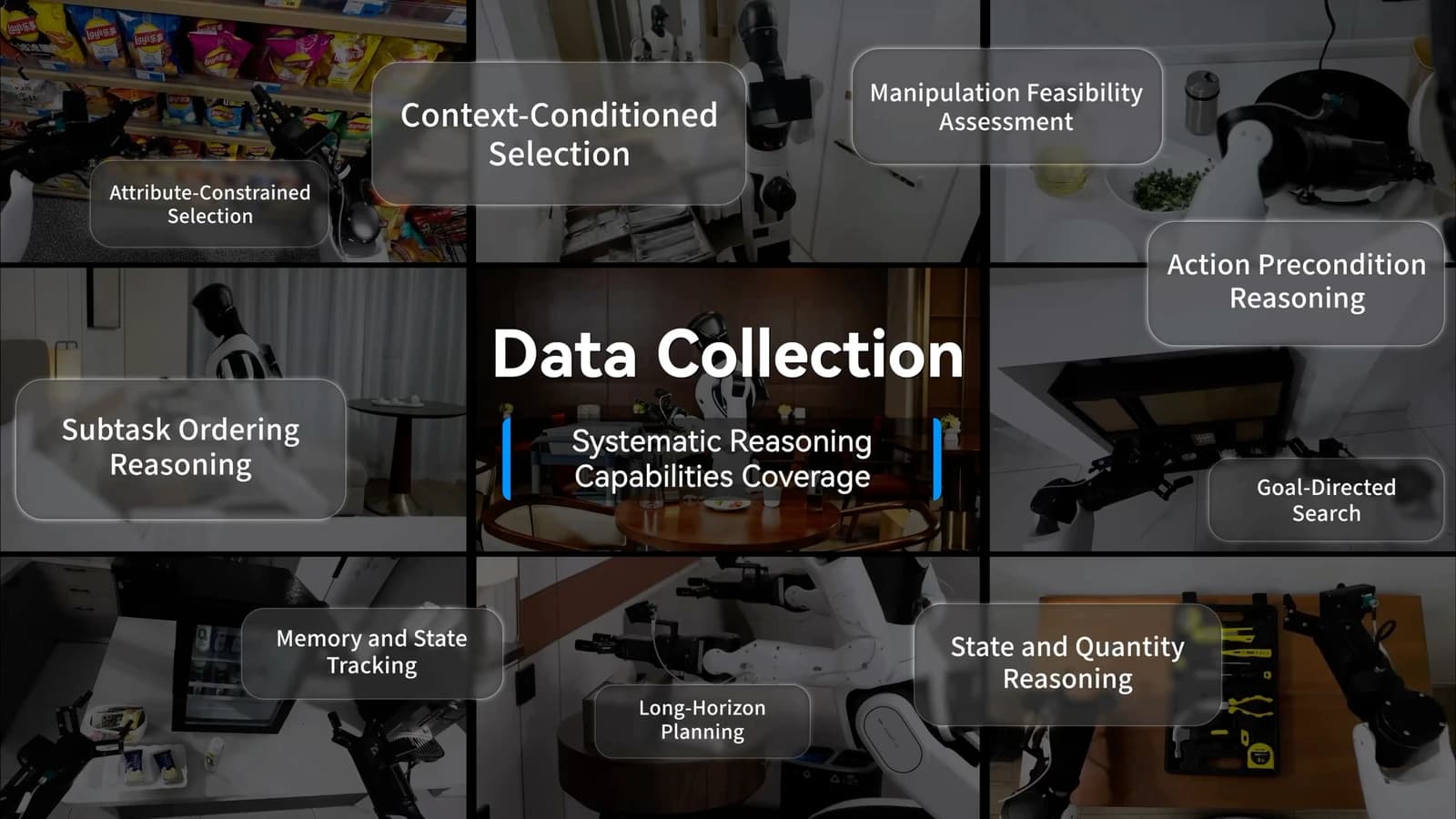
AGIBOT Releases Physical Reasoning Dataset to Connect Robot Decisions With Actions
- Published on
- Reading time
- 2 min read
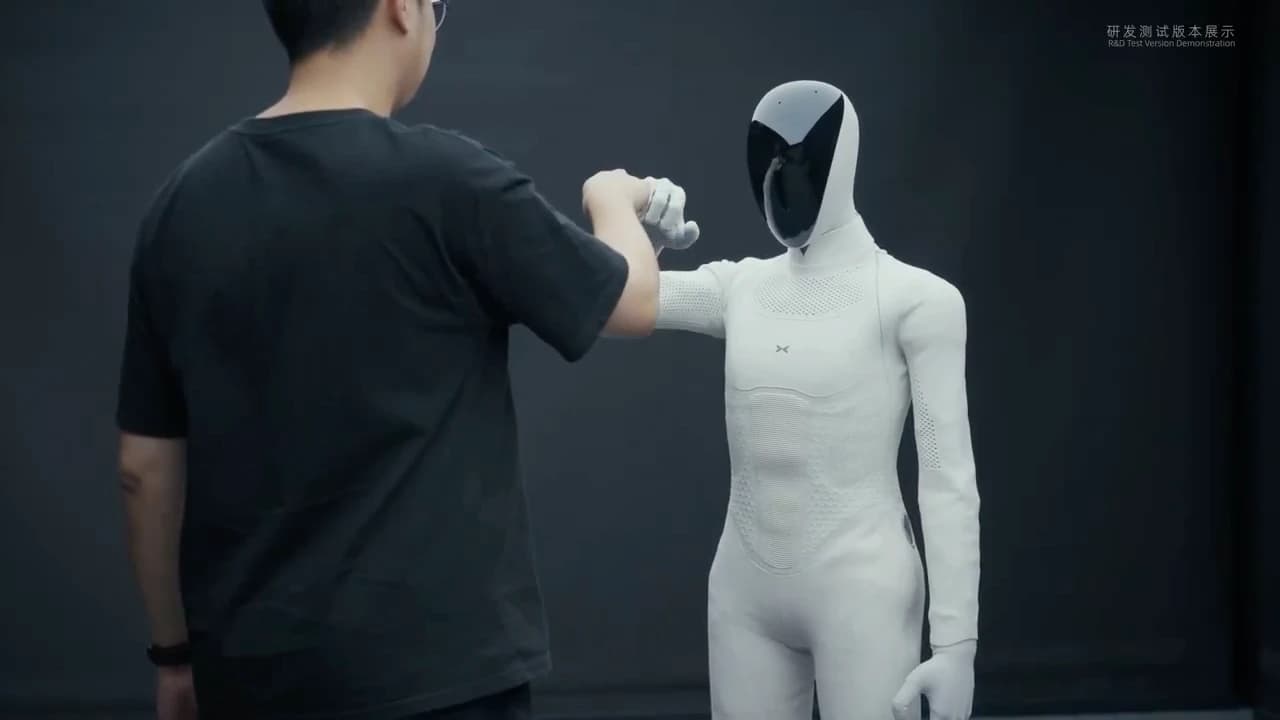
XPENG Shows IRON Switching Between Handshakes, Fist Bumps and High-Fives
- Published on
- Reading time
- 8 min read
The Unitree G1 Is Becoming a Platform for American Robot Startups
- Published on
- Reading time
- 3 min read
Noetix Robotics Files for Hong Kong IPO, Bloomberg Reports
- Published on
- Reading time
- 3 min read
Unitree’s H2-X Flips Off Cars in New Kung Fu “Guardian” Video
- Published on
- Reading time
- 3 min read
After Its Stock Surge, Unitree Warns Humanoid Commercialization Is Still in Its Early Days
The weekly humanoid robotics briefing
One email a week: the launches, funding and research that mattered, with context from Humanoids Daily.
Read recent issues