- Published on
Siemens and Humanoid Formalize Partnership Following Successful "Physical AI" Trials in Erlangen
One tap, and our reporting appears more often in your Google Top Stories. It makes a real difference to a small newsroom.


Your guide
Rich Robinson
Jee Chee Ren · Executive tour
See China’s AI and robotics ecosystem first-hand.
Six days exploring AI, robotics and advanced manufacturing.
With Rich Robinson, Clinical Professor of Entrepreneurship at Peking University
Beijing · Guangzhou · Shenzhen
29 November–4 December 2026
Referral partnership · We earn a commission on referred bookings.
- Siemens and Humanoid have officially announced a milestone in their partnership following successful autonomous logistics testing at the Siemens Electronics Factory in Erlangen.
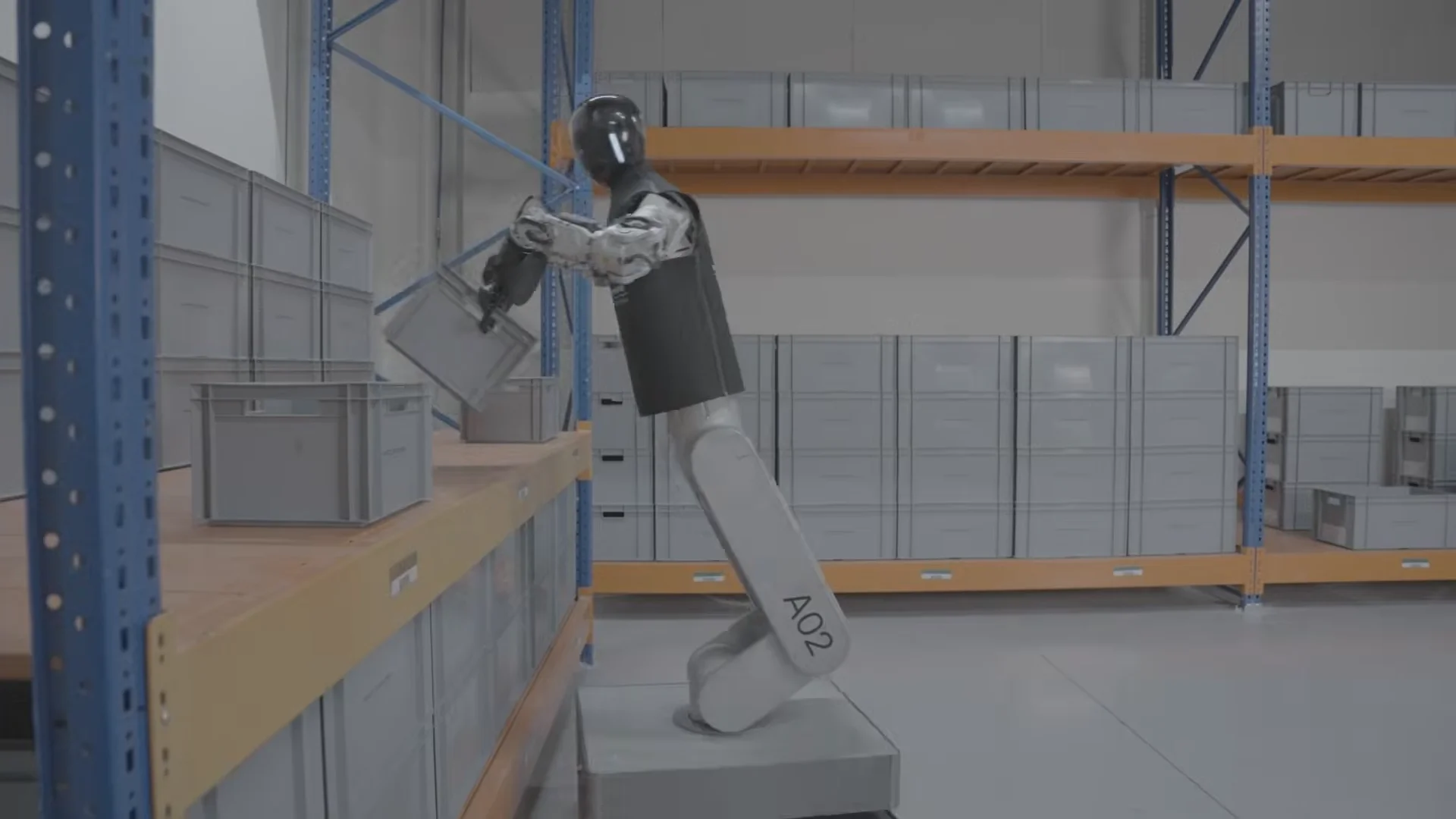
- The HMND 01 Alpha wheeled robot achieved a 90% success rate in autonomous pick-and-place tasks with a throughput of 60 tote moves per hour.
- The deployment leverages the Siemens Xcelerator portfolio and NVIDIA’s physical AI stack, including the Jetson Thor edge computer and Isaac Sim.
- This collaboration marks a shift toward "factory-grade" humanoid integration, moving beyond isolated pilots to synchronized, adaptive manufacturing workflows.
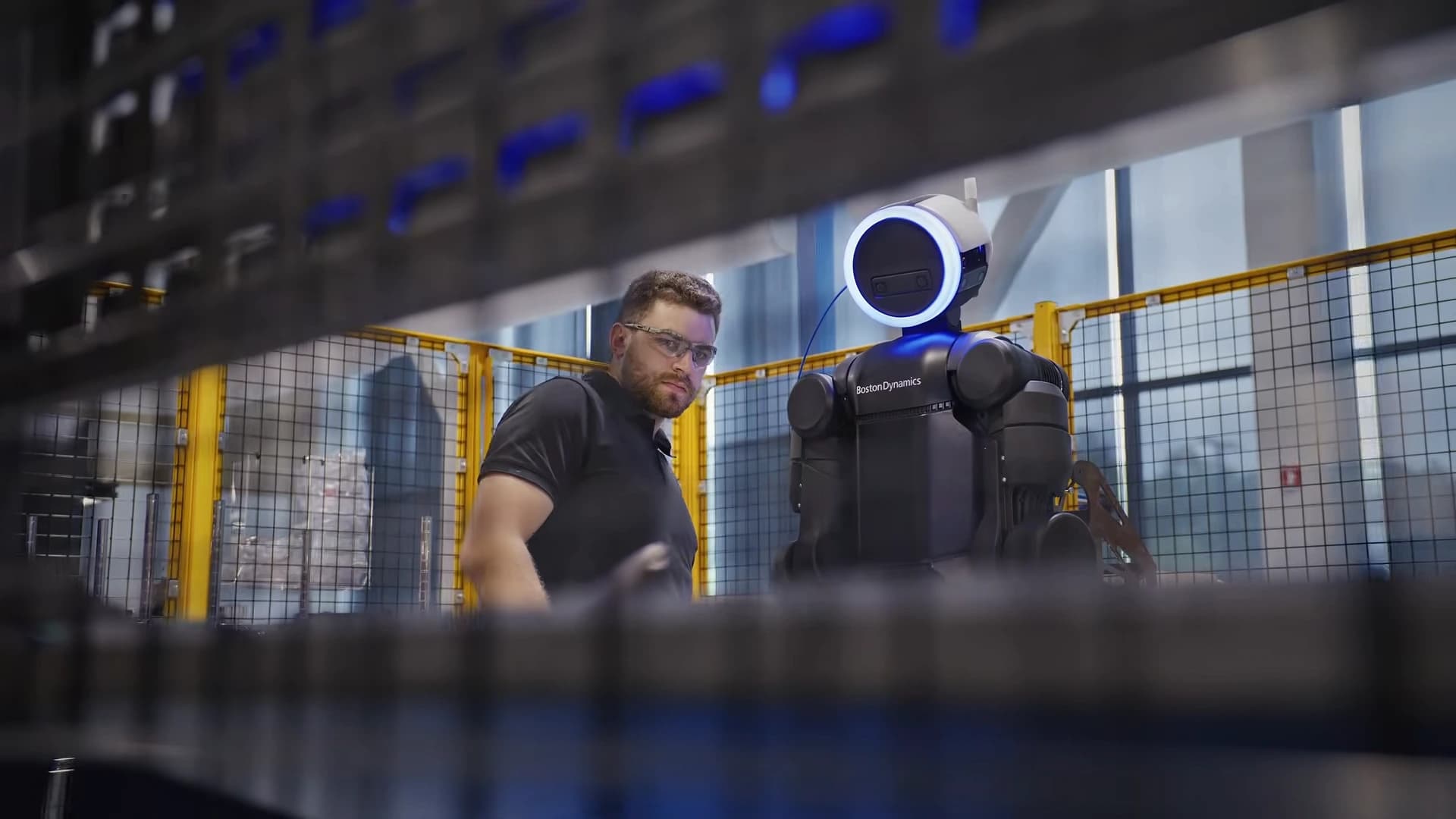
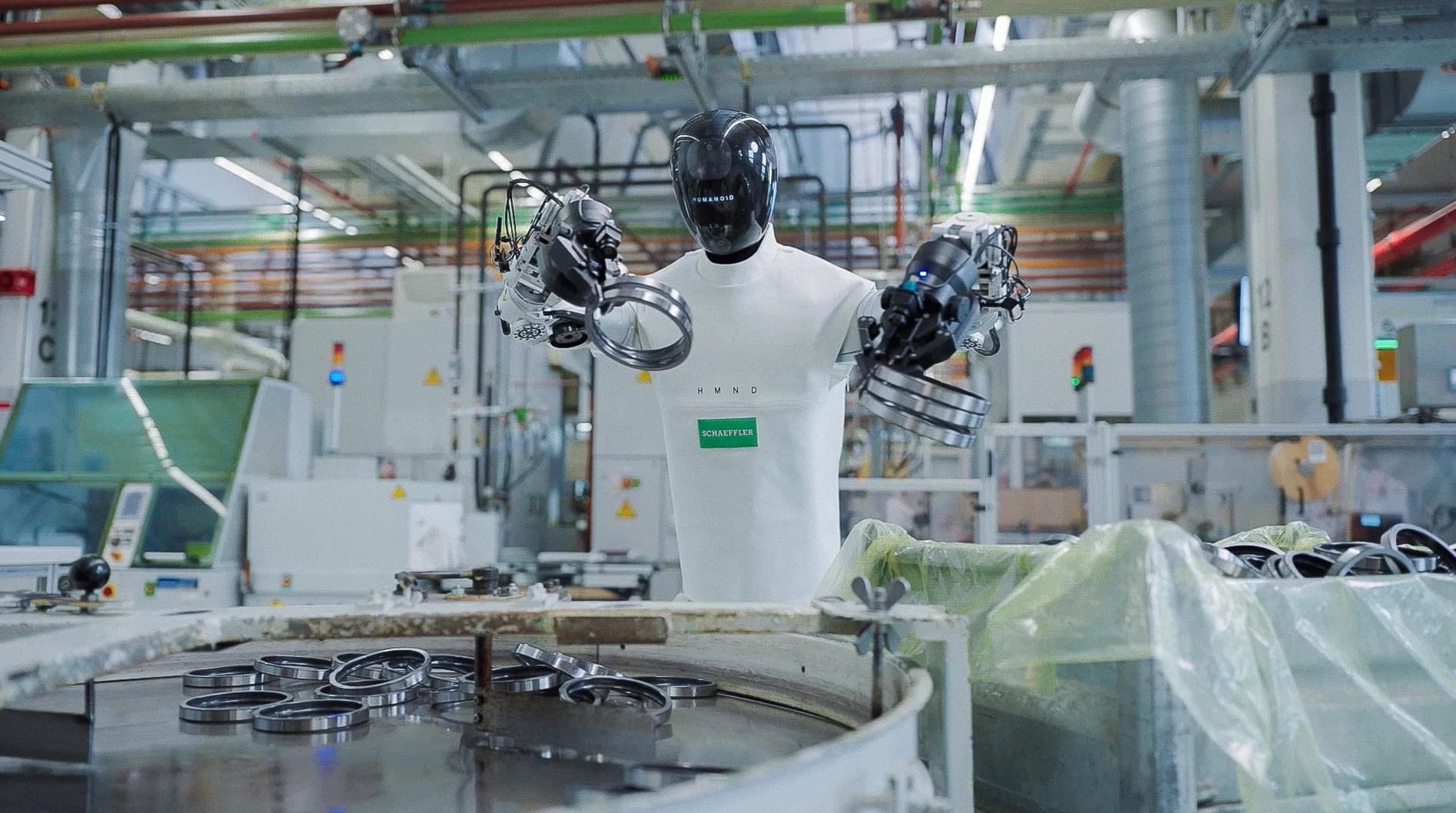
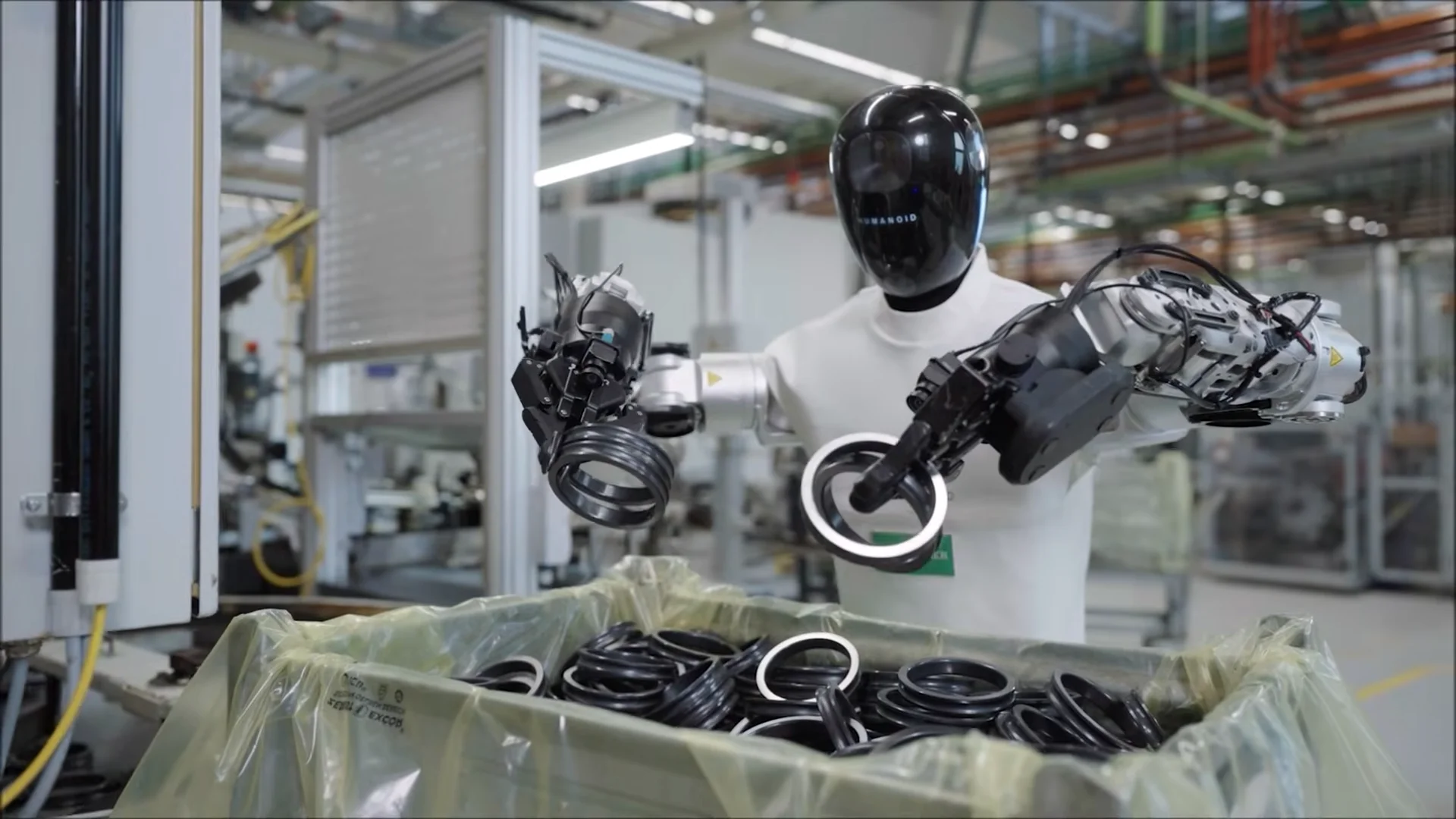
In a move that signals the growing maturity of general-purpose robotics in heavy industry, Siemens and UK-based startup Humanoid today announced the successful completion of a landmark milestone at Siemens’ electronics factory in Erlangen, Germany. The collaboration has moved the HMND 01 Alpha from laboratory research into the rigorous environment of a live production floor, proving that "Physical AI" can meet the throughput and uptime requirements of modern manufacturing.
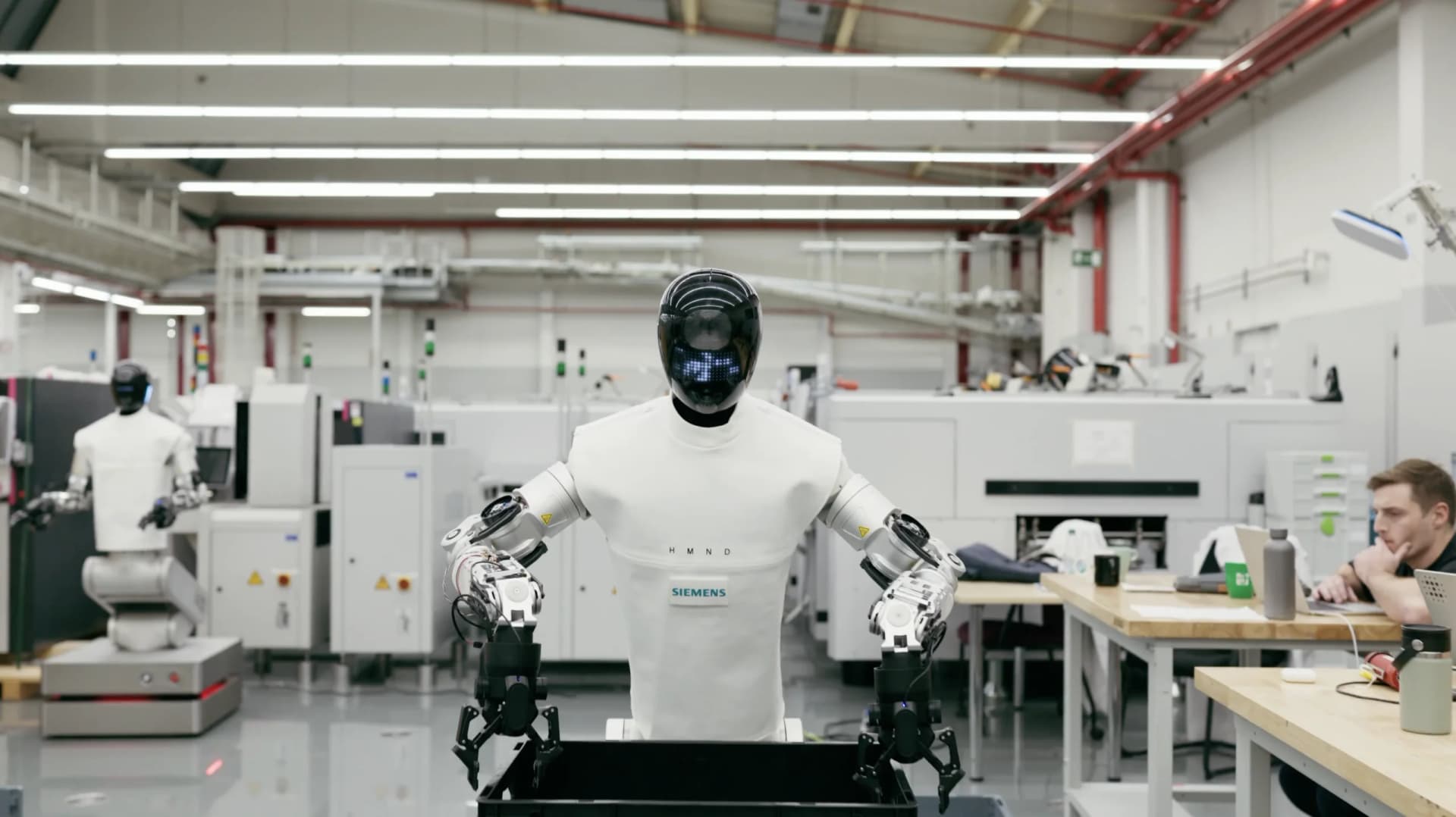
The trial focused on autonomous logistics, specifically tote-handling tasks where the robot was required to pick, transport, and place containers for human operators. According to joint data released by the companies, the platform met all target performance metrics, maintaining continuous operation for over eight hours with an autonomous success rate exceeding 90%.
Bridging the Integration Gap
While Humanoid has previously teased its rapid development cycle—claiming to have moved from CAD to factory floor in just 10 months—the Siemens partnership addresses the "industrial backbone" necessary for scale. By utilizing the Siemens Xcelerator portfolio, the HMND 01 Alpha is no longer an isolated machine; it is a collaborative asset integrated with digital twins, fleet management systems, and PLC-robot interfaces.
This deep integration allows the robot to respond dynamically to real-time production data rather than following static paths. It aligns with Humanoid’s broader strategy of prioritizing market-ready solutions over research-heavy "hero videos," focusing on the "boring" but essential tasks of industrial kitting and material handling.
The weekly humanoid robotics briefing
One email a week: the launches, funding and research that mattered, with context from Humanoids Daily.
Read recent issuesThe NVIDIA Factor: Accelerating the Timeline
A critical component of this deployment is the reliance on NVIDIA’s physical AI stack. Humanoid confirmed the use of NVIDIA Jetson Thor for edge compute and NVIDIA Isaac Sim for simulation-first development. This approach reportedly compressed the hardware development timeline from the industry standard of 18–24 months down to just seven months.
"Simulation-first hardware design has enabled the team to optimize actuator selection, joint strength, and mass distribution virtually," the companies stated. This software-first agility is a hallmark of Humanoid’s KinetIQ framework, which allows for the rapid training and deployment of new behavioral policies.
From Alpha to Industrial Scale
The Erlangen results mirror similar successes Humanoid has seen in recent months. In early 2026, the company reported 60% higher-than-targeted performance at Ford’s Cologne plant and a separate logistics trial with automotive seating specialist Martur Fompak.
However, as Humanoid CEO Artem Sokolov has noted, the current "Alpha" units remain research and development tools. The true test of this Siemens partnership will come in Q3 2026, when Humanoid plans to launch its "production-intent" hardware. With a backlog of 30,000 pre-orders, the pressure is now on to translate these high-performing pilots into a scalable, revenue-generating fleet.
For Siemens, the success in Erlangen validates their strategy of building "fully AI-driven, adaptive manufacturing sites," positioning the industrial giant as the primary gateway for humanoid robots entering the global workforce.
Share this article
Read next
- Published on
- Reading time
- 25 min read
The Humanoids of Europe: Built by Their Customers
- Published on
- Reading time
- 5 min read
Europe’s First Pure-Play Humanoid Unicorn: Humanoid Raises $152M at $1.35B Valuation
- Published on
- Reading time
- 4 min read
From Prototype to Production: Humanoid Taps Bosch for European Manufacturing Push
- Published on
- Reading time
- 4 min read
Scale at Speed: Humanoid and Schaeffler Move to Massive Multi-Thousand Unit Rollout
- Published on
- Reading time
- 3 min read
From ERP to the Edge: Humanoid and SAP Bridge the Gap in Martur Fompak Logistics Trial
- Published on
- Reading time
- 4 min read
Watch: Inside Humanoid’s 10-Month Sprint from First CAD to Factory Floor

The weekly humanoid robotics briefing
One email a week: the launches, funding and research that mattered, with context from Humanoids Daily.
Read recent issues