- Published on
NEURA Unveils Lighter 4NE1 Gen 4 as TUM RoboGym Opens in Munich
One tap, and our reporting appears more often in your Google Top Stories. It makes a real difference to a small newsroom.


Your guide
Rich Robinson
Jee Chee Ren · Executive tour
See China’s AI and robotics ecosystem first-hand.
Six days exploring AI, robotics and advanced manufacturing.
With Rich Robinson, Clinical Professor of Entrepreneurship at Peking University
Beijing · Guangzhou · Shenzhen
29 November–4 December 2026
Referral partnership · We earn a commission on referred bookings.
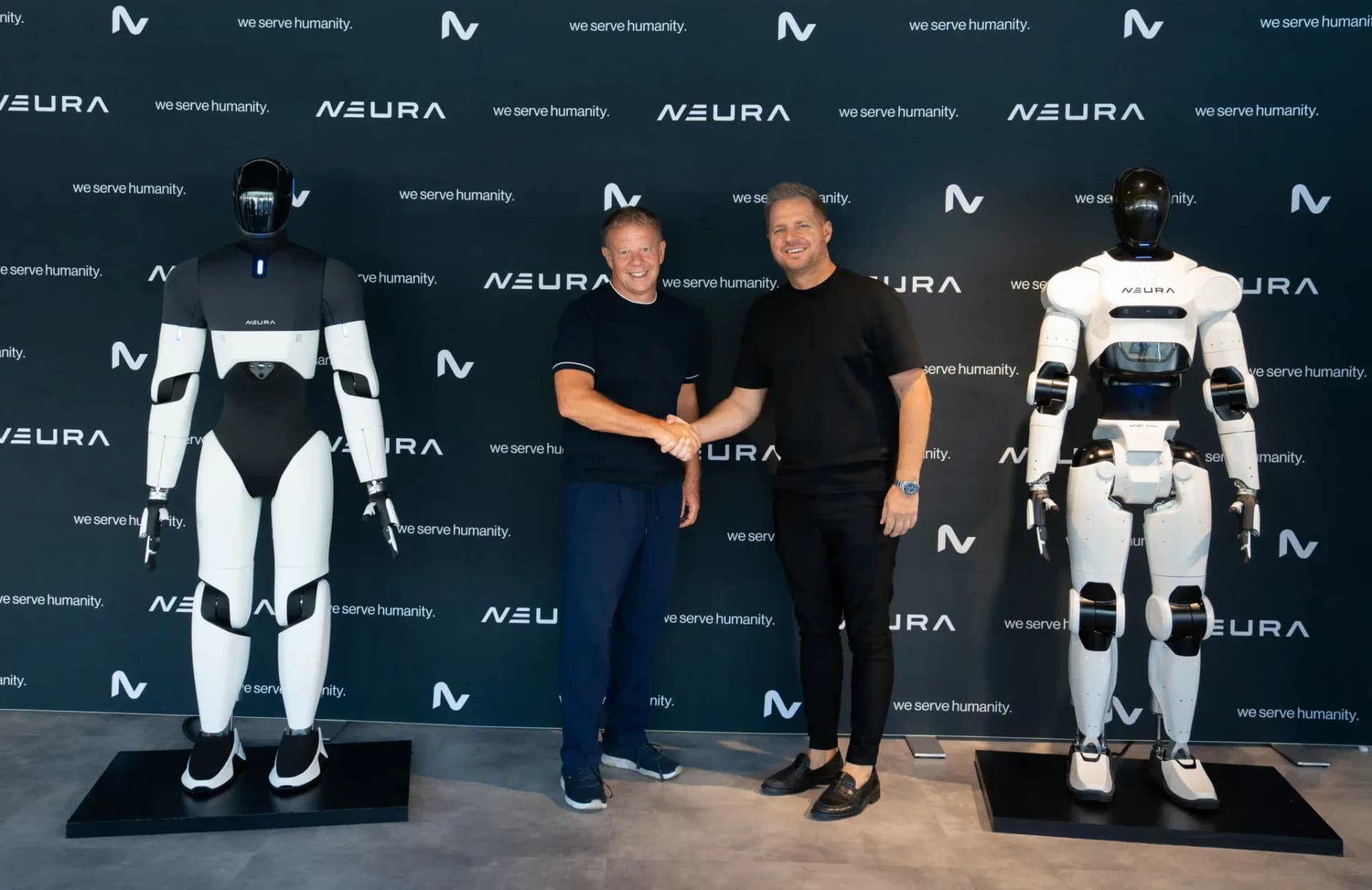
NEURA Robotics has unveiled 4NE1 Gen 4, a slimmer humanoid with a black textile exterior that the company says is 20% lighter than its predecessor. The October 22 reveal accompanied the opening of the TUM RoboGym at Munich Airport's LabCampus, linking the new hardware to a facility for teaching robots practical tasks.
- NEURA says 4NE1 Gen 4 is 20% lighter, with upgraded hands, limb-level reflexes and Neuron AI.
- The robot is being prepared for series production; the announcement does not specify pricing or customer delivery dates.
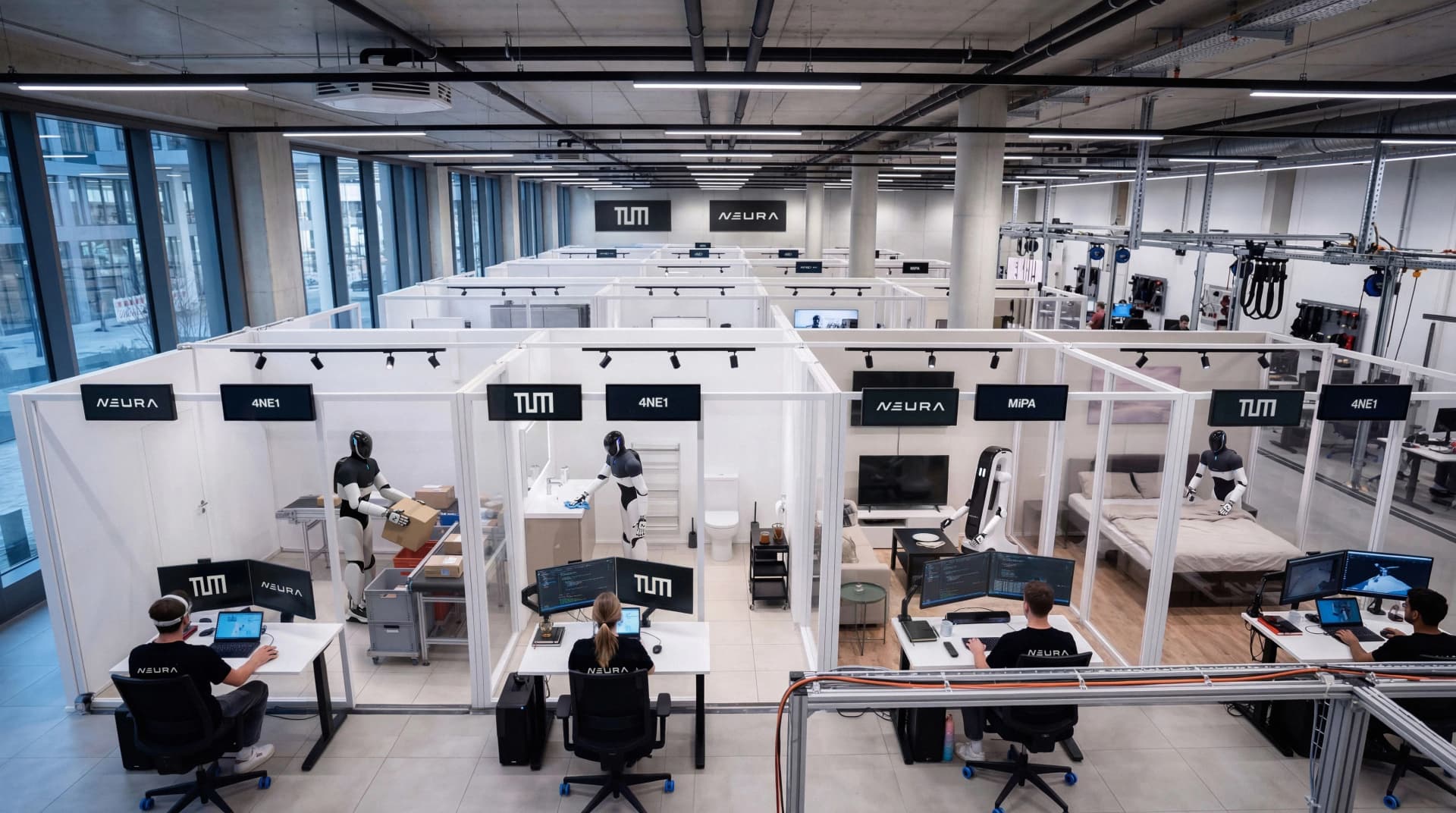
- TUM says its new RoboGym will initially train around 100 humanoid and service robots in 48 cells.
- A separate NXAI partnership aims to add stronger memory capabilities to NEURA's robotics software.
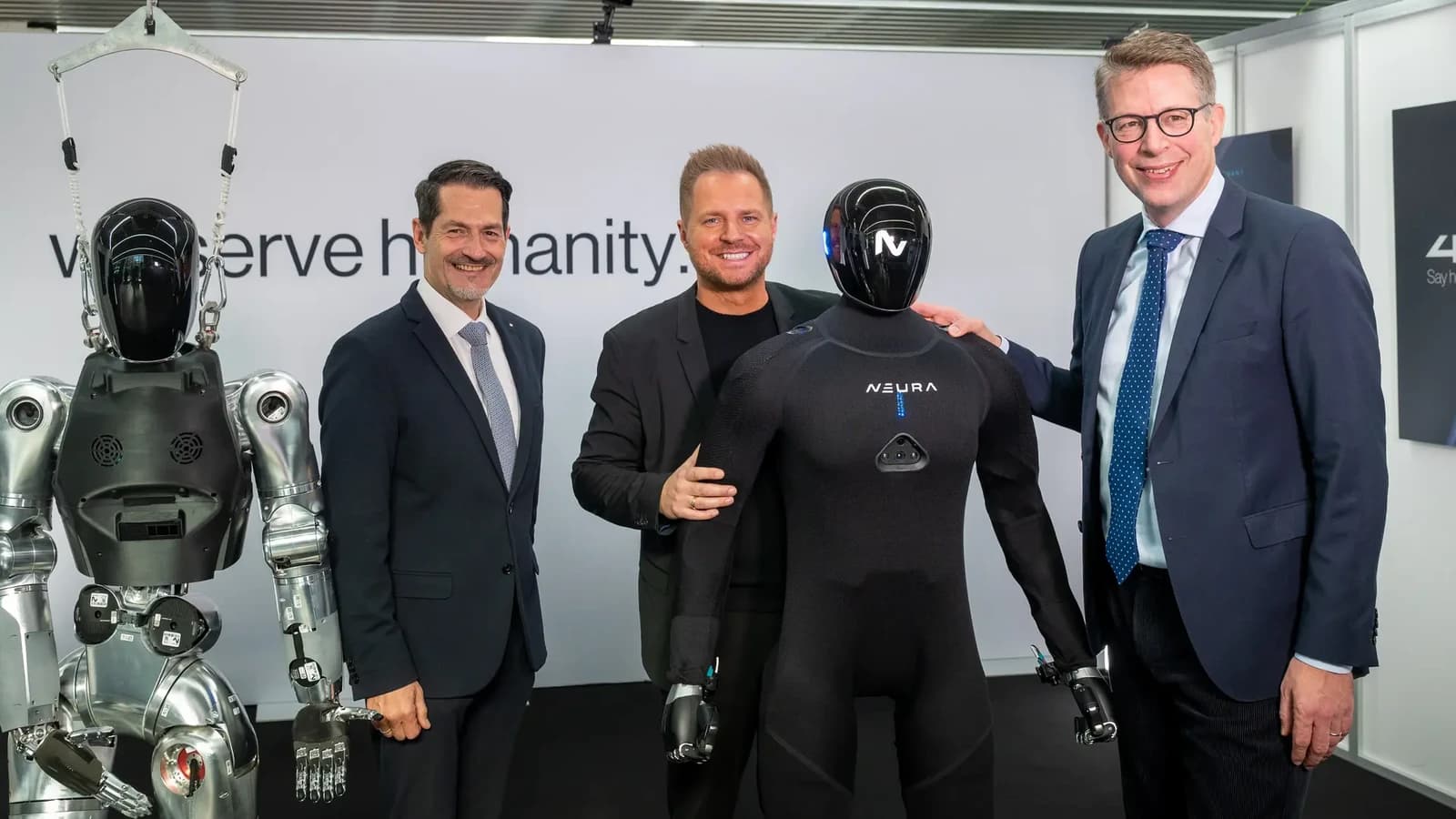
A new body and control system
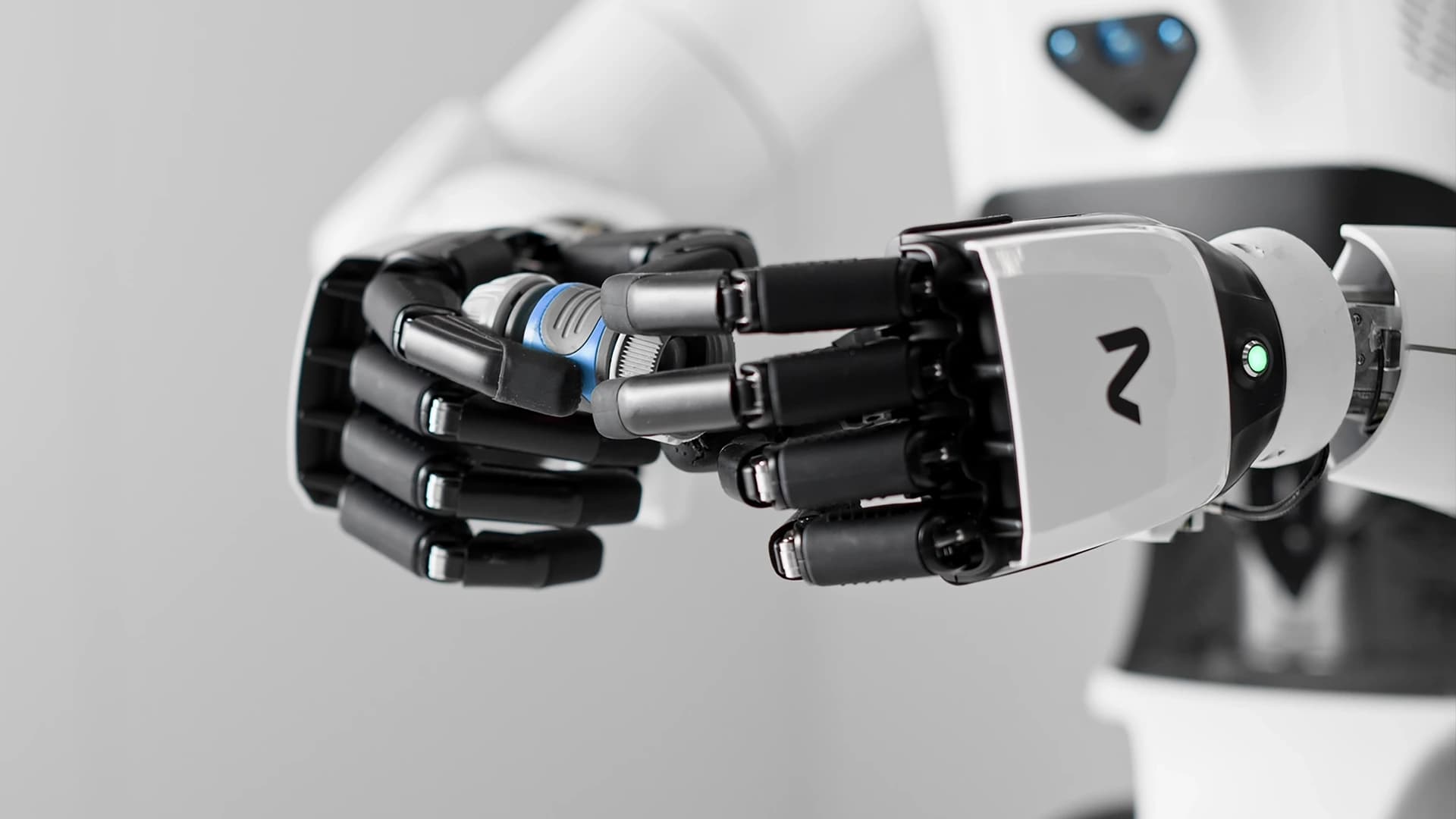
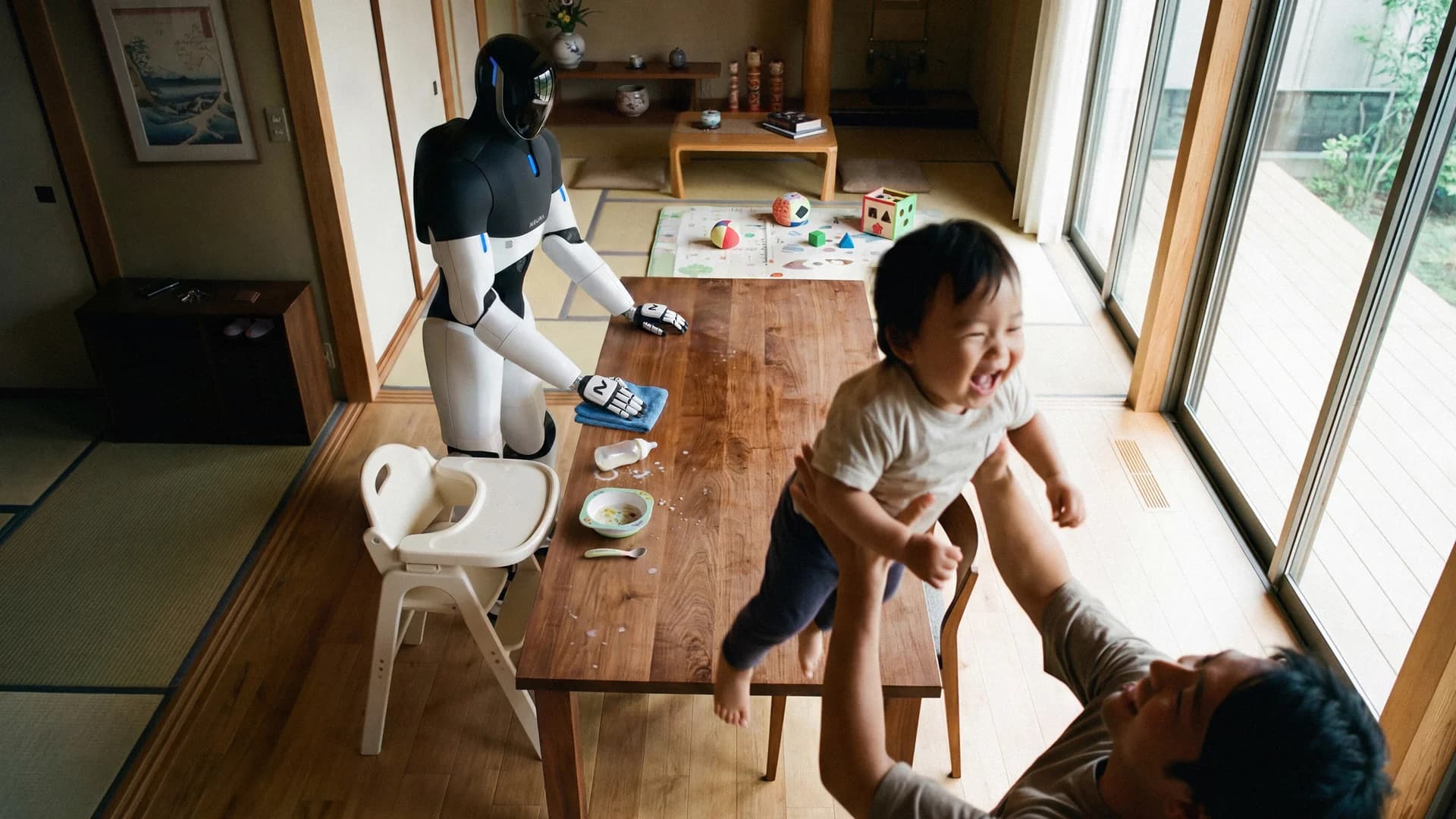
In its launch announcement, NEURA describes improved gripping and “Smart Limbs,” with local reflexes allowing limbs to respond independently. The company says Gen 4 is already operating in its Gyms and is also appearing at NVIDIA GTC Berlin.
Neuron AI combines visual information with touch, force, sound and robot-state inputs to guide movement. NEURA presents the textile covering as a more approachable appearance with scope for customization. These are company descriptions; the release does not provide comparative manipulation benchmarks or an absolute weight for the new robot.
A training center for practical work
According to TUM's opening announcement, the RoboGym brings together 48 training cells and an initial population of roughly 100 humanoid and service robots. Those figures cover the facility's robot mix, rather than 100 units of the new 4NE1.
The weekly humanoid robotics briefing
One email a week: the launches, funding and research that mattered, with context from Humanoids Daily.
Read recent issuesTasks include folding boxes, assembling components and using tools. Data generated through physical interaction will feed a curated cloud data lake for research into robot skills and safe human-robot interaction. Industrial applications and internal logistics are the initial focus.
The opening follows our earlier coverage of the NEURA–TUM training-center project. It gives researchers and companies a shared place to test how well a learned skill survives contact with real objects and workflows.
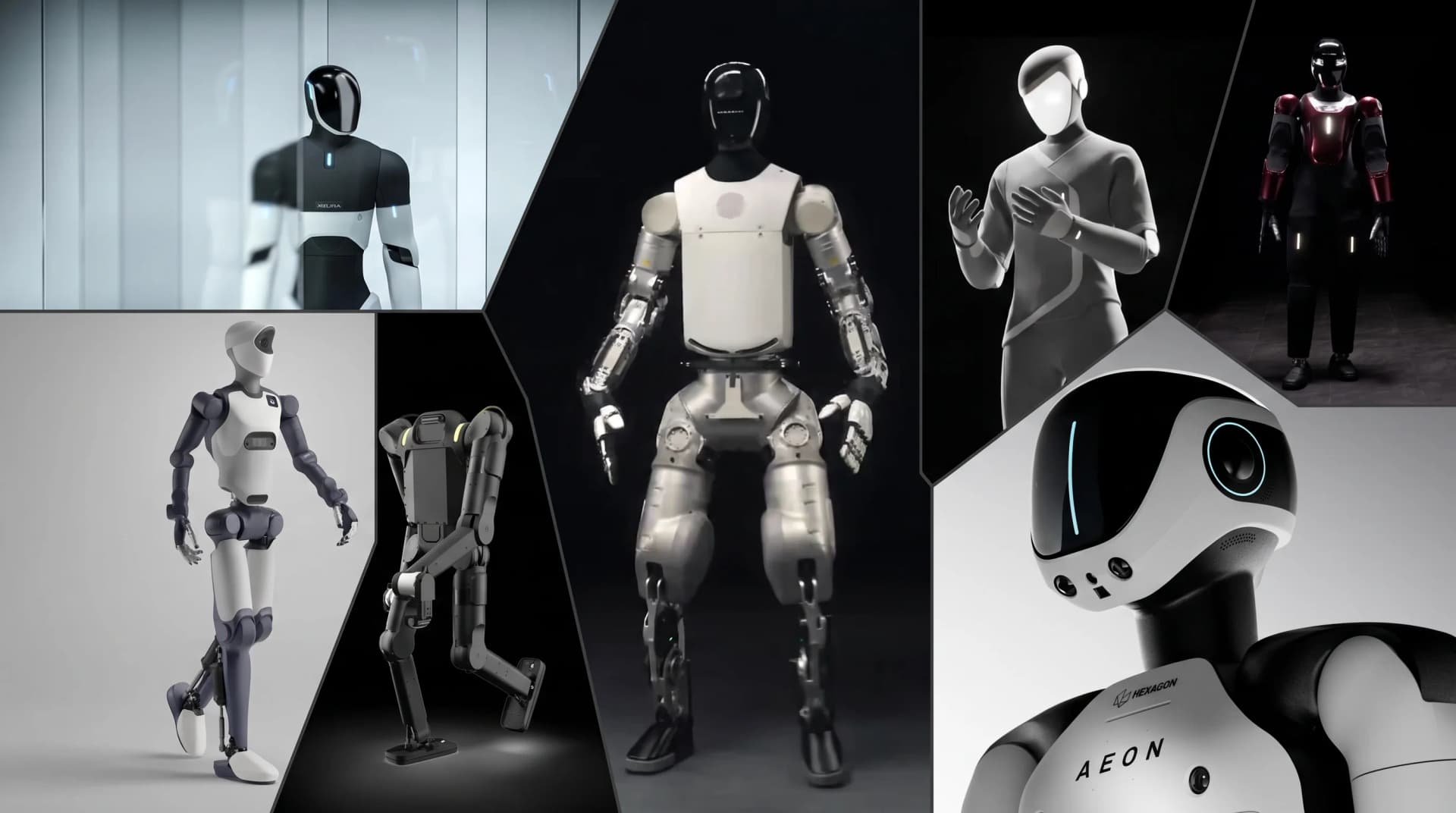
European competitor Generative Bionics is pursuing a similar approach. As we reported on October 21, it plans a 5,000-square-metre Physical AI Data Factory in Italy, using AMD infrastructure to combine robot practice with simulation and model training. That facility is scheduled to become operational in Q4 2027, while the Munich RoboGym has now opened.
NXAI partnership adds a memory component
Two days before the launch, NEURA announced a partnership with Austria's NXAI to develop memory for cognitive robots. The work combines NEURA's Physical AI software with xLSTM, a recurrent architecture developed under Sepp Hochreiter that maintains and updates state across long sequences.
The aim is to help robots keep track of multi-step tasks and draw on previous experience. NXAI also plans to offer its own model through Neuraverse, alongside the independently developed Neuron AI. Companies would be able to adapt it, test it in NEURA Gyms and deploy it on suitable robots.
That partnership describes ongoing development, not confirmation that the new NXAI memory component is already running on Gen 4. Together, the announcements outline NEURA's approach: new robot hardware, facilities for collecting experience, and software intended to make that experience useful across longer tasks.
Share this article
Read next
- Published on
- Reading time
- 3 min read
NEURA Gives Its Robot AI Touch, Sound and Memory Ahead of 11-Minute Laundry Demo
- Published on
- Reading time
- 3 min read
NEURA Launches HealthTech Unit, With MiPA on Its Healthcare Roadmap
- Published on
- Reading time
- 25 min read
The Humanoids of Europe: Built by Their Customers
- Published on
- Reading time
- 5 min read
NEURA Robotics and SECO Team Up to Scale European Physical AI Hardware
- Published on
- Reading time
- 6 min read
NEURA Robotics Secures Record $1.4 Billion Series C, Led by Tether, to Build the "Machine Economy"
- Published on
- Reading time
- 4 min read
NEURA Robotics and TUM Launch Europe’s Largest Physical AI Training Center
The weekly humanoid robotics briefing
One email a week: the launches, funding and research that mattered, with context from Humanoids Daily.
Read recent issues