- Published on
Humanoid Expands NVIDIA Collaboration, Replacing Two Robot Computers With One
One tap, and our reporting appears more often in your Google Top Stories. It makes a real difference to a small newsroom.


Your guide
Rich Robinson
Jee Chee Ren · Executive tour
See China’s AI and robotics ecosystem first-hand.
Six days exploring AI, robotics and advanced manufacturing.
With Rich Robinson, Clinical Professor of Entrepreneurship at Peking University
Beijing · Guangzhou · Shenzhen
29 November–4 December 2026
Referral partnership · We earn a commission on referred bookings.
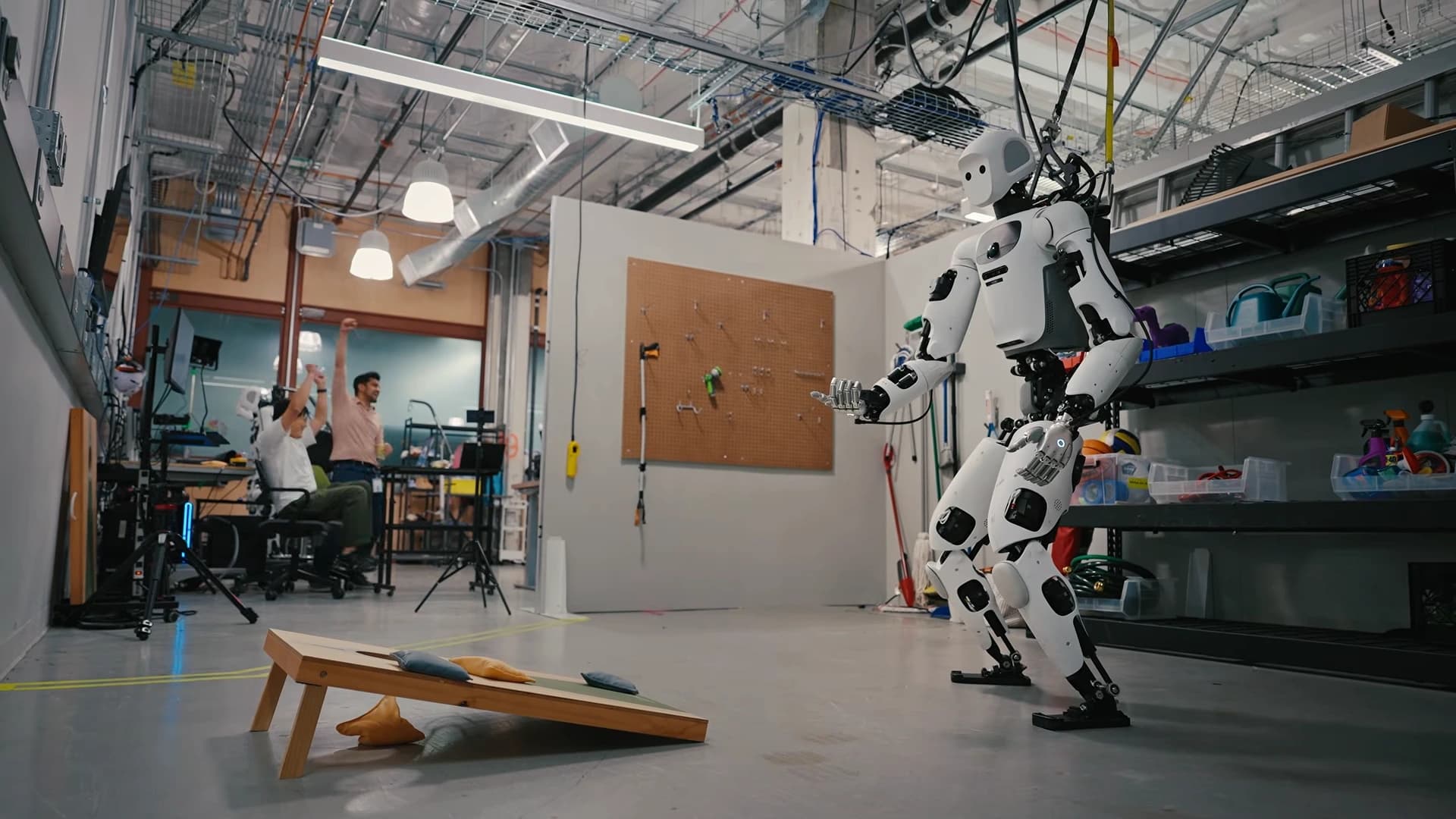
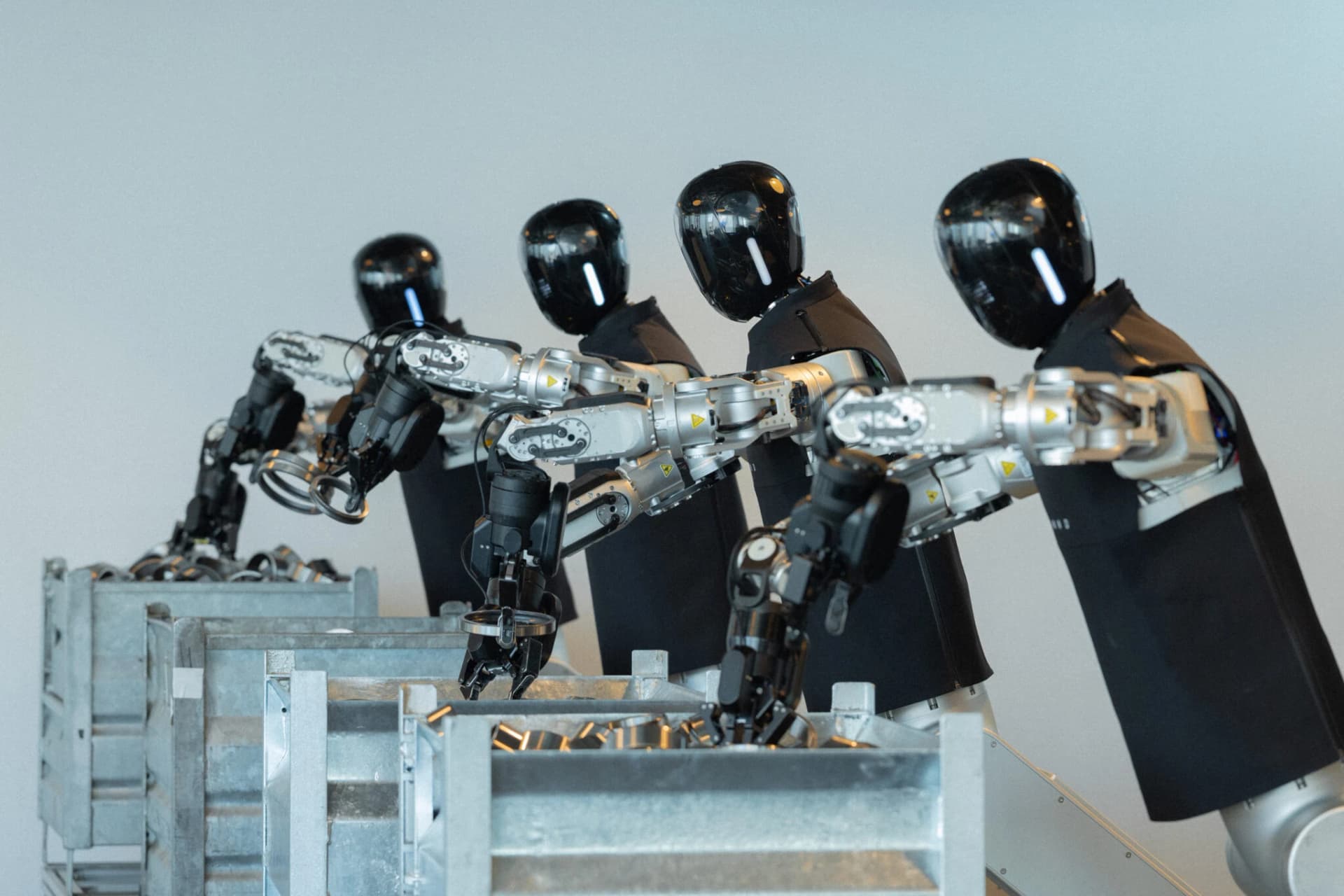
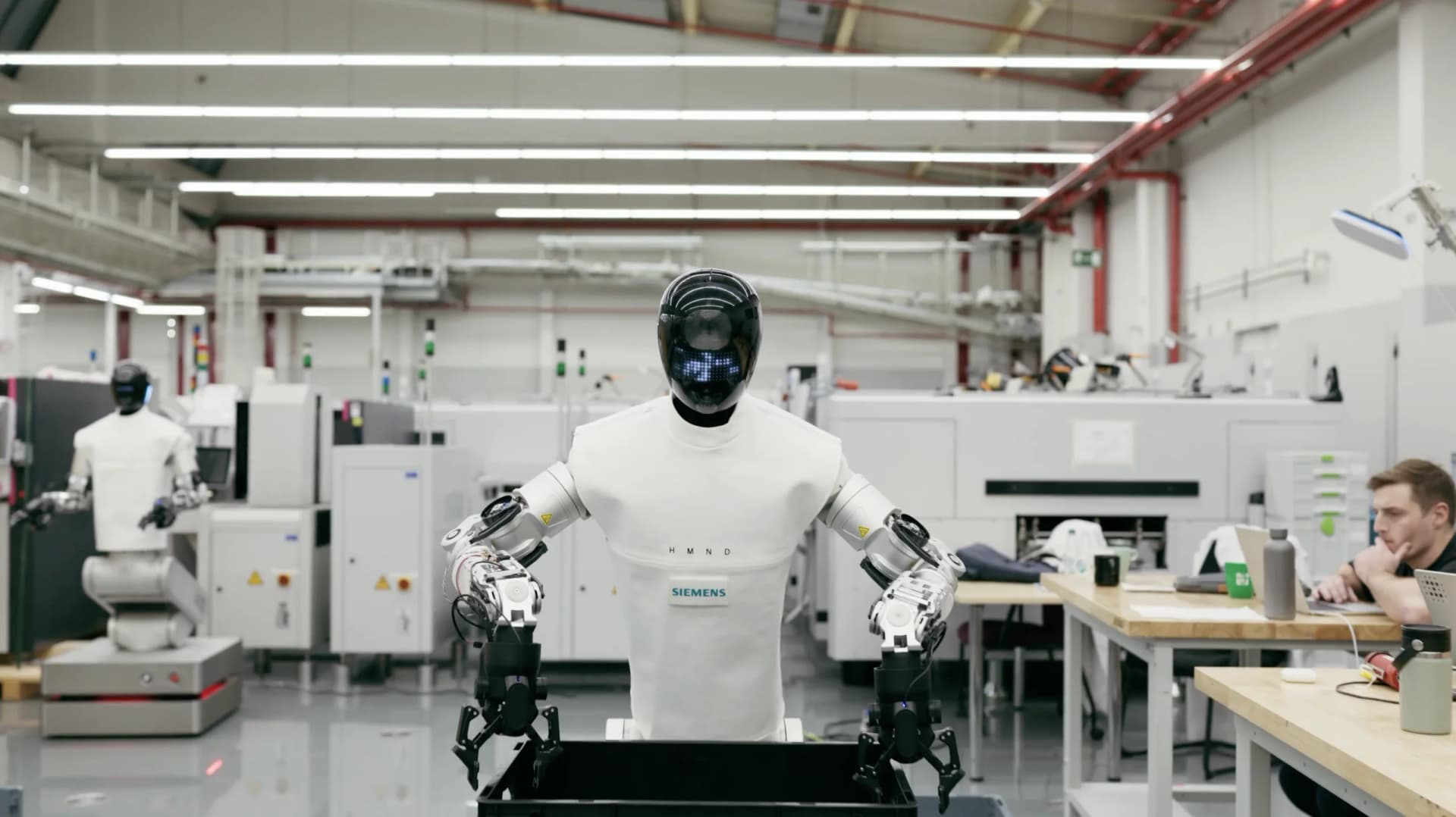
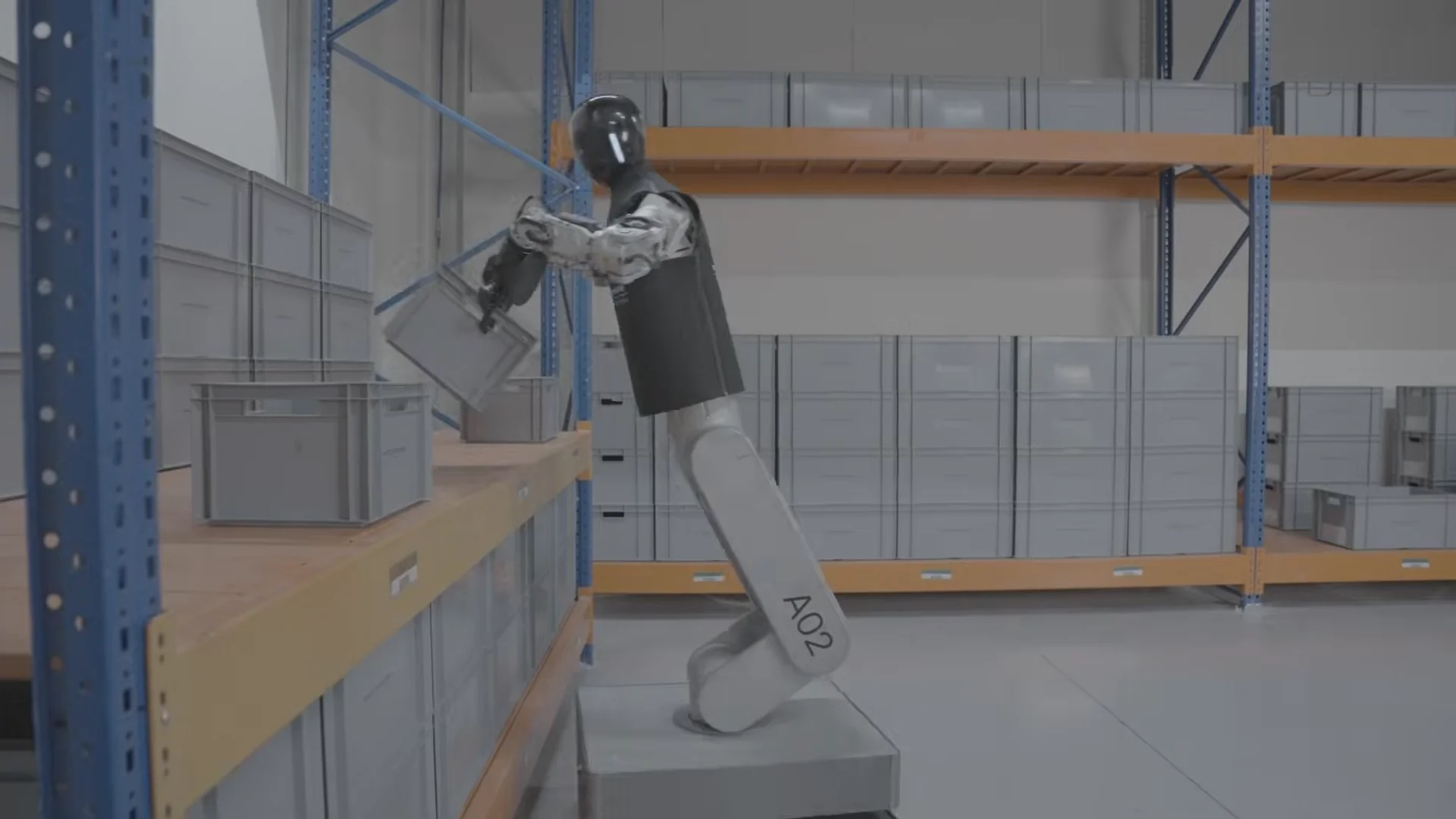
UK robotics company Humanoid is expanding its collaboration with NVIDIA to simplify the computing architecture inside its next generation of robots. One concrete result: the company says moving to Jetson Thor has allowed it to consolidate two onboard computers into a single system while maintaining computing capacity.
The October 21 announcement extends a relationship that already includes NVIDIA’s Isaac Lab and Isaac Sim training and simulation tools. The new work focuses on running AI and coordinating sensing and control directly onboard the robot.
- Humanoid says Jetson Thor replaces two onboard computers with one while maintaining computing capacity.
- The expanded collaboration includes Isaac OS, Holoscan Sensor Bridge and Holoscan SDK to connect sensor processing, AI inference and control.
- The announcement describes an architecture upgrade for next-generation robots, without a launch date or quantified performance benchmarks.
Bringing sensing and AI closer together
Humanoid’s stated goal is to run increasingly sophisticated AI onboard, allowing its robots to process their surroundings and respond in real time. That depends on more than raw computing power: data also needs to move efficiently between sensors, models and control systems.
The company says Jetson Thor’s shared CPU and GPU memory reduces unnecessary data movement and latency while making computing resources easier to share between workloads. It also describes potential additional computing headroom, rather than specifying a measured increase in performance.
The weekly humanoid robotics briefing
One email a week: the launches, funding and research that mattered, with context from Humanoids Daily.
Read recent issuesHoloscan Sensor Bridge addresses another part of the same problem. Humanoid says camera data can be placed directly into memory accessible to the GPU, reducing extra copies and CPU work before the AI models process it.
In practical terms, these changes aim to shorten and simplify the path from a camera observation to a robot’s response. The announcement does not disclose measured end-to-end latency, power savings or changes in task success rates.
From simulation to onboard execution
Humanoid says it has used Isaac Lab and Isaac Sim since its early development to train and test models before moving them onto physical robots. The expanded collaboration adds more NVIDIA technology to the execution side of that workflow.
The company describes Isaac OS as an open, deterministic runtime framework for coordinating multiple robotics workloads. It is also integrating Holoscan SDK and high-bandwidth Ethernet connections for sensor data and control signals. Together, the changes are intended to reduce hardware and software complexity and make the platform easier to develop and test.
Founded by Artem Sokolov in 2024, Humanoid develops robots for industrial applications and says its platforms run on its proprietary KinetIQ AI framework. This announcement does not describe a replacement for KinetIQ; it concerns the underlying computing and runtime architecture.
The update follows Humanoid’s $152 million Series A at a $1.35 billion valuation and its contract manufacturing agreement with Bosch. Those announcements addressed financing and production capacity; the NVIDIA collaboration focuses on the computing architecture of the robots themselves.
The significance is a more integrated onboard system for future robots. Whether that delivers greater autonomy will depend on the capabilities and operating results Humanoid demonstrates on the resulting hardware. No next-generation product launch date or customer deployment commitment is included in the release.
Share this article
Read next
- Published on
- Reading time
- 25 min read
The Humanoids of Europe: Built by Their Customers
- Published on
- Reading time
- 5 min read
Europe’s First Pure-Play Humanoid Unicorn: Humanoid Raises $152M at $1.35B Valuation
- Published on
- Reading time
- 4 min read
From Prototype to Production: Humanoid Taps Bosch for European Manufacturing Push
- Published on
- Reading time
- 4 min read
Scale at Speed: Humanoid and Schaeffler Move to Massive Multi-Thousand Unit Rollout
- Published on
- Reading time
- 4 min read
Siemens and Humanoid Formalize Partnership Following Successful "Physical AI" Trials in Erlangen
- Published on
- Reading time
- 3 min read
From ERP to the Edge: Humanoid and SAP Bridge the Gap in Martur Fompak Logistics Trial

The weekly humanoid robotics briefing
One email a week: the launches, funding and research that mattered, with context from Humanoids Daily.
Read recent issues