- Published on
Monolithos Seeks Robotics Teams to Test a Memory Layer for Robot Experience
One tap, and our reporting appears more often in your Google Top Stories. It makes a real difference to a small newsroom.

- Monolithos’s Robot Brain alpha retains task histories and supplies reviewed, conditional memories to existing robotics software.
- Founder Silas Yu says 51WORLD is organizing physical robot tests, but completed external or physical robot performance results are not yet available.
- The next evaluation will compare the memory layer with practical log-retrieval and fixed-rule approaches, including the effort needed to maintain it.
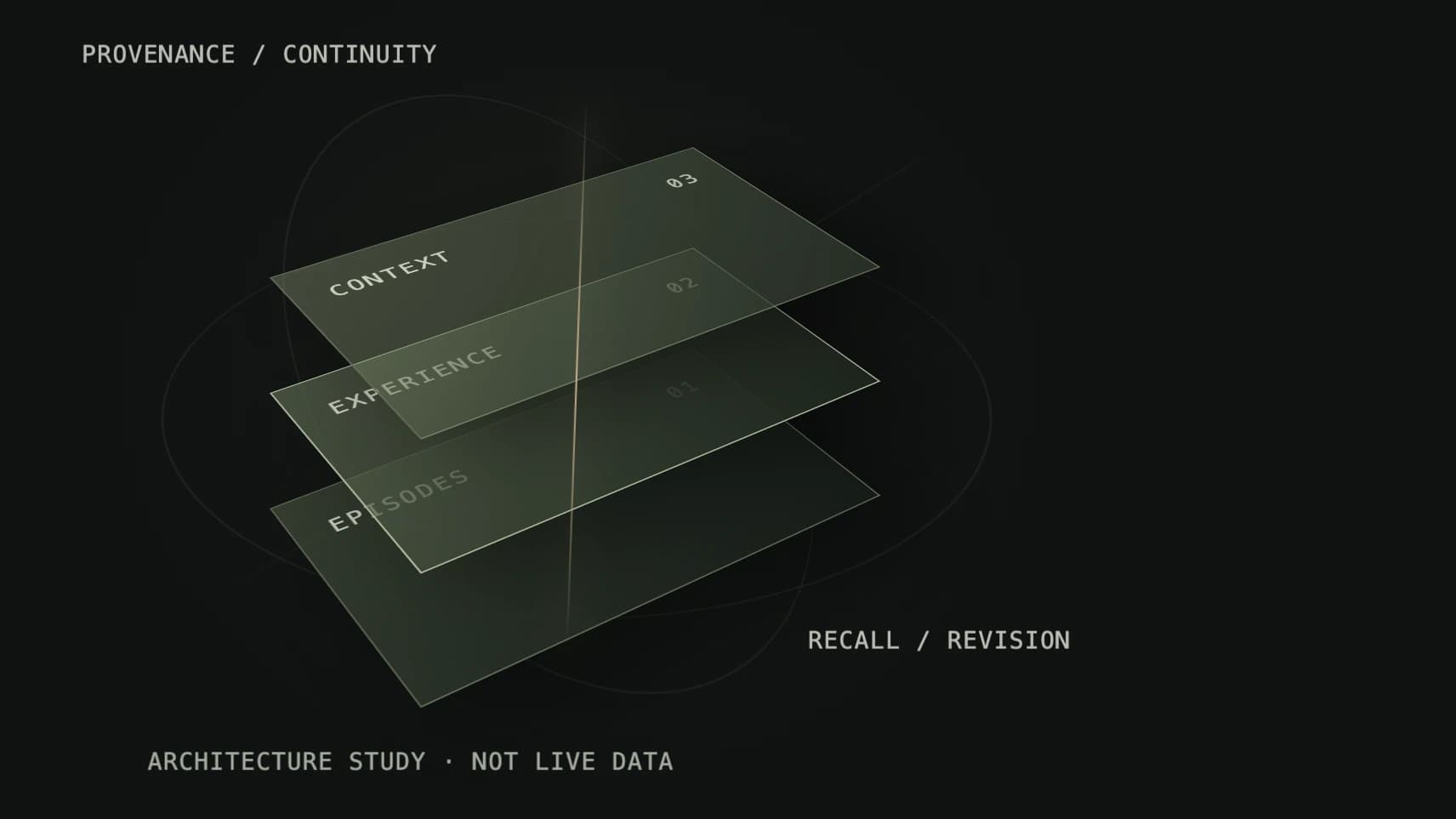
When a robot fails and a human steps in, what should the next task remember? Monolithos is building a software layer to retain that history—and is looking for robotics teams to test whether it helps their machines make better decisions.
In a written interview with Humanoids Daily, founder Silas Yu described Robot Brain as a long-term memory service that works alongside an existing robot stack. Its public alpha records failures, corrections and outcomes, then supplies relevant experience to a planner or recovery process.
Keeping lessons—and knowing when to revise them
“As robots gain better models and skills, their experience should become a lasting asset that improves what they do next,” Yu told Humanoids Daily.
The proposed benefit goes beyond saving a task log. Robot Brain connects an interpretation to its source events, the conditions under which it applies and any evidence that challenges it. New model-generated interpretations undergo an explicit review step; that review can be submitted by an authorized operator or agent workflow, so it does not necessarily mean a human checked the result.
The weekly humanoid robotics briefing
One email a week: the launches, funding and research that mattered, with context from Humanoids Daily.
Read recent issuesYu described a synthetic inspection test in which a task stopped while an access permit was unconfirmed. A scripted operator check was followed by a completion record. When a counterexample later showed access failing despite a valid permit, the earlier interpretation became ineligible for use and a revised version retained the uncertainty.
“The observed result was that new evidence changed what the memory system would supply to a later task,” Yu said.
That demonstrated memory revision. The team has yet to demonstrate the complete sequence of a real operator correcting a physical robot and that experience improving its next attempt.
Looking for a test outside the lab
Yu said the 51WORLD team is organizing physical robot tests, with the platform, task and results still being coordinated. Completed evidence currently consists of internal software and simulation testing; the browser demo is a recorded replay.
One simulated block-pushing study improved recovery successes from 7 out of 16 conditions with fixed controller settings to 13 out of 16 using historical outcomes to select settings. A richer experience classifier produced the same result as the simpler history-based approach. The tests used familiar development conditions, rather than unseen tasks.
“We have not yet established a task-performance advantage over mature hand-written recovery rules or a well-engineered log-retrieval system,” Yu said.
Memory alongside the robot’s existing software
Robot Brain connects through a Python SDK or local HTTP interface and operates at task boundaries. The integrating team must report relevant changes in objects, environments and software; the memory layer cannot independently detect every change. Perception, motion control and emergency stops remain with the robot’s existing stack.
Yu described Monolithos as a US-registered company whose team comes from software development and design. Robot Brain shares memory infrastructure with its other AI applications.
The next milestone, he said, is an evaluation inside an external team’s own stack: measuring repeated failures, recovery effort and memory-maintenance costs against practical alternatives. The public alpha and integration documentation give interested teams a starting point for that work.
Share this article
Read next
- Published on
- Reading time
- 3 min read
Robotera’s VPP2 Tops RoboDojo Simulation Benchmark by Linking Video Prediction to Robot Actions
- Published on
- Reading time
- 3 min read
Microagi Says It Reached $100 Million Revenue Run Rate in Six Months
- Published on
- Reading time
- 3 min read
Ultra Raises $50 Million Series A for Warehouse Robots, Deepens Physical Intelligence Partnership
- Published on
- Reading time
- 2 min read
BYD Humanoid Robot Design Emerges in Patent Images
- Published on
- Reading time
- 3 min read
ARC Brings Human-Piloted Humanoid Fights to Singapore
- Published on
- Reading time
- 2 min read
Dyna Robotics’ Taku to Join Nasdaq Closing Bell at RoboStrategy Event
The weekly humanoid robotics briefing
One email a week: the launches, funding and research that mattered, with context from Humanoids Daily.
Read recent issues