- Published on
Origami Robotics Unveils S1 Glove to Capture Human Dexterity for Robots
One tap, and our reporting appears more often in your Google Top Stories. It makes a real difference to a small newsroom.


Your guide
Rich Robinson
Jee Chee Ren · Executive tour
See China’s AI and robotics ecosystem first-hand.
Six days exploring AI, robotics and advanced manufacturing.
With Rich Robinson, Clinical Professor of Entrepreneurship at Peking University
Beijing · Guangzhou · Shenzhen
29 November–4 December 2026
Referral partnership · We earn a commission on referred bookings.
Origami Robotics has introduced S1, a skill capture glove designed to record the finger movements and touch involved in human dexterity. Announced on October 21, the device was developed alongside the company's robot hand so that recorded finger angles correspond directly to joints the robot can command.
The launch uses music to illustrate the idea: violin, piano and percussion performances recorded while wearing the glove. The aim is to capture more than the visible motion, including the contact and pressure changes that help a practiced person control an instrument or tool.
- S1 records finger joint angles, touch and video together, with a joint arrangement matched to Origami's robot hand.
- Origami says the glove measures 20 finger joint angles and continues recording motion when fingers are hidden from cameras.
- The company says mass production has started, but transferring human contact and dexterity to robot execution remains work in progress.
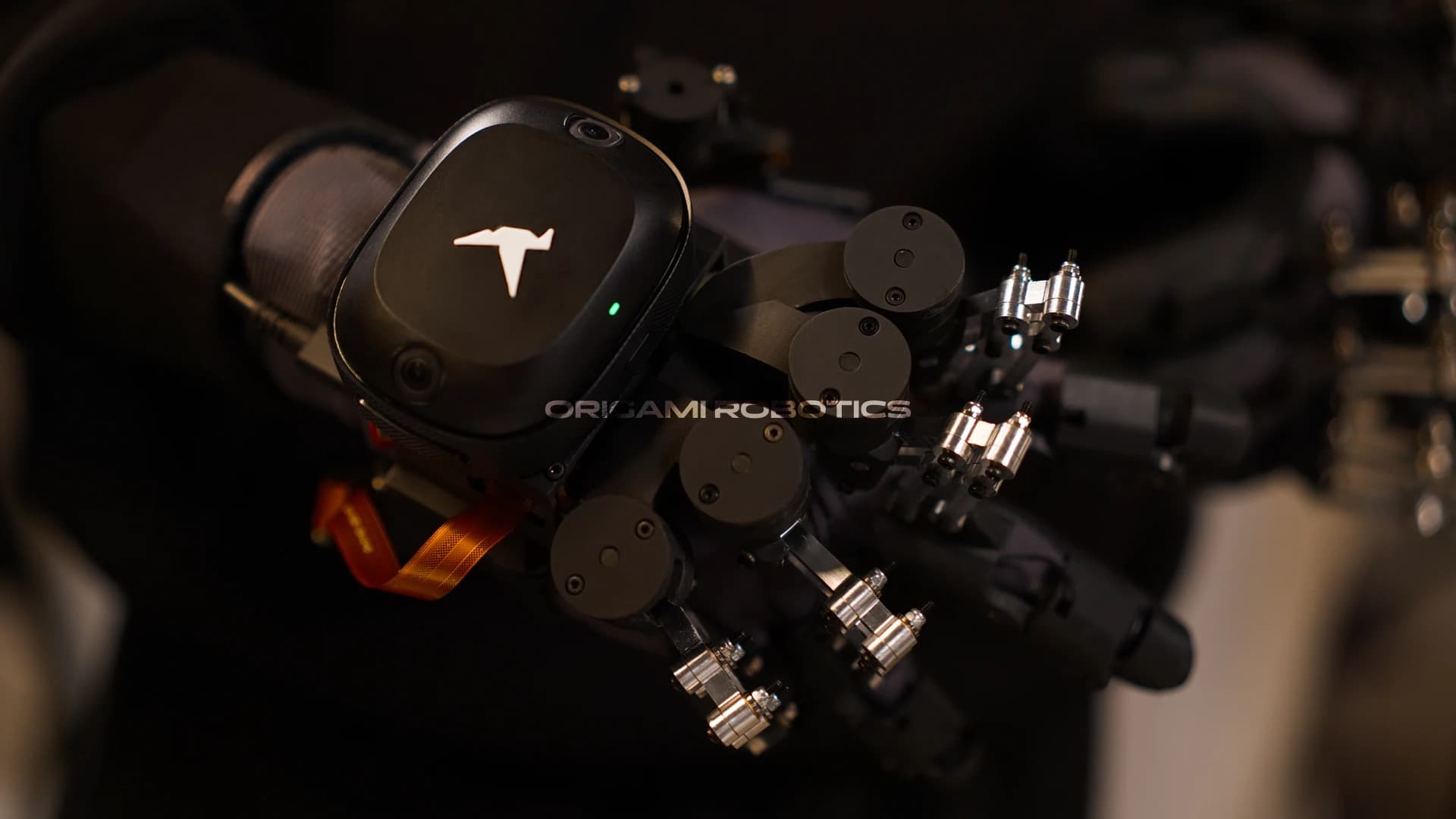
Origami's launch announcement accompanies a technical post, “A million hours of what?”, which sets out its argument that the contents of a demonstration matter as much as the number of hours collected.
Capturing what a camera cannot see
According to Origami, S1 uses encoders to measure 20 finger joint angles and records pressure at the fingertips and palm alongside video on a shared timeline. The press release also lists wrist position and orientation in six degrees of freedom.
The weekly humanoid robotics briefing
One email a week: the launches, funding and research that mattered, with context from Humanoids Daily.
Read recent issuesThat combination addresses two problems with learning manipulation from images. An object or the other hand can hide a working finger. And a finger can press harder without visibly changing position, leaving video with limited information about the interaction.
Origami reports that the glove continued measuring movements inside a container when cameras could no longer see the fingers. Its demonstrations compare recording continuity with vision-based hand estimation, although the company notes that the glove and bare-hand recordings were separate takes from different viewpoints.
For a separate accuracy check, Origami compared fingertip positions calculated from the glove's measurements with OptiTrack motion capture. It reports millimeter-level accuracy for the index, middle and ring fingers in that recording, measured relative to the glove's wrist. This is a company-reported test, rather than a general accuracy guarantee across every task and wearer.
The team also says it tried 30 demanding tasks, including card shuffling and fast Rubik's Cube solves, to examine what people could do while wearing S1. For data collection, preserving natural movement matters: a device that slows an experienced operator or changes their grip would also change the demonstration being recorded.
Designed with the robot hand
S1's central design choice is the correspondence between glove and robot. After fitting and calibration, measured finger angles become position targets for the matching robot joints. Origami says this avoids a geometric retargeting solver for those movements, preserving individual joint bends that could otherwise be lost when a system only tries to match fingertip positions.
The glove and robot hand also share tactile sensors. But matching joint angles does not guarantee the same contact with an object. Human hand sizes vary, and the robot's fingertips have different shapes, affecting where pressure is applied.
Origami acknowledges that gap and says it is developing a learned model to account for it. The musical performances therefore demonstrate human skill being captured; they do not establish that its robot can reproduce those performances. The company says the speed and dexterity of natural human movements remain difficult for robotic hands to match.
The terminology will be familiar to readers following Sunday Robotics, which already uses the name “Skill Capture Glove™” for the device it developed alongside Memo’s hand. As we explored in The UMI Effect, matching the data collection device to the robot is becoming a broader design strategy. Origami’s S1 shares that emphasis, with its own approach to joint measurements and tactile sensing.
From factory trials to a wider fit
Origami says an earlier rigid glove was deployed in a couple of factories after being built seven months ago. Those trials exposed a practical problem: only some workers could fit into it. The current soft-shell design accommodates a wider range of hands, with each wearer still needing fitting and calibration.
The company says mass production has started and directs interested users to a waitlist for availability updates. The press release describes a manufacturing-cost goal comparable to existing egocentric data collection devices, but gives no numerical price or shipping schedule.
Readers may remember Origami from its debate with 1X CEO Bernt Børnich over robotic hand design. That exchange focused on gearing, tendon systems, force sensing and durability. S1 adds the data collection side of Origami's approach: designing the recording hardware and the hand that will use its data together. Whether the captured skill carries over to reliable robot performance is the next test.
Share this article
Read next
- Published on
- Reading time
- 5 min read
The Gearbox Trap: Origami Robotics and 1X Clash Over the Future of Manipulation
- Published on
- Reading time
- 4 min read
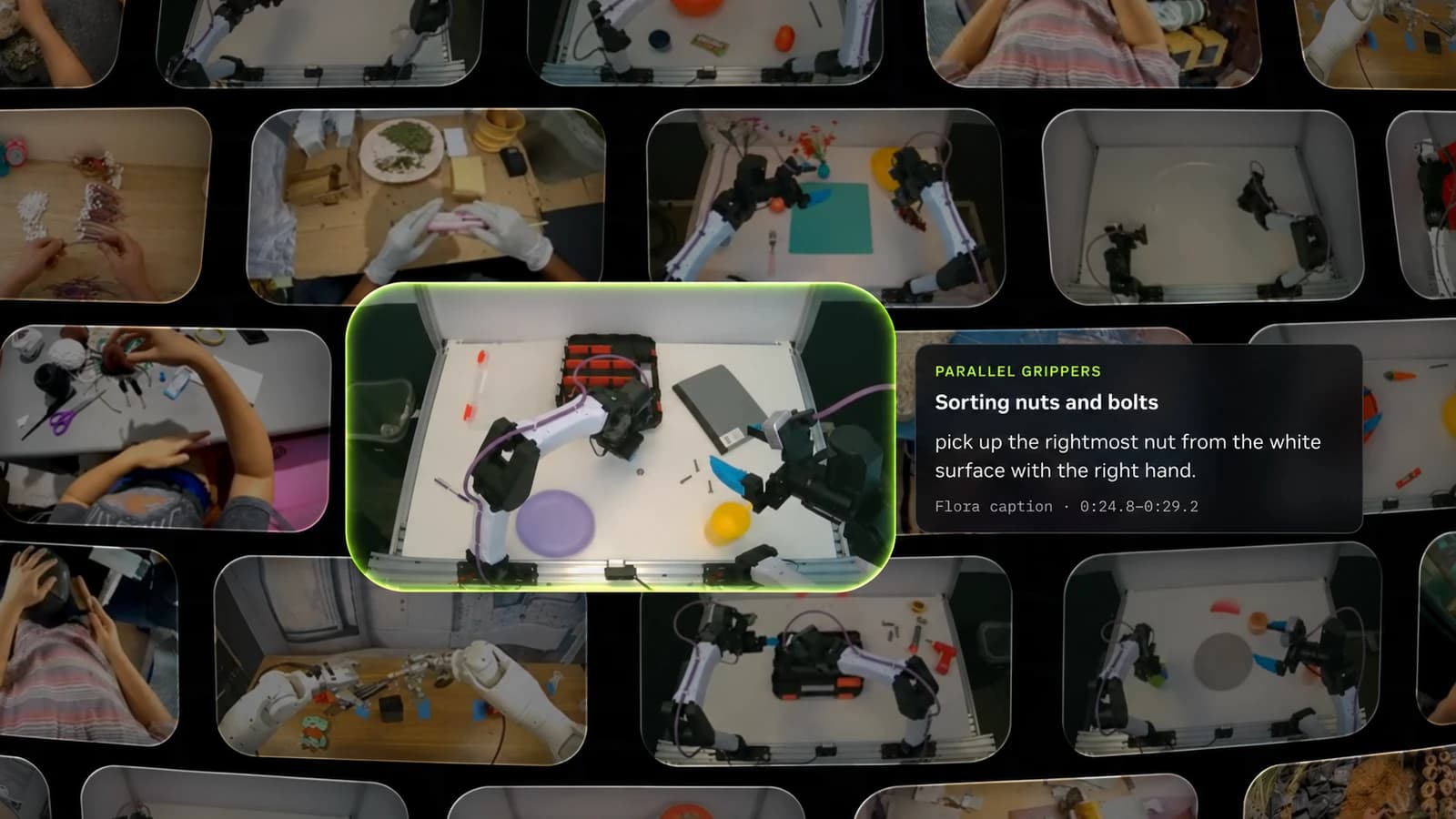
NVIDIA Releases Flora to Turn Robot Videos Into Training Data
- Published on
- Reading time
- 4 min read
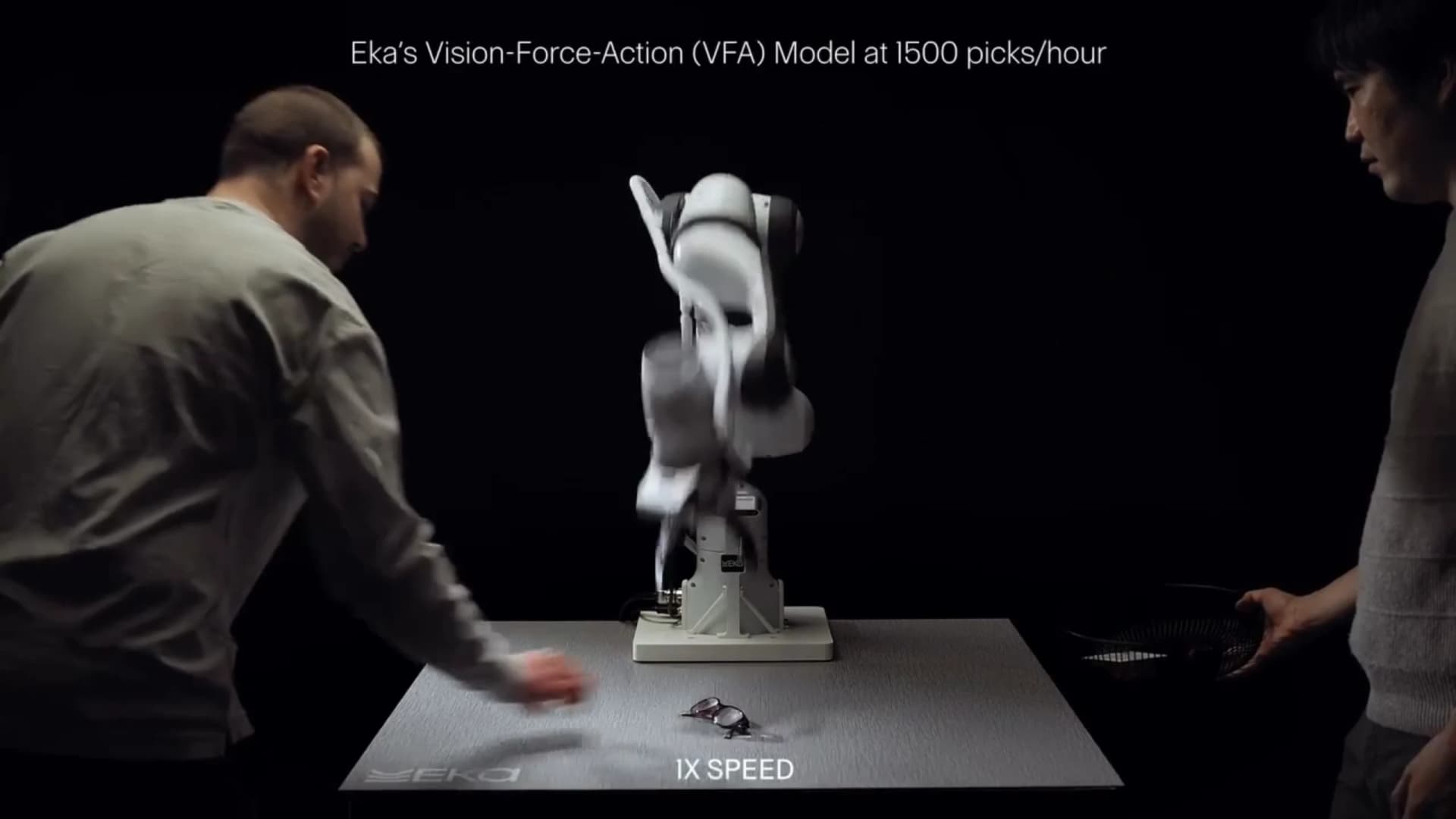
Eka Robotics Raises $150 Million to Give Robots a Better Feel for the Physical World
- Published on
- Reading time
- 4 min read
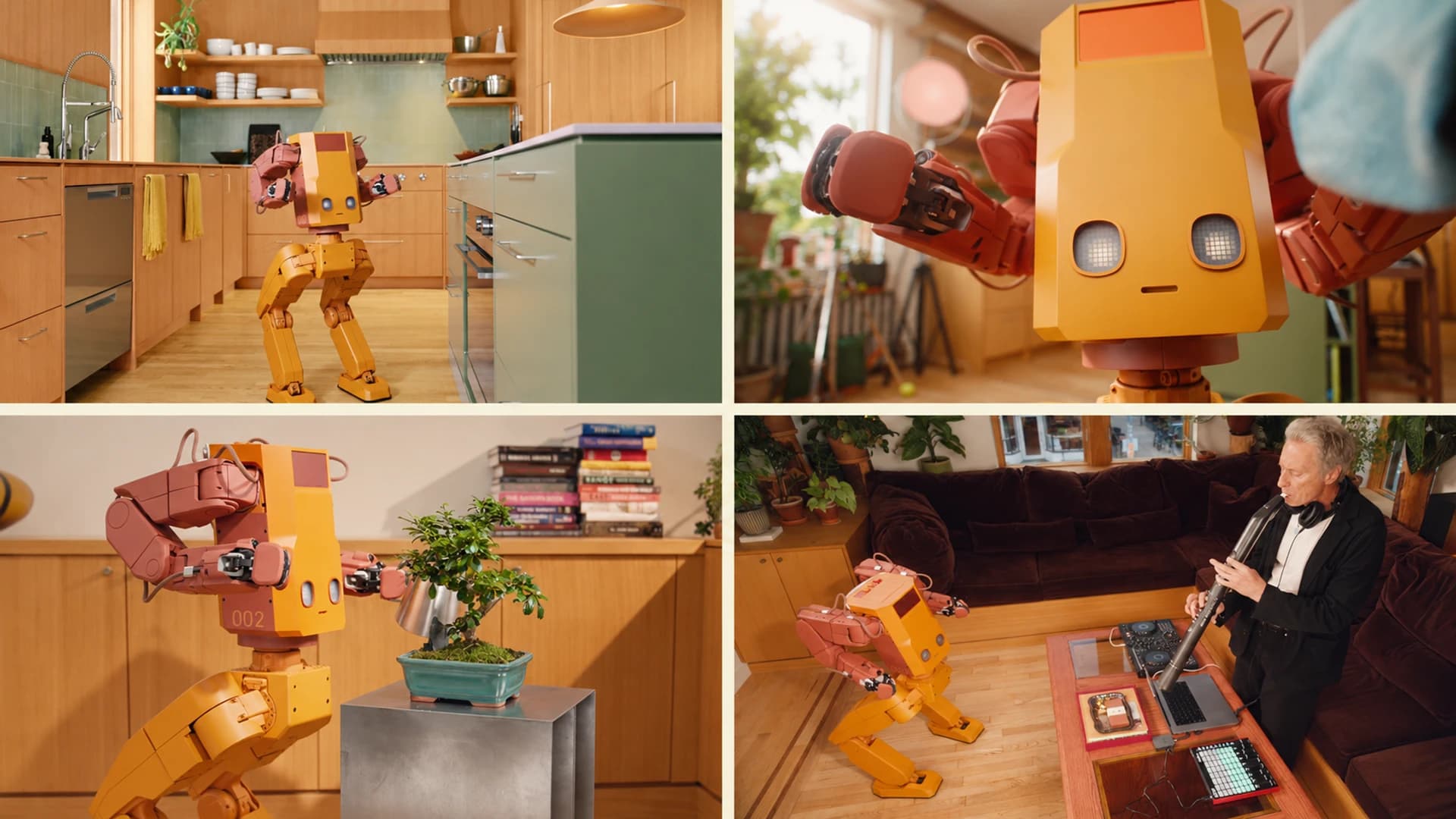
Former Boston Dynamics Roboticist Unveils Voxel, a $20,000 Home-Tidying Robot
- Published on
- Reading time
- 2 min read
AGCO Signs Agility Deal to Bring Humanoid Robots to Its Kansas Factory
- Published on
- Reading time
- 4 min read
Faraday Future Moves to Give Its Robotics Business a Separate Listed Home in $200 Million Deal

The weekly humanoid robotics briefing
One email a week: the launches, funding and research that mattered, with context from Humanoids Daily.
Read recent issues