- Published on
Robbyant’s Embodied AI Challenge Will Send 15 Teams to a Real-Robot Final in Shanghai
One tap, and our reporting appears more often in your Google Top Stories. It makes a real difference to a small newsroom.

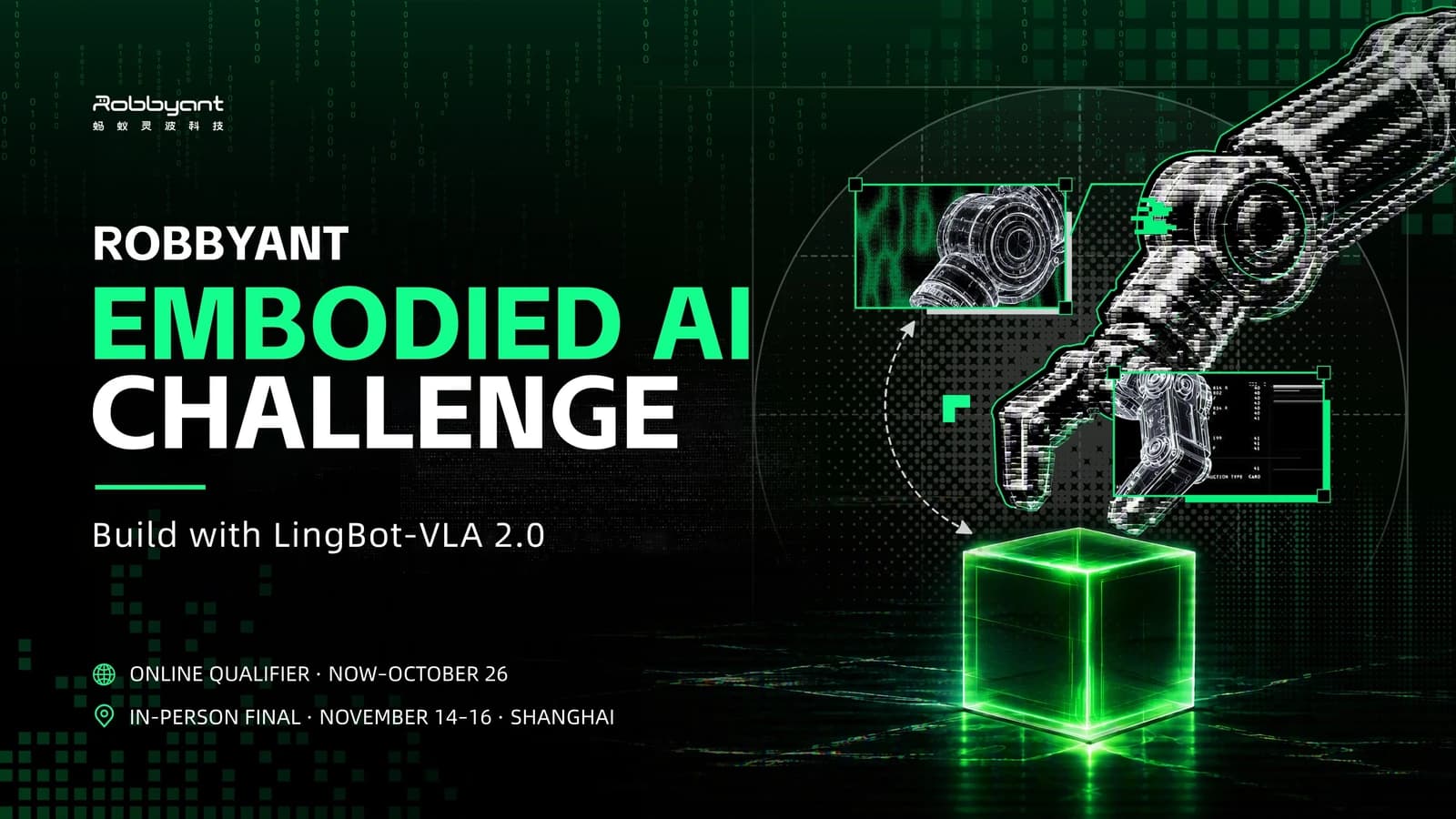
Robbyant will advance 15 teams to the Shanghai final of its inaugural Embodied AI Challenge, where competitors will adapt their models to physical robots during a 48-hour hackathon, the company told Humanoids Daily.
The November 14–16 event will use AgileX Robotics’ Cobot Magic, a dual-arm mobile manipulation platform. The confirmation adds hardware and finalist details to Robbyant’s October 27 announcement, which reported more than 1,800 registered teams from 13 countries.
- Robbyant says 15 teams will compete in a 48-hour physical-robot hackathon in Shanghai, using AgileX’s Cobot Magic platform.
- The challenge is built around the open-source LingBot-VLA 2.0 model; more than 1,800 teams registered, but the number of qualifying submissions has not been disclosed.
- Final tasks, scoring criteria and arrangements for advance robot access and training data are still being finalized.
From model development to physical execution
Organized by Ant Group’s embodied AI company Robbyant with ModelScope and Alibaba Cloud Tianchi, the competition launched in September. Its announced scope covers model training and fine-tuning, generalization in simulation and adaptation to real robots.
In written responses to Humanoids Daily, Ant Group PR advisor Tony Peng said finalists would need to “adapt, optimize and deploy their models on physical robots.” Qualifying submissions are still under review, so the 15 finalists have not yet been identified in the information shared with us.
Follow humanoid robotics without following every announcement.
Get the week’s most important launches, funding and research—and why they matter—in one email from Humanoids Daily.
Once a week. Unsubscribe anytime.
Read recent issuesThe selected platform makes the final a mobile-manipulation challenge rather than a competition between humanoid bodies. Its relevance to humanoid development lies in the underlying question: how effectively can a vision-language-action model be adapted to perform useful tasks on physical hardware?
What the final will measure remains open
Robbyant said the task design and scoring criteria are still under development. It has not yet confirmed whether finalists will encounter unfamiliar objects, environments or tasks, or how much access they will have to robots and real-world training data beforehand.
Those choices will shape what the results tell us. Success after extensive practice on a known task measures something different from adapting to an unfamiliar object or setting. Repeated trials and accounting for human intervention would also help distinguish a successful attempt from consistent performance.
Asked about improvements over the base LingBot-VLA 2.0 model and publication of baseline comparisons, results and complete-attempt videos, Peng said evaluation was ongoing and further details would follow. No publication commitment for those materials was provided in the response.
The registrations indicate substantial interest in the challenge, but they should not be read as 1,800 completed qualifying entries. The physical final could provide a useful view of how teams adapt an open model under a common competition format. Its value as evidence of broader robot generalization will depend on the rules and results still to come.
Share this article
Follow humanoid robotics without following every announcement.
Get the week’s most important launches, funding and research—and why they matter—in one email from Humanoids Daily.
Once a week. Unsubscribe anytime.
Read recent issuesRead next
- Published on
- Reading time
- 3 min read
XPENG Says IRON’s Solid-State Battery Has Entered Small-Batch Production
- Published on
- Reading time
- 2 min read
ROKAE Reports 10,000 Humanoid Arms Delivered, Identifies Schaeffler Factory Deployment
- Published on
- Reading time
- 3 min read
AGIBOT Coordinates 110 Production Humanoids in Guinness-Certified Dance Performance
- Published on
- Reading time
- 3 min read
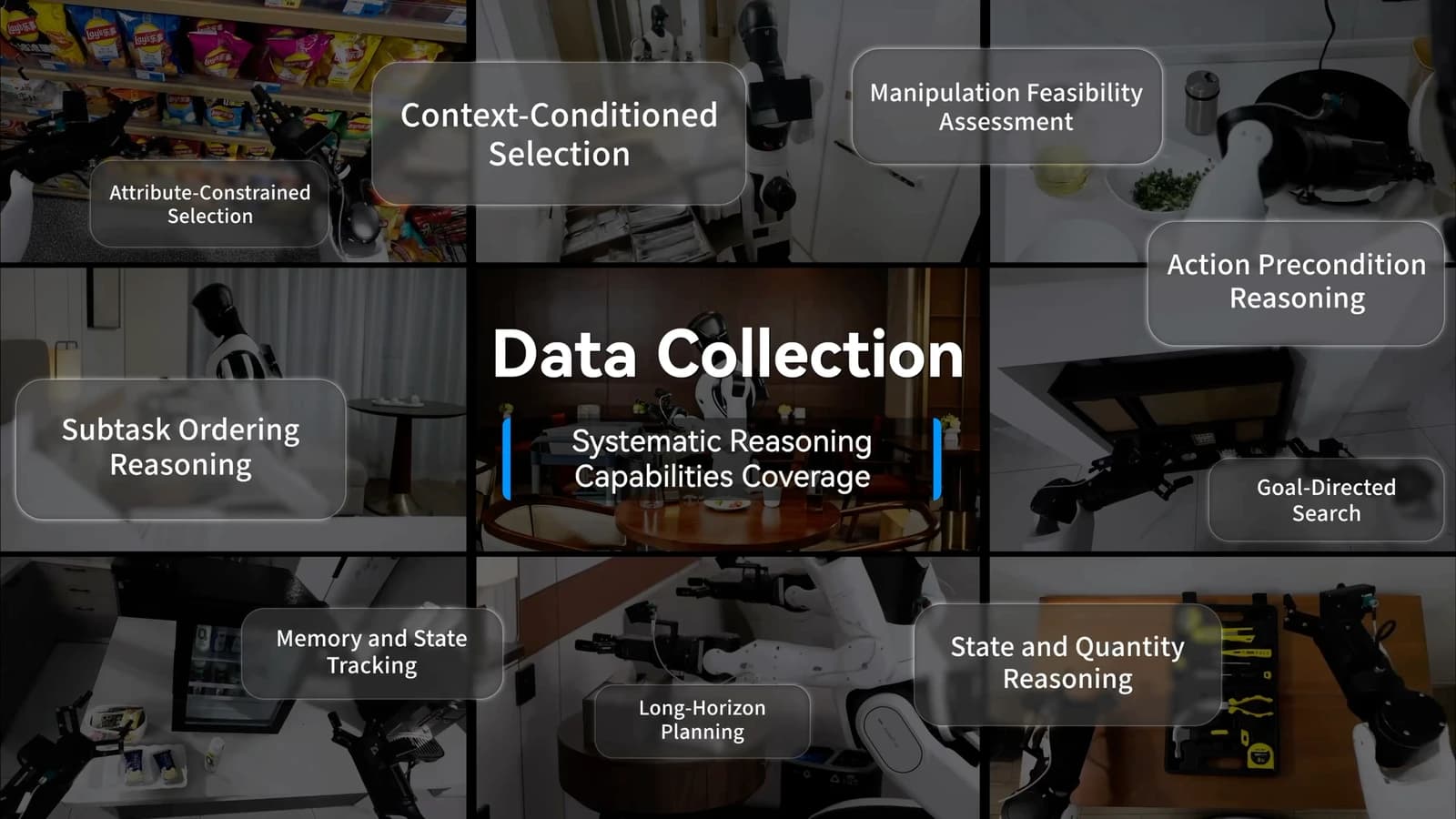
AGIBOT Releases Physical Reasoning Dataset to Connect Robot Decisions With Actions
- Published on
- Reading time
- 2 min read
XPENG Shows IRON Switching Between Handshakes, Fist Bumps and High-Fives
- Published on
- Reading time
- 8 min read
The Unitree G1 Is Becoming a Platform for American Robot Startups