- Published on
XPENG Shows IRON Switching Between Handshakes, Fist Bumps and High-Fives
One tap, and our reporting appears more often in your Google Top Stories. It makes a real difference to a small newsroom.


Your guide
Rich Robinson
Jee Chee Ren · Executive tour
See China’s AI and robotics ecosystem first-hand.
Six days exploring AI, robotics and advanced manufacturing.
With Rich Robinson, Clinical Professor of Entrepreneurship at Peking University
Beijing · Guangzhou · Shenzhen
29 November–4 December 2026
Referral partnership · We earn a commission on referred bookings.
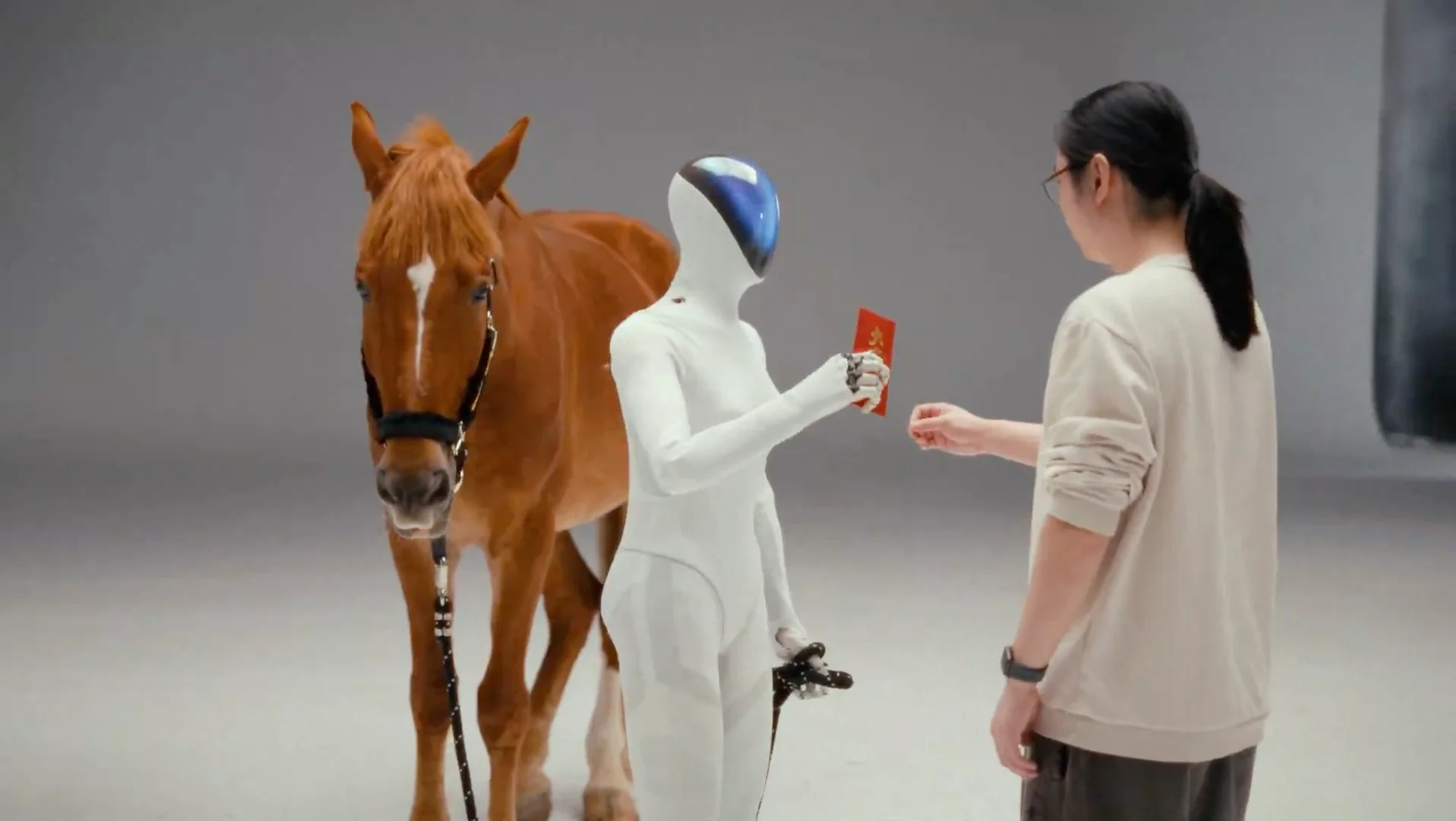
XPENG has shared a new IRON demonstration showing its humanoid switching between handshakes, fist bumps and high-fives as a person changes gestures mid-movement. The company says its VLA 2.0 technology lets the robot interpret visual cues and adjust its movements without spoken commands.
- IRON follows changing hand gestures, including switching arms to reach a high-five.
- XPENG says the robot re-evaluates what it sees every 0.2 seconds using VLA 2.0.
- The footage is labeled an R&D test-version demonstration, with no success-rate or end-to-end latency figures disclosed.
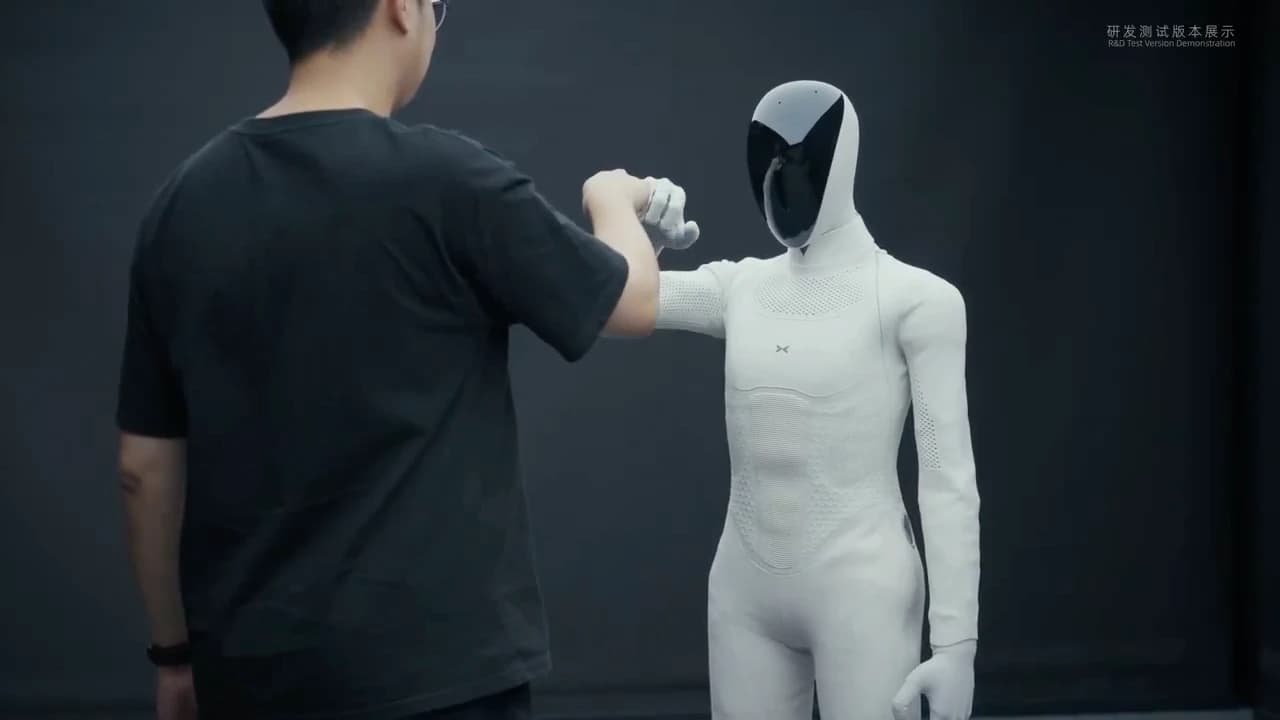
In the video posted by XPENG, a tester offers a handshake, changes to a fist bump, then moves into a high-five. When the target moves beyond the reach of the arm IRON initially uses, the robot responds with its other hand.
The accompanying explanation describes a continuous cycle of observation, motion planning and execution. Rather than waiting for one gesture to finish before responding to the next, XPENG says IRON keeps updating its movement as the person's hand changes position. Its stated interval of 0.2 seconds corresponds to five reasoning updates per second; it is not a measurement of the complete time between seeing a gesture and responding.
XPENG's post describes IRON as predicting a person's next move. The concrete behavior presented here is narrower: adapting to changing visual cues during an interaction. The video does not provide a separate test of prediction accuracy or disclose how many attempts were filmed. It also does not establish whether the VLA 2.0 system is identical to the model used in XPENG's vehicles.
CEO He Xiaopeng framed the demonstration as a step toward everyday use: “Natural interaction begins with these simple moments.” He said continued improvements would allow IRON to enter daily life and create value.
The update focuses on a small but useful interaction skill: keeping up when a person changes their mind halfway through a gesture. The on-screen R&D label places it firmly in ongoing development, rather than announcing a production-ready capability or customer rollout.
Share this article
Read next
- Published on
- Reading time
- 6 min read
Inside XPENG’s Bet on IRON: He Xiaopeng on Why the Hardest Path in Humanoid Robotics Is Never Crowded
- Published on
- Reading time
- 6 min read
XPENG Launches Mass Production of IRON Humanoid
- Published on
- Reading time
- 4 min read
XPENG's Head of Robotics Admits Hardware is 'Bottleneck' as 2026 Production Goal Looms
- Published on
- Reading time
- 4 min read
Xpeng to Break Ground on "Full-Chain" Humanoid Factory to Meet 2026 Production Goal
- Published on
- Reading time
- 3 min read
XPENG CEO Targets Late 2026 for Massive IRON Deployment
- Published on
- Reading time
- 5 min read
Simulating the 'Masterpiece': XPENG Robotics Unveils Design Framework and Lattice Musculature for IRON

The weekly humanoid robotics briefing
One email a week: the launches, funding and research that mattered, with context from Humanoids Daily.
Read recent issues