- Published on
The Unitree G1 Is Becoming a Platform for American Robot Startups
One tap, and our reporting appears more often in your Google Top Stories. It makes a real difference to a small newsroom.


Your guide
Rich Robinson
Jee Chee Ren · Executive tour
See China’s AI and robotics ecosystem first-hand.
Six days exploring AI, robotics and advanced manufacturing.
With Rich Robinson, Clinical Professor of Entrepreneurship at Peking University
Beijing · Guangzhou · Shenzhen
29 November–4 December 2026
Referral partnership · We earn a commission on referred bookings.
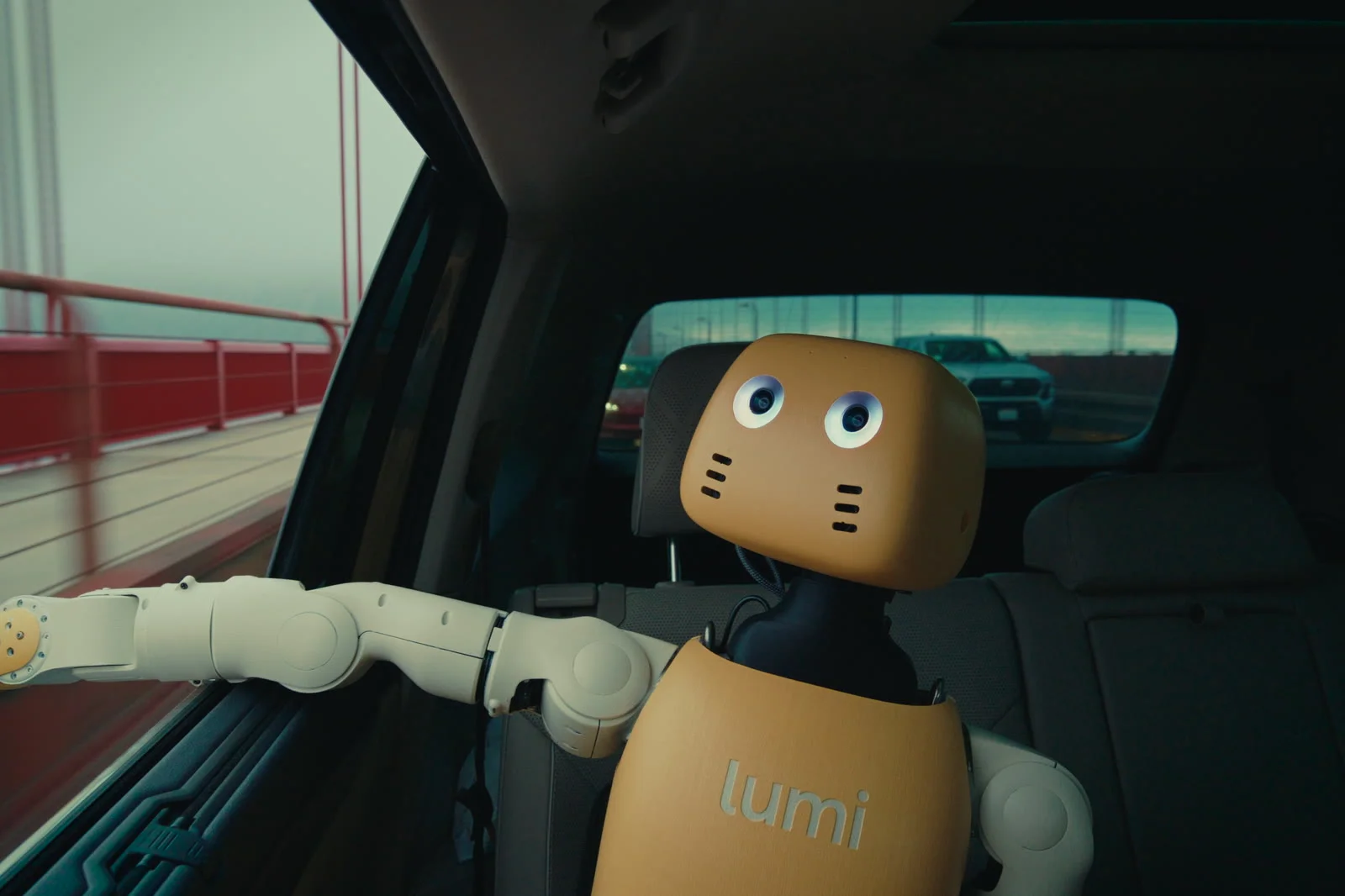
A yellow conversational robot, a furry entertainment character and a home helper with backwards-bending legs look like three very different visions of American robotics. Beneath those designs, the Unitree G1 is emerging as a common starting point, allowing startups to focus on what a robot does and how people experience it rather than building every joint from scratch.
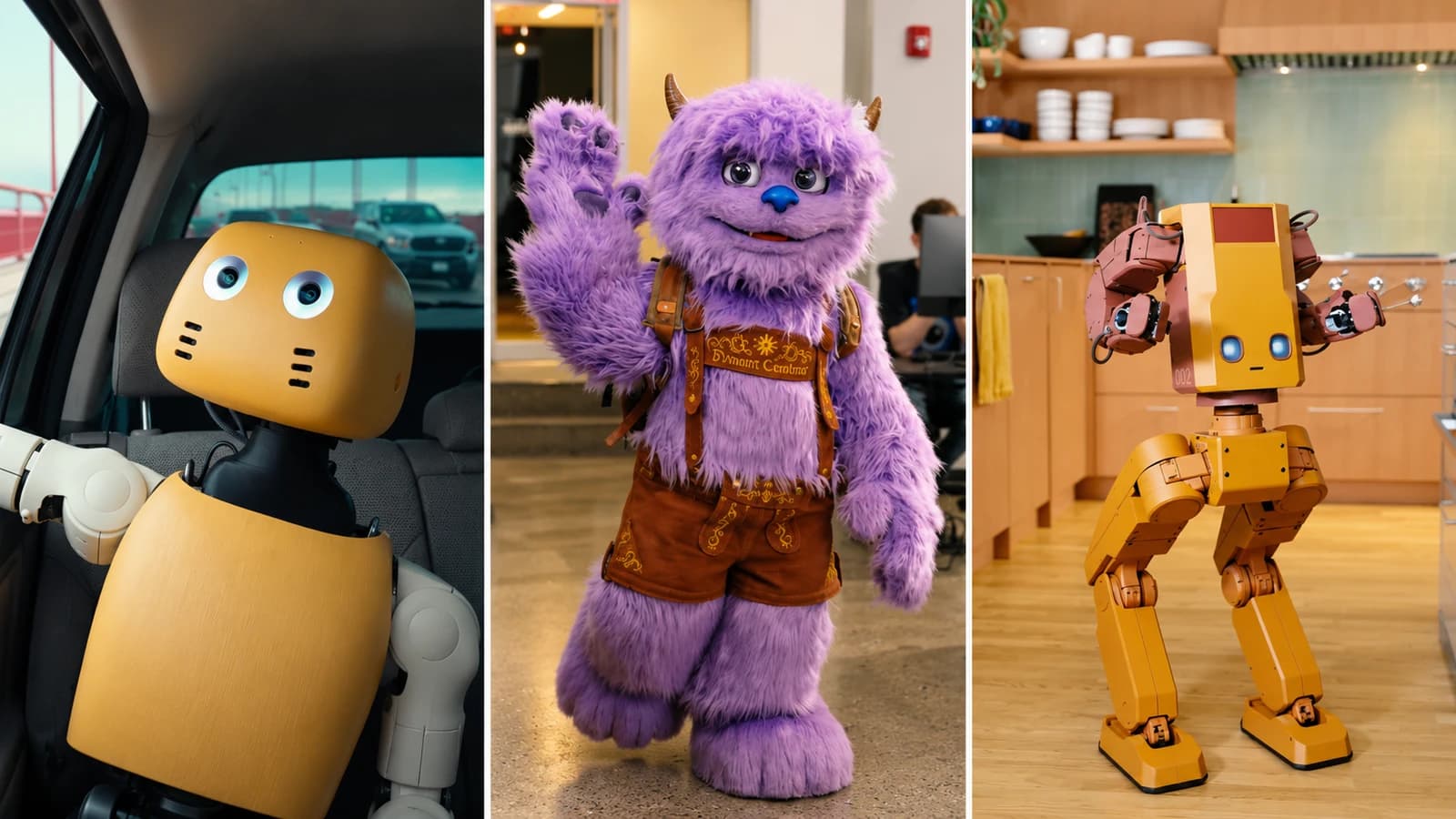
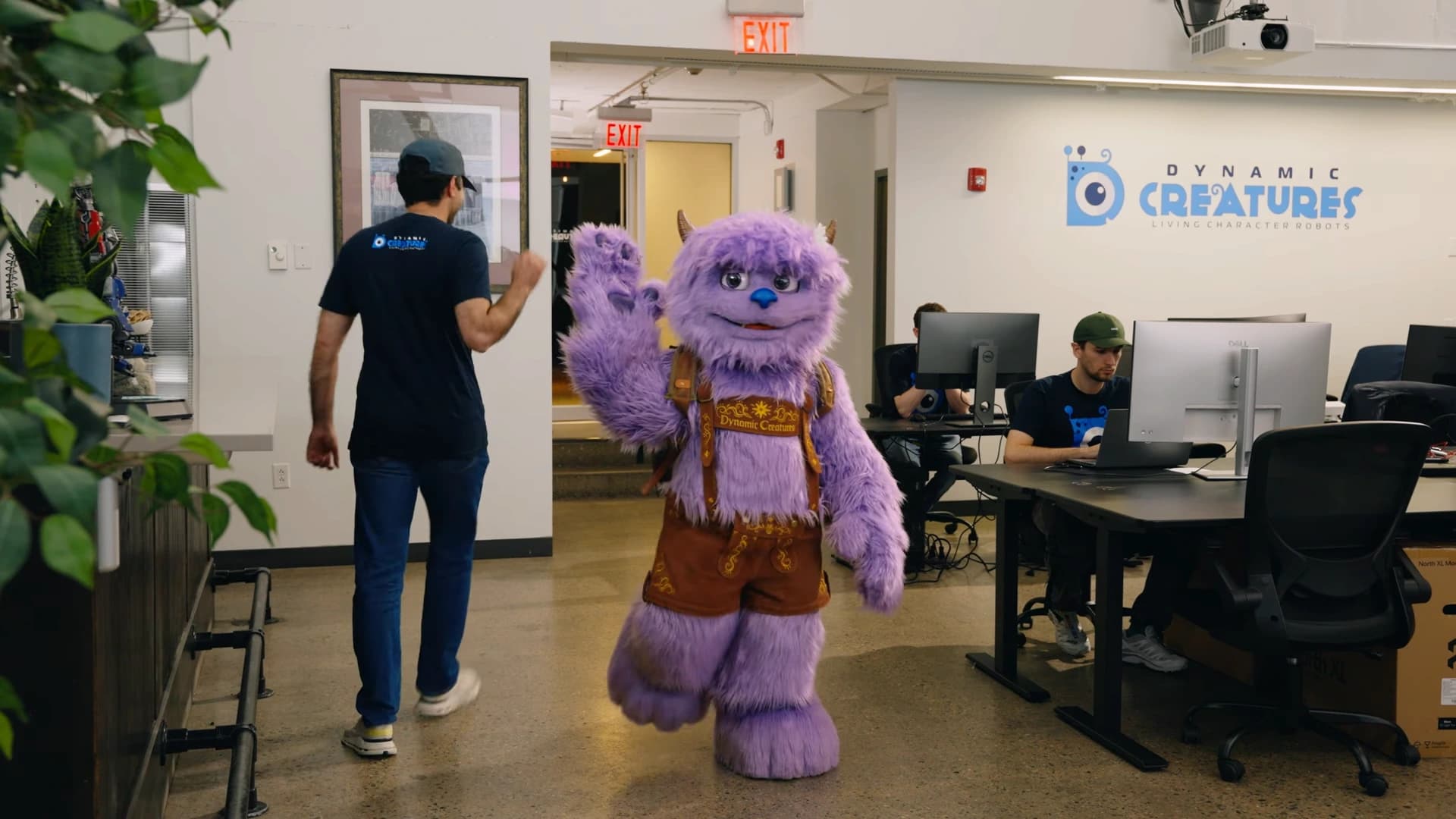
Lightberry's Lumi is documented as using a G1 body. Tuesday Labs investor Benjamin Bolte identifies Voxel as G1-based, while development footage from Dynamic Creatures suggests a modified G1 underneath Hugo's costume. That third connection remains unconfirmed, but together the projects illustrate the growing importance of a Chinese hardware platform to new American robot products.
- Lumi uses a Unitree G1 body; investor Benjamin Bolte identifies Voxel as G1-based. Hugo's possible G1 foundation remains a visual inference.
- The startups are pursuing different products through custom sensing, software, character design and intended applications.
- A report of Wang Xingxing's latest remarks puts cumulative G1 production at roughly 10,000–20,000 units, a manufacturing figure rather than a verified sales total.
- Using an existing platform can reduce the scope of hardware development, but leaves application reliability, safety and customer support to be solved.
Three products, different uses for a common body
Lightberry's Lumi offers the clearest documented example. As we reported in our coverage of its launch, the San Francisco company built its interactive robot on a 29-degree-of-freedom G1 body, replacing the onboard computer and adding its own sensing and interaction hardware.
Lumi combines a Jetson Thor T4000 module, an eight-microphone array, stereo cameras, a moving neck and grippers. Its $39,990 Founder Edition was announced for commercial entertainment, marketing and developer uses. The product proposition centers on conversation, timing and awareness of the people around it. Lightberry is trying to make an encounter work, with hardware changes that go well beyond a new exterior.
The weekly humanoid robotics briefing
One email a week: the launches, funding and research that mattered, with context from Humanoids Daily.
Read recent issuesDynamic Creatures' Hugo takes character design further. Its purple fur, horns and oversized hands conceal a platform the company describes as having 43 actuators. Dynamic Creatures says it is developing a Vision-Language-Expression model to connect perception and language with expressive movement.
The G1 connection is less certain here. In the Hugo introduction video we covered, a developer's monitor briefly shows a mechanical model whose proportions and joint layout resemble a modified G1. Dynamic Creatures has not confirmed that identification in the material reviewed. Its relationship with Boston Dynamics as an entertainment and hospitality partner does not, by itself, identify Hugo's underlying hardware.
Tuesday Labs' Voxel is the most visually unconventional of the three. Its tall yellow body doubles as a face, with low-set illuminated eyes and legs that bend in the opposite direction to human knees. The prototype appears to reinterpret the G1 in a reversed orientation, giving familiar hardware a markedly different silhouette. The launch materials do not provide a detailed account of the conversion.
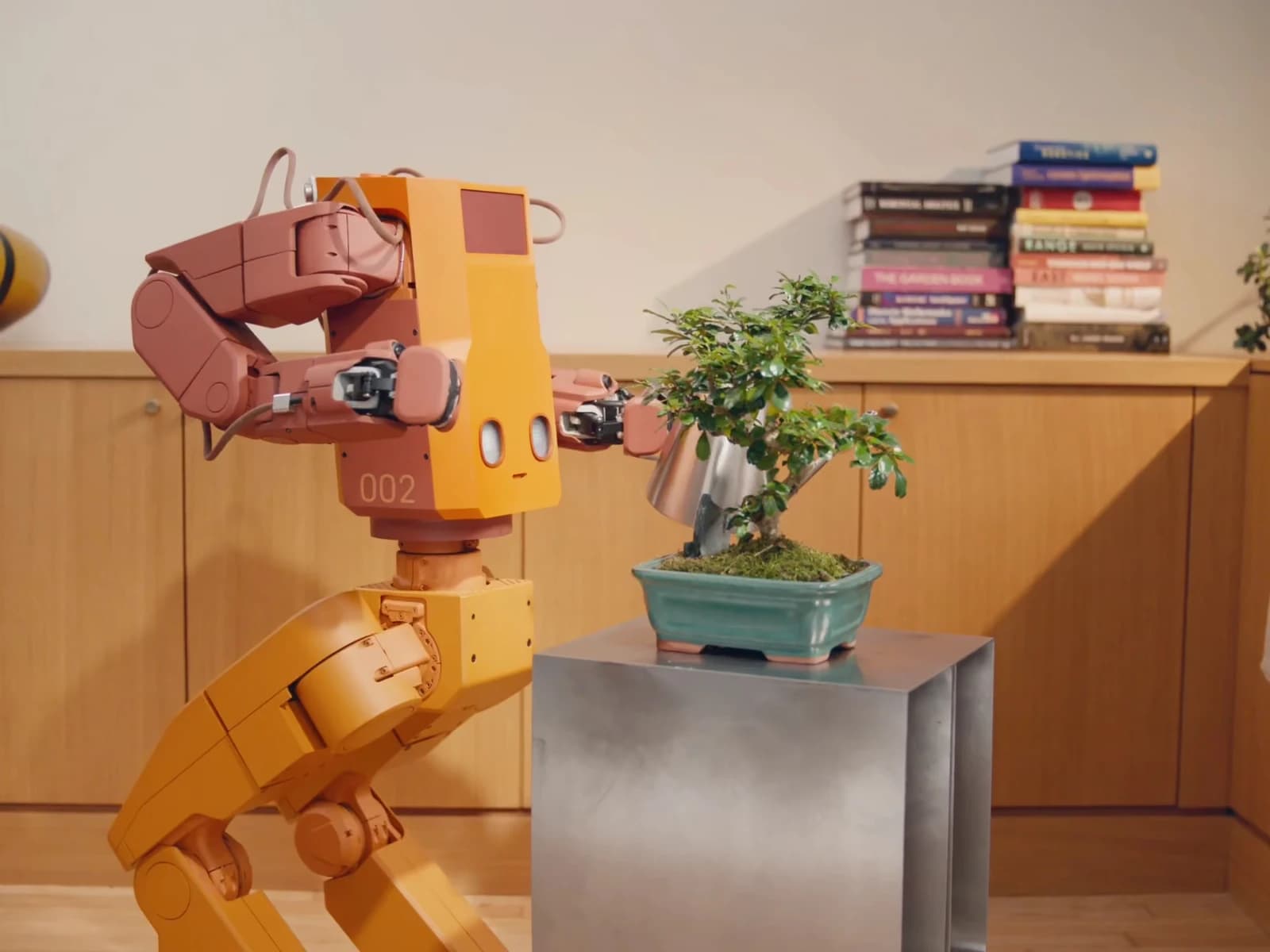
Bolte supplies a more direct identification. In his defense of Tuesday Labs, he explicitly calls it a “Unitree G1 wrapper” and discloses that he is an angel investor in the company.
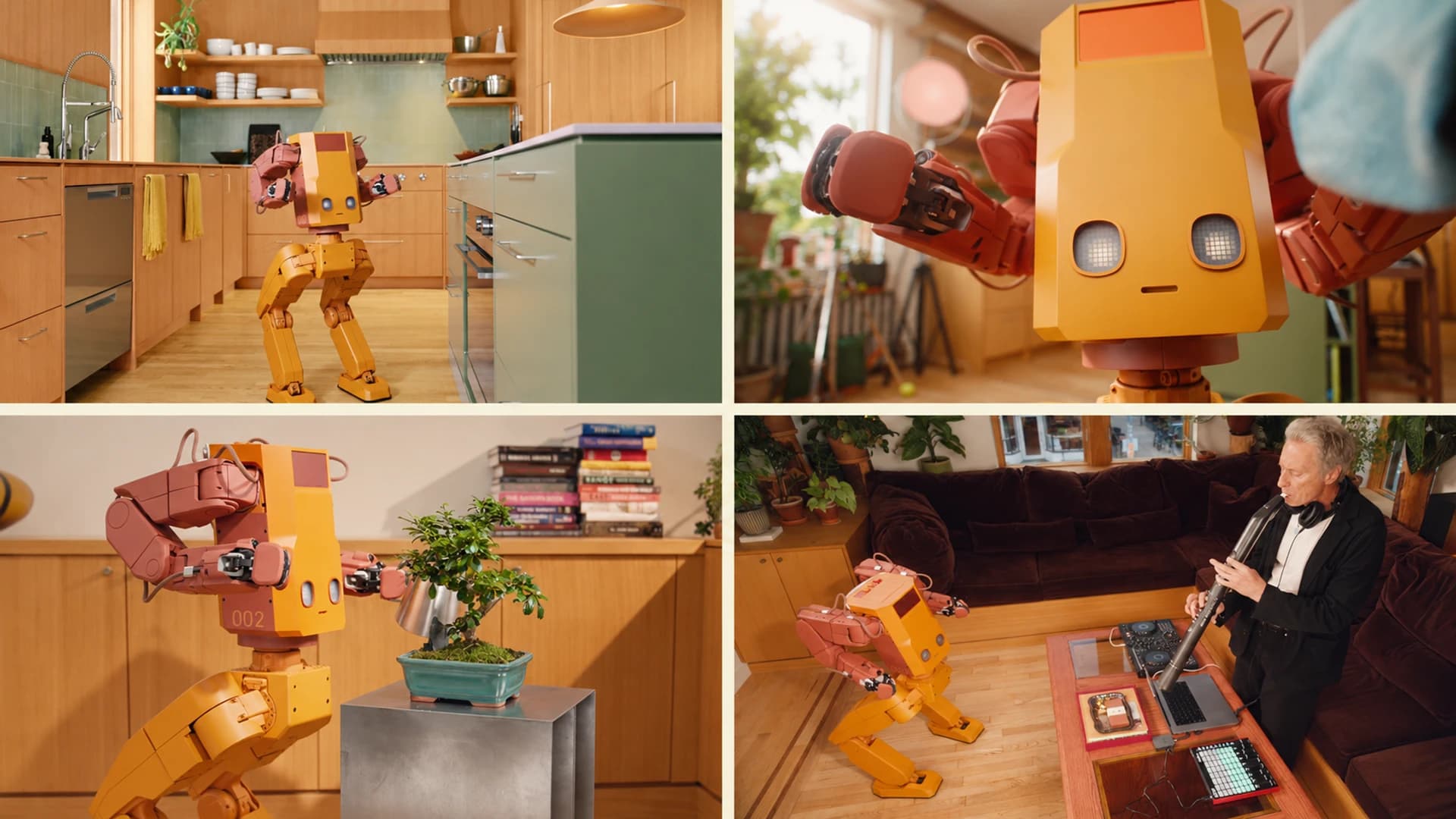
Tuesday Labs gives its own explanation of that approach in its making-of video. Hardware lead Paul Vizzio says the team wants to test its idea for a character-driven home robot as quickly as possible: “The quickest way for us to do that is use the most proven technology, at least on the robotic side, there is, and then add our character development on top of that.” He does not name Unitree or the G1 in that explanation, but it makes clear why the team chose to build on existing robotics technology.
The video also describes what Tuesday is adding. Founder and CEO Rosalind Shinkle calls character an architecture for unifying the robot's design decisions. Founding engineer Sam Scheele gives a concrete example: the team has worked on smoothing transitions between motion models, avoiding the visible jolts that can break the impression of one coherent character. That is a specific engineering task beyond changing the robot's appearance, although the video does not establish how reliably Voxel performs household chores.
As our Voxel launch article explains, Tuesday is targeting household tidying, fetching and plant care. Its estimated $20,000 product is expected in 2028, and the company says the development prototype will undergo substantial hardware redesign. The platform used for the launch should therefore not be treated as a confirmed specification for the eventual production robot.
The argument over “wrappers”
The pattern has drawn criticism. In an October 21 post, Clay Haight, working on hardware at Sunday, described three recent startups wrapping the G1 as a sign of weakness in US robotics manufacturing. The post does not name the three companies.
Bolte argues that buying the body can be a commercially sensible choice. His case for Tuesday is that a startup can build a product without financing an entire humanoid manufacturing program or training its own foundation model. He also points to freedom to choose external model providers. His assessment of Tuesday's economics is an investor's view, not independently demonstrated profitability.
Bolte's background gives that argument particular context. He founded K-Scale Labs, which attempted to build its own humanoid platform before shutting down. In his explanation of K-Scale's collapse, he described the financing burden of making its flagship K-Bot viable at scale and a funding round that failed to materialize.
Neither position settles whether these new products will succeed. They identify different questions: who can manufacture an affordable robot body, and who can turn that body into something customers want to use and pay for?
How large has the G1 platform become?
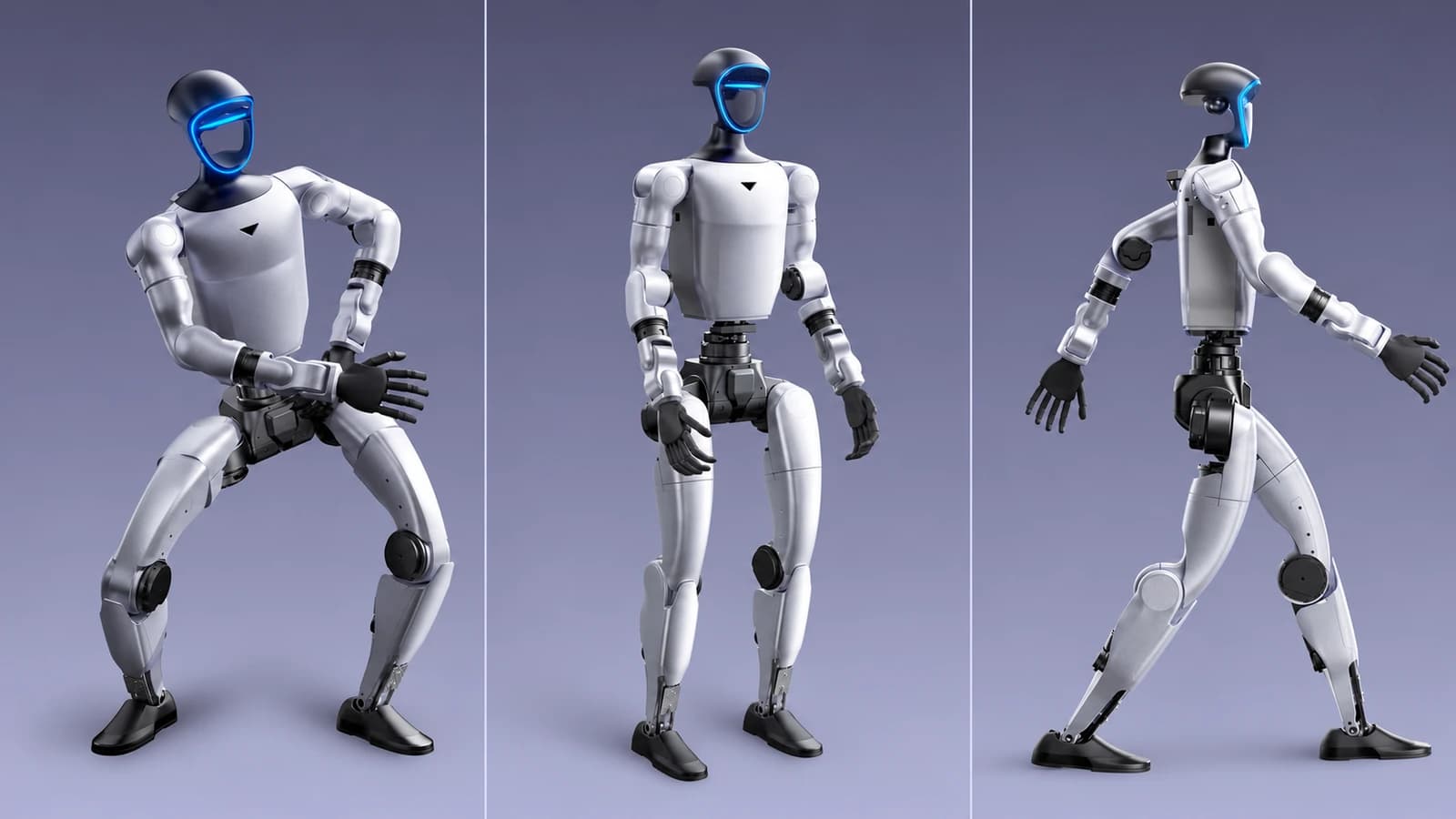
The G1's appeal extends beyond these launches. Unitree sells a configurable humanoid platform, with its official specifications distinguishing the standard G1 from the developer-oriented EDU version.
The widely cited $13,500 starting price needs that distinction. Unitree's store says the base product does not support secondary development and directs customization customers to the EDU edition. The entry price is therefore not a reliable estimate of what an application startup pays for its development hardware, modifications or finished product.
Manufacturing scale is another part of the story. According to BigGo Finance's account of Wang Xingxing's October 22 conference remarks, the Unitree founder put cumulative G1 production since its May 2024 launch at roughly 10,000–20,000 units and described it as the world's best-selling humanoid.
The report's body gives that broad range, despite a headline suggesting nearly 20,000. It should be treated as an attributed production claim, not an independently verified count of sales, active deployments or robots performing paid work. Even with that limitation, it indicates the scale of manufacturing behind a platform other companies can build around.
Why the FCC restrictions do not shut out the existing G1
The platform's US role also has a regulatory dimension. As we reported in July, the FCC restricted new equipment authorizations for foreign-produced advanced robotic devices. The distinction is between newly authorized models and those already approved: previously authorized models can continue to be imported and sold, including newly manufactured units, as Latham & Watkins explains.
The G1 falls on the existing-model side. Bonded Robotics' compliance review identifies its FCC authorization as dating to March 3, 2025, before the July 28, 2026 restrictions. That gives the established platform a route into the US market that new foreign models may lack. It does not automatically settle the status of every derivative: substantial modifications or a separately marketed configuration may raise their own authorization requirements.
The work moves up the stack
A shared body lets teams concentrate on different problems: Lumi's conversational interaction, Hugo's character performance and Voxel's intended household routines. It also creates dependence on the supplier's hardware, parts availability and platform decisions.
Adding a new exterior alone would offer limited differentiation. Reliable navigation, useful manipulation, natural interaction and service over the life of the product require substantial engineering, regardless of where the legs were manufactured. The demonstrations and reservations announced so far do not establish that those problems have been solved.
For Unitree, the significance is broader than the visibility of its own brand. A G1 can reach a new audience under another company's character, software and product identity. The emerging test of its success as a platform is whether those companies can turn a readily available robot body into durable businesses of their own.
Share this article
Read next
- Published on
- Reading time
- 4 min read
Former Boston Dynamics Roboticist Unveils Voxel, a $20,000 Home-Tidying Robot
- Published on
- Reading time
- 7 min read
Lightberry Unveils Lumi: A $40k Interactive Humanoid Built on a Unitree Core
- Published on
- Reading time
- 3 min read
Dynamic Creatures Introduces Hugo, a Furry Character Robot With 43 Actuators
- Published on
- Reading time
- 5 min read
Dynamic Creatures Emerges From Stealth With Boston Dynamics Backing to Build Expressive Guest-Facing Robots
- Published on
- Reading time
- 4 min read
The Imminent Embodied AI Ban: FCC to Target Chinese Humanoids
- Published on
- Reading time
- 6 min read
The Battle Over Chinese Humanoids: As Congress Debates the GUARD Act, Industry Divides Over National Security vs. Research Reality


The weekly humanoid robotics briefing
One email a week: the launches, funding and research that mattered, with context from Humanoids Daily.
Read recent issues