- Published on
The Physical Bottleneck: Why Actuator Technology is the Next Frontier for Humanoid Robots
One tap, and our reporting appears more often in your Google Top Stories. It makes a real difference to a small newsroom.


Your guide
Rich Robinson
Jee Chee Ren · Executive tour
See China’s AI and robotics ecosystem first-hand.
Six days exploring AI, robotics and advanced manufacturing.
With Rich Robinson, Clinical Professor of Entrepreneurship at Peking University
Beijing · Guangzhou · Shenzhen
29 November–4 December 2026
Referral partnership · We earn a commission on referred bookings.
- Humanoid robotics is rapidly shifting its developmental focus from purely cognitive AI software to overcoming complex physical actuation bottlenecks.
- Traditional industrial robotic joints are too rigid for the dynamic, compliant motion required in unpredictable, human-centric environments.
- Quasi-Direct Drive (QDD) architectures provide the necessary low impedance, backdrivability, and precise force interaction for next-generation humanoid platforms.
- Integrated actuator solutions, such as those engineered by CubeMars, combine motors, drivers, and encoders into compact systems to accelerate reliable real-world deployment.
The evolution of humanoid robots has reached a critical inflection point. Over the past few years, the industry has witnessed exponential gains in artificial intelligence. Advanced vision-language models and reinforcement learning algorithms have granted machines the ability to understand complex environments, reason through multi-step tasks, and make split-second decisions. Yet, as these cognitive capabilities accelerate, a glaring disparity has emerged: the hardware struggles to keep pace with the software.
For humanoid robots to transition from highly curated demonstration environments to chaotic, real-world applications, they require more than just intelligence. They require robust, reliable, and highly responsive physical motion capabilities. At the heart of this challenge lies actuator technology.
The Transition to Real-World Physical Execution
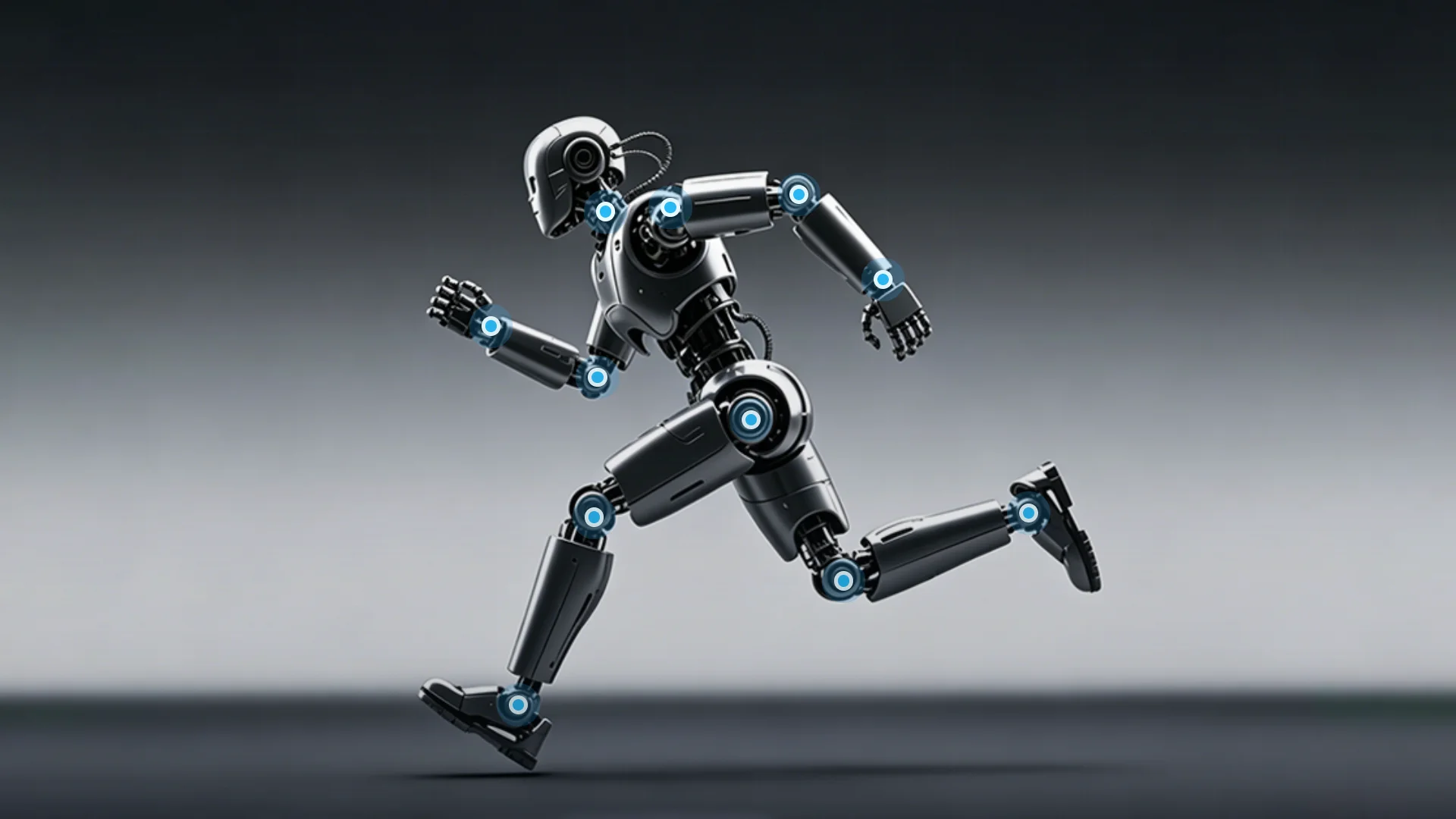
Historically, the development of intelligent machines prioritized the brain over the brawn. AI enables a robot to interpret a task—such as navigating a cluttered warehouse or assisting in a medical facility—but it is the hardware that determines whether the robot can physically execute that task without mechanical failure.
Motion systems have evolved into the definitive bottleneck for practical humanoid deployment. A robot's intelligence is ultimately limited by its joints. If an actuator cannot deliver the necessary torque, respond with sufficient speed, or absorb unexpected impacts safely, the most sophisticated neural network in the world cannot prevent a system failure. Strengthening the connection between digital intent and physical movement is now the primary objective for robotics engineers worldwide.
The weekly humanoid robotics briefing
One email a week: the launches, funding and research that mattered, with context from Humanoids Daily.
Read recent issuesWhy Humanoids Demand Specialized Actuation
Traditional industrial robots operate in highly structured, predictable environments. Their joint systems are engineered for absolute rigidity, millimeter-level repeatability, and continuous high-speed operation behind safety cages. Humanoid robots, however, face a completely different set of operational realities.
First, humanoids are subject to severe space and weight constraints. To mimic the human form factor efficiently, actuators must be remarkably compact without sacrificing power, requiring a high torque density that legacy industrial motors cannot natively provide.
Second, operating in dynamic, human-centric environments demands mechanical compliance. When a humanoid interacts with a person or bumps into an unexpected obstacle, its joints cannot remain entirely rigid; they must possess excellent backdrivability and low impedance to absorb the force safely. This requires rapid dynamic response and highly precise torque control—capabilities that ensure the robot can perform delicate human-robot interactions without posing a safety risk.

The Quasi-Direct Drive (QDD) Paradigm
To meet these stringent requirements, the robotics industry is moving away from traditional high-ratio gearboxes and increasingly embracing Quasi-Direct Drive (QDD) architectures.
QDD systems utilize motors with high torque density paired with low-ratio reduction gears. This specific configuration minimizes friction and rotational inertia, resulting in highly transparent force transmission. For a humanoid robot, this means the actuator can instantly sense external forces and react accordingly. The inherent backdrivability of QDD designs allows for exceptional force interaction, enabling the robot to handle unpredictable physical environments with human-like compliance.

Furthermore, the push toward integrated actuator solutions is simplifying the complex development cycles of humanoid platforms. By merging the motor, driver, encoder, and communication systems into a single, cohesive unit, engineers can reduce system weight, eliminate failure points in wiring, and drastically accelerate both prototyping and manufacturing phases.
Bridging the Gap: The CubeMars Approach
Addressing these industry-wide challenges requires deep, sustained specialization in robotic power systems. With 17 years of dedicated experience in industrial automation and a comprehensive global service network, CubeMars focuses precisely on the advanced actuator architectures required to power next-generation intelligent equipment.
Their integration of QDD technology offers a clear blueprint for the future of humanoid joint design. The CubeMars AK Series Robotic Actuators provide a highly integrated structure that delivers essential torque density within a tightly constrained footprint. Featuring dual encoder feedback, the AK Series is engineered specifically for the dynamic demands of humanoid joints, ensuring precise torque control and reliable proprioceptive feedback.

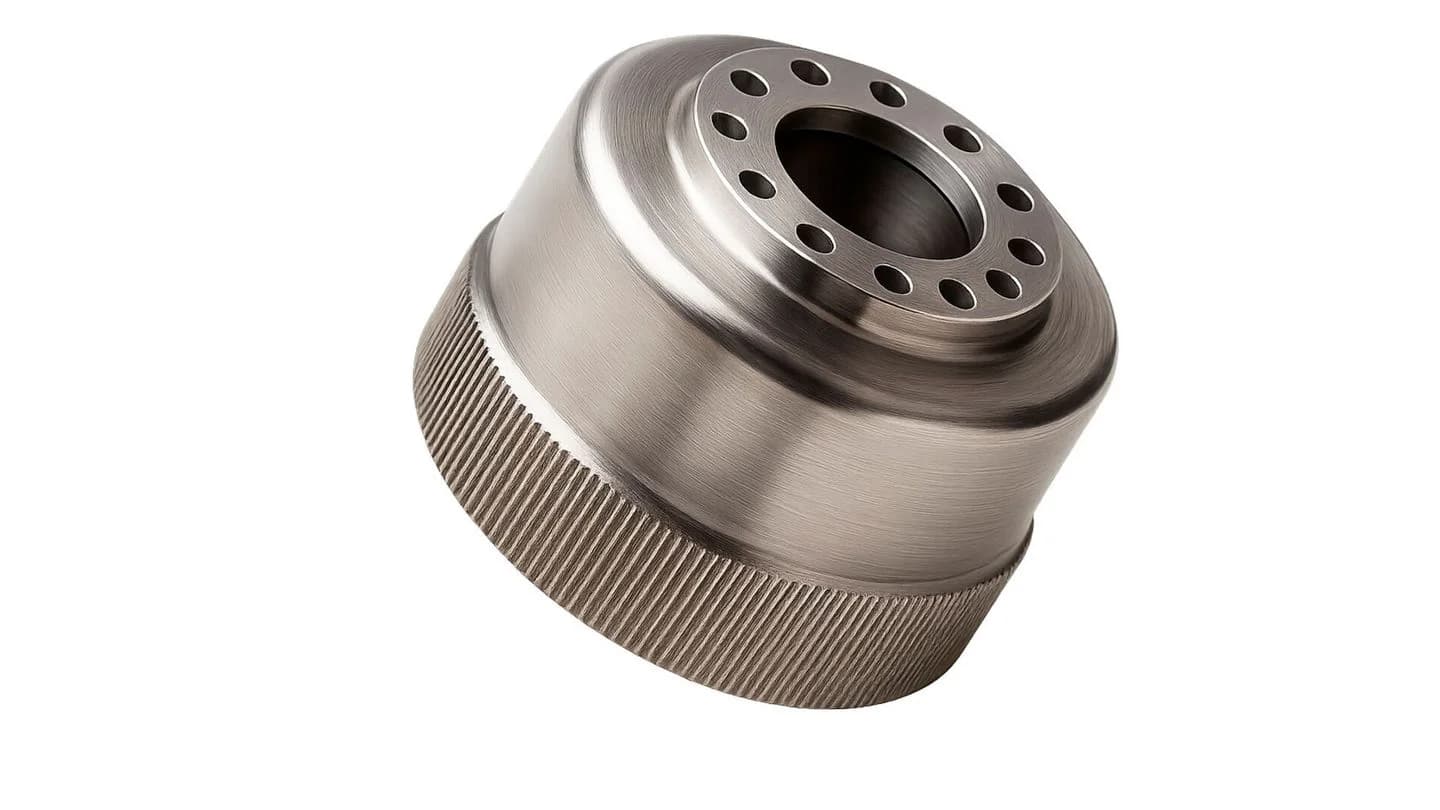
For applications demanding even greater mechanical force—such as lower-limb load-bearing joints—the AKH Series Hollow Shaft Actuators utilize a specialized planetary structure. This design maintains a compact mechanical integration while maximizing torque output, demonstrating how targeted actuator engineering can overcome the physical limitations of humanoid locomotion.
As the industry shifts toward scalable physical AI the differentiation between competing robotic platforms will no longer be strictly algorithmic. In a market projected to easily exceed $10 billion over the next decade, success will be defined by physical capability. Innovations in integrated, high-performance actuators are not just hardware components; they are the foundational building blocks that will finally allow artificial intelligence to operate confidently in the physical world.
Share this article
Read next
- Published on
- Reading time
- 8 min read
Analysts See a PEEK Boom in Humanoid Robots. Kingfa’s Robotics Lead Says Most of It Is Hype
- Published on
- Reading time
- 4 min read
Schaeffler Cracks the Cost Bottleneck: Formed Strain Wave Gearboxes Target 2027 Mass Production
- Published on
- Reading time
- 6 min read
Tesla Begins Optimus Production in Fremont, Targets Customer Deliveries in Late 2027
- Published on
- Reading time
- 3 min read
Agile Robots Unveils Agile ONE SN as NVIDIA Expands Its Isaac Robotics Platform
- Published on
- Reading time
- 8 min read
The Unitree G1 Is Becoming a Platform for American Robot Startups
- Published on
- Reading time
- 3 min read
Noetix Robotics Files for Hong Kong IPO, Bloomberg Reports



The weekly humanoid robotics briefing
One email a week: the launches, funding and research that mattered, with context from Humanoids Daily.
Read recent issues