- Published on
Unitree’s UniUni Lets Operators Choreograph Robot Teams With Natural Language
One tap, and our reporting appears more often in your Google Top Stories. It makes a real difference to a small newsroom.


Your guide
Rich Robinson
Jee Chee Ren · Executive tour
See China’s AI and robotics ecosystem first-hand.
Six days exploring AI, robotics and advanced manufacturing.
With Rich Robinson, Clinical Professor of Entrepreneurship at Peking University
Beijing · Guangzhou · Shenzhen
29 November–4 December 2026
Referral partnership · We earn a commission on referred bookings.
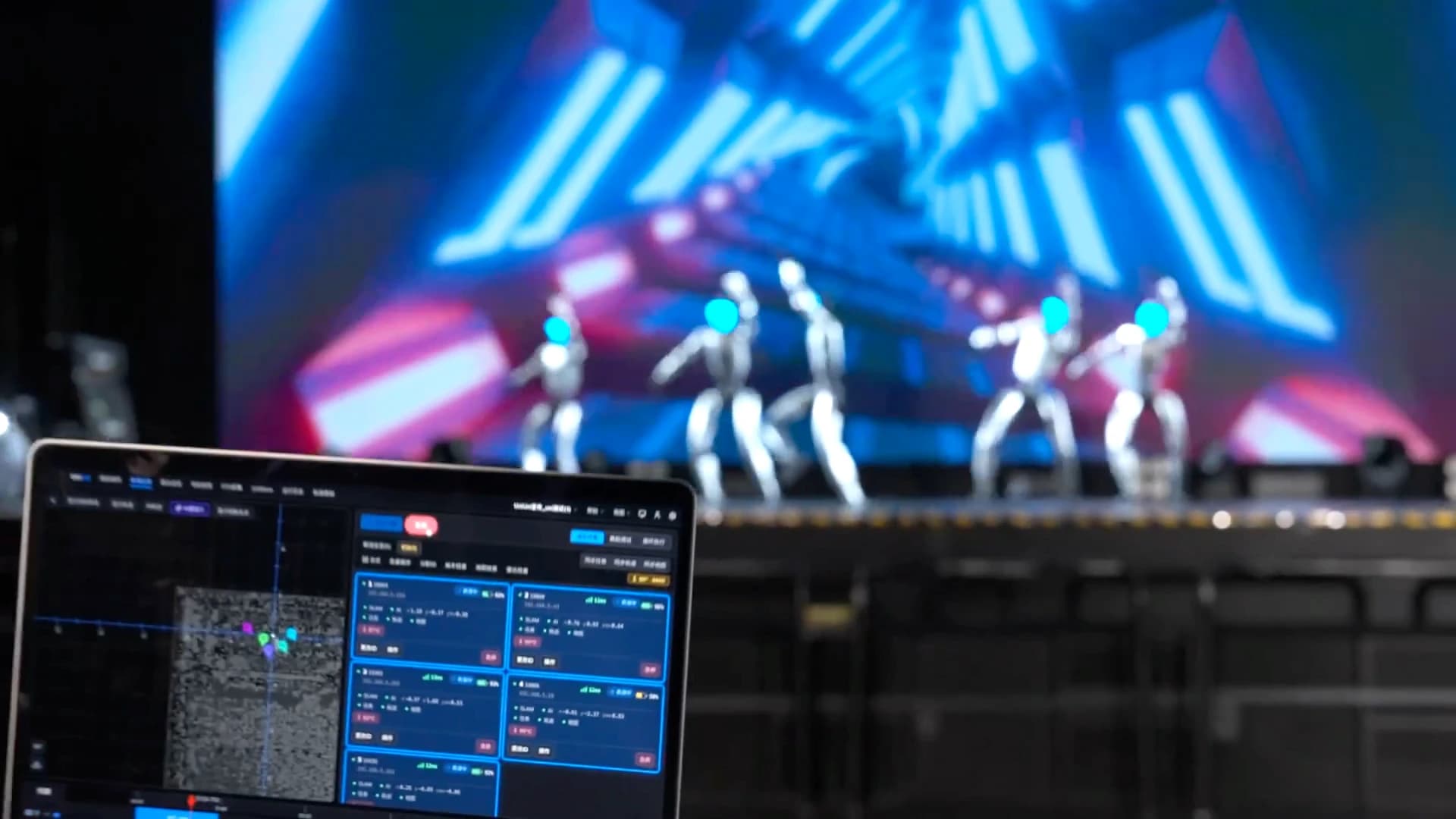
- UniUni combines stage mapping, a per-robot choreography timeline and live device monitoring in a system for coordinated robot performances.
- Unitree demonstrates a natural-language interface for requesting choreography changes, alongside battery warnings and emergency-stop controls.
- The announcement does not specify pricing, availability, supported models or the maximum number of robots it can coordinate.
Unitree is introducing UniUni, a control system designed to make coordinating a robot performance easier—from changing dance movements and formations to monitoring batteries and stopping individual machines.
In its announcement, the company describes tools for rapid choreography, real-time device monitoring and safety braking. A promotional video adds a further feature: making choreography changes through natural-language instructions.
From stage mapping to last-minute changes
The video presents UniUni through a staged workplace skit: a team preparing a robot show receives successive requests to change movements, add paths and increase the number of performers.
The interface brings several parts of that workflow together. A LiDAR mapping view displays a point-cloud representation of the stage, with Unitree advertising centimeter-level scene construction. A choreography editor gives each robot its own timeline track and provides an action library containing dance movements.
The weekly humanoid robotics briefing
One email a week: the launches, funding and research that mattered, with context from Humanoids Daily.
Read recent issuesLater, a prompt box invites an operator to describe the choreography changes they want. Unitree labels this feature AI choreography and shows a robot-position grid alongside the interface. The clip presents natural language as another way to edit a performance, although it does not explain the underlying model or how proposed movements are checked before execution.
Keeping track of the performers
The monitoring screen shows individual robots’ battery percentages, temperatures and emergency-stop buttons. In the skit, a low-battery warning prompts the team to replace one performer after an emergency stop.
Those controls address a practical problem as robot shows grow: coordinating movements also means keeping track of which machines are ready to perform. UniUni packages choreography and equipment supervision into the same workflow.
The demonstration remains a promotional presentation rather than a measured test of setup time or reliability. The request to expand to five robots is part of the story, not a stated capacity limit; a later shot shows a larger formation. Unitree has not provided a maximum fleet size in the announcement.
Despite the “swarm” name, the capabilities presented center on choreographed performances and operator control. The video does not establish decentralized coordination or general-purpose collaboration between robots on industrial tasks.
Share this article
Read next
- Published on
- Reading time
- 3 min read
Unitree’s Wang Xingxing Says GPT-6 Tests Strengthen His Optimism for Embodied AI
- Published on
- Reading time
- 3 min read
Unitree Unveils Human-Sized Robot Hand Starting at $6,500
- Published on
- Reading time
- 3 min read
Unitree Says It Won’t Become a Robot Integration Company
- Published on
- Reading time
- 5 min read
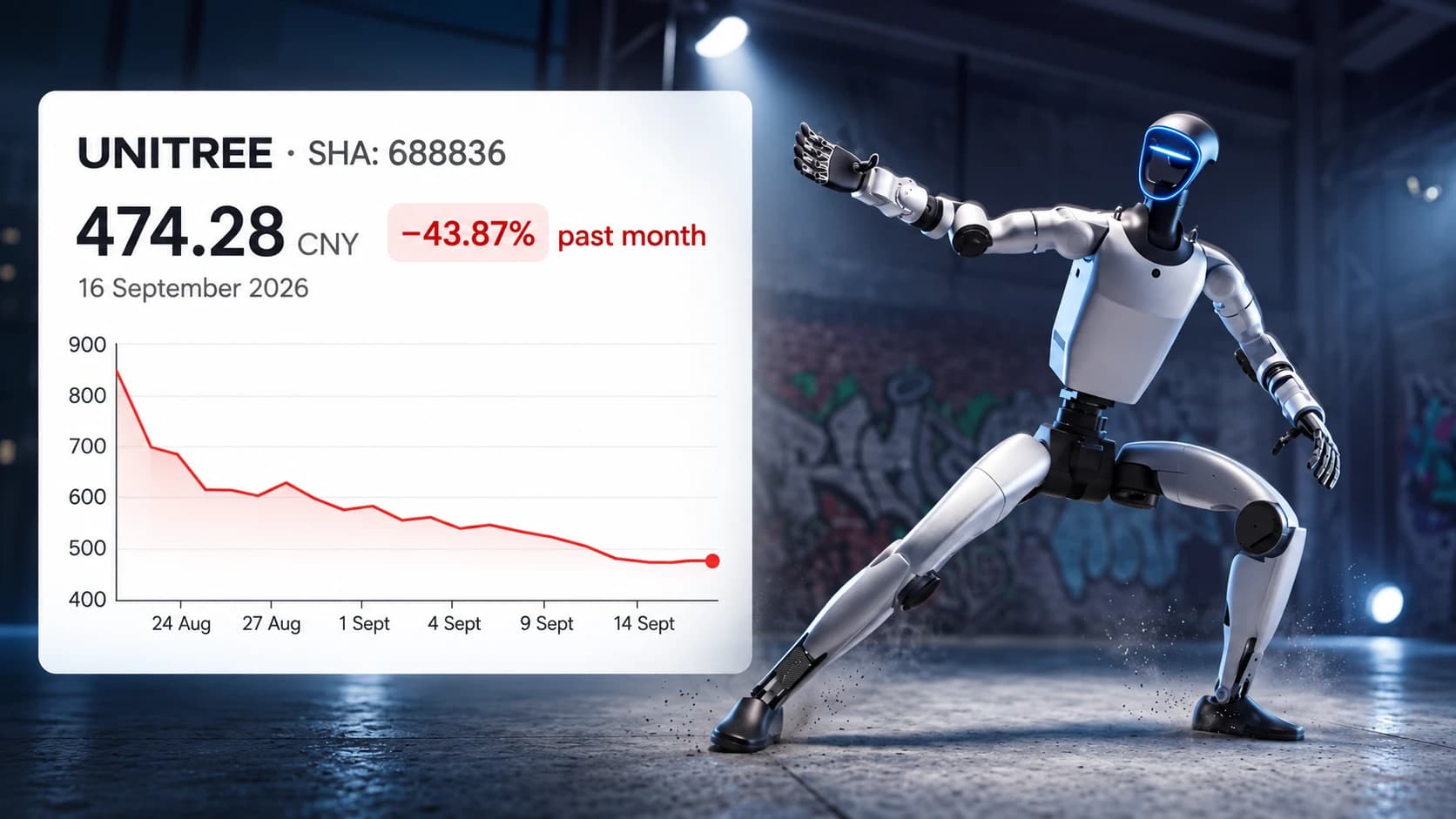
Unitree’s Stock Slump Puts China’s Robot IPOs Under Scrutiny
- Published on
- Reading time
- 7 min read
Unitree’s AI models explained: UniFoLM, WLA and X2
- Published on
- Reading time
- 3 min read
Unitree launches G1+ with stronger motors, a moving neck and a $15,000 price
The weekly humanoid robotics briefing
One email a week: the launches, funding and research that mattered, with context from Humanoids Daily.
Read recent issues