- Published on
Analysis: Tesla Optimus ''PR'' Video Suggests Robot Has Reached Competitive Running Speeds
One tap, and our reporting appears more often in your Google Top Stories. It makes a real difference to a small newsroom.


Your guide
Rich Robinson
Jee Chee Ren · Executive tour
See China’s AI and robotics ecosystem first-hand.
Six days exploring AI, robotics and advanced manufacturing.
With Rich Robinson, Clinical Professor of Entrepreneurship at Peking University
Beijing · Guangzhou · Shenzhen
29 November–4 December 2026
Referral partnership · We earn a commission on referred bookings.
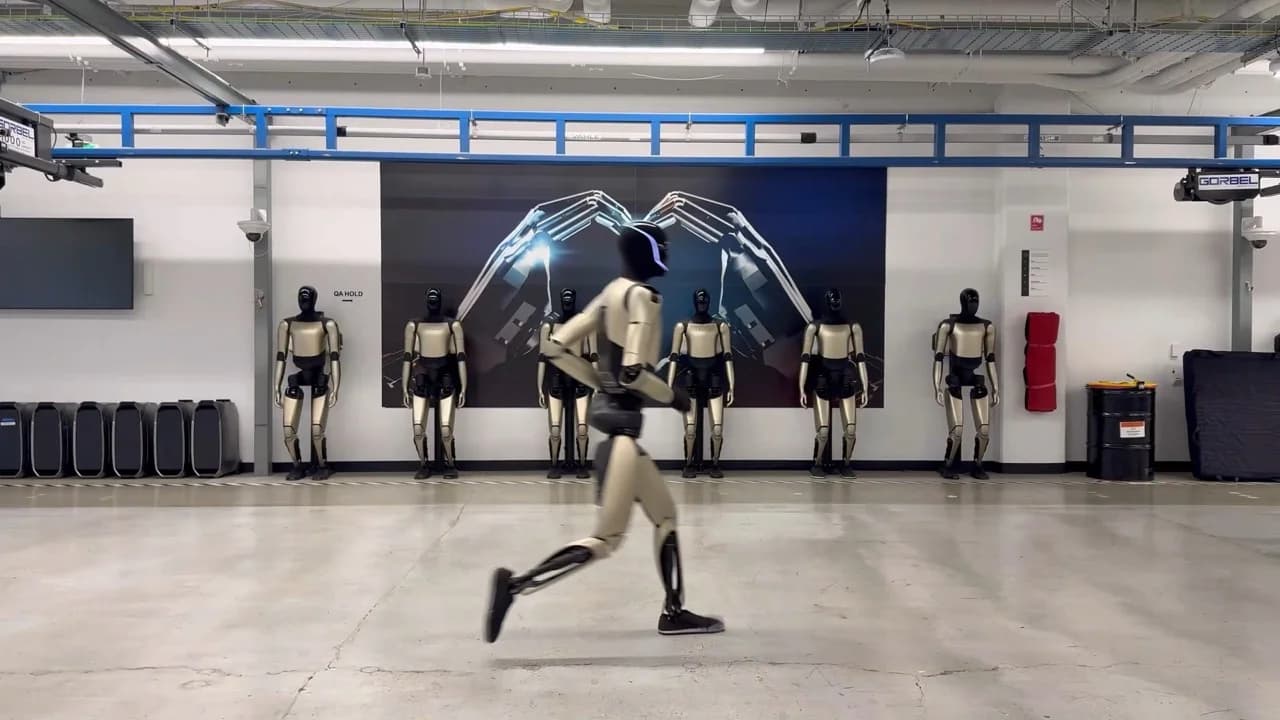
Tesla’s Optimus program has released a brief but significant video update, showing the humanoid robot sprinting across a laboratory floor with the caption, "Just set a new PR in the lab."
While the company did not release official telemetry data to accompany the post, the visual evidence points to a dramatic increase in the robot's locomotive capabilities. If independent analyses of the footage are accurate, Tesla may have quietly vaulted Optimus into the upper echelon of high-speed humanoid robotics, challenging records currently held by competitors like Unitree and RobotEra.
The 8.5 MPH Estimate
In the absence of official metrics, the robotics community has turned to pixel-based analysis to gauge the robot's performance.
Scott Walter, known on X as @GoingBallistic5, provided a detailed breakdown of the footage. By using the stationary Optimus units in the background as a reference scale to establish a 6.5-meter distance, Walter calculated that the active robot covered the ground in approximately 1.71 seconds.
The weekly humanoid robotics briefing
One email a week: the launches, funding and research that mattered, with context from Humanoids Daily.
Read recent issuesHis calculation results in a speed of roughly 3.8 meters per second (m/s), or 8.5 mph.
"I stand corrected!! ... 6.5m/1.71s = 3.8 m/s = 13.7 kph = 8.5 mph" — Scott Walter (@GoingBallistic5)
If this estimate holds true, it represents a significant leap over previous demonstrations. For context, earlier this year, Optimus showed off walking that was fluid but, naturally, nowhere near this velocity.
Technically 'Running'
Beyond raw speed, the gait mechanics shown in the video mark a critical technical milestone: a true flight phase.
Walking is defined by keeping at least one foot in contact with the ground at all times to maintain kinematic closure. Running, by contrast, requires generating enough vertical impulse to propel the body into the air, creating a moment where both feet are off the ground simultaneously. This introduces dynamic instability, requiring significantly faster control loops to prevent falling.
Walter noted that the new video confirms Optimus is "Technically running as both feet are momentarily airborne, or in a flight phase."
Stacking Up Against the Competition
If the 3.8 m/s figure is accurate, Optimus is now operating at speeds comparable to the fastest verified humanoids in the world.
According to recent reports on bipedal speed, the current landscape is led by a few key players:
- RobotEra L7/STAR1: The Chinese startup RobotEra recently demonstrated its STAR1 robot running at 3.6 m/s (8.0 mph) in the Gobi Desert , with claims that its newer L7 model can hit 4.0 m/s.
- Unitree H1: Another major Chinese competitor, Unitree, held the record earlier this year with its H1 robot reaching 3.3 m/s (7.4 mph).
- Cassie: While Agility Robotics’ "Cassie" holds a Guinness World Record at 4.0 m/s, it is classified as a bipedal platform (legs only) rather than a full humanoid with a torso and arms.
An 8.5 mph (3.8 m/s) run would place Optimus ahead of the Unitree H1 and slightly faster than the verified speed of the RobotEra STAR1. This is a remarkable position for a robot that, until recently, was primarily associated with dexterity tasks like folding laundry rather than athletic sprinting.
Rapid Evolution
The speed of development remains the most striking aspect of this update. Roughly two and a half years ago, the initial Optimus prototypes struggled to walk. The progression to a natural, unsupported running gait suggests that Tesla’s investment in RL training is paying dividends.
A Note of Caution
While the video is impressive, it is important to contextualize the environment. The "PR" (Personal Record) was set in a controlled laboratory setting on a flat, high-friction surface.
Until Tesla releases official telemetry or demonstrates this capability in a longer, unscripted format, the "fastest" title remains up for debate. However, the video confirms that the hardware and software constraints that once limited Optimus are rapidly being solved.
Share this article
Read next
- Published on
- Reading time
- 2 min read
Musk Puts Optimus and Cybercab at the Center of Tesla’s Future Value
- Published on
- Reading time
- 5 min read
Musk Details Optimus Hand Challenges, Warns of Slow Initial Production Ramp
- Published on
- Reading time
- 3 min read
Musk Says Tesla Halved AI5 RAM to Secure Memory for Optimus Production
- Published on
- Reading time
- 5 min read
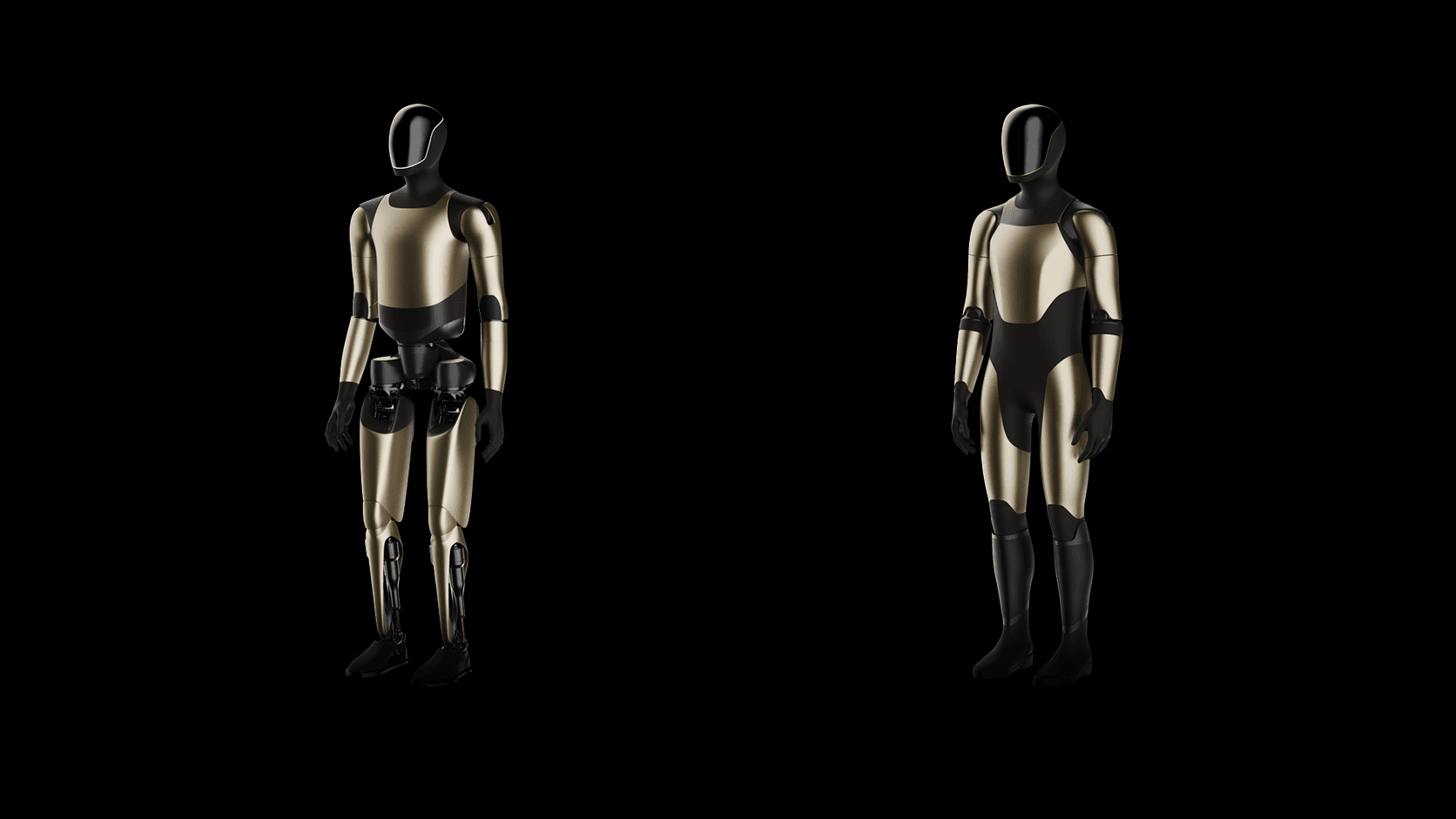
Tesla App Contains Optimus Gen 3 Renders—Here’s What They Show
- Published on
- Reading time
- 4 min read
Supply Chain Rumors Hint at Massive Optimus Order as Fremont Production Line Ramps Up
- Published on
- Reading time
- 5 min read
The Terafab Manifesto: Tesla and Intel Join Forces to Power Musk’s "Galactic" AI Ambitions
The weekly humanoid robotics briefing
One email a week: the launches, funding and research that mattered, with context from Humanoids Daily.
Read recent issues