- Published on
Amazon FAR Open Sources Holosoma to Unify Humanoid Simulation and Training
One tap, and our reporting appears more often in your Google Top Stories. It makes a real difference to a small newsroom.


Your guide
Rich Robinson
Jee Chee Ren · Executive tour
See China’s AI and robotics ecosystem first-hand.
Six days exploring AI, robotics and advanced manufacturing.
With Rich Robinson, Clinical Professor of Entrepreneurship at Peking University
Beijing · Guangzhou · Shenzhen
29 November–4 December 2026
Referral partnership · We earn a commission on referred bookings.
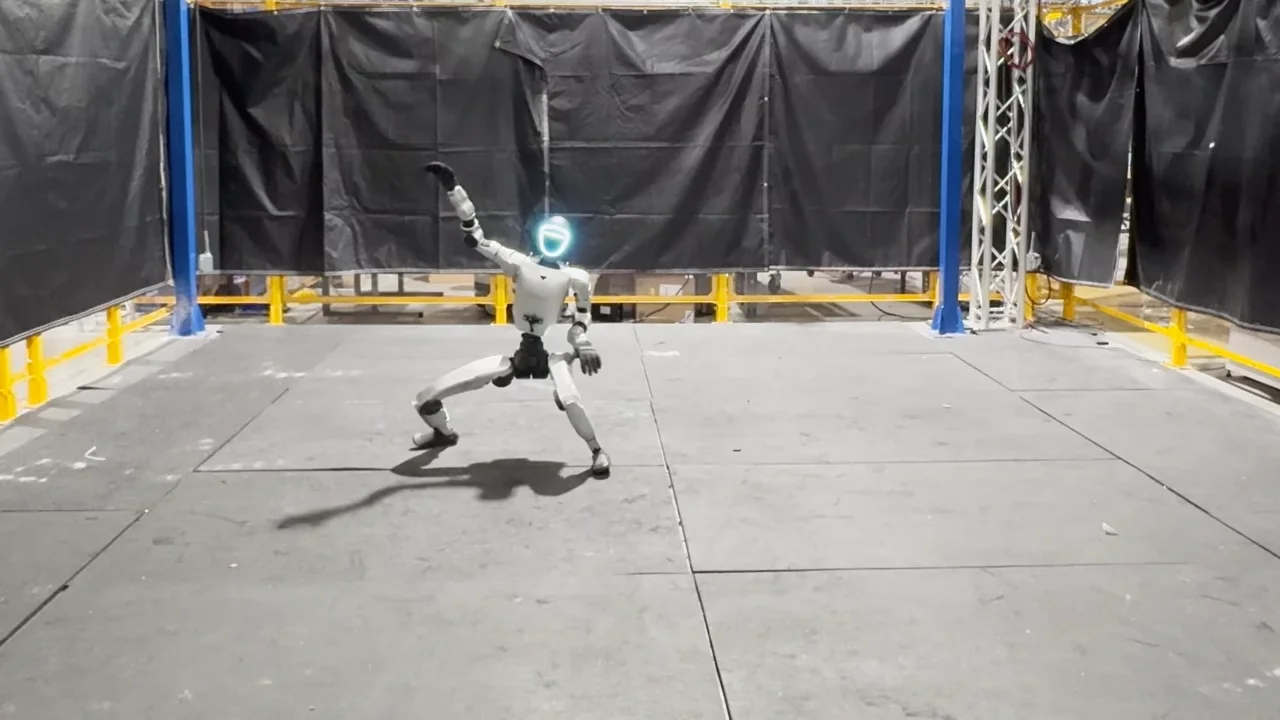
Amazon’s Frontier AI & Robotics (FAR) team has open-sourced Holosoma, a comprehensive software framework designed to streamline the complex pipeline of training and deploying humanoid robots.
Announced today by Amazon FAR researcher (and incoming UT Austin professor) Carlo Sferrazza, the release aims to solve what he describes as the "full-stack problem" of sim-to-real learning. By unifying fragmented simulation backends into a single codebase, Amazon is attempting to lower the barrier to entry for researchers working on next-generation bipedal locomotion and manipulation.
The release marks another significant contribution to the open science community from Amazon, following closely on the heels of their OmniRetarget data generation engine and the ResMimic manipulation framework.
Solving the "Back-End" Fragmentation
One of the persistent headaches in robotics reinforcement learning (RL) is the disconnect between various simulation environments. Researchers often train policies in high-throughput environments like IsaacGym, but validate them in physically accurate simulators like MuJoCo, before finally attempting to deploy them on real hardware.
The weekly humanoid robotics briefing
One email a week: the launches, funding and research that mattered, with context from Humanoids Daily.
Read recent issuesHolosoma—derived from the Greek for "whole-body"—addresses this by supporting multiple simulation backends within a single training codebase. According to the repository documentation, the framework supports:
- Training: IsaacGym, IsaacSim, and MJWarp (MuJoCo Warp).
- Inference: MuJoCo (for simulation) and a shared pipeline for real-world deployment.
"With Holosoma, we unify the simulation landscape," Sferrazza wrote in a statement on X. "IsaacGym, IsaacSim, and MJWarp backends are all supported in a single training codebase."
The framework also integrates OmniRetarget, Amazon's previously released tool for converting human motion capture data into robot-feasible movements. This confirms that Amazon is building an interconnected ecosystem of research tools rather than isolated one-off projects.
Under the Hood: Algorithms and Accessibility
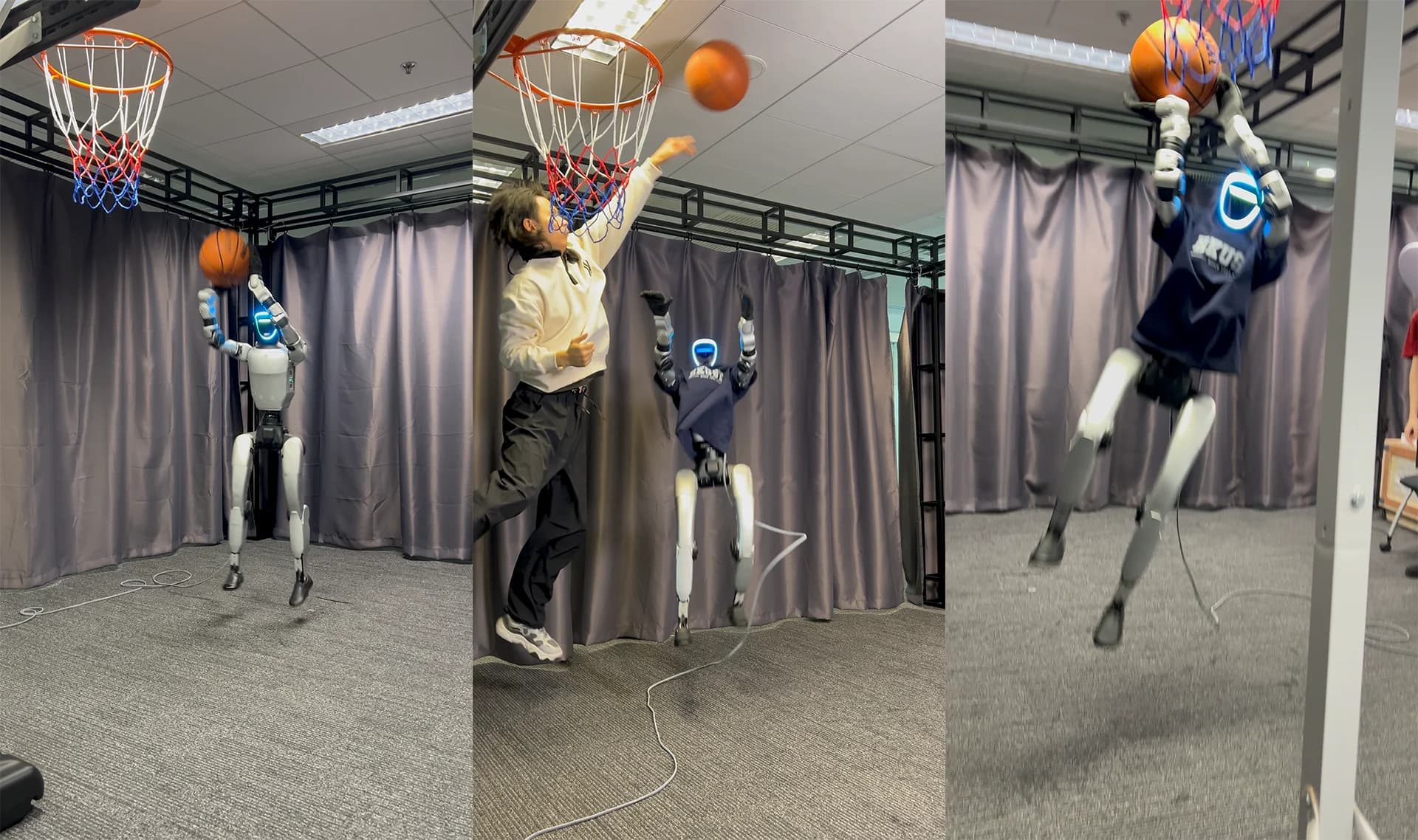
The framework is designed to be agnostic regarding the specific robot hardware, though it currently provides out-of-the-box support for the Unitree G1 and Booster T1 humanoids. This focus on the Unitree G1 aligns with industry trends, as the accessible price point of the G1 has made it a standard platform for research, also utilized in Amazon's ResMimic research.
Technically, Holosoma supports both locomotion (velocity tracking) and whole-body tracking tasks. It implements efficient RL algorithms including PPO (Proximal Policy Optimization) and FastSAC (Soft Actor-Critic), with native multi-GPU support to accelerate training times.
Notably, the release places a heavy emphasis on the "deployment" phase. A major bottleneck in academic research is often the "sim-to-real" gap—where code that works in a simulation fails on a physical machine due to latency or software incompatibility. Holosoma includes a unified inference stack that allows researchers to run the exact same code across simulation backends and on real-world robots, logging data directly to Weights & Biases (wandb) for analysis.
The Strategic Context
While Holosoma is an academic contribution, released under the permissive Apache-2.0 license, it fits into a clearer picture of Amazon's industrial ambitions.
Recent reports indicate Amazon has an internal goal of automating 75% of its operations over the coming years. Achieving this will require robots that can navigate unstructured environments and manipulate diverse objects—problems that traditional, hard-coded automation cannot solve.
By open-sourcing the tools required to train these "generalist" brains, Amazon accelerates the broader field of humanoid research while establishing its own methodologies as industry standards. The team behind Holosoma includes notable figures in the field, including Pieter Abbeel and others associated with the FAR team.
For Sferrazza, the release serves as a capstone to his time at Amazon FAR before he transitions to an assistant professorship at UT Austin, where he plans to continue research into humanoid robotics and dexterous manipulation.
The full codebase is available now on GitHub.
Share this article
Read next
- Published on
- Reading time
- 4 min read
Don’t Forget the Salt: Physical Intelligence Equips Robots with 15-Minute "Multi-Scale" Memory
- Published on
- Reading time
- 3 min read
NVIDIA "Supersizes" Humanoid Control: SONIC Open-Sources Whole-Body Tracking at Scale
- Published on
- Reading time
- 4 min read
NVIDIA DreamZero explained: how its robot AI differs from a VLA
- Published on
- Reading time
- 4 min read
Beyond the Gala: OmniXtreme Breaks the Generality Barrier for Humanoid Agility
- Published on
- Reading time
- 4 min read
HumanX: The AI Framework Turning Unitree’s G1 into a Basketball Pro
- Published on
- Reading time
- 4 min read
China’s Universities Launch "Embodied Intelligence" Majors to Feed a Hungry Robot Workforce


The weekly humanoid robotics briefing
One email a week: the launches, funding and research that mattered, with context from Humanoids Daily.
Read recent issues