- Published on
Schaeffler Partners with Leju Robotics as CEO Klaus Rosenfeld Defends "Physical AI" Strategy Amid Cautious Outlook
One tap, and our reporting appears more often in your Google Top Stories. It makes a real difference to a small newsroom.


Your guide
Rich Robinson
Jee Chee Ren · Executive tour
See China’s AI and robotics ecosystem first-hand.
Six days exploring AI, robotics and advanced manufacturing.
With Rich Robinson, Clinical Professor of Entrepreneurship at Peking University
Beijing · Guangzhou · Shenzhen
29 November–4 December 2026
Referral partnership · We earn a commission on referred bookings.
The "Schaeffler Effect"—the massive market re-rating of the German industrial giant as a primary proxy for humanoid robotics—is moving from financial speculation into deep operational integration.
In a flurry of activity this week, Schaeffler officially established a dedicated subsidiary in China, opened a state-of-the-art "innovation factory," and signed a strategic partnership with Leju Robotics. However, this aggressive pivot toward "Physical AI" comes against a backdrop of financial pragmatism. Speaking with CNBC today, Schaeffler CEO Klaus Rosenfeld defended the company’s "conservative" 2026 outlook, citing high one-off expenses while doubling down on robotics as the engine of the firm’s next transformation.
The Leju Partnership: A Gateway to the Chinese Ecosystem
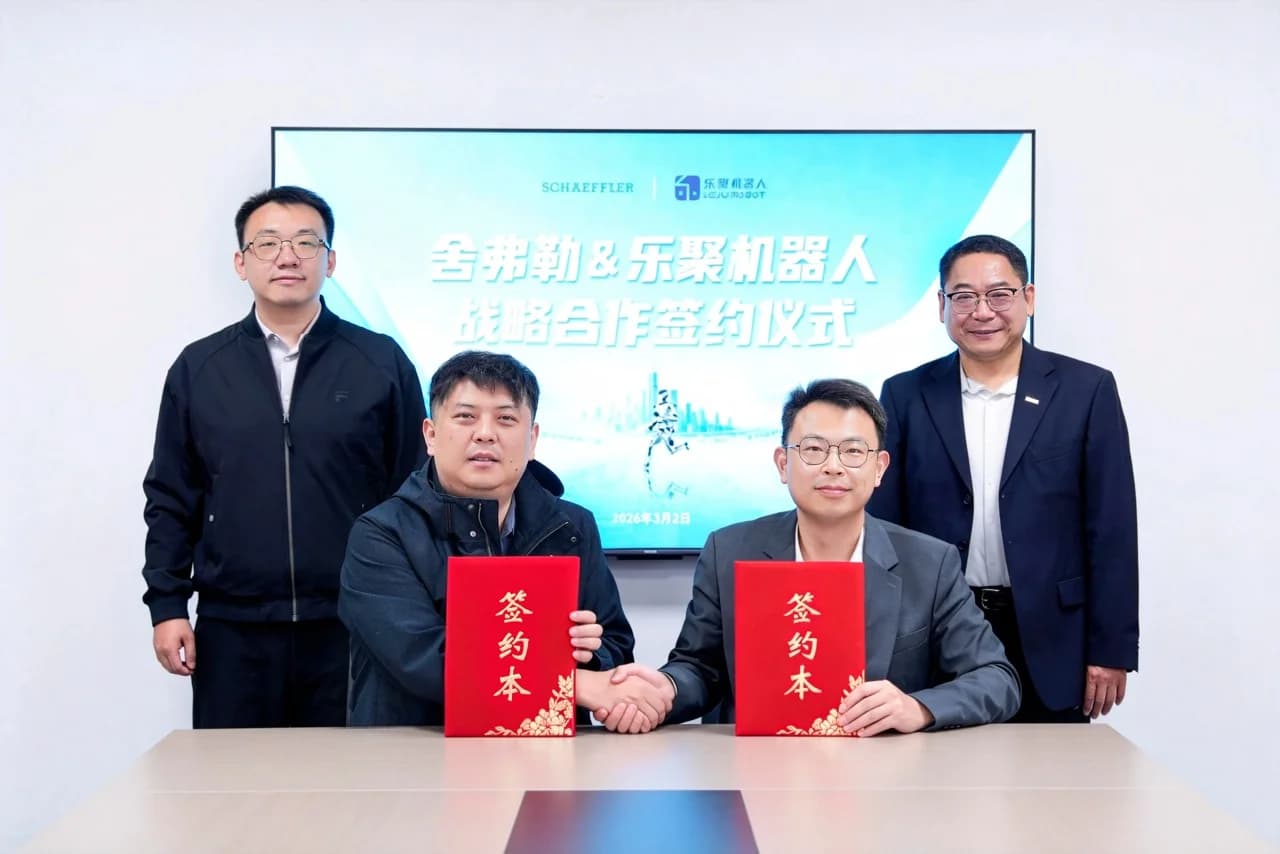
On March 2, 2026, Schaeffler announced a strategic cooperation agreement with Leju Robotics, marking its first major partnership with a Chinese humanoid manufacturer. This deal joins Schaeffler’s existing global network, which includes a multi-thousand unit commitment with Neura Robotics and a five-year strategic alliance with UK-based startup Humanoid.
The cooperation focuses on transitioning humanoid robots into industrial-scale manufacturing. Specific applications include:
The weekly humanoid robotics briefing
One email a week: the launches, funding and research that mattered, with context from Humanoids Daily.
Read recent issues- Intelligent Factory Inspection: Using humanoid mobility for autonomous facility monitoring.
- Equipment Operation Support: Assisting or managing traditional machinery.
- Human-Robot Collaboration: Integrating robots into existing manual workflows.
"With Leju Robotics, we are gaining a strong, innovative partner in one of the most dynamic growth markets for humanoids," Rosenfeld stated in a press release. The move is a logical progression following the February 27 establishment of Schaeffler Embodied Intelligent Robotics (Taicang) Co., Ltd. in Suzhou, a specialized vehicle designed to capture the entire humanoid value chain.
A New "Innovation Factory" in Taicang
Furthering its "user-supplier" strategy, Schaeffler opened a new innovation factory in Taicang this morning. Rosenfeld described the facility as "probably the most modern humanoid manufacturing technology show," where the company can demonstrate end-to-end production under one roof.
The site is not just for show; it serves as a data-collection hub. Schaeffler intends to deploy thousands of humanoid robots across its global network by 2035, using them as "core production elements" to iterate on the very hardware it sells. This includes the all-in-one planetary gear actuators showcased at CES 2026, which are essential for the high-torque requirements of robotic joints.
Navigating the "Grim" Economic Landscape
Despite the technological optimism, Schaeffler’s financial outlook for 2026 remains cautious. Rosenfeld told CNBC that while 2025 revenues were solid and free cash flow reached $266 million—exceeding revised guidance—the company must remain "careful" in the current geopolitical and economic environment.
High one-off expenses are expected to weigh on 2026 earnings, leading to a conservative guidance. However, Rosenfeld emphasized that the company’s midterm targets remain intact, with a goal of achieving 6% to 8% margins by 2028. He views the humanoid and defense sectors as critical pillars, aiming for these divisions to generate 10% of total sales—approximately $3.2 billion—by 2035.
Workforce Transformation: Support or Replacement?
One of the most pressing questions facing Schaeffler is the impact of this "robotic revolution" on its 110,000-strong global workforce. When asked by CNBC about the potential for job losses, Rosenfeld framed the technology as a solution to global demographic challenges rather than a replacement for human labor.
"We see it rather as something that enriches work than takes away work from labor," Rosenfeld said, suggesting that humanoids will change the "quality of work" and help solve labor shortages. He noted that Schaeffler has a history of managing complex transformations, including retraining and qualifying staff to work alongside new technologies.
The Tier 1 Ambition
By controlling both the "muscles" (actuators) and the "nervous system" (data and sensors) through its new Taicang subsidiary and partnerships with companies like NVIDIA and Microsoft, Schaeffler is positioning itself as the indispensable technical partner for the robotics era.
Whether the market’s enthusiasm for this "Humanoid Premium" will persist through a fiscally conservative 2026 remains to be seen. However, with its first Chinese partnership secured and a physical headquarters for AI-driven manufacturing now operational, Schaeffler is clearly betting that the path to recovery runs through the silicon brains and metallic joints of the next generation of workers.
Share this article
Read next
- Published on
- Reading time
- 8 min read
Analysts See a PEEK Boom in Humanoid Robots. Kingfa’s Robotics Lead Says Most of It Is Hype
- Published on
- Reading time
- 3 min read
The Taicang Nexus: Schaeffler Launches Dedicated Embodied AI Subsidiary in China
- Published on
- Reading time
- 5 min read
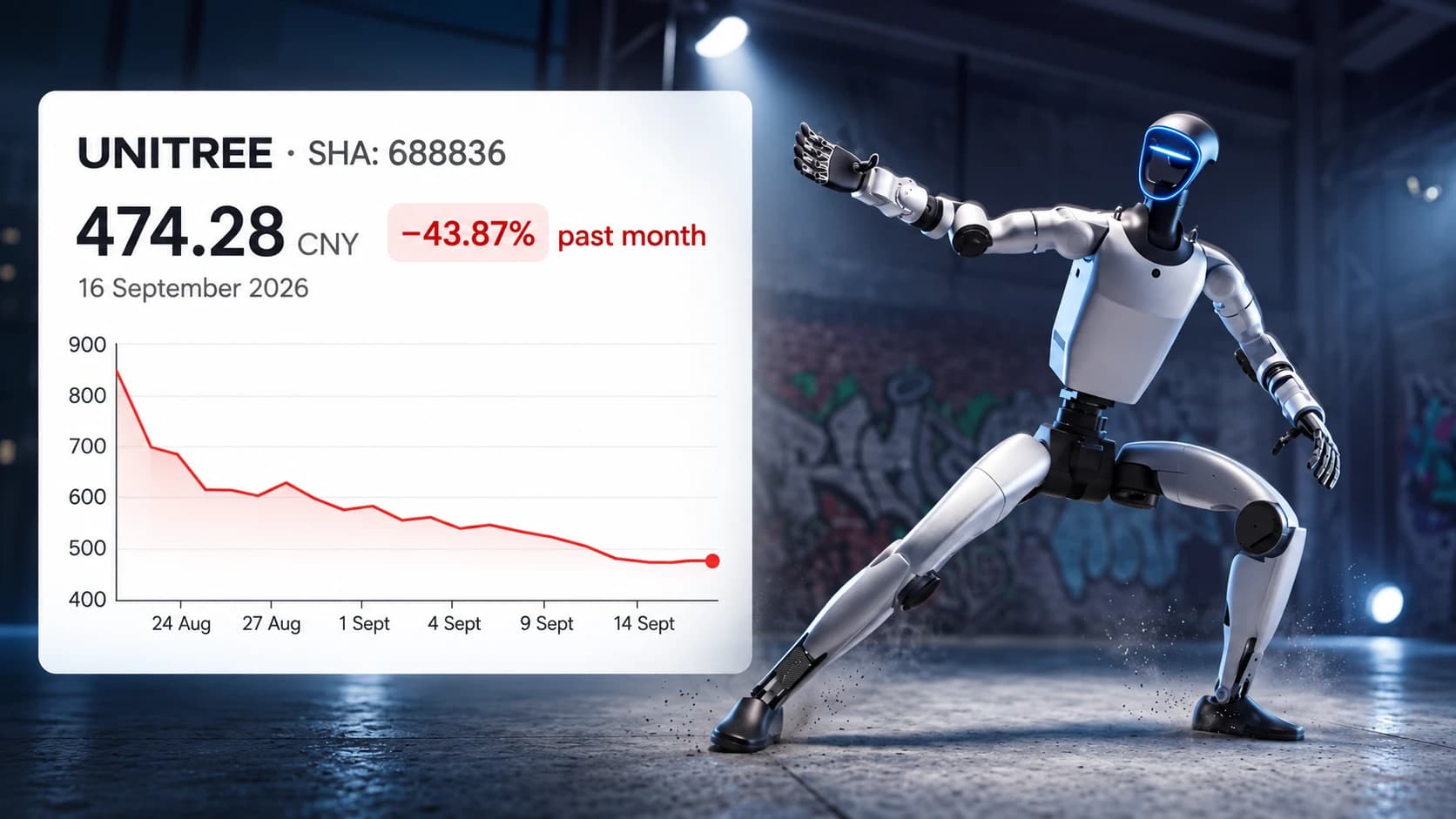
Unitree’s Stock Slump Puts China’s Robot IPOs Under Scrutiny
- Published on
- Reading time
- 6 min read
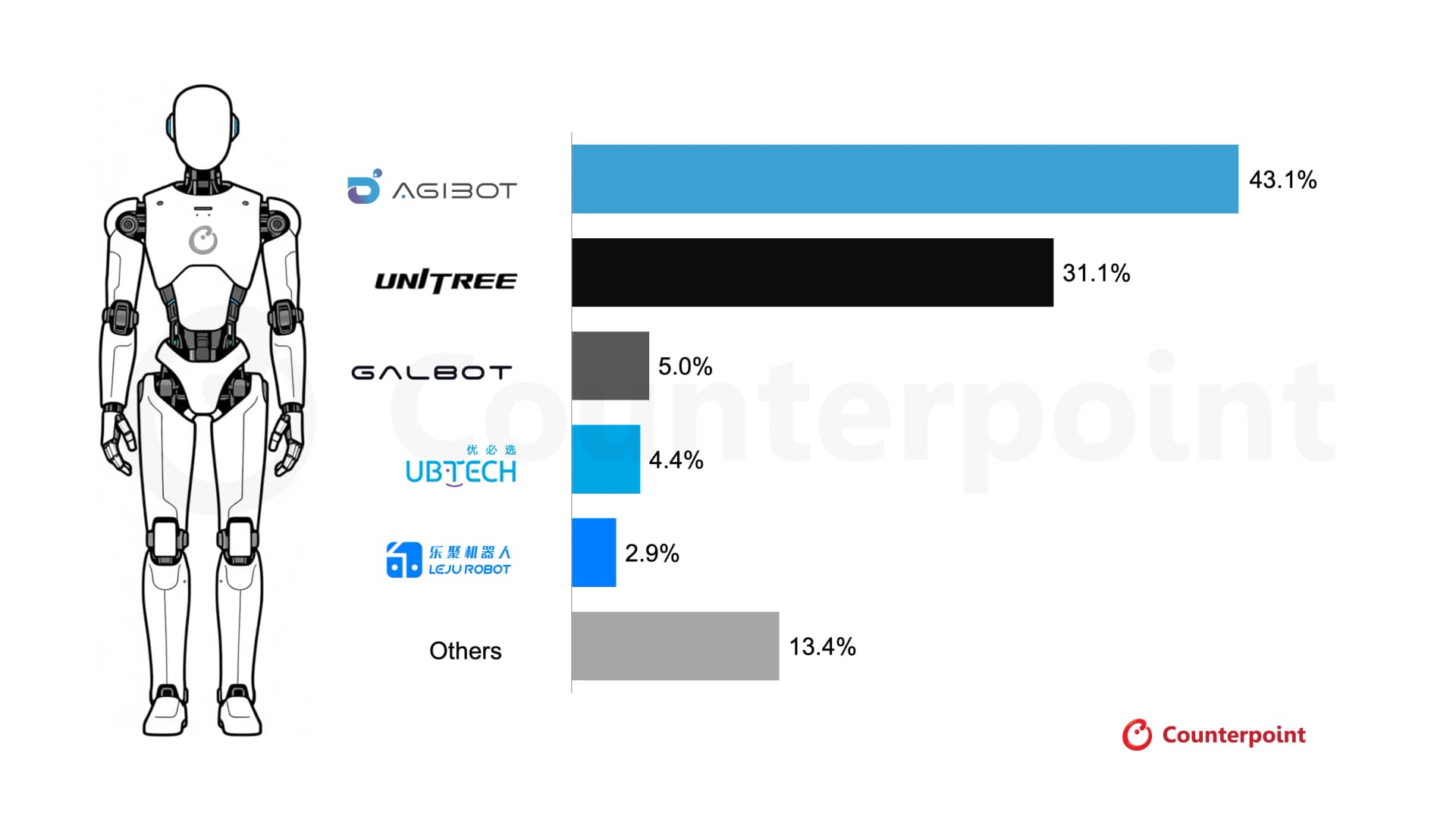
Global Humanoid Shipments Surpass 22,000 in H1 2026 as AGIBOT Leads and Form-Factor Debates Intensify
- Published on
- Reading time
- 4 min read
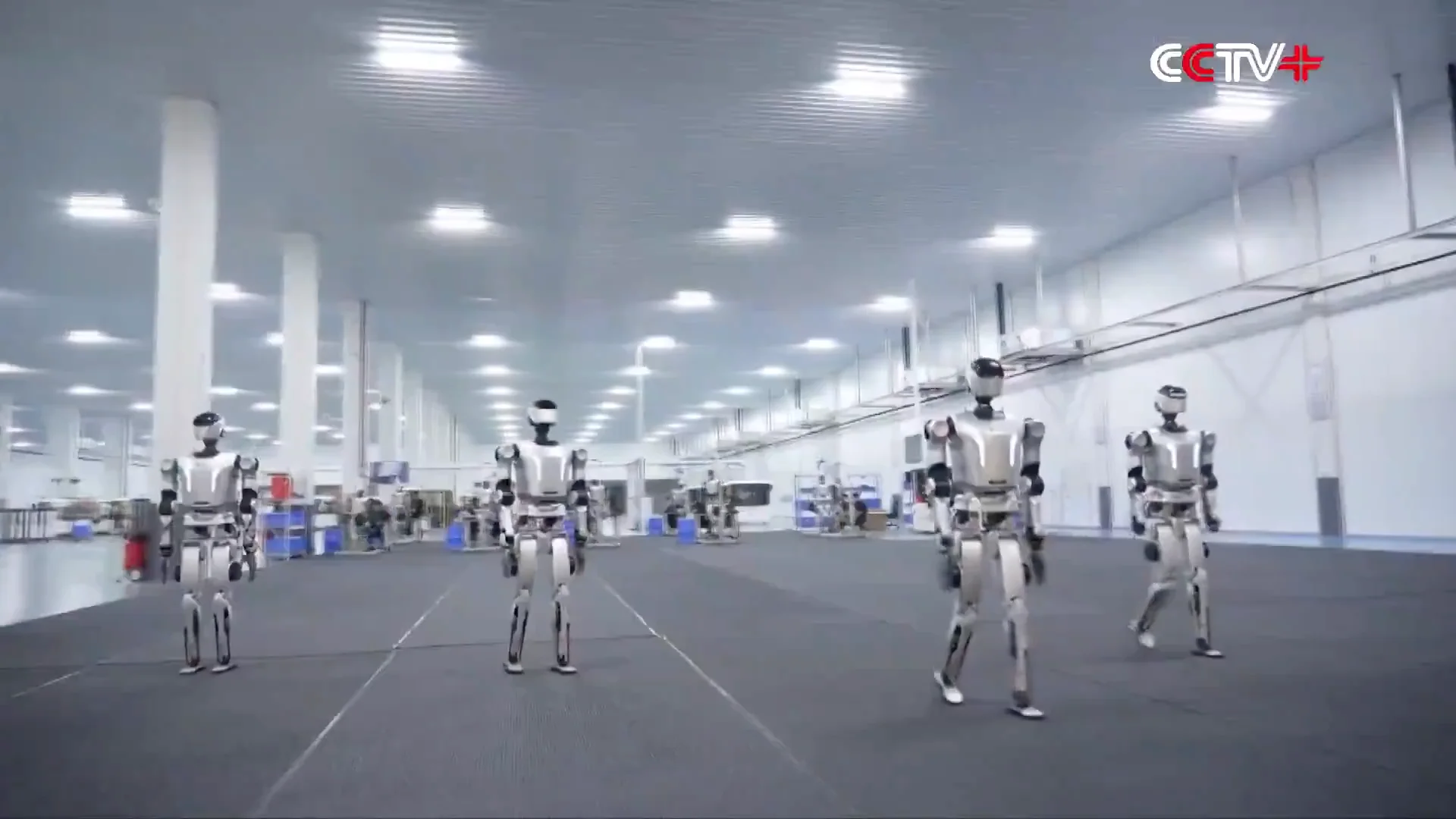
10,000 Units a Year: Inside China’s First Automated Humanoid Production Line
- Published on
- Reading time
- 25 min read
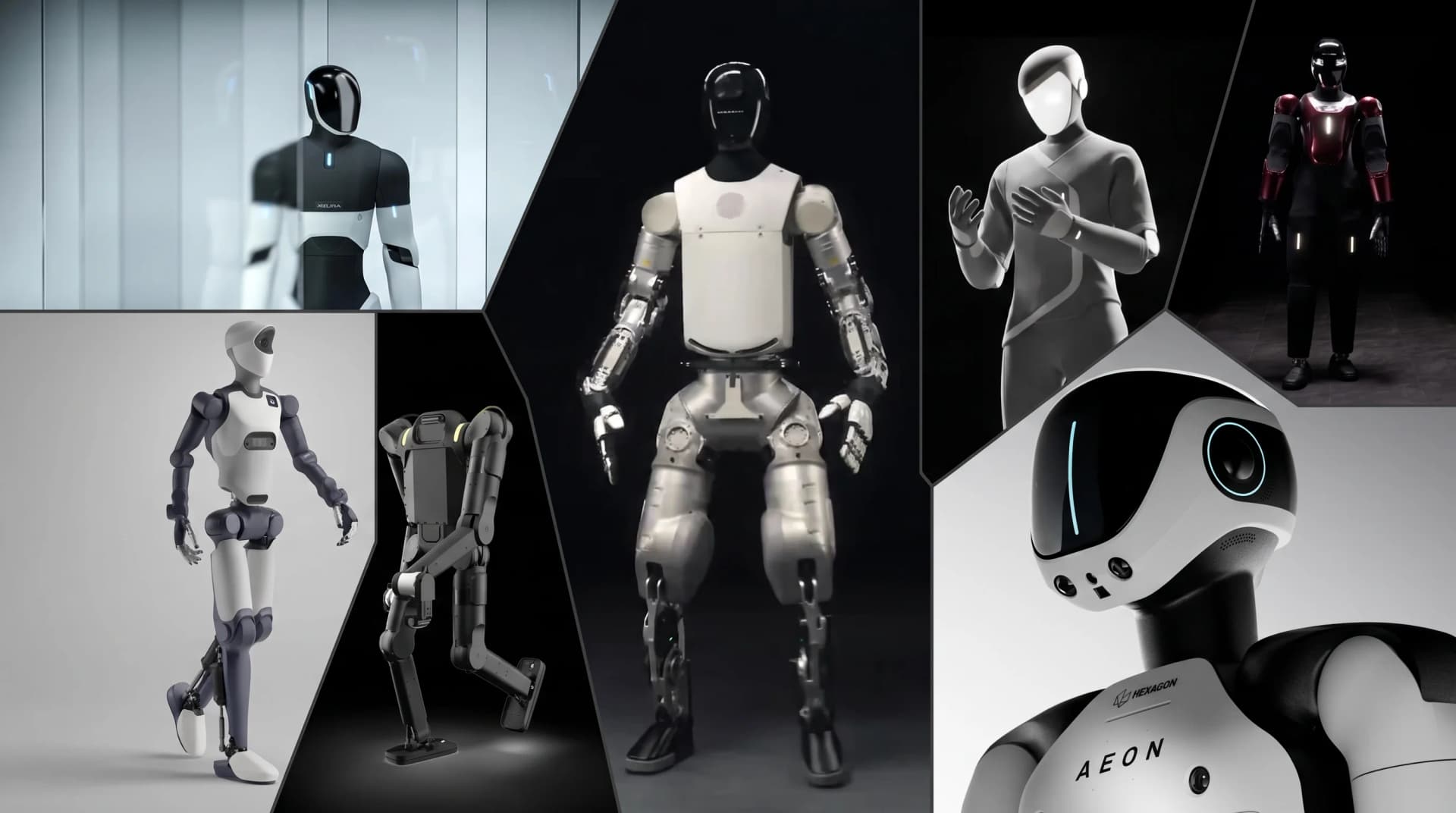
The Humanoids of Europe: Built by Their Customers


The weekly humanoid robotics briefing
One email a week: the launches, funding and research that mattered, with context from Humanoids Daily.
Read recent issues