- Published on
The Human Scale: NVIDIA’s EgoScale Unlocks High-Dexterity Robotics via 20,000 Hours of Human Video
One tap, and our reporting appears more often in your Google Top Stories. It makes a real difference to a small newsroom.

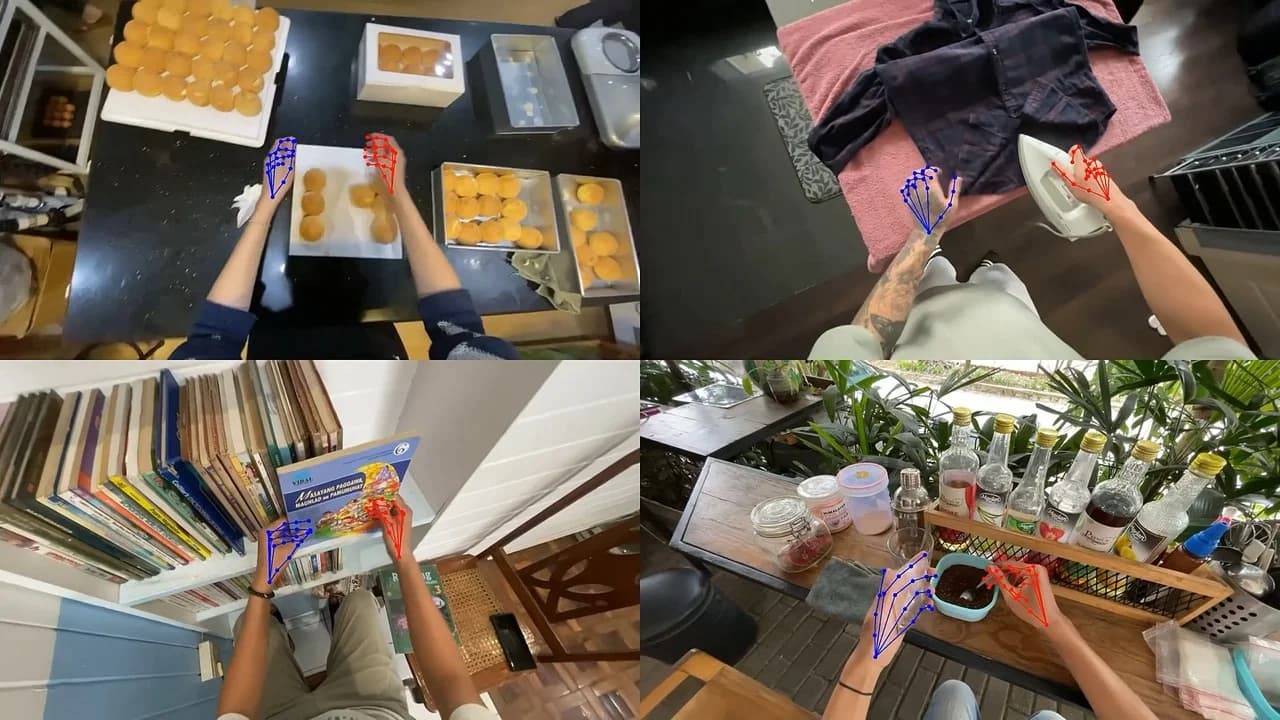
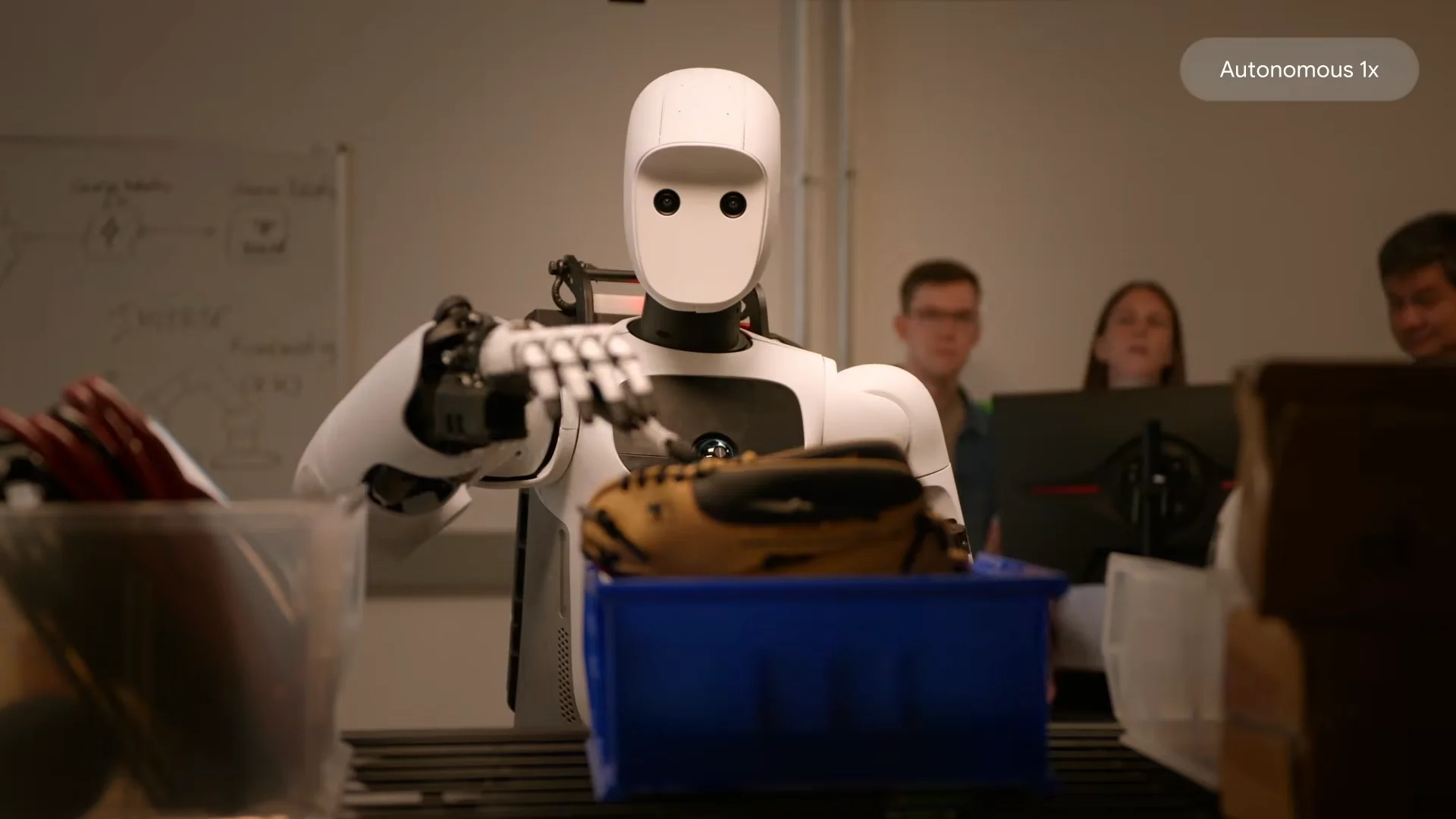
NVIDIA researchers have introduced EgoScale, a new human-to-robot transfer framework that suggests the path to master-level robot dexterity isn't more robot data, but more human video. By pretraining on a massive 20,854-hour dataset of egocentric human manipulation, the team has uncovered a "predictable scaling law" where human action prediction directly correlates with downstream robotic success.
The project, led by NVIDIA’s GEAR Lab, marks a significant departure from traditional robotics training which often relies on expensive, slow robot teleoperation. Instead, EgoScale treats humans as the most "scalable embodiment" on the planet, using their everyday movements to build a foundational motor prior for machines.
The Scaling Law of Dexterity
At the heart of EgoScale is a dataset more than 20 times larger than prior efforts in human-robot policy transfer. Spanning over 9,000 scenes and 6,000 tasks, the data provides a long-tail coverage of real-world manipulation—from assembling boxes to handling delicate electronics.
The researchers discovered a near-perfect log-linear scaling law () between the volume of human data and the model's validation loss. As data scales, the model’s ability to predict human wrist and hand actions improves monotonically, which in turn leads to a consistent rise in real-robot performance.
The weekly humanoid robotics briefing
One email a week: the launches, funding and research that mattered, with context from Humanoids Daily.
Read recent issues"This offline scaling behavior is strongly predictive of real-robot performance," the researchers noted, establishing that large-scale human video is a predictable supervision source for embodied intelligence.
A Simple Three-Stage Recipe
The EgoScale framework bypasses complex transfer algorithms in favor of a straightforward training pipeline:
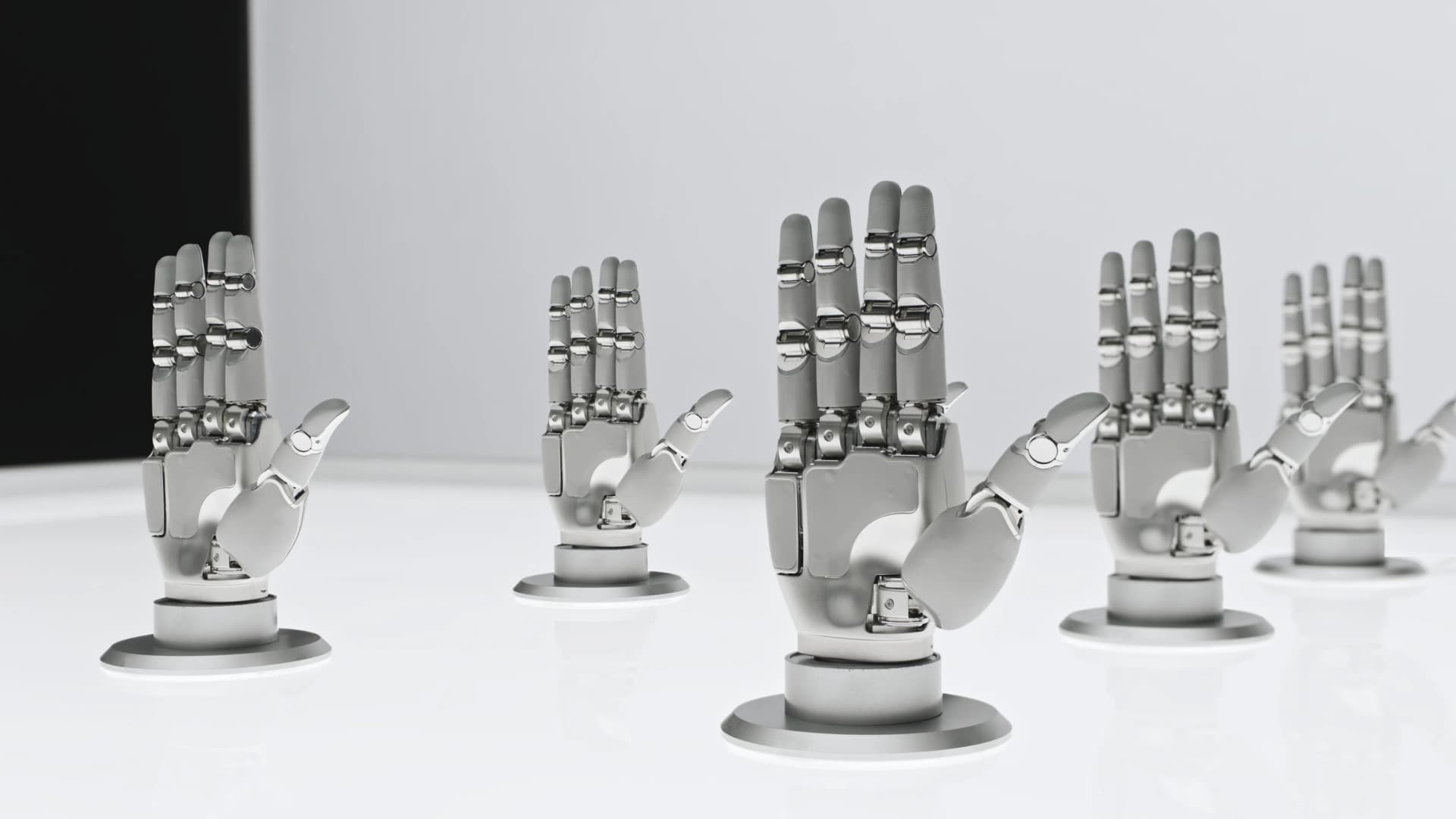
- Pretraining (Human Data): A Vision-Language-Action (VLA) model is trained on the 20,000+ hours of human video. To bridge the embodiment gap, human hand motions are retargeted into a 22-degree-of-freedom (DoF) robotic hand joint space.
- Mid-training (Aligned Data): The model is "anchored" to robot sensing using a small, 54-hour dataset of aligned human-robot "play data". This stage is critical for grounding human-derived representations in executable robot control.
- Post-training (Task Specific): The policy is fine-tuned on specific downstream tasks.
This method resulted in a 54% improvement in average success rates over baselines trained without human pretraining. The model successfully mastered high-dexterity tasks including card sorting, unscrewing bottle caps, and even the multi-step process of using a syringe to transfer liquids.
Emergent One-Shot Capabilities
Perhaps the most striking result is the emergence of one-shot task adaptation. With the EgoScale prior, a robot can learn a completely new task, such as folding a shirt, from just a single teleoperated demonstration.
This efficiency suggests that the model is not just mimicking motions but has internalized "common motion primitives". This mirrors recent industry shifts toward generative simulation and foundational movement models that prioritize "physical commonsense" over rigid, programmed behaviors.
Embodiment Agnosticism
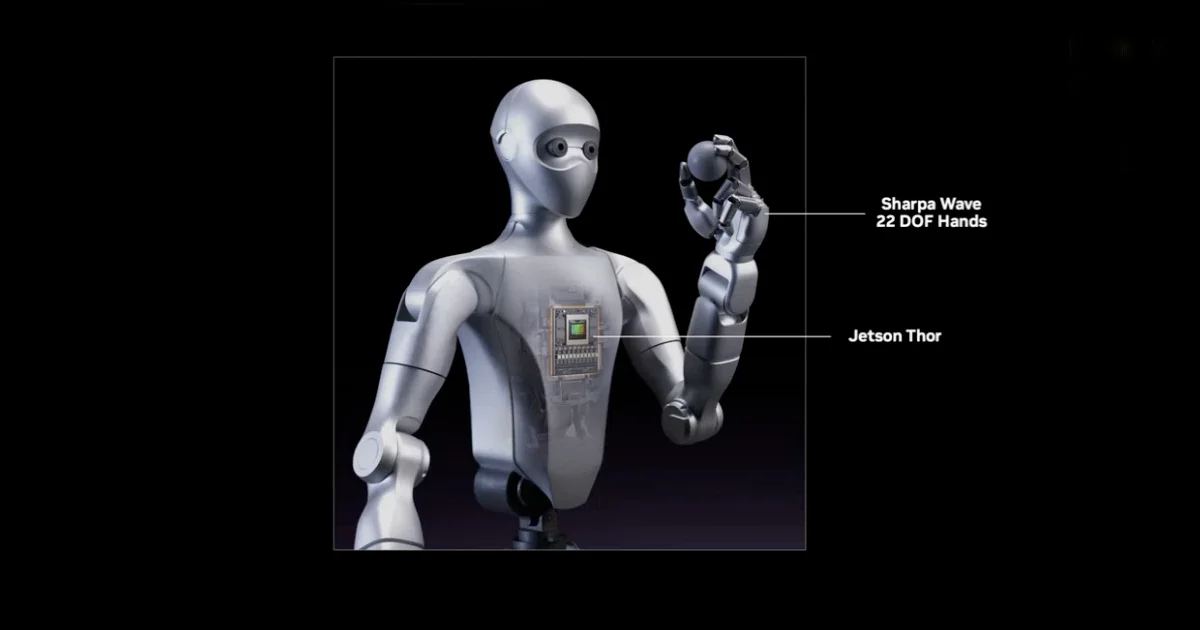
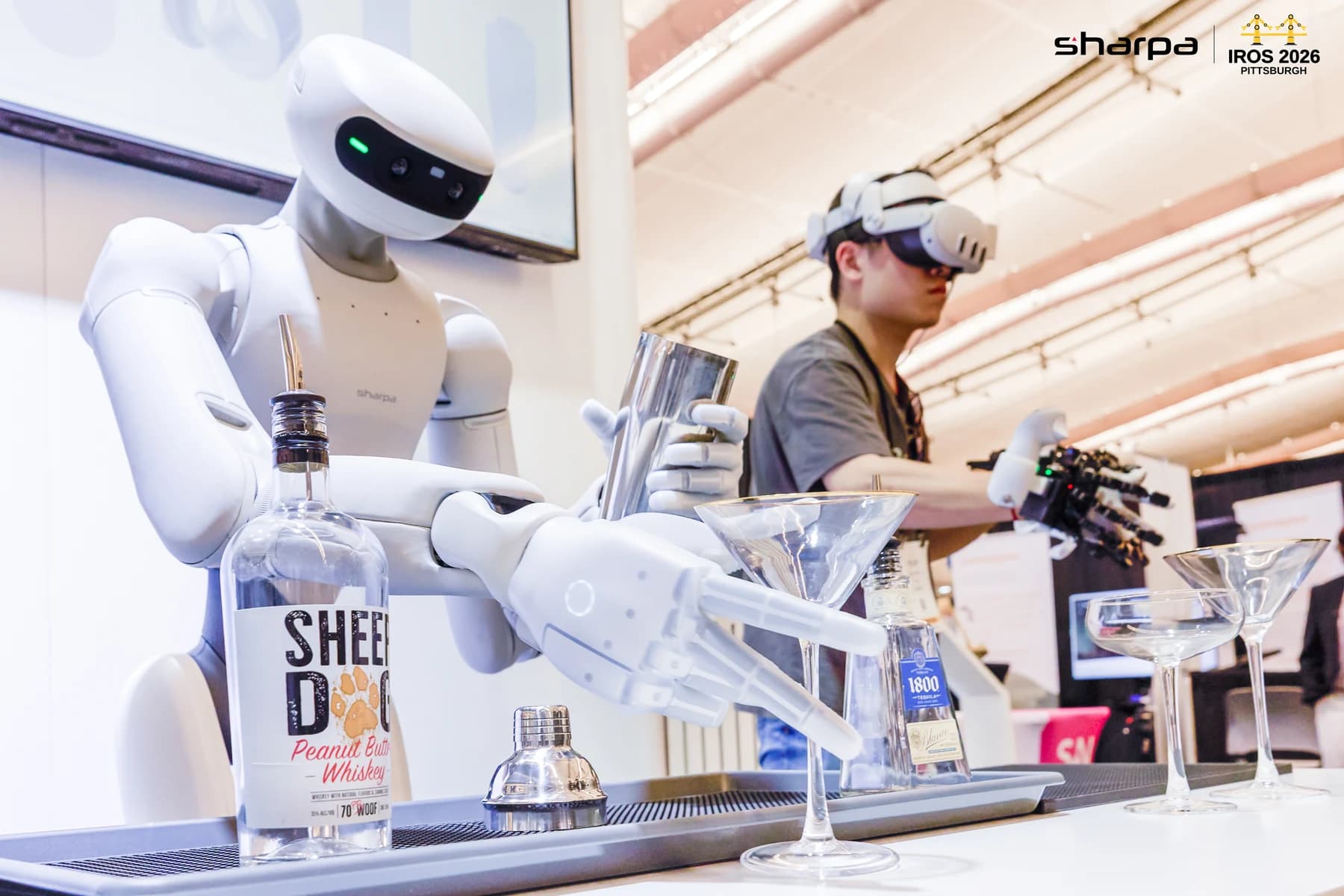
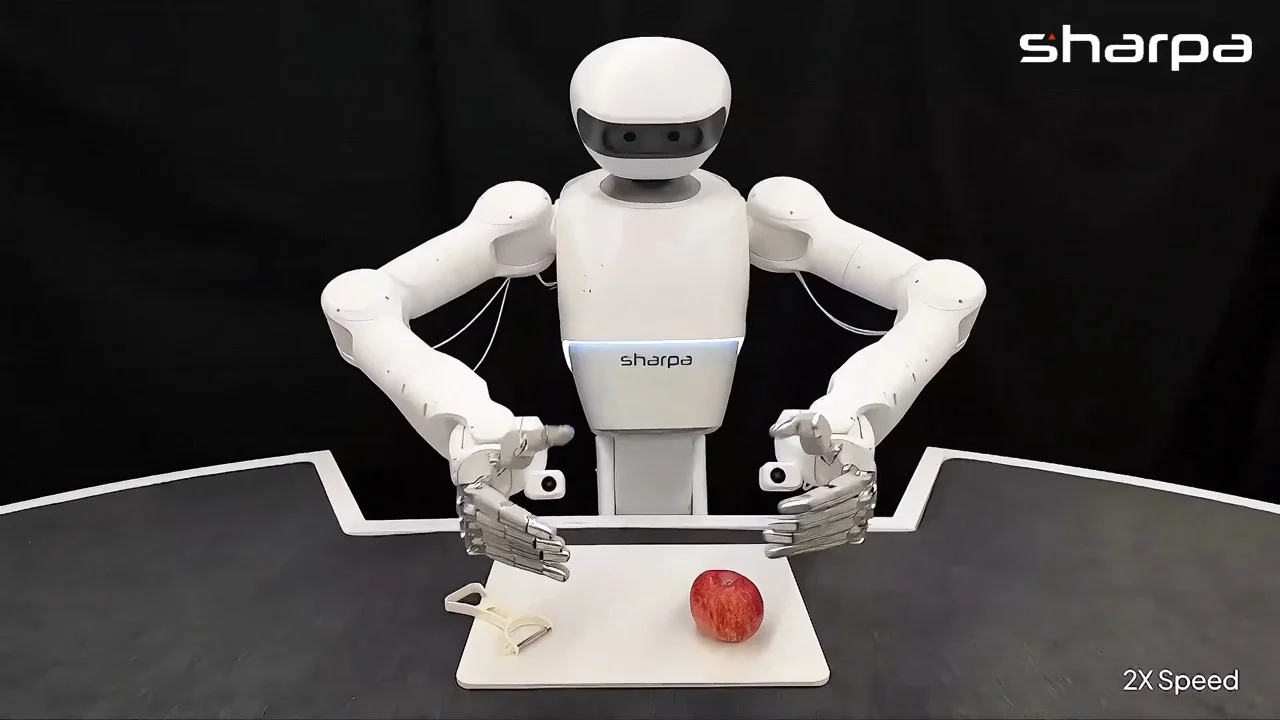
While the model was primarily trained for the 22-DoF Sharpa dexterous hand, the learned representations proved surprisingly flexible. When transferred to a Unitree G1 robot—which uses a significantly different 7-DoF tri-finger hand—the human-pretrained policy still provided a 30% absolute improvement in success rate over models trained on G1 data alone.
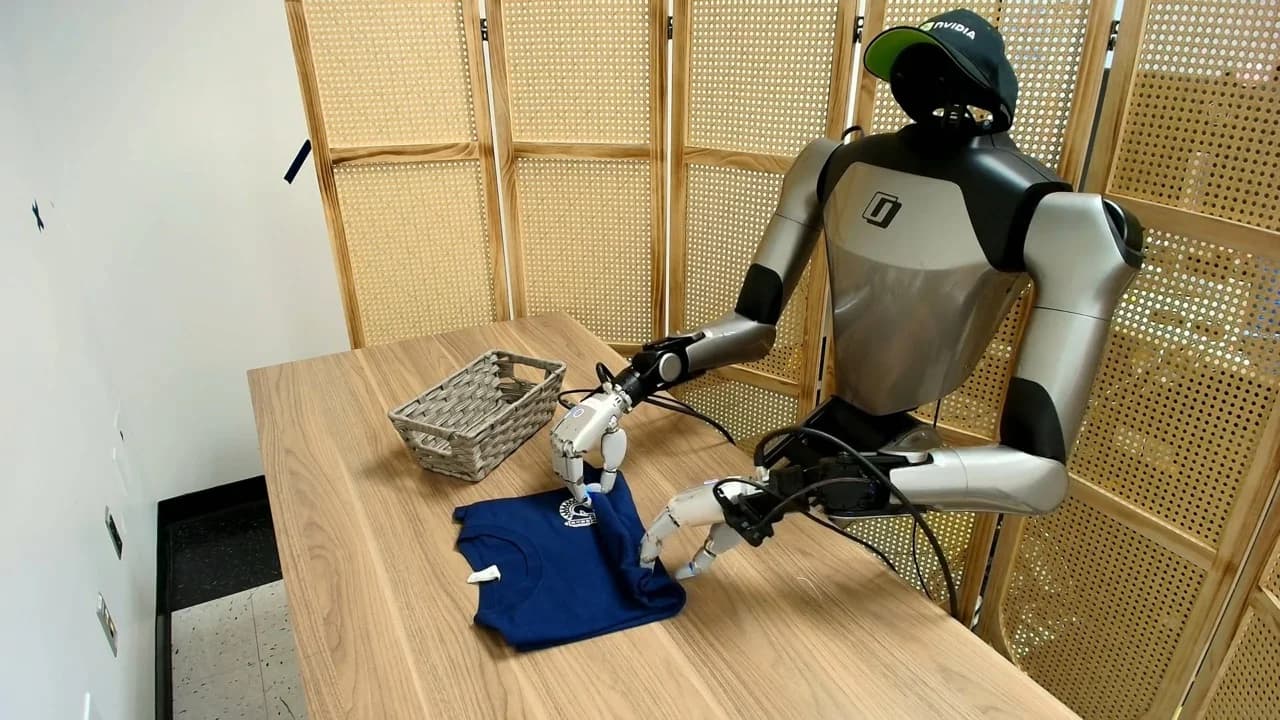
This cross-embodiment success supports the "Bitter Lesson" of robot hardware: as robots become more kinematically similar to humans, the need for specialized "transfer" layers disappears. Instead, the rich motion data provided by humans serves as a universal motor prior.
The Path Forward
The EgoScale release arrives amidst an intensifying race to solve the "robotics data gap". While others are collecting high-fidelity teleoperation data at scale, NVIDIA is betting that the "dark matter" of physical interaction is already encoded in the millions of hours of human activity already being recorded.
As model capacity and human data volume continue to scale, the researchers anticipate even greater gains in long-horizon planning and compositional generalization. The ultimate goal remains a "Physical Turing Test"—a world where a machine's physical grace is indistinguishable from a human's.
Share this article
Read next
- Published on
- Reading time
- 6 min read
NVIDIA GTC: NVIDIA and Sharpa Unveil Isaac GR00T Reference Humanoid Robot
- Published on
- Reading time
- 3 min read
NVIDIA "Supersizes" Humanoid Control: SONIC Open-Sources Whole-Body Tracking at Scale
- Published on
- Reading time
- 7 min read
Google DeepMind Unveils Gemini Robotics 2, Bringing Whole-Body Intelligence and Multi-Robot Teams to Physical AI
- Published on
- Reading time
- 5 min read
Sharpa Launches D01 Robot, W02 Hand and AE01 Haptic Glove at IROS 2026
- Published on
- Reading time
- 4 min read
The Apple Peeling Milestone: How Sharpa’s "MoDE-VLA" Unlocks Bimanual Dexterity
- Published on
- Reading time
- 3 min read
Sharpa Robotics Ramps Up Mass Production of "Vision-Based" Tactile Hand
The weekly humanoid robotics briefing
One email a week: the launches, funding and research that mattered, with context from Humanoids Daily.
Read recent issues