- Published on
The Gearbox Trap: Origami Robotics and 1X Clash Over the Future of Manipulation
One tap, and our reporting appears more often in your Google Top Stories. It makes a real difference to a small newsroom.


Your guide
Rich Robinson
Jee Chee Ren · Executive tour
See China’s AI and robotics ecosystem first-hand.
Six days exploring AI, robotics and advanced manufacturing.
With Rich Robinson, Clinical Professor of Entrepreneurship at Peking University
Beijing · Guangzhou · Shenzhen
29 November–4 December 2026
Referral partnership · We earn a commission on referred bookings.
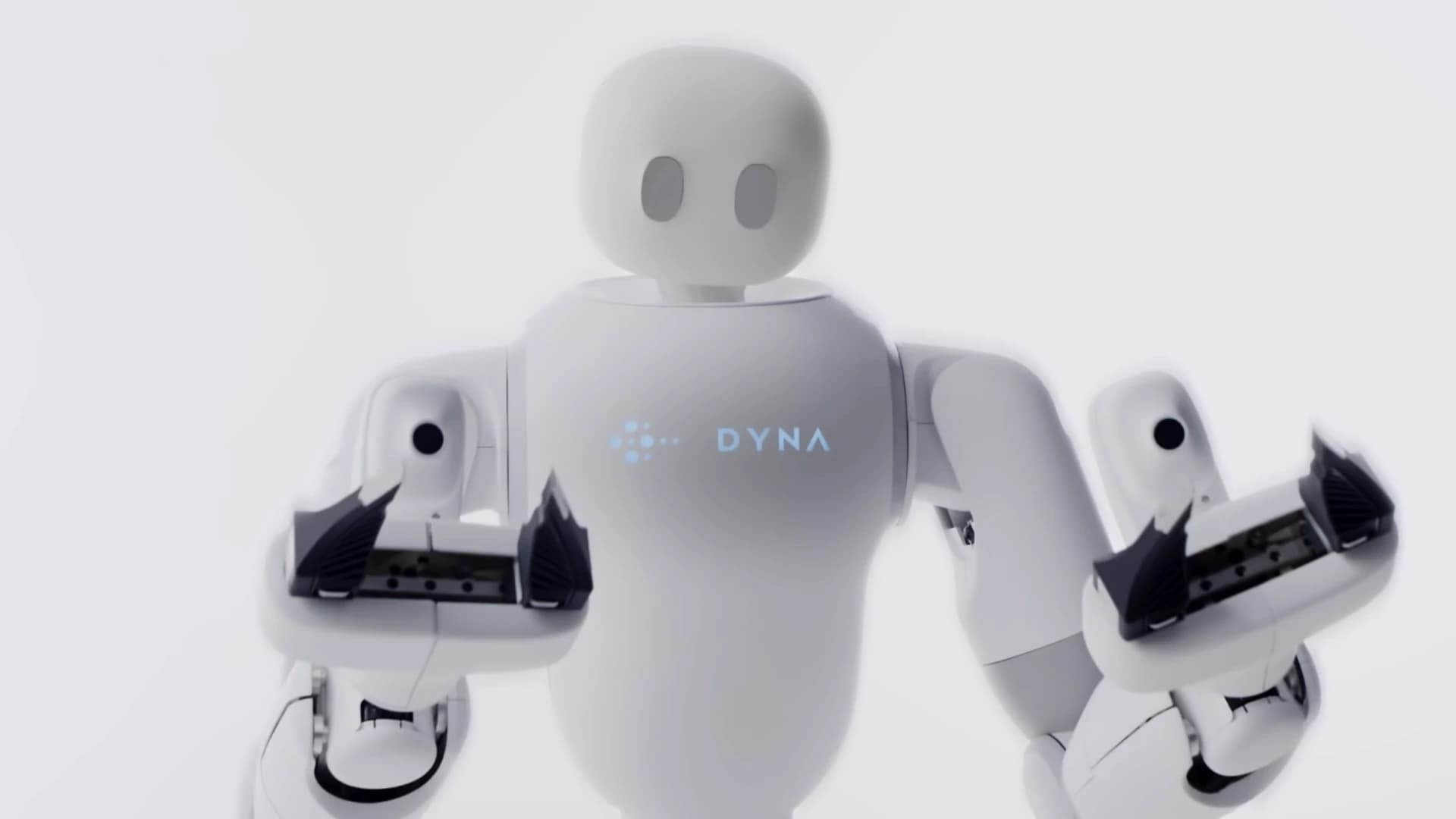
While humanoid locomotion has made visible strides—evidenced by the mass synchronized dancing seen at the 2026 Chinese New Year celebrations—the "business end" of the robot remains a significant hurdle. In a widely circulated technical blog post titled "The Dexterity Deadlock," Origami Robotics co-founder Quanting Xie and colleagues argue that the industry’s reliance on high-ratio gearboxes is "poisoning" the development of human-level manipulation.
The critique has sparked a discussion among industry leaders, including 1X Technologies CEO Bernt Børnich, over whether the path to dexterity lies in complex tendon systems or simplified "joint-drive" hardware.
The "Geometric Curse" of Robotic Fingers
The core of Origami’s argument is what they call the Geometric Curse. Because robot fingers are small, they cannot accommodate the large, powerful motors found in legs. According to Xie, torque scales with the cube of the linear dimension (). When a motor is shrunk to fit a finger, its torque "vanishes," forcing engineers to use massive gear ratios—often between and —to amplify strength.
These high-ratio gearboxes introduce three critical failures that break the "sim-to-real" pipeline:
The weekly humanoid robotics briefing
One email a week: the launches, funding and research that mattered, with context from Humanoids Daily.
Read recent issues- Reflected Inertia: Reflected inertia scales with the square of the gear ratio (). At a ratio, a finger hits an object with the momentum of a "sledgehammer" rather than a delicate touch.
- The Information Wall: Friction and stiction in complex gears block force information from reaching the motor. This makes the hand "blind," unable to feel millinewton-level contact without expensive external sensors.
- Mechanical Fragility: Tiny gear teeth are often the first component to break under impact, creating a maintenance nightmare for fleet deployments.
This hardware bottleneck forces companies to rely on massive domain randomization in simulation to account for "chaos terms" like grease viscosity and gear wear—approaches Origami believes are treating the symptom rather than the disease.
Origami’s Solution: Axial Flux and 15:1 Ratios
To break the deadlock, Origami has moved away from traditional radial flux motors in favor of an axial flux architecture. By using a flatter motor topology that places magnets at a larger effective radius, they can generate higher torque in a smaller volume.

Combined with thermal optimization, this allowed Origami to drop the gear ratio from the industry-standard to a transparent . The result is a fully backdrivable hand that can sense forces through motor current alone, echoing the proprioceptive approach used by Kyber Labs.
1X Responds with NEO’s "New" Hand Specs
The critique prompted a rare public data drop from 1X CEO Bernt Børnich, who defends the "tendon-drive" paradigm used in the upcoming $20,000 NEO humanoid. Børnich argues that 1X’s approach achieves high transparency and safety by moving actuators to the forearm.

Børnich revealed updated specifications for NEO’s hands, which appear to have been quietly upgraded for the 2026 commercial launch:
- Degrees of Freedom: 22 DOF (fully actuated via 44 active tendons).
- Gear Ratio: (using 1X custom high-torque motors).
- Reliability: 3.5 million cycles at nominal load.
- Force Transparency: "High" via motor currents.
Dr. Scott Walter (read our interview with him here), known as the "Humanoid Botangelist" on X, noted that this represents a significant jump from the 18-DOF hand seen on the Neo Beta prototype. Walter speculated that 1X has likely restored CMC joint mobility and 5th metacarpal opposition to achieve "human parity", a goal also pursued by Figure’s 7th-generation hand.
The 100-Million-Cycle Gap
While the debate over "tendon-drive" (1X, Tesla V3) versus "joint-drive" (Origami, Wuji Tech) continues, Quanting Xie pointed out a more sobering reality: reliability. Industrial robots from companies like FANUC typically boast lifespans of 80,000 to 100,000 hours, which translates to roughly 180 million cycles.
Xie challenged the real-world utility of Børnich’s 3.5-million-cycle figure, calculating that a high-activity home schedule of 60 grasps per minute—for constant tidying, laundry, and kitchen work—would hit that limit in just 81 days. Børnich countered that 60 grasps per minute exceeds even highly effective human performance. He further noted that NEO would likely last significantly longer because typical domestic grasps occur well below nominal load.
The disagreement also highlights a fundamental divide in repairability. Børnich argues that 1X has designed NEO specifically for cheap, easy replacement of wearing parts, whereas high-precision gears are costly and difficult to service. Xie, however, remained skeptical of the maintenance workload, suggesting that re-routing 44 snapped tendons through a high-DOF hand is a "much more complex task" than simply swapping out a modular joint-drive actuator held by four screws.
These durability concerns led Xie to predict a new sector of the economy: "Robo-Mechanics". Much like automotive service centers, the complexity of 22-DOF hands—whether geared or tendon-driven—will likely require professional maintenance that exceeds the capabilities of the average homeowner.
As firms like Sharpa Robotics ramp up mass production, the industry is moving from "can it do the task" to "how long can it do the task before it breaks".
Share this article
Read next
- Published on
- Reading time
- 6 min read
The "Final Boss" of Home Robotics: 1X Unveils Next-Gen Robotic Hands for NEO Alongside New CFO
- Published on
- Reading time
- 3 min read
Tesla’s Next Optimus Hand to Feature 50 Actuators, Musk Says, Eclipsing Current Prototype
- Published on
- Reading time
- 5 min read
The Great Dexterity Divide: Why Robotics Leaders Are Warring Over Tendon vs. Direct-Drive Hands
- Published on
- Reading time
- 10 min read
The Contact Problem: How AGILINK’s New OmniHand 3 Ultra-M is Teaching Robots to Feel
- Published on
- Reading time
- 5 min read
Wuji Tech Teases Wuji Hand 2: High Engineering Ambitions Behind a CGI Veil
- Published on
- Reading time
- 3 min read
Sanctuary AI Achieves "Zero-Shot" Sim-to-Real Milestone for Hydraulic Dexterous Hands

The weekly humanoid robotics briefing
One email a week: the launches, funding and research that mattered, with context from Humanoids Daily.
Read recent issues