- Published on
Noble Machines Exits Stealth: The "Anti-Human" Approach to Industrial Humanoids
One tap, and our reporting appears more often in your Google Top Stories. It makes a real difference to a small newsroom.


Your guide
Rich Robinson
Jee Chee Ren · Executive tour
See China’s AI and robotics ecosystem first-hand.
Six days exploring AI, robotics and advanced manufacturing.
With Rich Robinson, Clinical Professor of Entrepreneurship at Peking University
Beijing · Guangzhou · Shenzhen
29 November–4 December 2026
Referral partnership · We earn a commission on referred bookings.
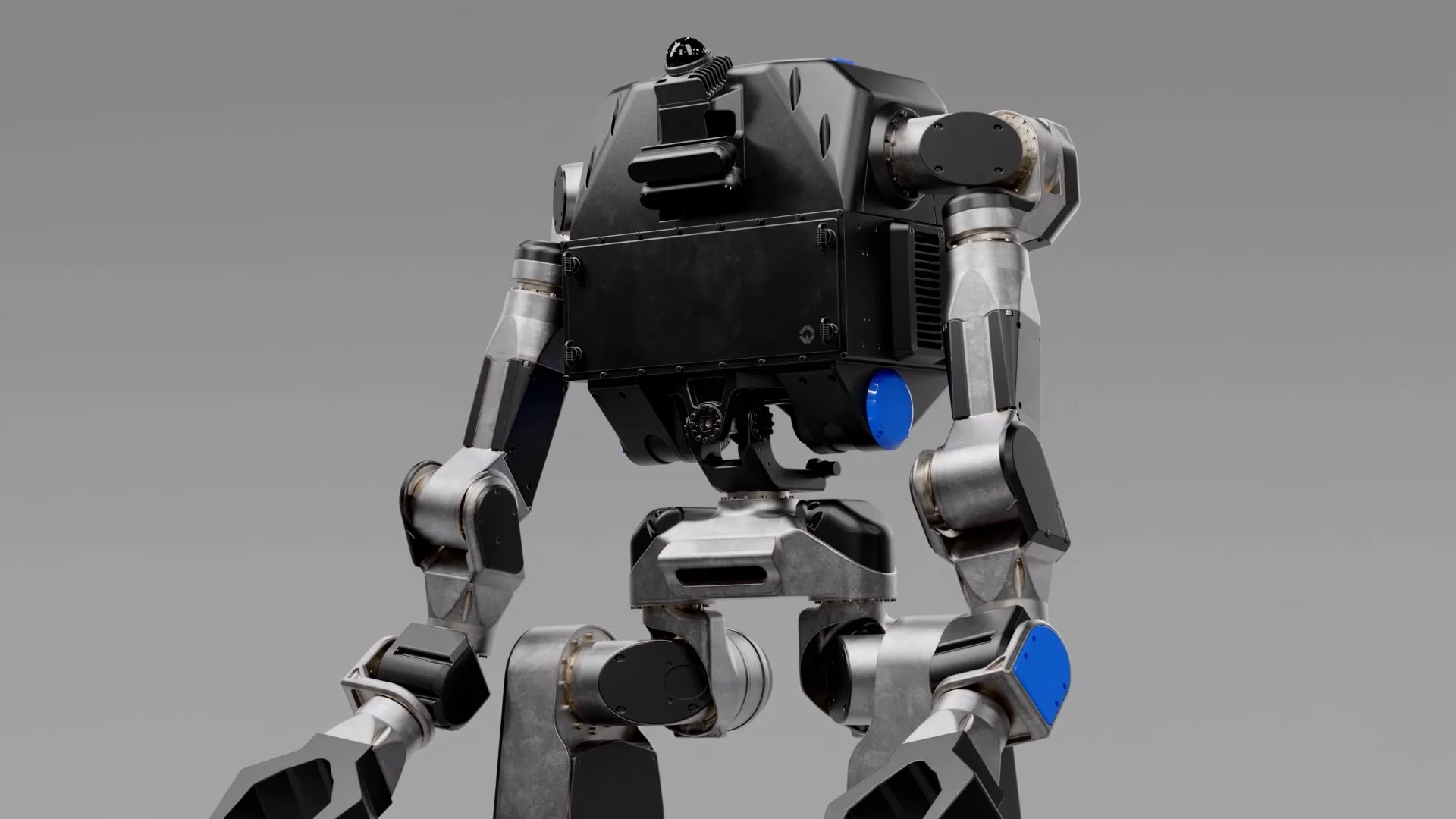
The crowded field of industrial humanoid robotics just gained a heavy-hitting contender. Noble Machines, the Sunnyvale-based startup formerly operating as Under Control Robotics (UCR), officially emerged from stealth today with the announcement of its first commercial deployment to a Fortune Global 500 customer.
Founded in 2024 by a team of veterans from SpaceX, Apple, NASA, and Caltech, Noble Machines is positioning itself as a pragmatic alternative to the increasingly sleek, "human-centric" designs seen elsewhere in the industry. While competitors like Generative Bionics emphasize tactile skin and human-like micro-interactions, Noble Machines is doubling down on "Physical AI" designed for the grit of construction, mining, and energy sectors.
From "Moby" to Noble: A Shift in Identity
Before its official rebranding, the company operated as UCR, where it spent eight months developing a robust prototype platform internally nicknamed Moby. The transition to the "Noble Machines" name marks a shift from experimental development to commercial scale.
The company’s launch is backed by a series of high-profile industrial partnerships, including collaborations with ADLINK, Solomon, and Schaeffler. The latter is particularly notable, as the motion technology giant has been very active in the humanoid robotics field, all over the world.
The weekly humanoid robotics briefing
One email a week: the launches, funding and research that mattered, with context from Humanoids Daily.
Read recent issuesHardware Engineered for the "4D" Jobs
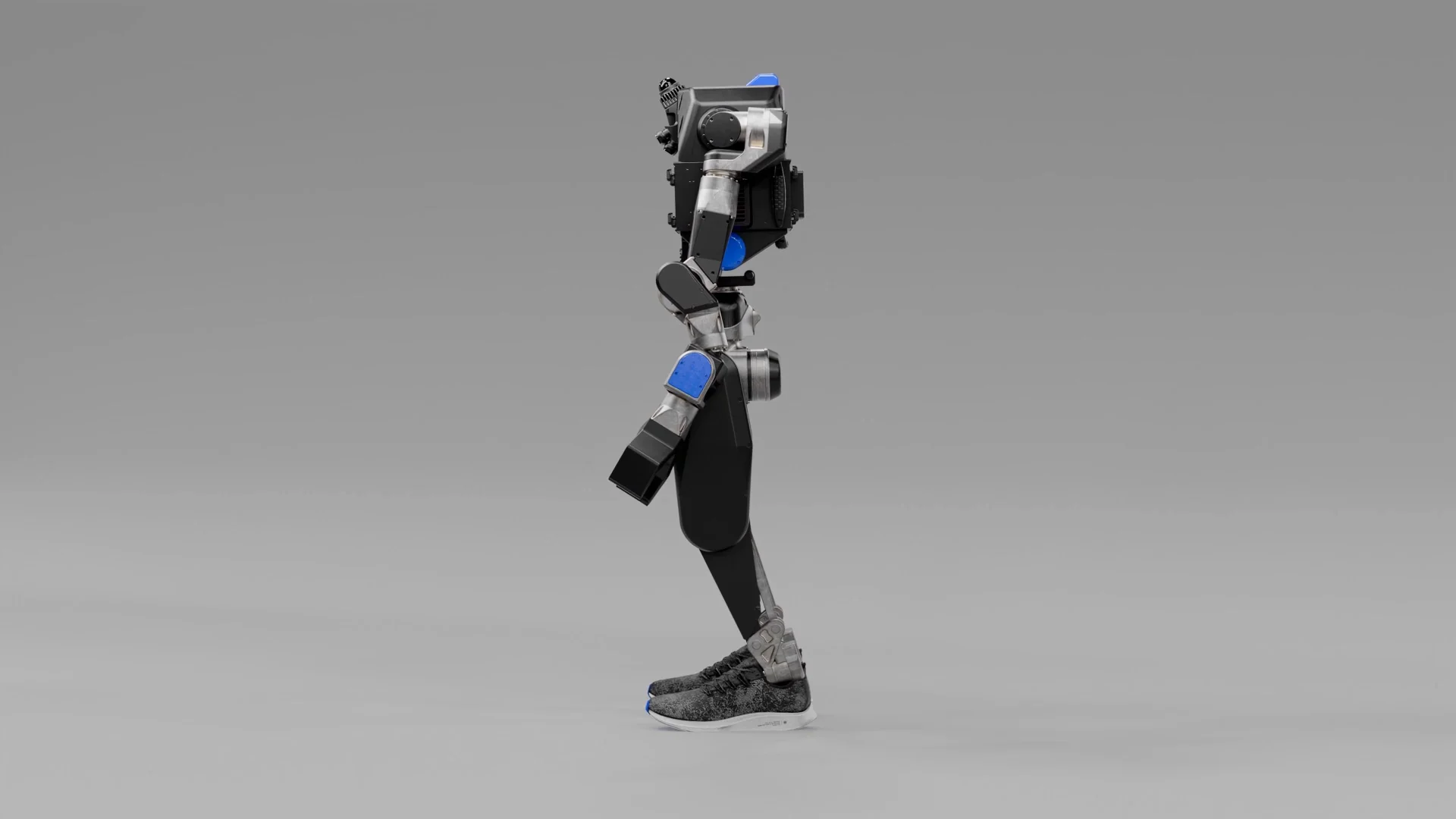
Noble Machines' flagship platform is designed to tackle the "4D" jobs—dull, dirty, dangerous, and declining—that have traditionally resisted automation. Unlike the 1.6 m/s walking speeds or delicate aesthetics of research-grade humanoids, the Noble platform focuses on ruggedized utility:
- Payload Capacity: The robots can lift and carry up to 27kg (50lb), a significant metric for material handling in construction and logistics.
- Endurance: The system is rated for 5 hours of battery life, powered by a single NVIDIA Jetson Orin edge AI computer.
- Mobility: Optimized for stairs, scaffolding, and cluttered "non-uniform" terrain rather than polished laboratory floors.
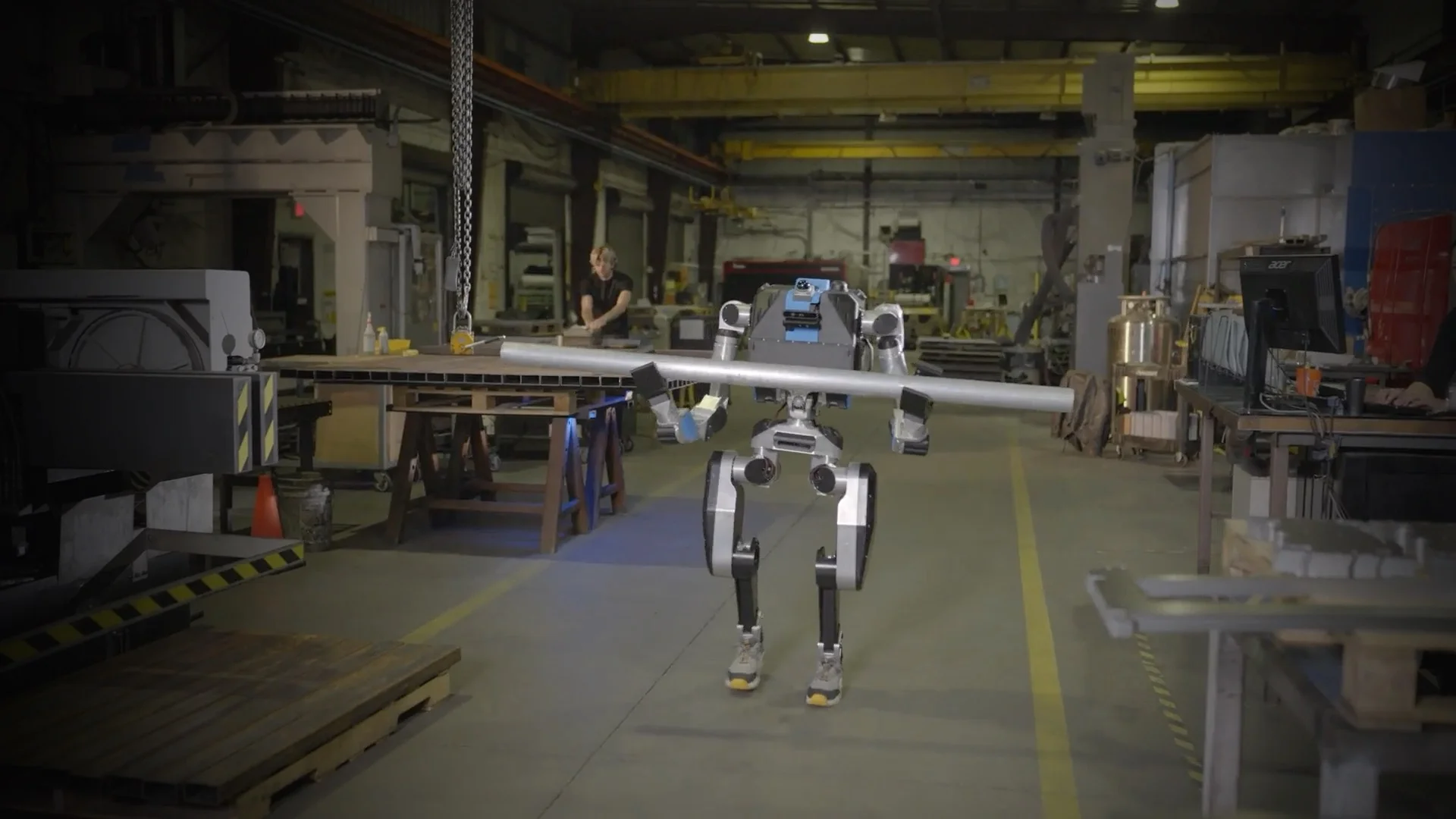
"Our mission is to tackle all the hazardous, physically demanding industrial tasks that keep the world moving," said Wei Ding, Co-founder and CEO of Noble Machines. This mission mirrors the trajectory of Houston-based Persona AI, which is similarly targeting heavy industry and shipbuilding through its partnerships with HD Hyundai and the American Bureau of Shipping.
The "Whole-Body" Intelligence Stack
At the heart of Noble Machines’ value proposition is its AI-driven whole-body control. The company claims its robots can learn new skills in hours, rather than months, through a combination of language-based instructions and physical demonstrations.
Technical documentation from the company’s "UCR" era reveals a sophisticated training pipeline built on the NVIDIA Isaac platform. By using a "Real2Sim" and "Sim2Real" loop, Noble Machines claims a 95% deployment success rate when moving machine-learning models from simulation to physical hardware. This approach allows the robot to autonomously identify terrain geometry and payload mass without needing explicit manual parameters.
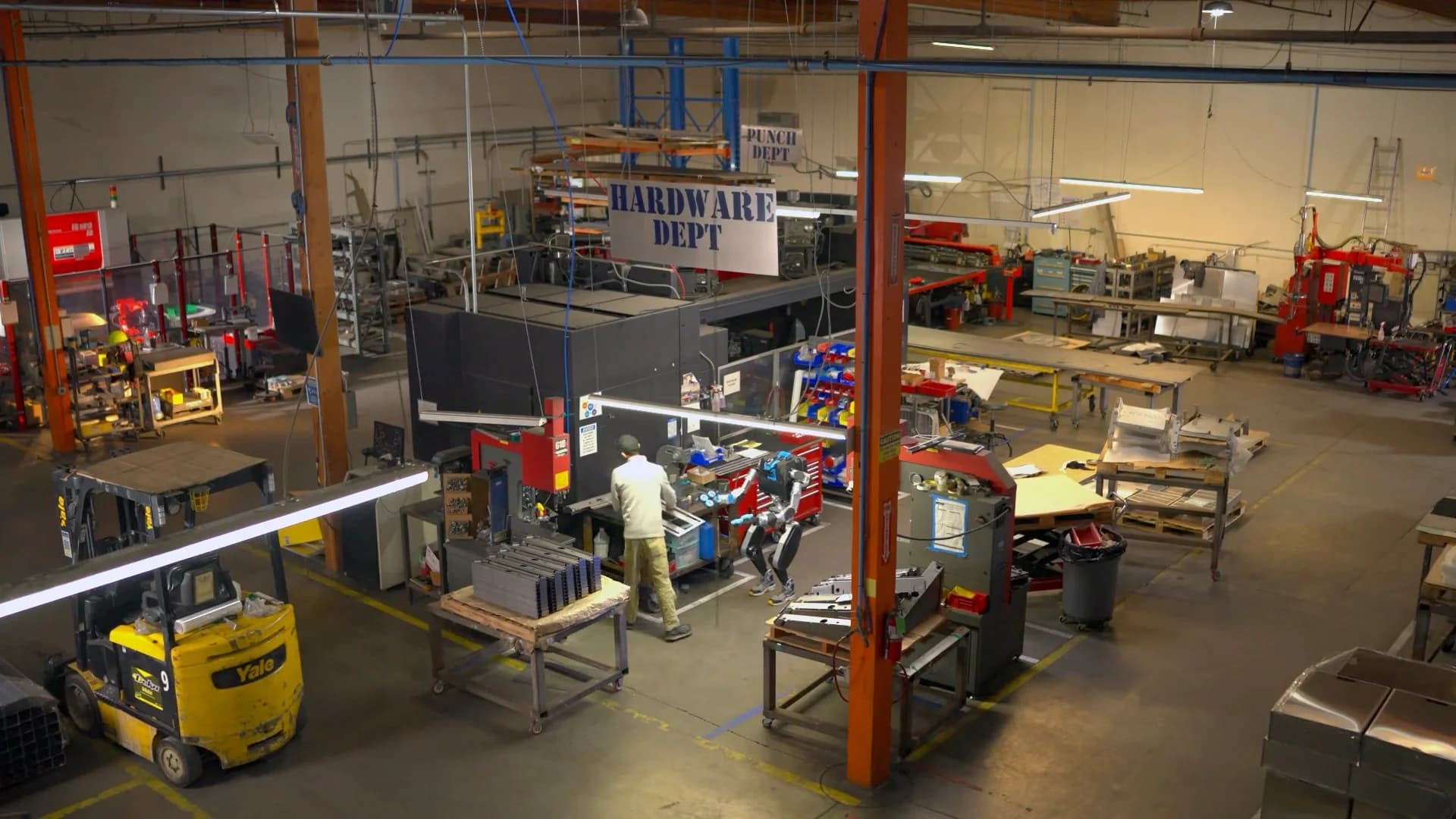
Crucially, Noble Machines’ philosophy prioritizes "application-essential performance" over imitating human-like movement. The company notes that while human-like motions—such as lateral torso sway—occasionally emerge as natural consequences of optimizing for energy efficiency, they are not the primary goal.
A Proving Ground in Heavy Industry
The emergence of Noble Machines reinforces a trend where the most aggressive humanoid deployments are happening in high-risk, labor-starved industrial niches rather than the service sector.
With initial units already shipped and a presence at NVIDIA GTC this week, Noble Machines is entering a race where the winner won't be the most "human" robot, but the one that survives a double shift on a construction site. As the company moves to validate its reliability in operational environments, it joins a growing list of startups—from Italy's Generative Bionics to America's Persona AI—attempting to prove that "Physical AI" is finally ready for the real world.
Share this article
Read next
- Published on
- Reading time
- 5 min read
Feather launches a $30,000 wheeled humanoid for developers, announces $7.6M funding
- Published on
- Reading time
- 5 min read
Weave Robotics Launches "Isaac 0": A $9,999 Stationary Bet on the Future of Laundry
- Published on
- Reading time
- 7 min read
Agility's Investor Day: Digit 5 Launches at a $150,000 Bill of Materials, and Its $300M Order Unlocks Skill by Skill
- Published on
- Reading time
- 4 min read
From Totes to Bearings: Agility’s Digit Hits the Production Floor in South Carolina
- Published on
- Reading time
- 3 min read
Unitree Unveils Human-Sized Robot Hand Starting at $6,500
- Published on
- Reading time
- 4 min read
PrimeBOT Launches Personal Robots at 19,999 Yuan, Betting on Apps and Companionship
The weekly humanoid robotics briefing
One email a week: the launches, funding and research that mattered, with context from Humanoids Daily.
Read recent issues