- Published on
Design Around the Data: Sunday Robotics Reveals Why They Built 100 Gloves Before One Robot
One tap, and our reporting appears more often in your Google Top Stories. It makes a real difference to a small newsroom.

Supported by RoboStrategySupport for Humanoids Daily comes from RoboStrategy
Sponsored
Investing involves risk, including possible loss of principal. Read the prospectus before investing.
Watch the interview in the player above
The robotics industry usually follows a predictable hardware cycle: build a capable robot, then figure out how to control it. Sunday Robotics is flipping that script.
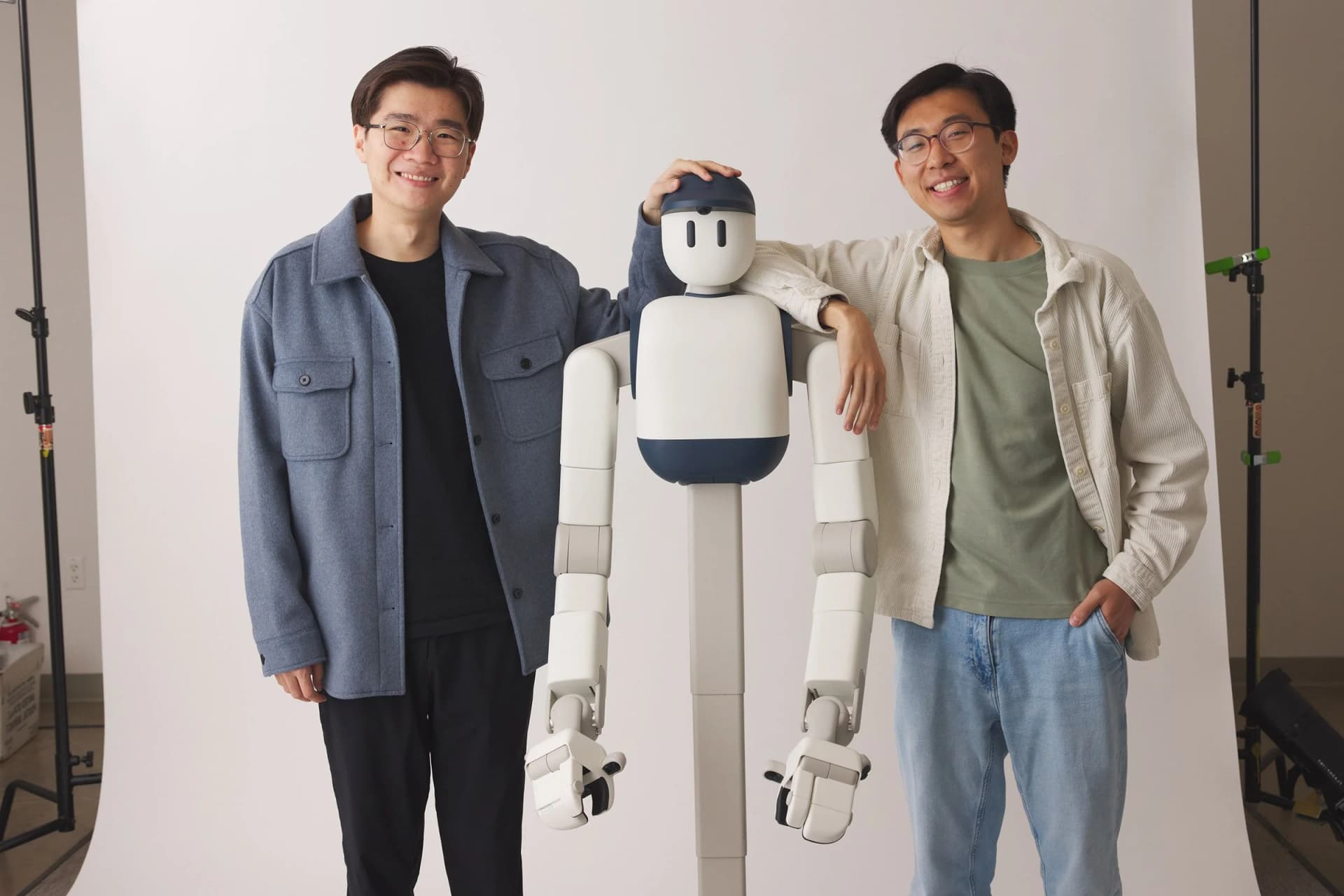
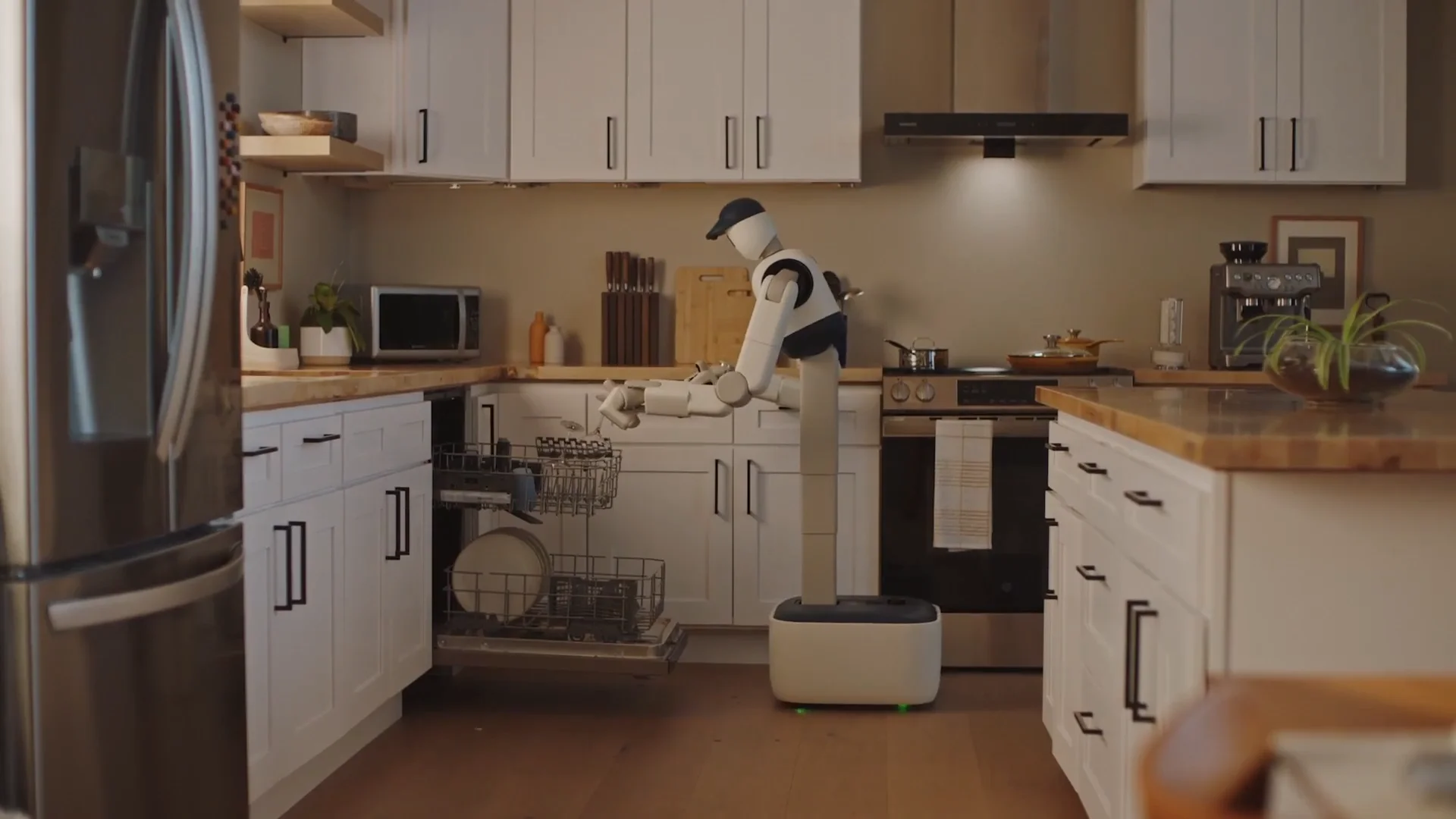
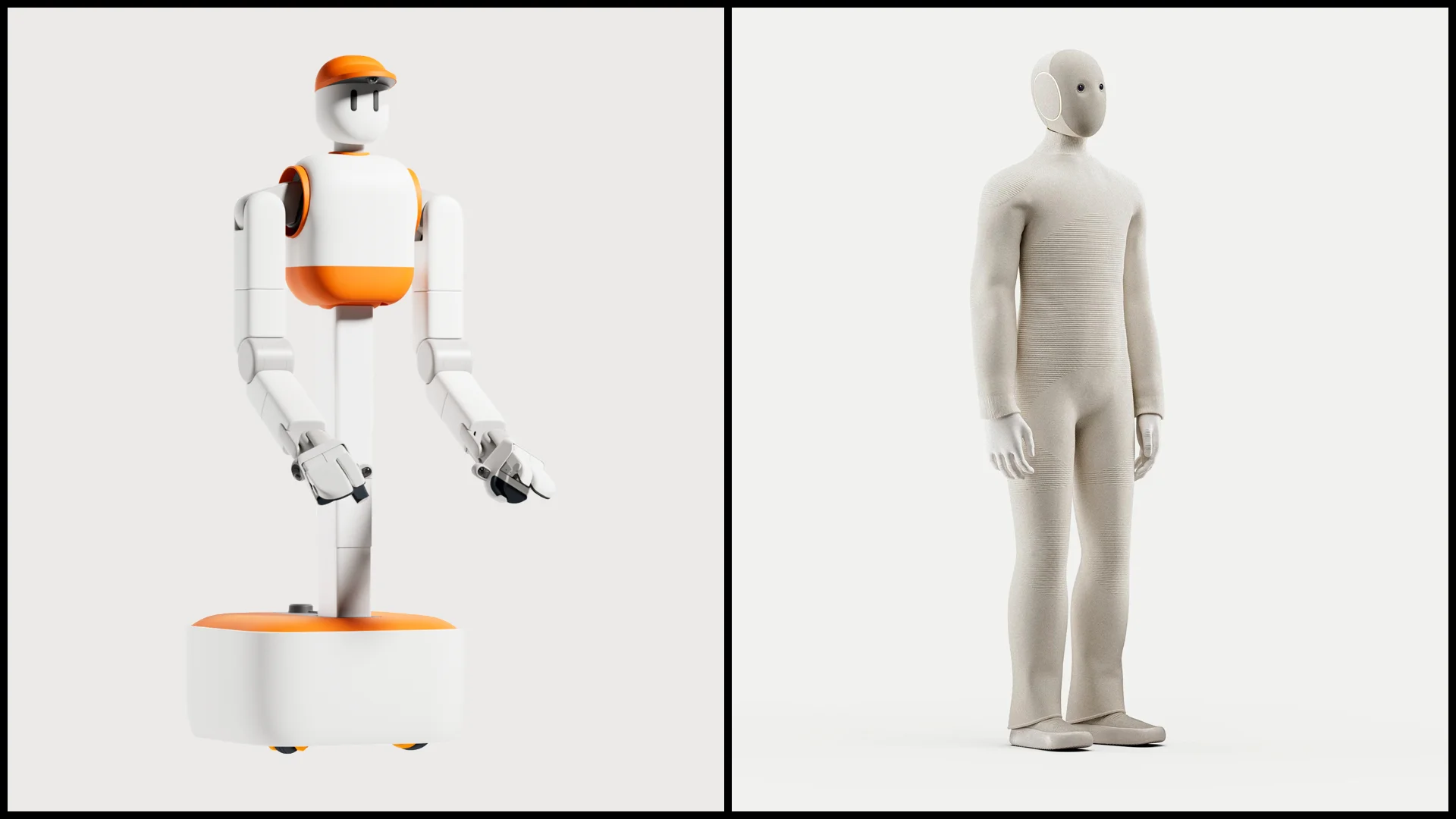
In a new interview with industry analyst Scott Walter and Marwa ElDiwiny, Sunday Robotics co-founder Cheng Chi and Head of Product Camilla Gao offered the most detailed look yet at the company’s "data-first" engineering philosophy. The conversation confirmed that the company's wheeled robot, Memo, was not the starting point of their journey, but rather the physical conclusion of a data project that began years ago in academia.
The "Glove-First" Doctrine
While Sunday recently emerged from stealth with a polished robot, Chi revealed that the hardware design was secondary to the data collection infrastructure.
The weekly humanoid robotics briefing
One email a week: the launches, funding and research that mattered, with context from Humanoids Daily.
Read recent issues"We first spent a lot of time designing the glove," Chi explained, referring to the company's Skill Capture Glove, or UMI (Universal Manipulator Interface). "We spent almost 100 iterations on the glove itself... We designed the robot around the hand."
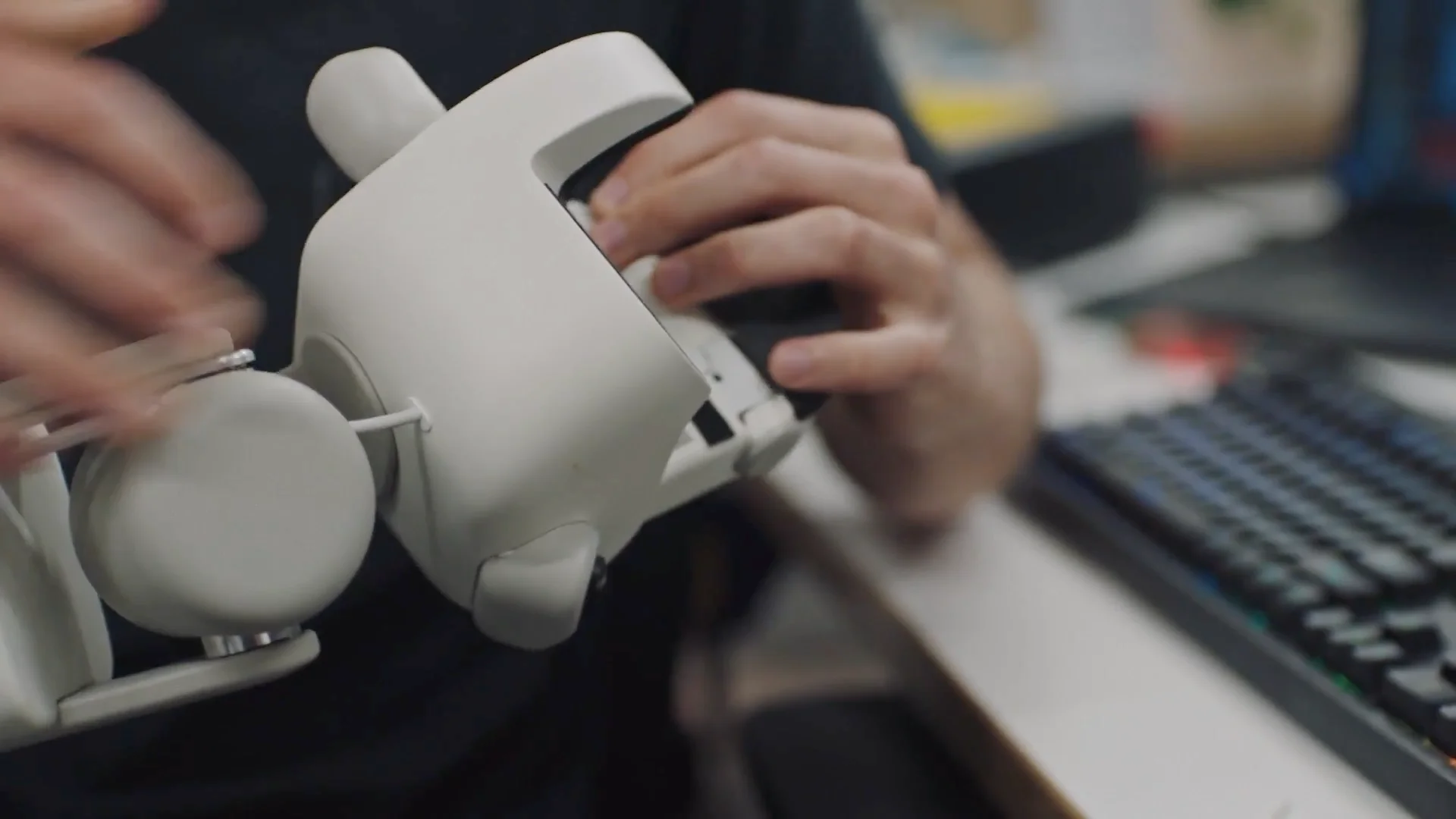
This approach contrasts sharply with competitors like 1X Technologies, which rely on teleoperation—controlling a specific robot remotely to generate data. Sunday's thesis is that if you capture the geometry of the human hand successfully, you can collect millions of training trajectories before you even finalize the robot's body.
Gao underscored this timeline, noting that by the time lead designer Shy Yang proposed the first design for Memo's body in September 2024, the team had already iterated on the glove 31 times.
Solving the "Singularity"
The interview also provided a rare anecdote about how online engineering discourse can influence physical product design.
Chi revealed that the design of Memo’s shoulder joints was directly influenced by Scott Walter’s educational content regarding "singularities"—mathematical points where a robot arm loses the ability to move in certain directions or requires infinite velocity to maintain a path.
"One of the iterations of the robot had a shoulder facing sideways," Chi told Walter. After watching Walter’s visualization of singularity zones, the team realized their design would force the robot's elbow into unstable positions. They subsequently reoriented the shoulder axis to point upward.
"We compromised a little bit on the design such that the axis actually points up," Chi said, noting that designer Shy Yang used "clever visual play" to ensure the robot still looked aesthetically pleasing despite the mechanical adjustment.
The "Passively Stable" Bet
The team also defended the controversial decision to use wheels instead of legs, a choice that separates them from the bipedal humanoids developed by Tesla and Figure.
Chi described the decision as a prioritization of manipulation over locomotion. "The most value a robot can provide... is manual labor," Chi argued. "We first want to solve the crux of the problem, which is manipulation."
The wheeled base offers "passive stability," meaning the robot does not expend energy standing still and will not fall over if power is cut. Walter noted that unlike uncanny bipedal androids, Memo "doesn't look like it will kill me in my sleep."
75% Human Speed
One of the most scrutinized aspects of Sunday’s reveal was the speed of the robot. While the viral launch videos were sped up (a common industry practice to fit social media attention spans), Chi clarified the real-world performance.
"The robot moves at around 75% speed of the data we collected of how people actually move," Chi stated. He noted that the human data collectors are instructed to move intentionally and smoothly, slightly slower than chaotic natural movement, to ensure high-quality training data.
This performance is enabled by the "compliance" of the system. While the robot's grippers are rigid, the control software allows for "softness" when needed. Chi highlighted the sock-folding demo as a prime example: the robot must apply significant force to stretch the sock opening, but instantly become compliant to avoid tearing the fabric—a balance of brute force and tactile sensitivity that pure position control cannot achieve.
The "Founding Family" Beta
Looking toward commercialization, Gao detailed the company's 2026 Beta program, dubbed the "Founding Family" program.
Sunday is positioning the robot as a purchase, likely priced competitively due to the use of commodity supply chain parts, rather than a pure "Robot-as-a-Service" rental model. However, users will likely pay for additional skills.
"We expect it to be a pretty involved relationship," Gao said of the early beta testers. "We’re mostly looking for people who will be okay with us maintaining the robot on a regular basis."
The company confirmed that while the robot has demonstrated "zero-shot generalization" in Airbnb environments it had never seen before, the beta will focus on refining reliability in diverse home layouts.
Conclusion
The interview reinforces Sunday Robotics' position as the pragmatist's bet in the humanoid race. By focusing on a "classical roboticist" approach—solving for stability, data quality, and manufacturing scalability—they are betting that consumers ultimately want a machine that works, regardless of whether it has legs.
"Data is the biggest bottleneck," Chi concluded. "It prevents robots from actually entering production right now."
For Sunday, the answer to that bottleneck wasn't a better robot, but a better glove.
Share this article
Read next
- Published on
- Reading time
- 5 min read
Beyond the Viral Demo: Sunday Robotics Claims 99.1% Zero-Shot Success in Laundry Folding with ACT-2
- Published on
- Reading time
- 5 min read
Watch: Inside Sunday Robotics’ Mission to Move Beyond the "Viral Demo"
- Published on
- Reading time
- 4 min read
Sunday Robotics Raises $165M to Transition from Demos to Real-World Deployment
- Published on
- Reading time
- 4 min read
Sunday Robotics Founders on the "GPT Moment" for Physical AI and Breaking the Data Bottleneck
- Published on
- Reading time
- 8 min read
The Appliance vs. The Android: Sunday and 1X Bet on Opposing Futures
- Published on
- Reading time
- 5 min read
The "No Bot of Theseus" Challenge: Scott Walter Proposes a Strict Decathlon Benchmark for Humanoids
The weekly humanoid robotics briefing
One email a week: the launches, funding and research that mattered, with context from Humanoids Daily.
Read recent issues