- Published on
Familiarity Breeds Trust: Hexagon Study Finds "Robot Anxiety" Spikes Where Visibility is Low
One tap, and our reporting appears more often in your Google Top Stories. It makes a real difference to a small newsroom.


Your guide
Rich Robinson
Jee Chee Ren · Executive tour
See China’s AI and robotics ecosystem first-hand.
Six days exploring AI, robotics and advanced manufacturing.
With Rich Robinson, Clinical Professor of Entrepreneurship at Peking University
Beijing · Guangzhou · Shenzhen
29 November–4 December 2026
Referral partnership · We earn a commission on referred bookings.
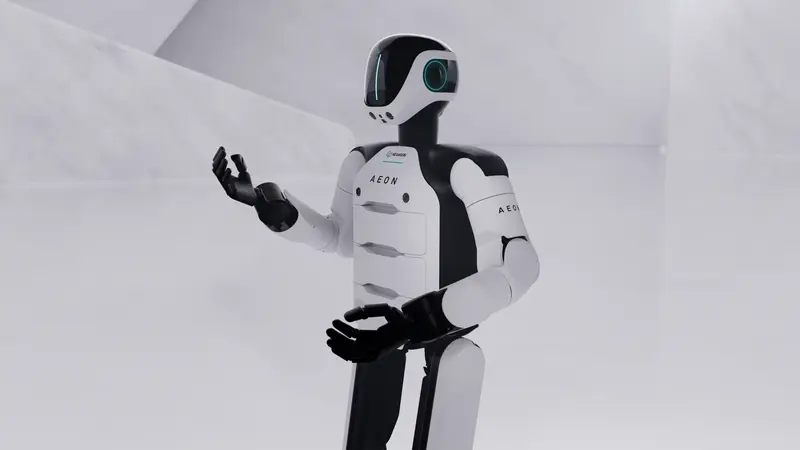
For the robotics industry, the greatest barrier to adoption might not be a lack of battery density or degrees of freedom, but a simple lack of social exposure. A new study from Hexagon, the Swedish technology giant behind the AEON humanoid platform, suggests that "robot anxiety" is highest in regions where the machines are least visible.
The "Robot Generation" study, which surveyed 18,000 participants across nine countries, paints a picture of a world polarized by its proximity to automation. While high-exposure markets like China and South Korea report high levels of excitement and low anxiety, countries with lower robot density—most notably the United Kingdom—remain deeply skeptical of a future shared with machines.
The Visibility Gap
The data reveals a direct correlation between cultural familiarity and public trust. In China, where 75% of adults report having seen or used robots in real life, excitement for the technology sits at a staggering 81%. Conversely, in the UK, only 30% of adults have encountered a robot, and a majority (52%) express worry that something might "go wrong" during an interaction.
This suggests that the "uncanny valley" of public perception may be more of a "visibility gap." As Dr. Blay Whitby, a technology ethicist cited in the report, notes, "Familiarity reduces fear." This is particularly evident in the way people view software versus hardware. In the UK, 61% of adults use AI regularly and 56% view chatbots as "robots," yet the anxiety only spikes when the AI takes a physical, mobile form.
The weekly humanoid robotics briefing
One email a week: the launches, funding and research that mattered, with context from Humanoids Daily.
Read recent issues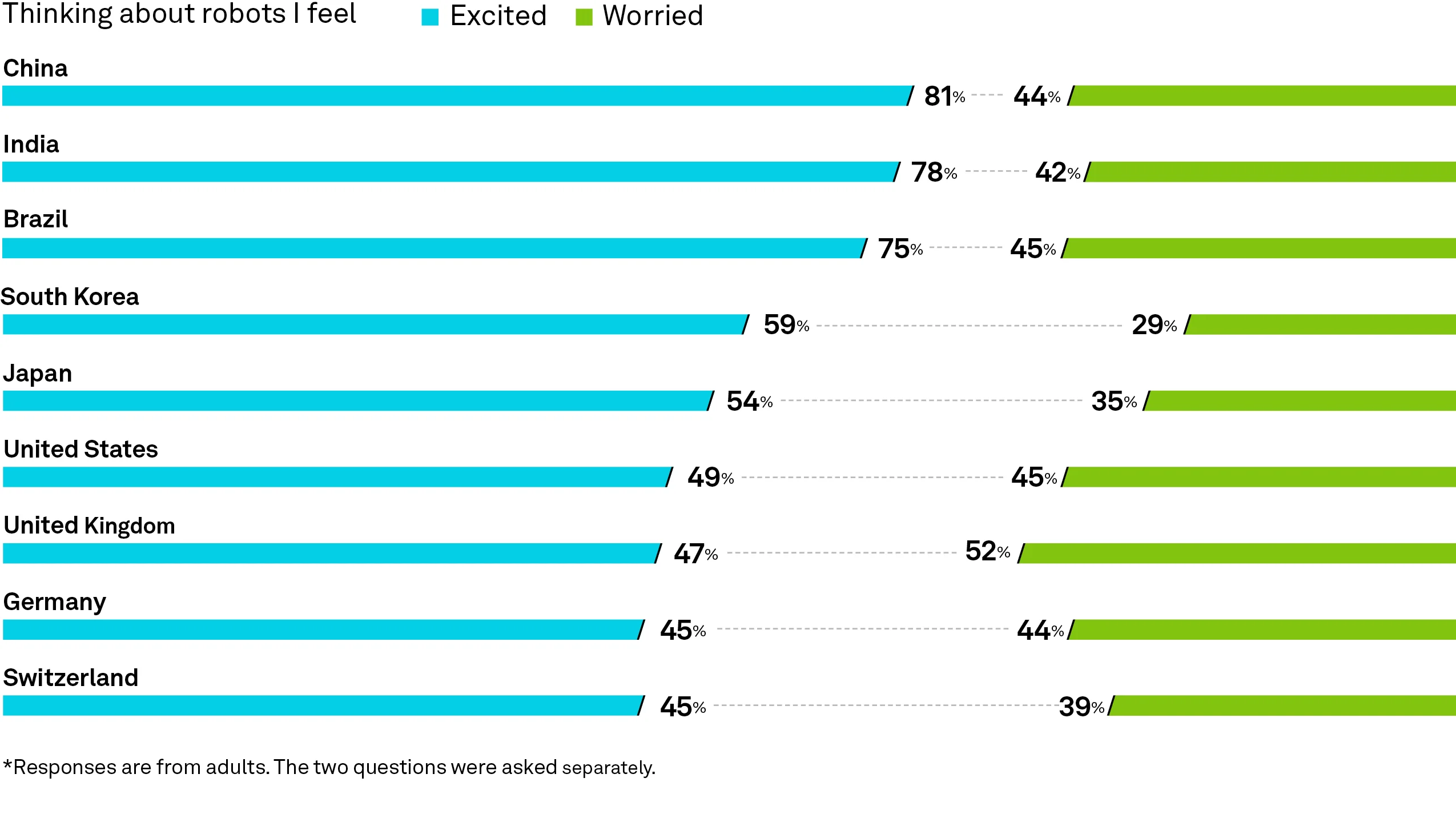
Security Over Sovereignty: The New Top Concern
Perhaps the most surprising takeaway from Hexagon’s research is the shift in what actually keeps people up at night. For years, the dominant narrative has been that humans fear robots will "take our jobs." However, the study shows that hacking and security (51%) have overtaken job replacement (41%) as the primary concern.
| Top Barriers to Robot Adoption | Percentage of Adults Concerned |
|---|---|
| Robots could be hacked/misused | 51% |
| Robots might go wrong/cause harm | 41% |
| Robots will replace humans at work | 41% |
| Robots will make humans lazy | 31% |
| Lack of trust compared to humans | 26% |
This shift suggests that as robots move from science fiction to factory floor reality, the public is viewing them as networked industrial equipment rather than existential threats. The fear is no longer just that the robot will take your paycheck, but that a bad actor might take control of the robot.
Context is Everything
The study also finds that acceptance is highly context-dependent. Humans are far more comfortable with robots in factories and warehouses (63% comfort level) than in homes (46%) or classrooms (39%). In industrial settings, the purpose of the machine is well-defined, and safety standards are understood.
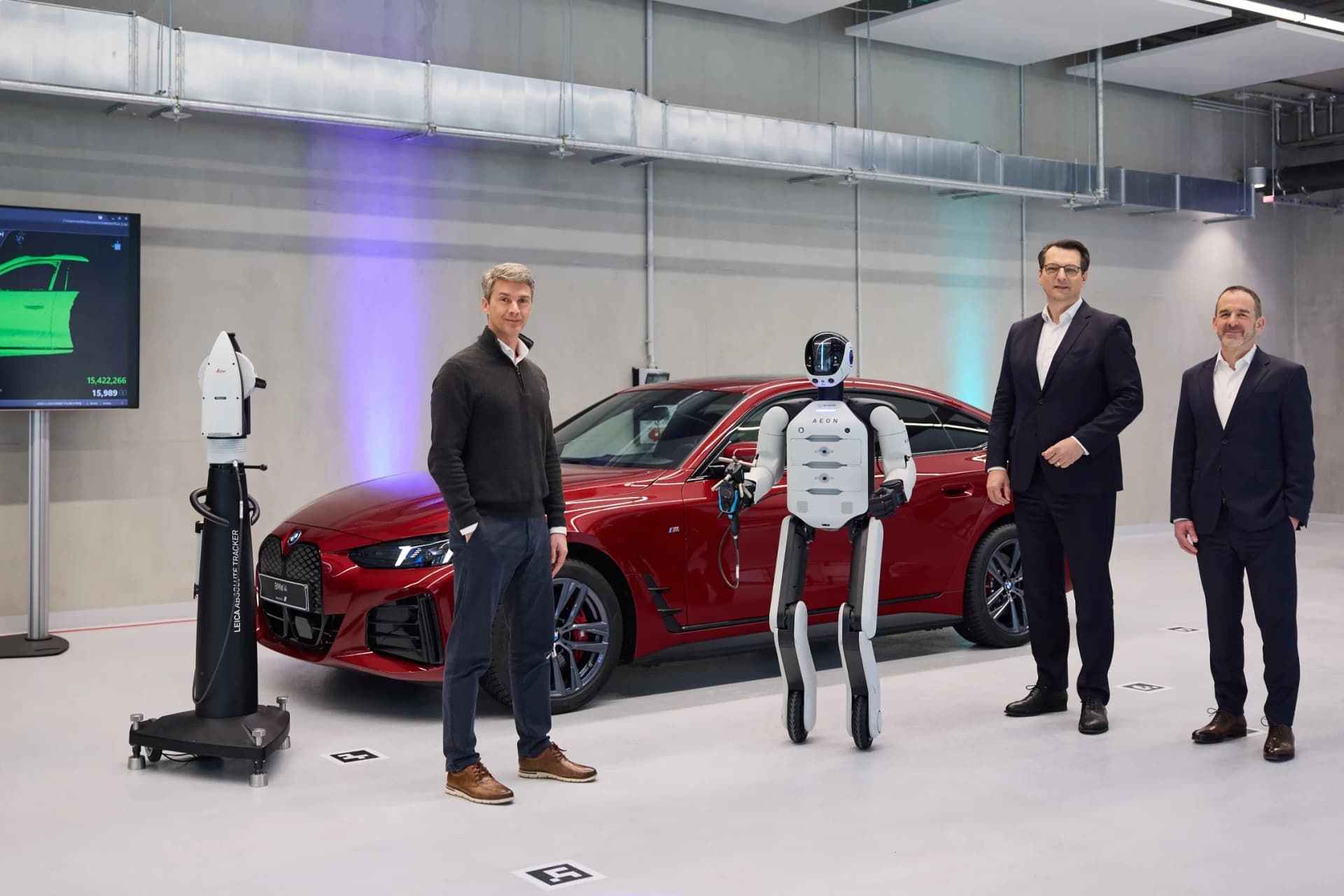
This aligns with the industry's current "Phase One" strategy, which focuses on controlled environments. We recently saw this play out with BMW's decision to deploy Hexagon’s AEON humanoid at its Leipzig plant to assist with battery assembly.
The Path Forward: "Appropriate Trust"
Hexagon’s CTO, Burkhard Boeckem, argues that building trust requires "visibility, purpose, and control." The report suggests that when people see robots working safely alongside humans to solve practical problems, the abstract fear of a "robot takeover" evaporates.

However, the responsibility remains with engineers and scientists to be transparent. As Michael Szollosy, a Research Fellow in Robotics, points out in the study, if the industry fails to explain why these technologies exist, a "counter-narrative" of fear will fill the vacuum.
For Hexagon, a company with net sales of approximately 5.4bn EUR and a growing stake in the humanoid race, this research is more than a PR exercise. It is a roadmap for deployment. If they want AEON to be a common sight in European factories, they first need to ensure the "Robot Generation" feels like they are in the driver's seat.
Share this article
Read next
- Published on
- Reading time
- 25 min read
The Humanoids of Europe: Built by Their Customers
- Published on
- Reading time
- 4 min read
The Tier 1 Play: Schaeffler Commits to 1,000 Hexagon AEON Humanoids in Deep Component Deal
- Published on
- Reading time
- 5 min read
BMW Brings "Physical AI" to Germany with Hexagon’s AEON Humanoid
- Published on
- Reading time
- 4 min read
Hexagon Enters Humanoid Arena with AEON Robot for Industry
- Published on
- Reading time
- 3 min read
Wandercraft Expands Industrial Push, Inks Deal With Auto Supplier SAPA
- Published on
- Reading time
- 3 min read
NEURA Unveils Lighter 4NE1 Gen 4 as TUM RoboGym Opens in Munich
The weekly humanoid robotics briefing
One email a week: the launches, funding and research that mattered, with context from Humanoids Daily.
Read recent issues