- Published on
Rhoda AI Breaks Stealth: Jagdeep Singh Teases "Real World" Generalization
One tap, and our reporting appears more often in your Google Top Stories. It makes a real difference to a small newsroom.


Your guide
Rich Robinson
Jee Chee Ren · Executive tour
See China’s AI and robotics ecosystem first-hand.
Six days exploring AI, robotics and advanced manufacturing.
With Rich Robinson, Clinical Professor of Entrepreneurship at Peking University
Beijing · Guangzhou · Shenzhen
29 November–4 December 2026
Referral partnership · We earn a commission on referred bookings.
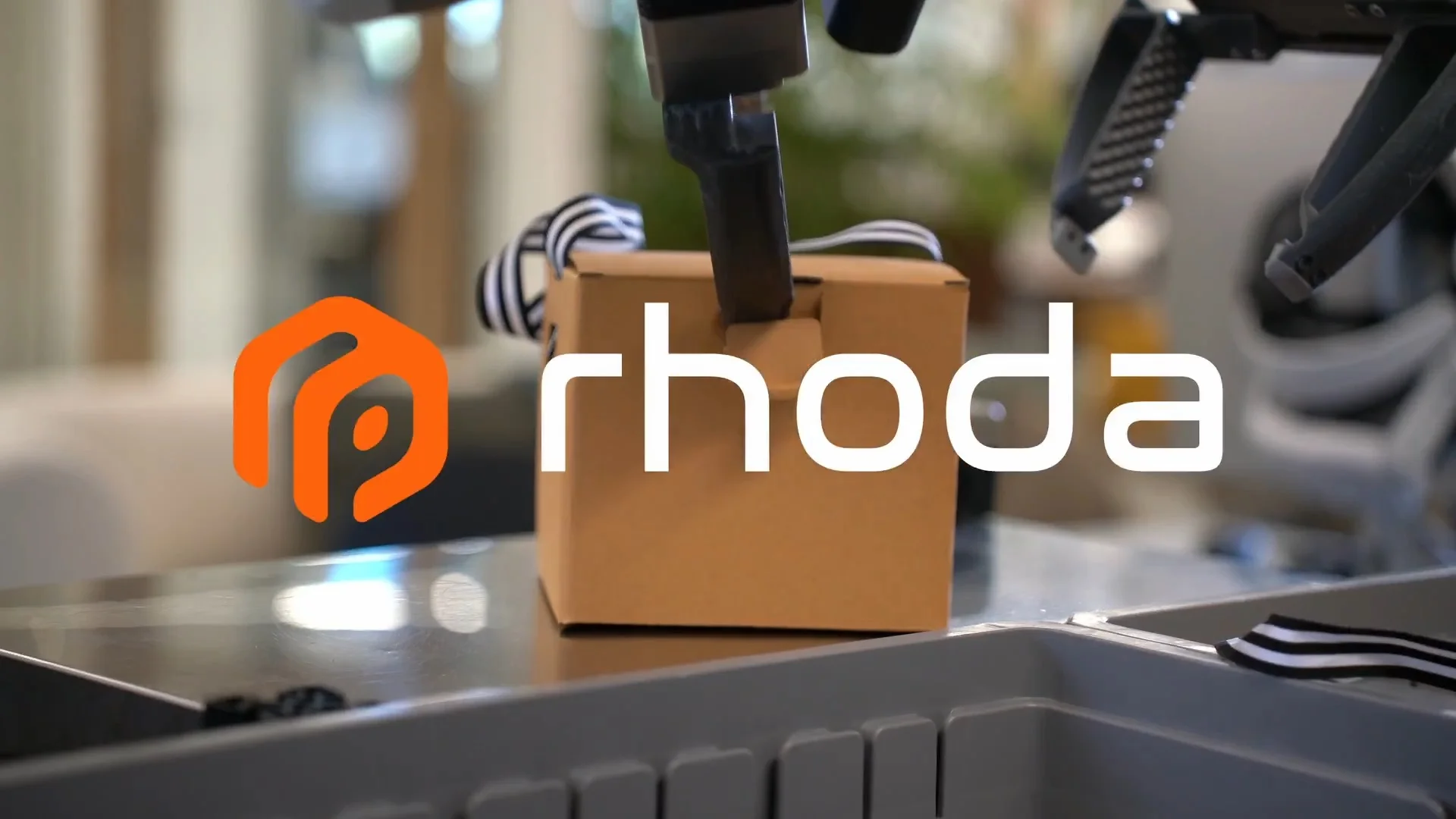
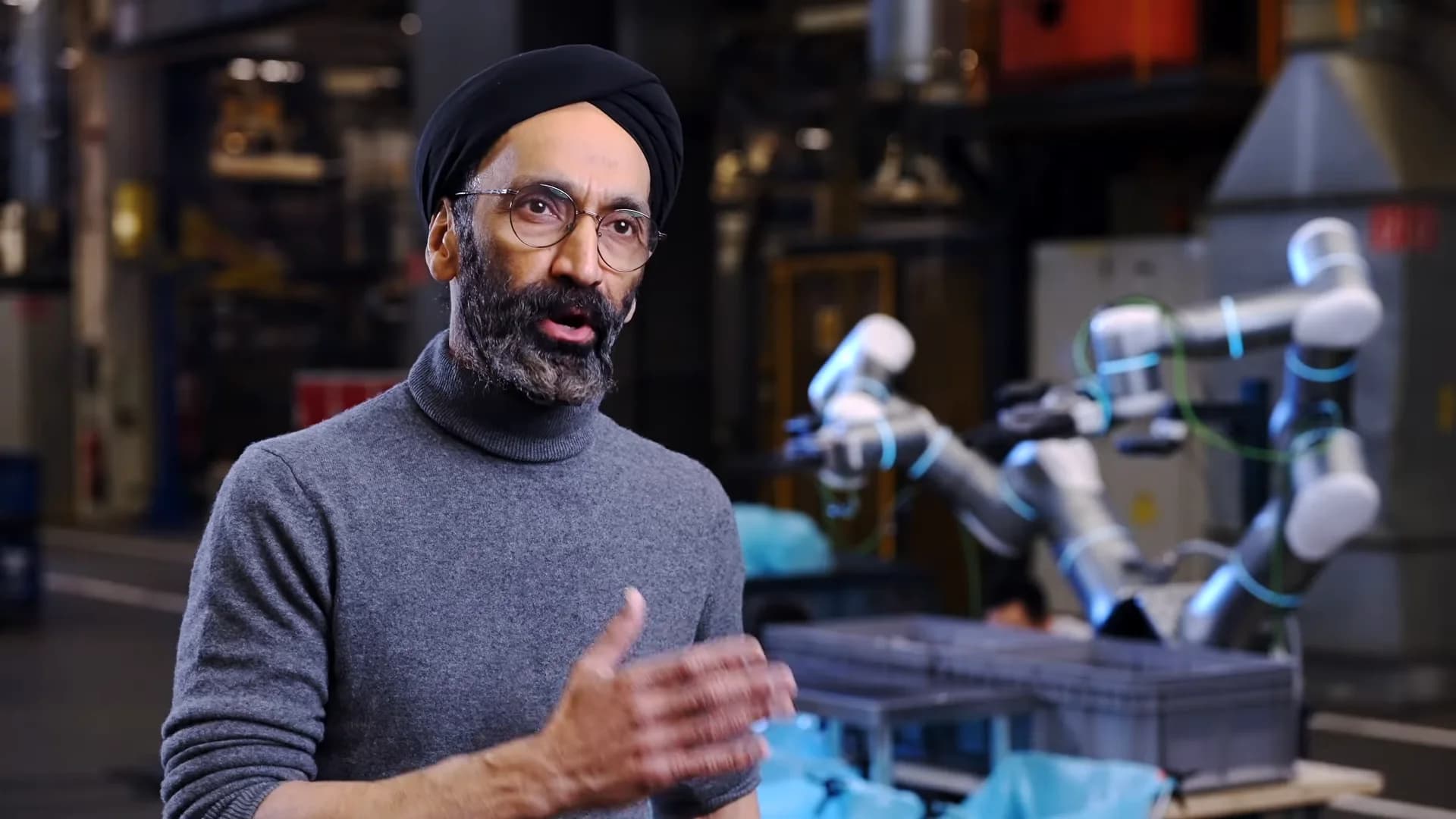
For months, Palo Alto-based Rhoda AI has been one of the most anticipated "ghosts" in the robotics industry. Despite having raised over $230 million and reaching a valuation near $1 billion, the company has remained remarkably quiet. That silence ended this week as founder and CEO Jagdeep Singh began a public-facing pivot, signaling that the stealth period for the venture is rapidly drawing to a close.
From Batteries to Bimanual Manipulation
Jagdeep Singh is no stranger to scaling "hard tech" companies. As the former CEO of QuantumScape, he spent years tackling the complexities of solid-state batteries before turning his attention to embodied AI. After maintaining a cryptic "CEO at Stealth Startup" title on LinkedIn for some time, Singh has updated his profile with a new Rhoda AI brand identity.
The update comes alongside a new mission statement of sorts. In a recent LinkedIn post, Singh identified the "robustness gap" as the primary hurdle currently facing the industry.
"One of the most underestimated problems in robotics is generalization from lab to real world," Singh wrote. "A system that works perfectly in the former can fail with minor changes that come with the latter — slightly different orientation, slightly different lighting, slightly different layout."
This focus on generalization suggests that Rhoda AI is aiming to move beyond the highly controlled "lab demos" that often characterize the sector. Singh’s assertion that "machines still aren’t" robust to these changes echoes the industry's ongoing struggle with Moravec’s Paradox—where high-level reasoning is easy for AI, but basic physical interaction remains difficult.
The weekly humanoid robotics briefing
One email a week: the launches, funding and research that mattered, with context from Humanoids Daily.
Read recent issuesThe Box-Opening Benchmark
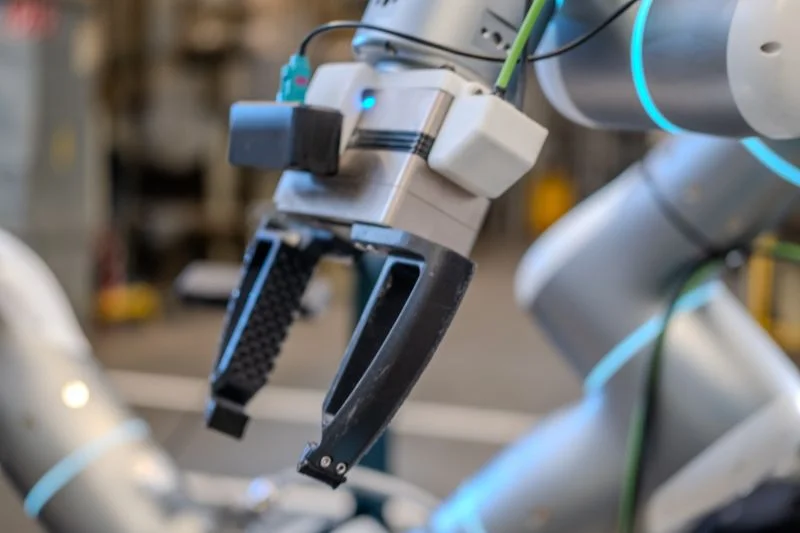
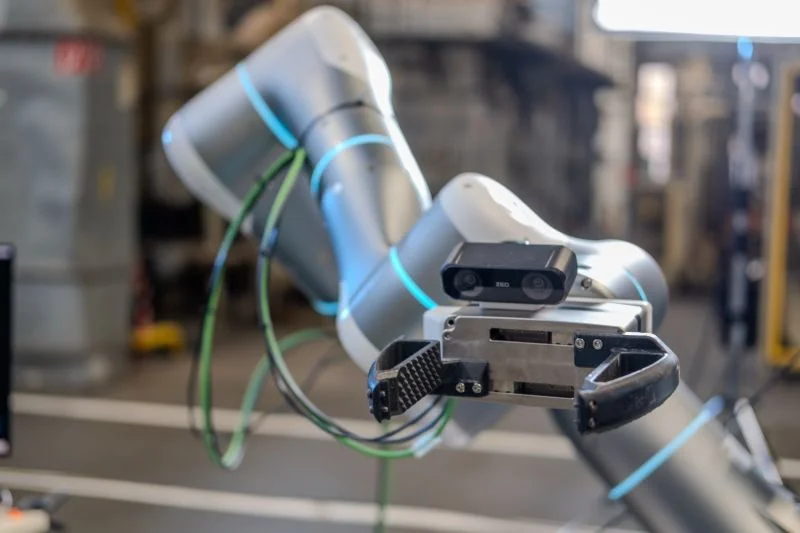
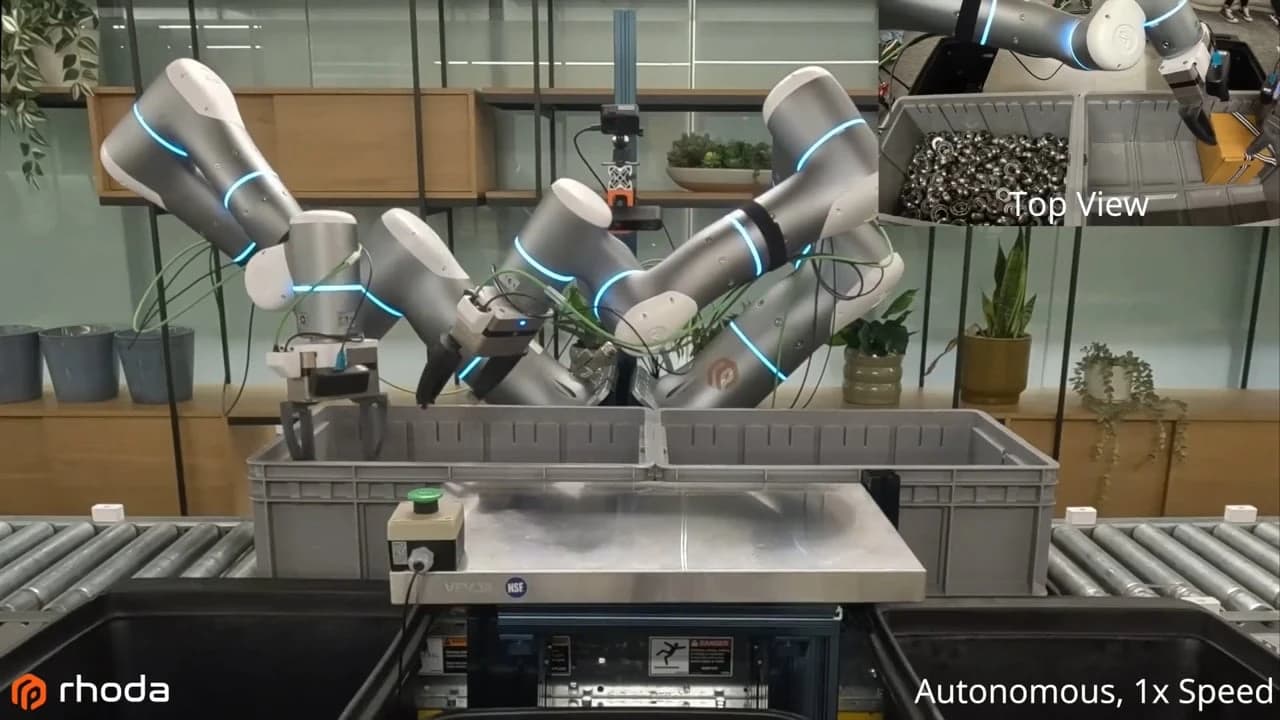
Rhoda AI also released a brief but technical video demonstration on X, offering the first look at its "general purpose bimanual manipulation platform". The footage shows a pair of robotic arms, equipped with simple grippers, working in tandem to open a cardboard box.
While box-opening may seem mundane, it requires the robot to handle deformable materials and maintain "physical commonsense" regarding force and friction. The use of two arms—a setup common in recent breakthroughs from competitors like Physical Intelligence (Pi)—points toward a strategy focused on complex, human-like dexterity.
Previous reports indicated that Rhoda AI’s hardware is specifically designed for "heavy lifting". Many current humanoid prototypes struggle to stabilize themselves while carrying loads exceeding 50 pounds. Judging by the teasers, it's unclear if Rhoda is positioning itself to solve this industrial-scale challenge.
A Competitive Convergence
The emergence of Rhoda AI adds another heavyweight to a field already crowded by massive funding rounds. The team Singh has assembled—which reportedly includes Stanford professor Gordon Wetzstein and Softbank veteran Vincent Clerc —suggests the company is combining high-end academic research with practical experience in consumer robotics.
By focusing on the "generalization gap," Rhoda is entering a direct philosophical debate with other players in the space. While companies like Sunday Robotics focus on cheap, high-fidelity human data, and Pi focuses on autonomous reinforcement learning, Rhoda’s specific technical path remains to be seen.
When asked on social media when more details would be available, Singh was brief: "More coming soon." For an industry hungry for "factory-ready" tools, that "soon" cannot come fast enough.
Share this article
Read next
- Published on
- Reading time
- 5 min read
Rhoda AI Hits $1.7B Valuation, Unveils "Direct Video-Action" Model to Bridge the Real-World Gap
- Published on
- Reading time
- 3 min read
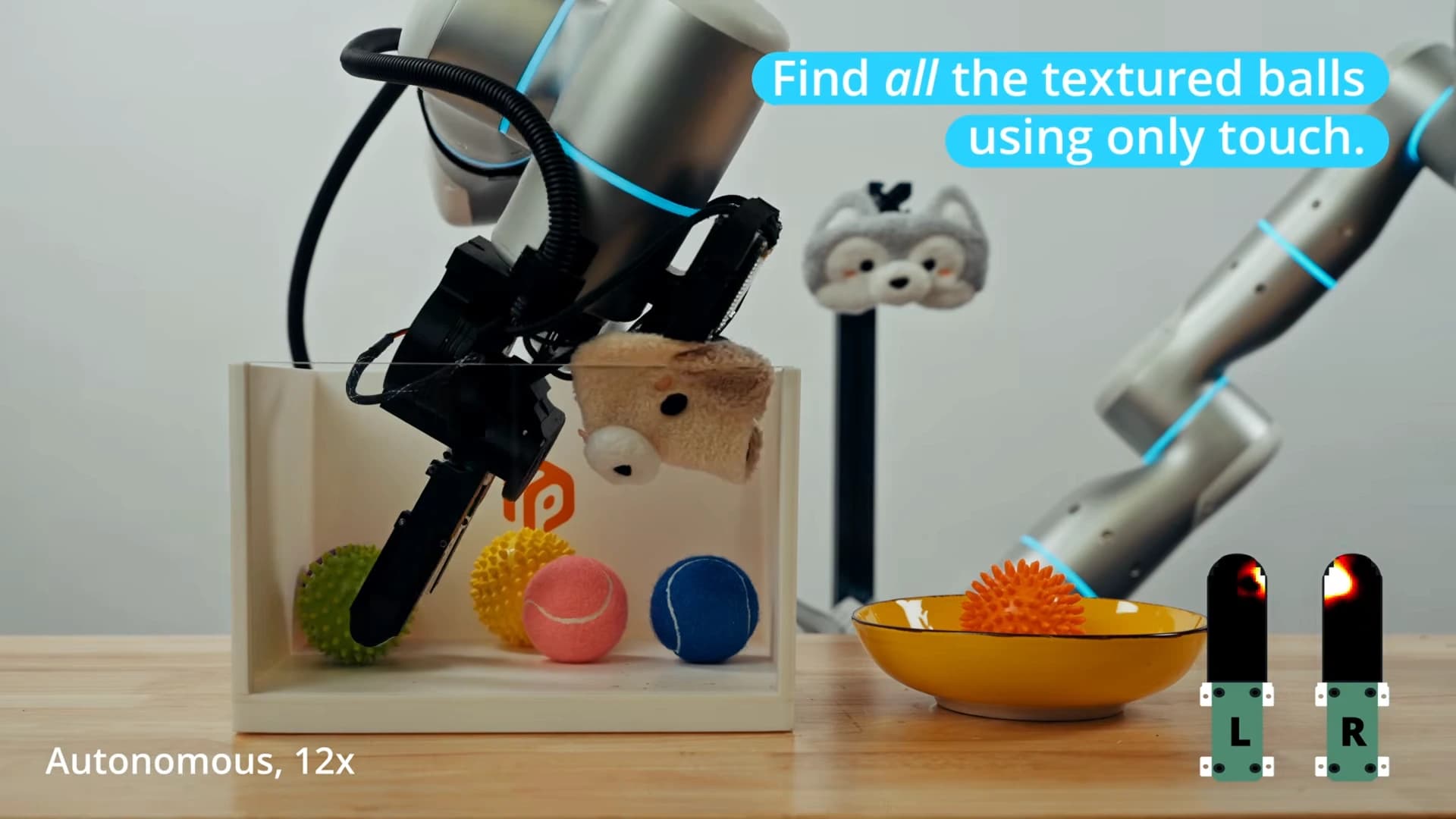
Rhoda Blindfolds Its Robot—and Lets Touch Guide the Search
- Published on
- Reading time
- 4 min read
Rhoda Tests Whether Scaling Web-Video Pretraining Makes Robots Better at Real Work
- Published on
- Reading time
- 3 min read
Stealth Startups Emerge With Over $300 Million to Join Crowded Humanoid Robot Field
- Published on
- Reading time
- 2 min read
Agility Moves Closer to Nasdaq as Merger Vote Is Set for November 2
- Published on
- Reading time
- 7 min read
Agility's Investor Day: Digit 5 Launches at a $150,000 Bill of Materials, and Its $300M Order Unlocks Skill by Skill

The weekly humanoid robotics briefing
One email a week: the launches, funding and research that mattered, with context from Humanoids Daily.
Read recent issues