- Published on
Living Room Ready: Watch How Figure 03 Tackles Domestic Tidying with Helix 02
One tap, and our reporting appears more often in your Google Top Stories. It makes a real difference to a small newsroom.


Your guide
Rich Robinson
Jee Chee Ren · Executive tour
See China’s AI and robotics ecosystem first-hand.
Six days exploring AI, robotics and advanced manufacturing.
With Rich Robinson, Clinical Professor of Entrepreneurship at Peking University
Beijing · Guangzhou · Shenzhen
29 November–4 December 2026
Referral partnership · We earn a commission on referred bookings.
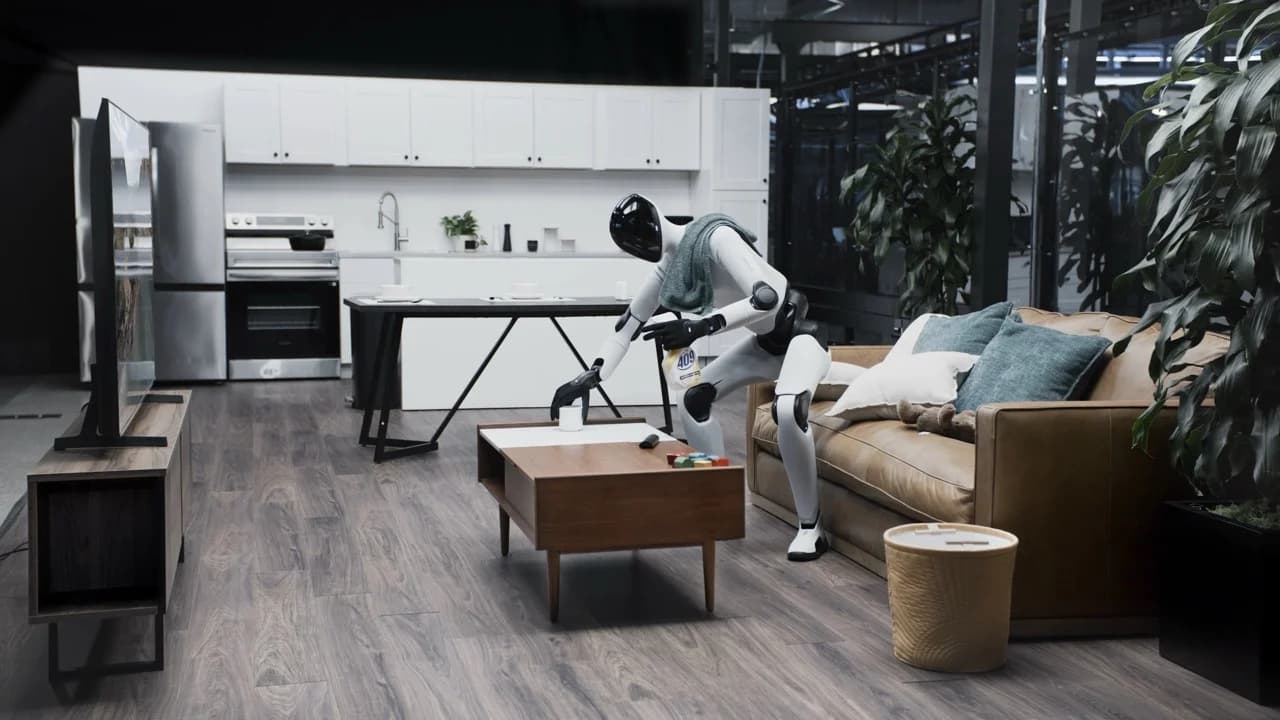
In the rapidly escalating race to bring humanoid robots into the domestic sphere, Figure has released a new demonstration showing its Figure 03 robot autonomously tidying a living room. The 2:28-minute video, released today, highlights the robot performing a series of complex, interlinked tasks—from spraying and wiping down tables to tossing pillows and organizing toys—marking what CEO Brett Adcock calls a "major milestone towards a robot in every home."
Beyond the Kitchen Sink
The demonstration follows the unveiling of Helix 02 earlier this year, where the company showcased the Figure 03 loading a dishwasher. While the previous demo focused on a relatively stationary task, the living room cleanup demands what Figure calls "loco-manipulation": the ability to move through an environment while simultaneously manipulating objects.
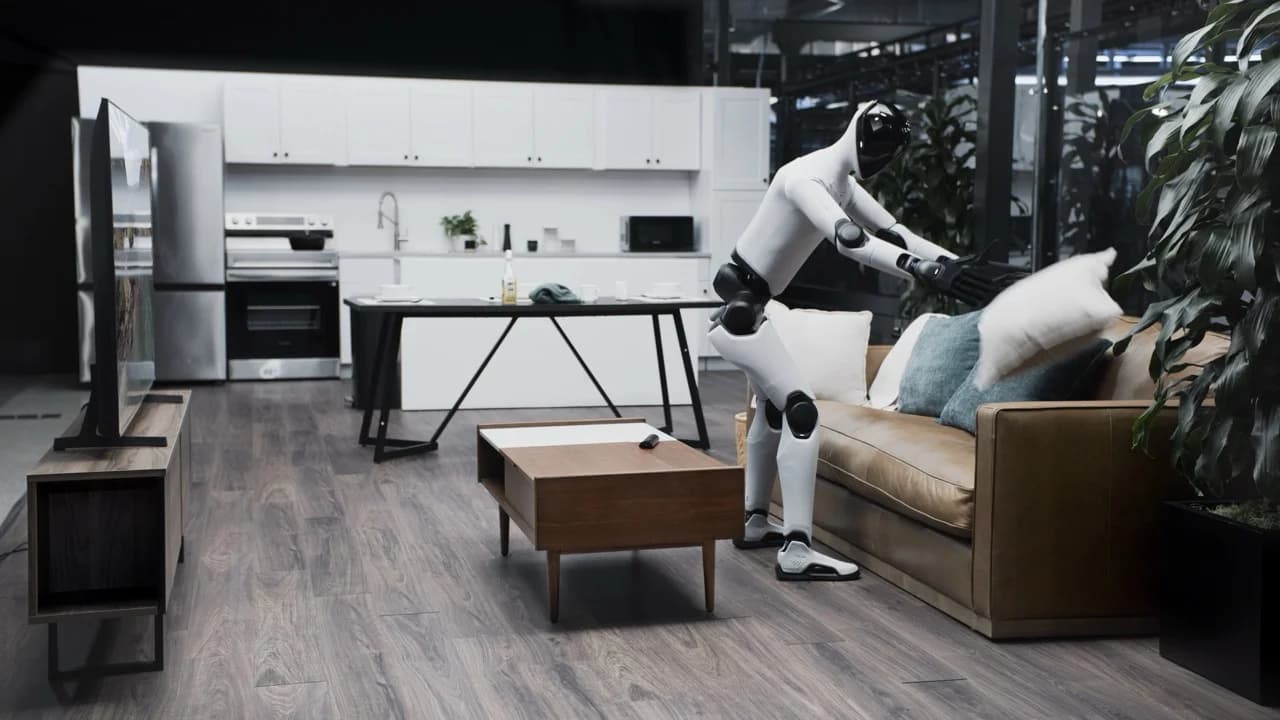
According to Figure, the living room represents a unique challenge for autonomous systems. Unlike the structured environments of the BMW Spartanburg pilot, home environments are unpredictable, featuring narrow navigation paths between furniture and dynamic, "soft" objects like towels and pillows that do not maintain a rigid shape.
Key Capabilities Demonstrated
The footage highlights several sophisticated behaviors that Figure claims were learned through data rather than hand-coded heuristics:
The weekly humanoid robotics briefing
One email a week: the launches, funding and research that mattered, with context from Humanoids Daily.
Read recent issues- Coordinated Tool Use: The robot uses a spray bottle to wet a surface before performing forceful wiping motions with a cloth.
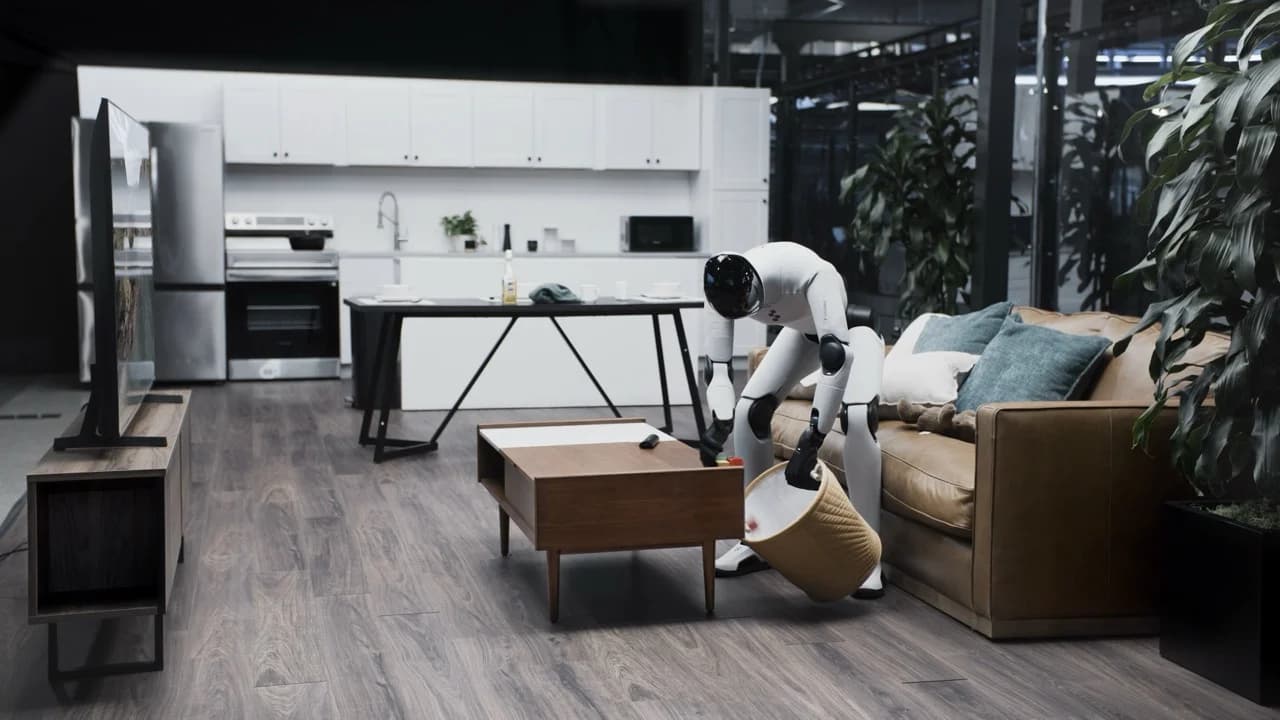
- Bimanual Manipulation: Figure 03 is seen picking up a bin with both hands to catch toys being scooped off a coffee table.
- Dynamic Object Handling: In a display of athletic coordination, the robot tosses a pillow back onto a couch with a controlled motion and "whips" a cleaning towel over its shoulder to free its hands.
- Precise Dexterity: The robot picks up a television remote, reorients it within its 7th-gen hands, and presses the power button.
- Whole-Body Efficiency: To maximize utility, the robot is shown tucking containers under its arm to keep its hands free for secondary tasks, a behavior often seen in human "multitasking."
The "Software 2.0" Strategy
The core of this demonstration is the Helix 02 AI architecture. Figure emphasizes that no new algorithms or special-case engineering were required to teach the robot these specific domestic chores. Instead, the system operates as a single, end-to-end neural network that translates "pixels to torque," allowing the robot to learn new tasks simply by being exposed to more demonstration data.
This approach is central to Figure’s goal of scaling to 100,000 units at its "BotQ" facility. By removing the need for 109,504 lines of C++ code—a feat Adcock announced in February—the company aims to create a "general-purpose" brain that can adapt to the "messy reality" of "unseen" homes.
The Road to 24/7 Autonomy
While the demo is visually impressive and remarkably smooth, it remains a "room-scale" success within a controlled environment. The ultimate test for the $39 billion startup will be whether this level of reliability holds up when the robots are shipped to customers.
Adcock has previously admitted to "babysitting" the robots around his own children, suggesting that while the "Software 2.0" transition is well underway, the safety and reasoning layers required for "free reign" in the home are still being refined. Nonetheless, the ability to side-step through narrow gaps while stowing tools and manipulating objects suggests that the gap between human and robotic domesticity is closing faster than anticipated.
Share this article
Read next
- Published on
- Reading time
- 4 min read
Stepping Up: Figure 03 Achieves Autonomous Ladder Climbing, Reigniting the Bipedal Debate
- Published on
- Reading time
- 8 min read
Beyond the 60-Hour Mark: Figure AI’s Endurance Marathon Signals Playbook for Figure 4 and Supply Chain Independence
- Published on
- Reading time
- 3 min read
Compute War Chest: Figure and Hark Secure Full Datacenter of NVIDIA B200s
- Published on
- Reading time
- 6 min read
In-Depth with Figure AI: CEO Brett Adcock Dissects 60-Minute Logistics Demo, Touts Endurance Over Spectacle
- Published on
- Reading time
- 2 min read
Figure’s Humanoid Has Walked 348 Miles on a Treadmill—and It’s Still Going
- Published on
- Reading time
- 6 min read
Figure CEO Brett Adcock Claims Humanoids Are Already Delivering ROI Amid Severe Labor Shortages

The weekly humanoid robotics briefing
One email a week: the launches, funding and research that mattered, with context from Humanoids Daily.
Read recent issues