- Published on
RJ Scaringe Unveils Mind Robotics: A $500M Bet on 'Captured Distribution' for Industrial AI
One tap, and our reporting appears more often in your Google Top Stories. It makes a real difference to a small newsroom.


Your guide
Rich Robinson
Jee Chee Ren · Executive tour
See China’s AI and robotics ecosystem first-hand.
Six days exploring AI, robotics and advanced manufacturing.
With Rich Robinson, Clinical Professor of Entrepreneurship at Peking University
Beijing · Guangzhou · Shenzhen
29 November–4 December 2026
Referral partnership · We earn a commission on referred bookings.
In the rapidly accelerating race to put "Physical AI" on the factory floor, a new heavyweight has entered the arena. Mind Robotics, a Palo Alto-based startup founded and led by Rivian CEO RJ Scaringe, announced today that it has secured $500 million in Series A funding to build what it describes as the world’s leading industrial robotics platform.
The round was co-led by Accel and Andreessen Horowitz (a16z), with Accel partner Sameer Gandhi joining the board. This latest injection follows a previously undisclosed $115 million seed round led by Eclipse Capital in late 2025, bringing the company’s total war chest to over $600 million before its first hardware unit has even been publicly revealed.
The "Captured Distribution" Advantage
The launch of Mind Robotics reinforces a growing industry thesis: in the world of frontier robotics, having a "design partner" is no longer optional—it is a competitive necessity. As noted by industry analysts, the private market is currently paying a massive premium for "captured distribution."
By operating with Rivian as both a partner and a major shareholder, Mind Robotics bypasses the "chicken and egg" problem that plagues many robotics startups. While firms like Rhoda AI rely on vast archives of internet video to train their models, Mind has immediate access to a "data flywheel" of active, high-scale manufacturing lines.
The weekly humanoid robotics briefing
One email a week: the launches, funding and research that mattered, with context from Humanoids Daily.
Read recent issuesThis vertical integration mirrors the strategies of other industry leaders:
- Tesla utilizes its own factories as the primary training ground for Optimus.
- Boston Dynamics is leveraging Hyundai’s massive manufacturing infrastructure for its production-ready Atlas.
Beyond Classical Automation
Scaringe’s vision for Mind is focused on the "structural gap" in current manufacturing. While traditional industrial robots excel at "repeatable, dimensionally stable tasks," a significant portion of industrial value-add still requires human-like adaptation and physical reasoning.
"We are building AI-powered robots—models, hardware, and deployment infrastructure—that will perform real tasks, in real plants, at real scale," Scaringe stated.
Unlike the human-mimicry approach pursued by companies like Figure, Mind appears to be leaning toward a "co-design" philosophy. By controlling both the robot's "brain" and the industrial processes it inhabits, Mind can optimize tasks for robotic efficiency rather than forcing a machine to move exactly like a human. This strategy aligns with the "utility-first" design seen in Hexagon’s AEON, which prioritizes multifunctionality over hands and feet like a human.
A Pedigree of Execution
The founding team at Mind Robotics suggests a heavy focus on the intersection of deep learning and mechanical control, with talent pulled from Physical Intelligence, Waymo, Zoox, and Google.
The involvement of Sarah Wang (a16z) and Sameer Gandhi (Accel) underscores investor confidence in Scaringe's ability to manage complex, vertically integrated hardware stacks. "RJ is one of the very few founders who have built and scaled a vertically integrated hardware company," noted Wang, referencing his work architecting Rivian’s full stack from battery systems to manufacturing lines.
The Road Ahead: From Automotive to Every Vertical
While Rivian serves as the initial launch environment, Mind Robotics is positioning itself as a standalone entity with ambitions beyond the EV sector. The company's roadmap suggests that mastering the "exacting" environment of the automotive floor is merely the first step toward unlocking every industrial vertical.
However, the path to scale is fraught with the "last mile" of performance. As seen in the retirement of the Figure 02 fleet at BMW, hardware reliability in 10-hour shifts remains the industry's greatest hurdle. Mind's success will likely depend on whether its "live manufacturing" data loop can solve these reliability issues faster than its well-funded rivals.
With $500 million in new capital and a "data factory" already at its disposal, Mind Robotics is no longer a ghost in the machine—it is a direct challenge to the established order of the humanoid and industrial AI landscape.
Share this article
Read next
- Published on
- Reading time
- 3 min read
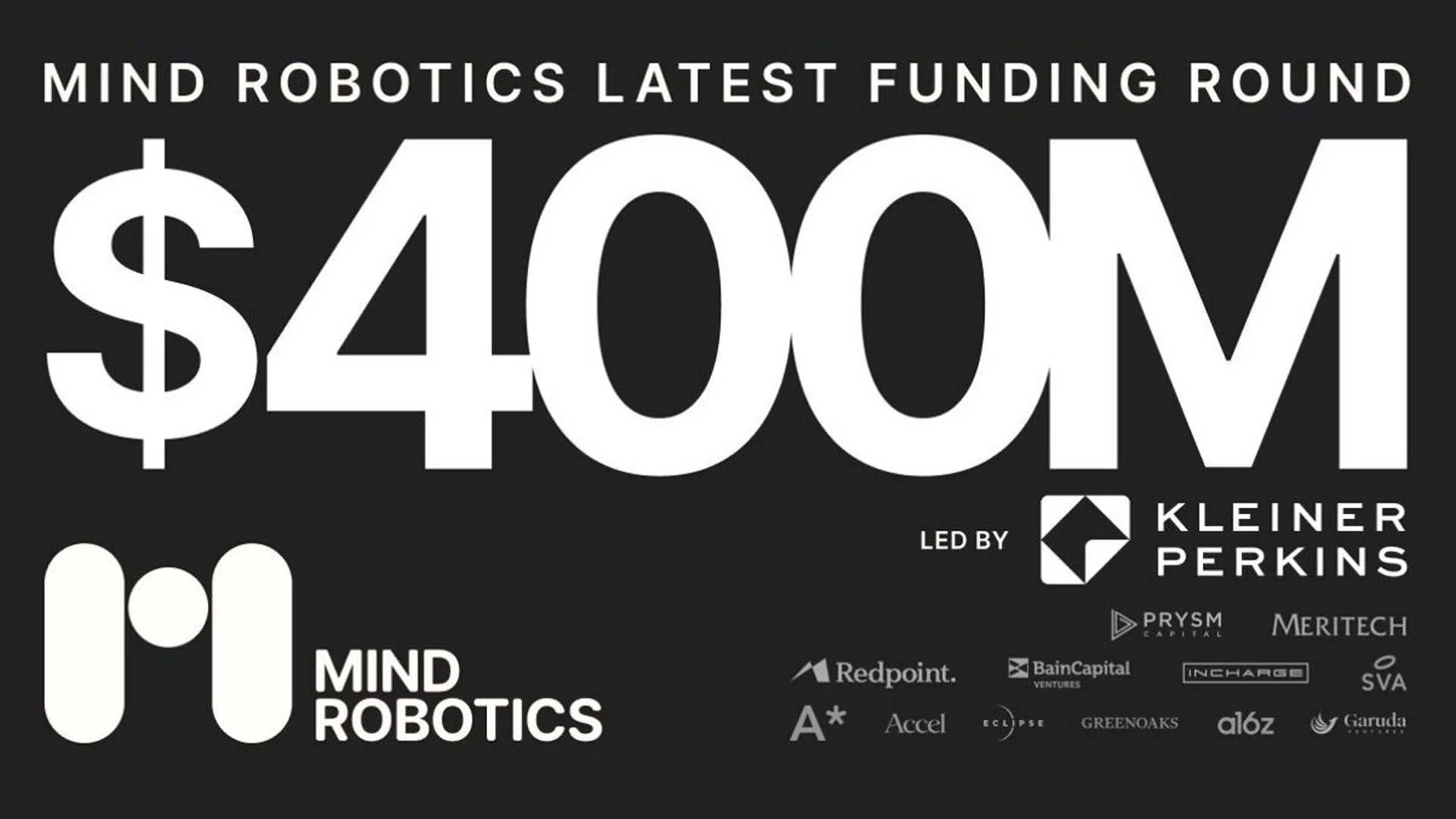
Mind Robotics Hits $1 Billion Funding Milestone with New $400M Round Led by Kleiner Perkins
- Published on
- Reading time
- 5 min read
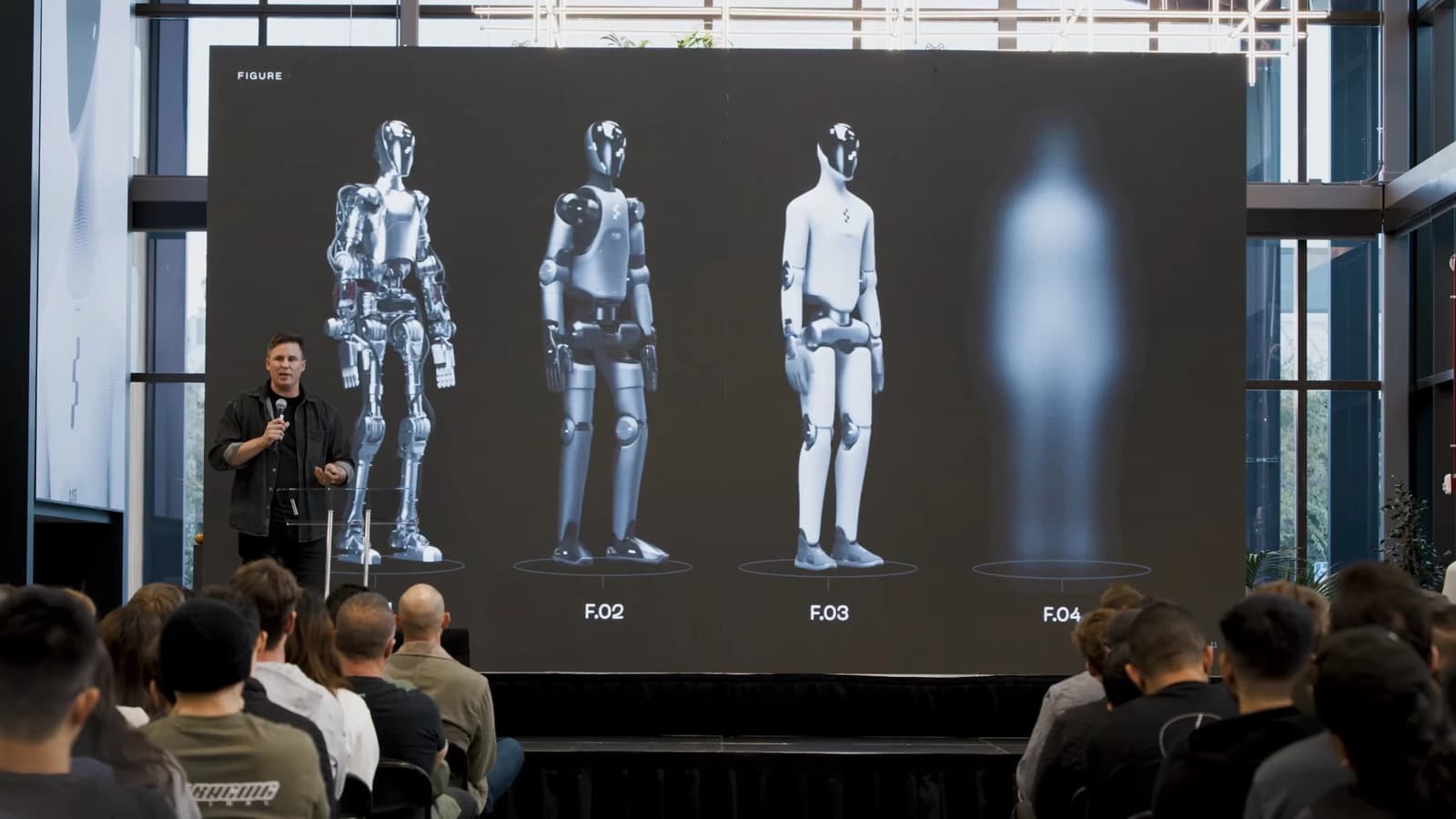
Figure 04 Reaches Design Lock as Adcock Details a Multibillion-Dollar AI Push
- Published on
- Reading time
- 2 min read
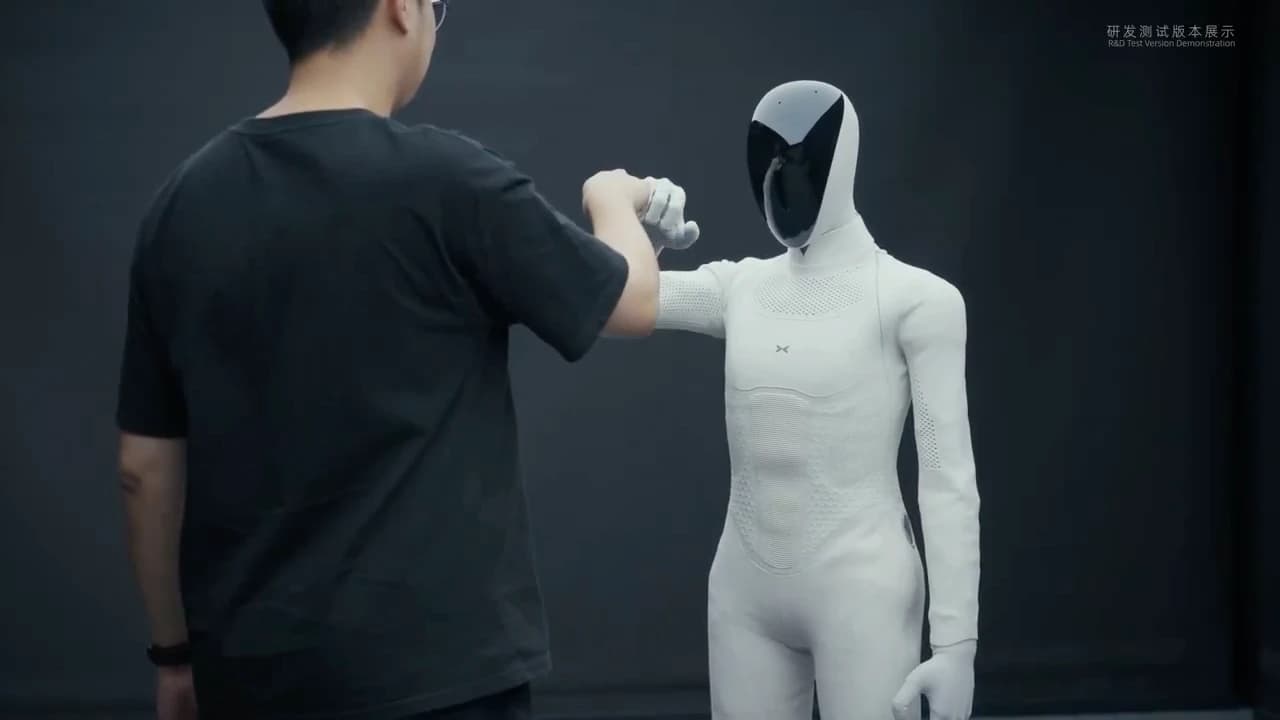
XPENG Shows IRON Switching Between Handshakes, Fist Bumps and High-Fives
- Published on
- Reading time
- 3 min read
NEURA Unveils Lighter 4NE1 Gen 4 as TUM RoboGym Opens in Munich
- Published on
- Reading time
- 6 min read
Tesla Begins Optimus Production in Fremont, Targets Customer Deliveries in Late 2027
- Published on
- Reading time
- 3 min read
Agile Robots Unveils Agile ONE SN as NVIDIA Expands Its Isaac Robotics Platform
The weekly humanoid robotics briefing
One email a week: the launches, funding and research that mattered, with context from Humanoids Daily.
Read recent issues