- Published on
AGIBOT Brings 300-Plus Robots to Chimelong Theme Park
One tap, and our reporting appears more often in your Google Top Stories. It makes a real difference to a small newsroom.

Supported by RoboStrategySupport for Humanoids Daily comes from RoboStrategy
Sponsored
Investing involves risk, including possible loss of principal. Read the prospectus before investing.
- AGIBOT and Chimelong have launched a robot deployment at Chimelong Spaceship Park in Zhuhai, with more than 300 robots announced across entertainment, visitor services and hospitality.
- The project combines performances and interactive activities with guidance, retail and hotel roles, supported by a dedicated 5G-A network and centralized coordination.
- The partners also announced a tourism-focused research institute. The release does not provide a model-by-model fleet breakdown, autonomy measures or operating results.
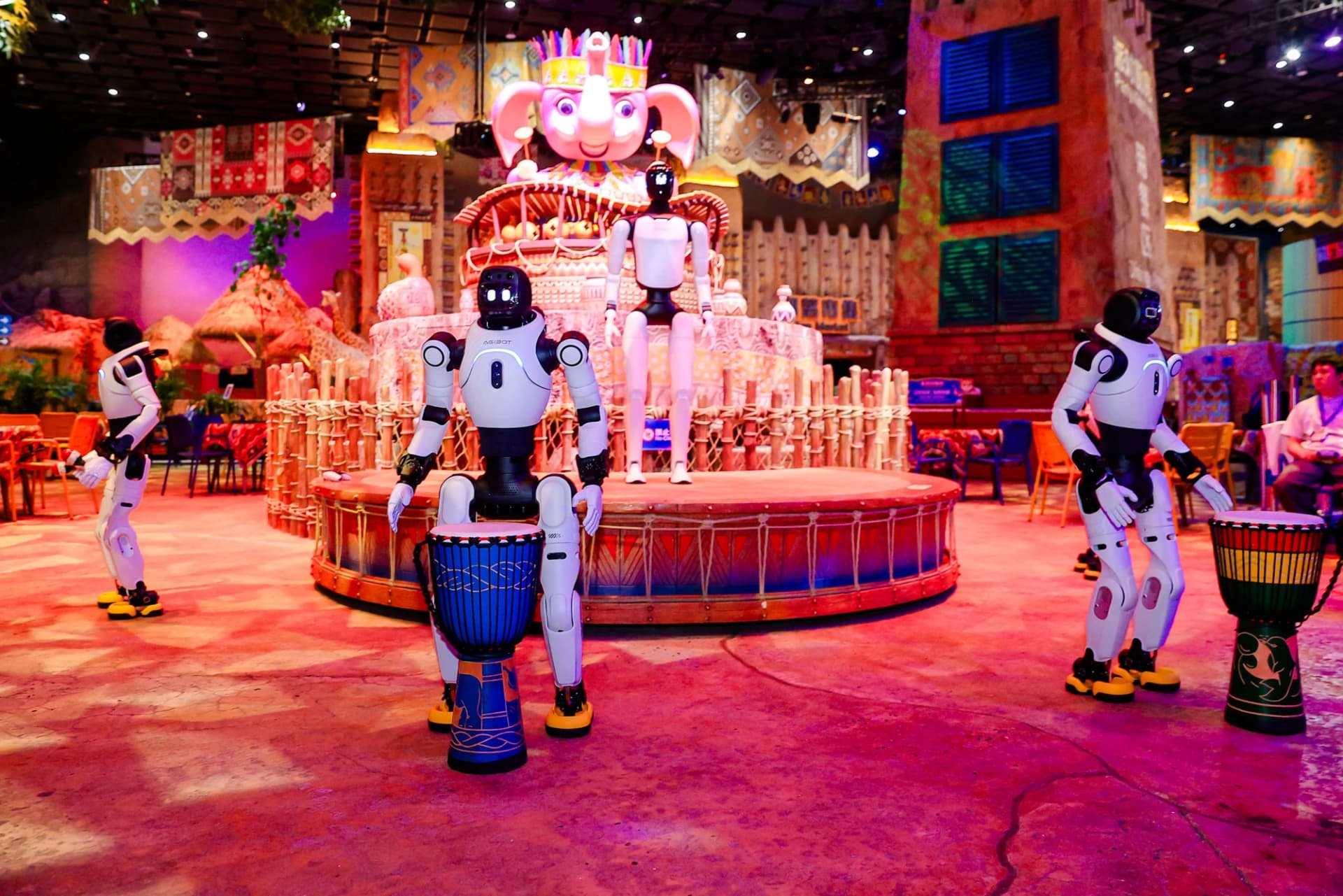
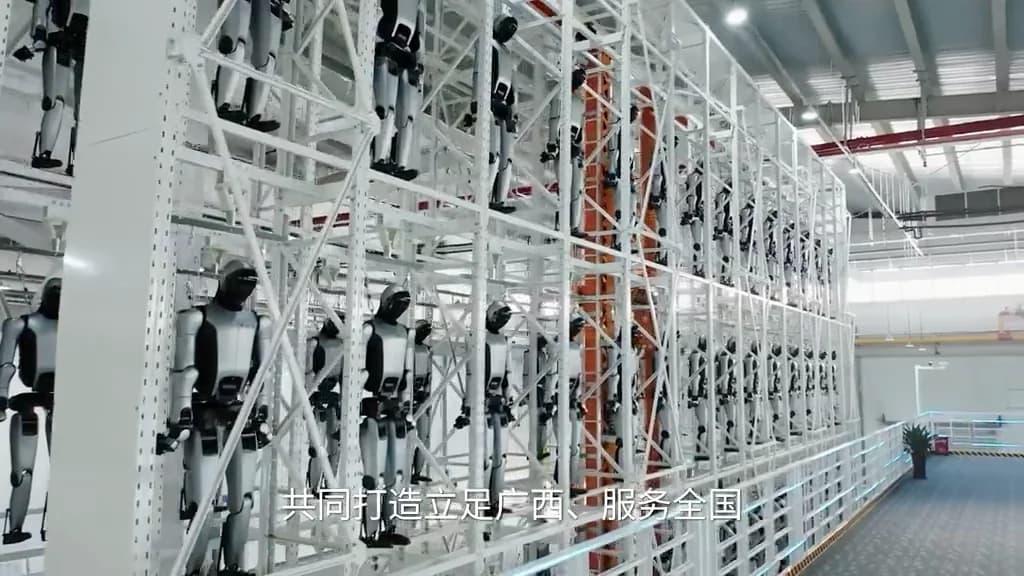
AGIBOT is bringing more than 300 robots into the visitor experience at Chimelong Spaceship Park, in a project that extends from martial-arts performances and table tennis to directions, shopping assistance and hotel welcomes.
AGIBOT and Chimelong Group announced the first phase of the deployment in Zhuhai, China, on September 24. In the company’s announcement and press materials supplied to Humanoids Daily, the partners describe robots taking on roles across the park and associated hospitality settings.
This is a new robotics project within an existing destination. Chimelong Spaceship began trial operations in September 2023; the announcement does not mark the opening of a newly built theme park.
Robots throughout a visitor’s day
The partners divide the deployment into seven areas: entertainment, education, guidance and shopping assistance, retail, companionship, hotel services and sports.
The weekly humanoid robotics briefing
One email a week: the launches, funding and research that mattered, with context from Humanoids Daily.
Read recent issuesPlanned experiences range from watching robots perform gymnastics and tai chi to playing table tennis or trying manipulation challenges. Other robots are intended to introduce exhibits, answer questions and guide visitors through designated areas. Hotel applications include welcoming guests and holding conversations over multiple exchanges.
The significance is the range of encounters proposed at one destination. A visitor could see a robot in a performance, interact with another during an activity and encounter one again at a hotel. The project combines the robot hardware with entertainment content and venue operations, rather than relying on a single attraction to demonstrate the technology.
The release describes the first phase as launched while also saying more than 300 robots “will be deployed.” That establishes the announced scale of the project, but does not provide a live inventory showing how many machines are operating simultaneously or a breakdown of which roles are available at launch. It also does not establish that all 300-plus machines are bipedal humanoids.
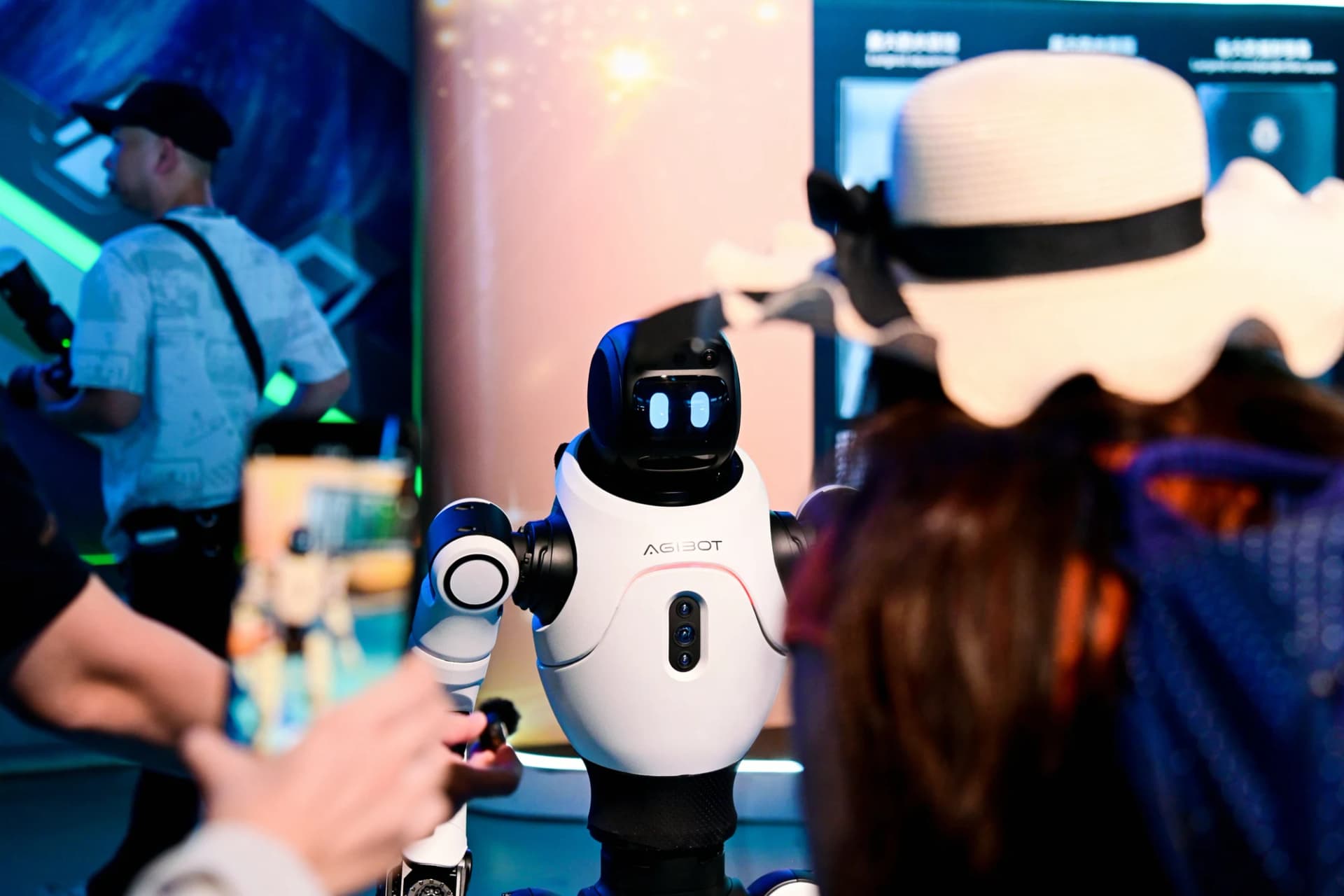
The less visible challenge: running the fleet
AGIBOT, Chimelong and China Mobile say they have established a dedicated 5G-A network to support connectivity across busy areas. Centralized coordination is intended to manage robots across park and hotel settings.
The partners also describe safeguards covering network security, privacy, charging and fire safety. They have not published technical details or operating measurements alongside the release, so these statements describe the announced framework rather than independently verified performance.
For a visitor-facing deployment, the practical tests extend beyond whether a robot can execute a routine. They include how often staff need to intervene, how machines handle interrupted conversations and unexpected movement, and how charging and maintenance fit around opening hours. Connectivity and fleet coordination alone do not establish autonomous operation.
The project follows AGIBOT’s recent promotion of A3 Ultra applications in hotels, shops and metro inspection. Chimelong gives that broader service-sector push a named venue and a substantial announced fleet, although the release does not specify which models perform each role or disclose the commercial terms.
A research site and a production milestone
AGIBOT and Chimelong also announced a joint research institute focused on embodied AI in culture and tourism. They intend to use operational experience from the project to develop further applications and operating models, with later phases extending robot use across Chimelong’s entertainment and hospitality settings.
The launch also marks delivery to Chimelong of the 20,000th robot to roll off AGIBOT’s production line, according to the company. That is a cumulative manufacturing milestone, not a claim that 20,000 robots have been deployed at Chimelong or that all produced units are operating commercially.
For AGIBOT, the park offers a setting to test repeated interactions with visitors outside a laboratory. The next useful evidence will be sustained operating results: which roles visitors use, how reliably the robots deliver them, and what level of human support keeps the experience running.
Share this article
Read next
- Published on
- Reading time
- 4 min read
The Era of Embodied AGI Begins: AGIBOT and Longcheer Deploy World’s First Humanoid-Led Mass Production Line
- Published on
- Reading time
- 4 min read
Modularizing the Last Mile: AGIBOT Unveils Genie Studio Agent to Scale Robot Deployment
- Published on
- Reading time
- 4 min read
Robros Adds Full-Body Teleoperation to Its Korean Humanoid
- Published on
- Reading time
- 3 min read
Boston Dynamics Opens Atlas Training Center at Hyundai’s Georgia Factory
- Published on
- Reading time
- 3 min read
Hyundai Eyes Czech Factory for Atlas Humanoid
- Published on
- Reading time
- 3 min read
X Square’s Robot Starts Work at Lululemon’s Wuhan Warehouse

The weekly humanoid robotics briefing
One email a week: the launches, funding and research that mattered, with context from Humanoids Daily.
Read recent issues