- Published on
AGIBOT GO-3 Preview Links Robot Pre-Training, Practice and Learning on the Job
One tap, and our reporting appears more often in your Google Top Stories. It makes a real difference to a small newsroom.

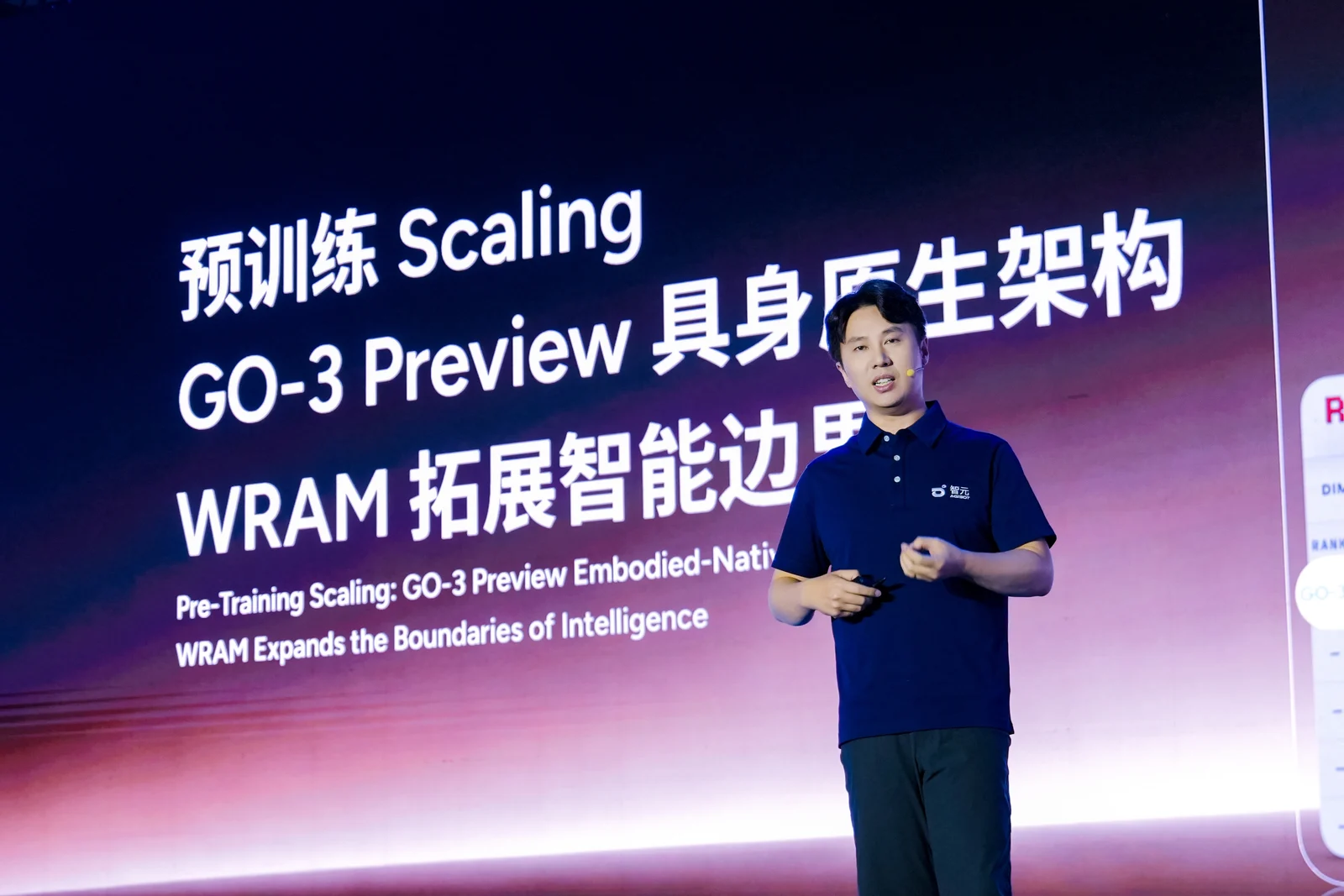
- GO-3 Preview connects reasoning, prediction and action: AGIBOT’s WRAM architecture combines task understanding with predictions of future states and robot movement generation.
- Learning spans three stages: the model works with Genie Evolver for post-training and Genie Master for learning from deployment experience.
- AGIBOT reports first-place benchmark rankings: the company names RoboDojo, RoboTwin and RoboColiseum; those comparisons have not been independently verified by Humanoids Daily.
- Open sourcing is planned for year-end: AGIBOT says GO-3 Preview will be fully open-sourced by the end of 2026.
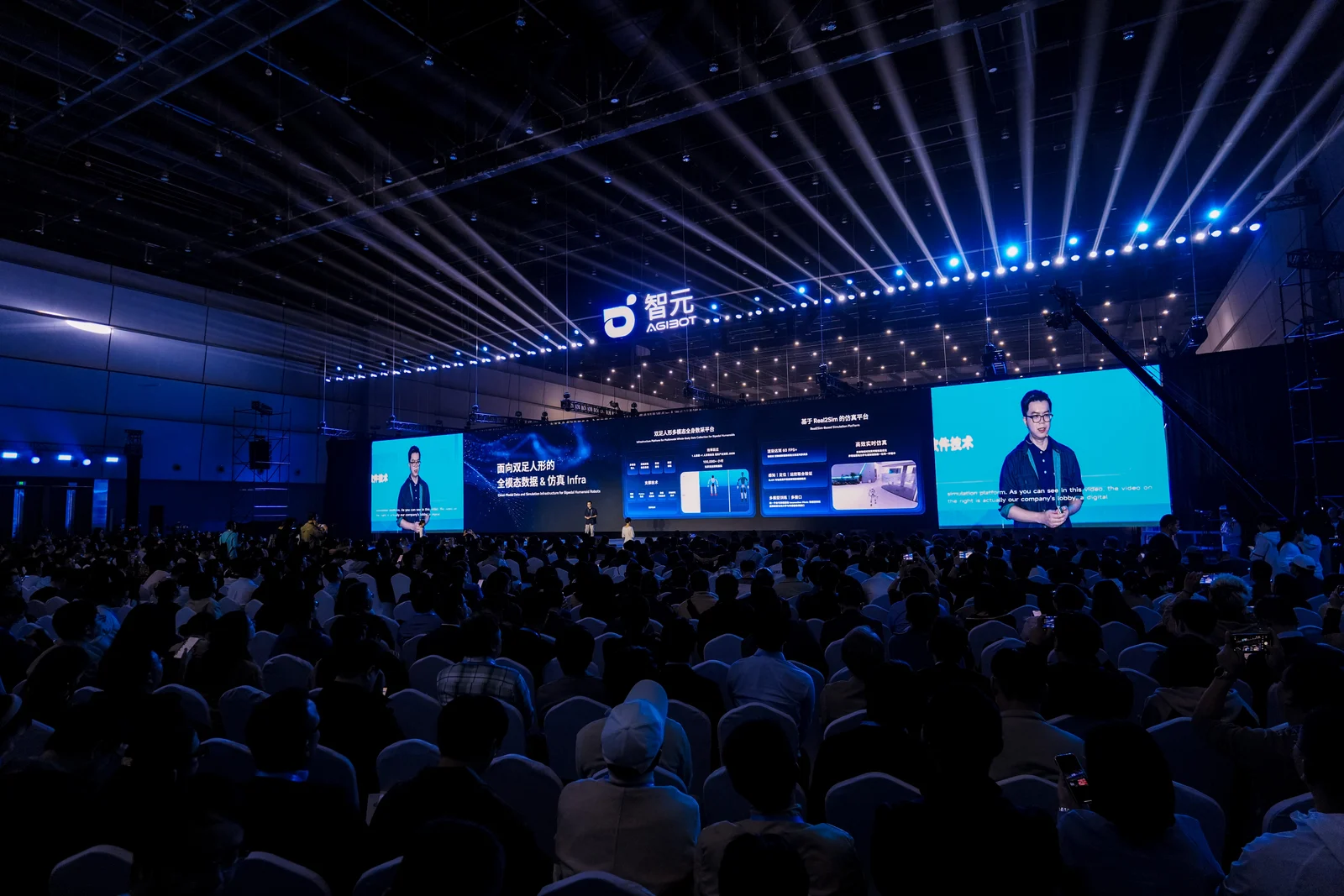
Yao Maoqing, AGIBOT co-founder, co-president and president of its Embodied AI business, presented GO-3 Preview at Innovation Day on October 29, describing an embodied foundation model designed to improve through pre-training, interaction and experience after deployment. The company says the model ranks first on RoboDojo, RoboTwin and RoboColiseum and plans to fully open-source it by the end of 2026.
The announcement connects three systems: GO-3 Preview develops general robot capabilities, Genie Evolver refines action strategies through physical and virtual interaction, and Genie Master coordinates tasks and retains experience during deployment. AGIBOT calls the combined approach “full-lifecycle scaling.”
The aim is to make learning continue beyond a robot’s initial training. AGIBOT’s examples range from precise assembly and tabletop games to a robot adjusting its behavior while working in a convenience store.
WRAM connects observations with possible outcomes
GO-3 Preview uses AGIBOT’s World Reasoning Action Model, or WRAM, to combine task understanding, future-state prediction and action generation.
Follow humanoid robotics without following every announcement.
Get the week’s most important launches, funding and research—and why they matter—in one email from Humanoids Daily.
Once a week. Unsubscribe anytime.
Read recent issuesIt does this through three mechanisms. A Control-Oriented Autoencoder, or CoAE, extracts visual representations suited to robot control, preserving information such as object positions, shapes and spatial relationships. SVP predicts future states from current observations and task conditions; the action-generation module learns movements toward the predicted outcome. KASO selects predictions that are more consistent with actions actually taken during training, helping align prediction and action learning.
This matters because the same instruction can call for different movements. Picking up a cup may require a different approach depending on its shape, position and surrounding clutter. AGIBOT’s stated goal is to learn transferable capabilities rather than a separate fixed movement sequence for every arrangement.
Training draws on both human first-person videos and robot trajectories. The former provide examples of interactions and task execution; the latter connect observations and actions to physical outcomes.
AGIBOT reports zero-shot task adaptation without task-specific supervised fine-tuning on physical robots, alongside few-shot adaptation using additional demonstrations. Its LEGO assembly example uses limited demonstrations and fine-tuning for precise manipulation, with an embodied agent coordinating the steps. That makes it a few-shot example rather than one of the zero-shot demonstrations.
Genie Evolver combines a robot fleet with virtual practice
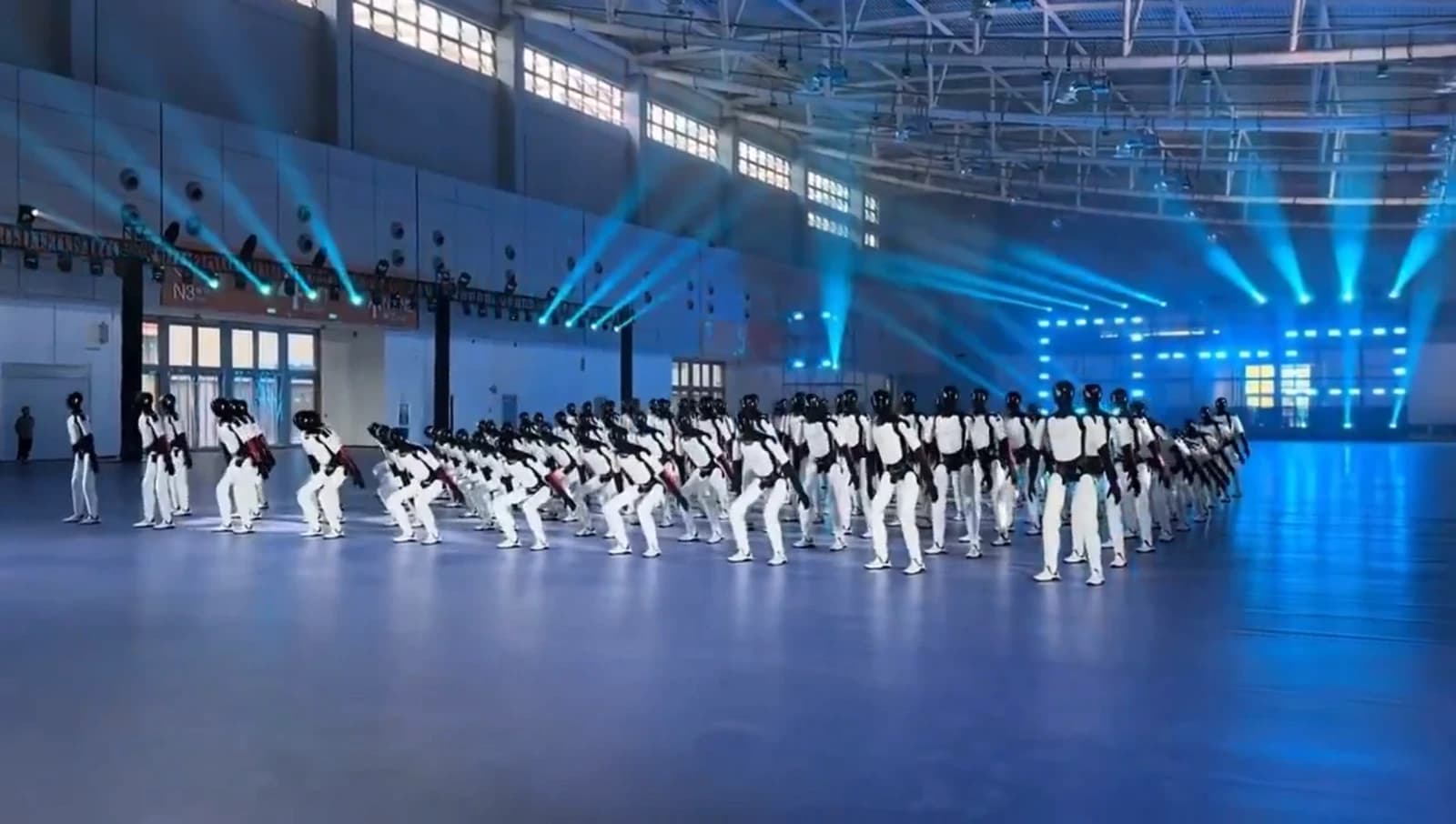
For post-training, AGIBOT describes Genie Evolver as a distributed system combining a fleet of 100 physical robots, physics simulation and world models.
On physical robots, Collective Experience Learning aggregates execution experience across the fleet. Successful trajectories offer examples to reuse, while failed attempts supply context for identifying needed adjustments. The aim is for lessons from one robot’s work to benefit others.
Physics simulation adds repeatable environments for exploring alternative strategies. World models serve a related but distinct role: the system can revisit a decision point, predict outcomes for different possible actions and use that feedback to refine a strategy before testing it physically.
AGIBOT illustrates the approach with tabletop curling, block extraction and throwing a ball into a moving basket. Each places different demands on the robot. Curling requires control of force and angle; extracting a block changes the arrangement for subsequent actions; a moving basket requires prediction and timing. AGIBOT says that after a few hours of practice combining real-world play and world-model learning, its curling robot won more often than typical human players.
Genie Master turns deployment experience into memory and training data
Genie Master is AGIBOT’s embodied agent framework for connecting planning, execution, feedback and retained experience. Its Embodied Execution Protocol defines four interface categories: capabilities, guidance, feedback and continuity. These cover what a robot can do, how to execute a task, how to assess the result and how to track unfinished work.
The company describes two routes from operational experience to improvement. One stores successful and unsuccessful attempts as reusable knowledge, and at the end of each day's operations consolidates that experience into long-term memory that can inform later planning and recovery.
The other produces trajectories and feedback for further action-policy training. Adjustments made during execution can become training material and eventually be incorporated into model parameters.
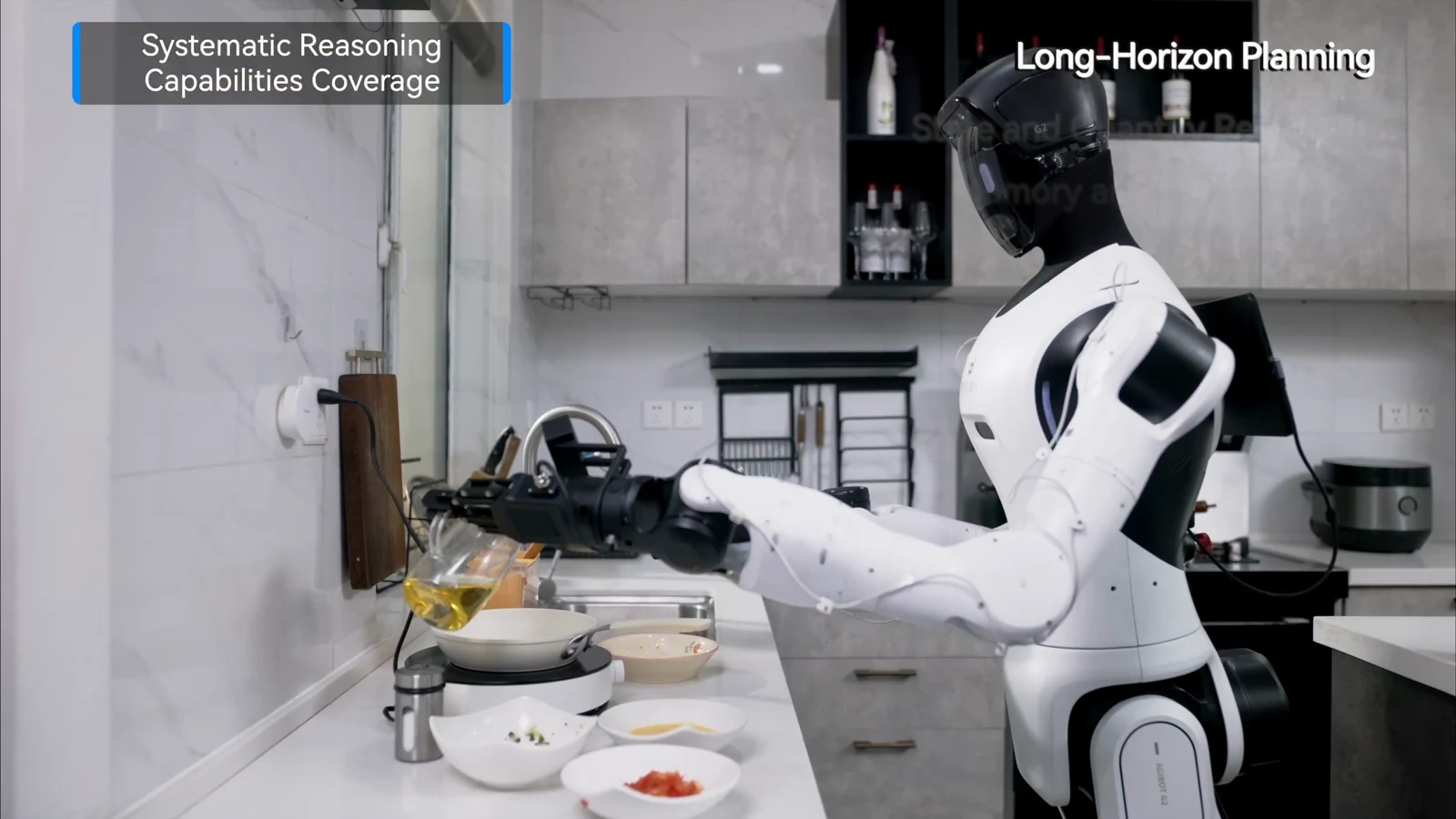
AGIBOT says a Genie G2 robot using Genie Master improved across tasks in a real convenience store without human demonstrations or manual tuning. It describes that demonstration as “Physical RSI,” or recursive self-improvement in the physical world. AGIBOT has not published the evaluation details needed to judge how much of that improvement was autonomous or how broadly it transfers.
Reported benchmarks and the open-source plan
AGIBOT reports first-place rankings on RoboDojo, RoboTwin and RoboColiseum. It has not published a full comparison protocol that would let others check those rankings independently.
AGIBOT plans to fully open-source GO-3 Preview by the end of 2026. It has not said when exactly the model will be published, under what license, or which training resources will come with it.
GO-3 Preview was part of the broader Innovation Day announcements. It follows GO-1, which introduced AGIBOT's ViLLA framework, and GO-2, which added action chain-of-thought reasoning. GO-3's central proposition is that pre-training, practice and deployment should contribute to one continuing learning process. The next test is how consistently that process improves real task performance—and how much researchers can reproduce once the promised resources become available.
Share this article
Follow humanoid robotics without following every announcement.
Get the week’s most important launches, funding and research—and why they matter—in one email from Humanoids Daily.
Once a week. Unsubscribe anytime.
Read recent issuesRead next
- Published on
- Reading time
- 6 min read
How AGIBOT’s Physical Reasoning Dataset Connects Planning With Robot Actions
- Published on
- Reading time
- 7 min read
AGIBOT Introduces Worken, New AI Models and G2 Max at Innovation Day 2026
- Published on
- Reading time
- 3 min read
AGIBOT Coordinates 110 Production Humanoids in Guinness-Certified Dance Performance
- Published on
- Reading time
- 3 min read
AGIBOT Releases Physical Reasoning Dataset to Connect Robot Decisions With Actions
- Published on
- Reading time
- 3 min read
IDC Puts H1 Humanoid Shipments Near 25,000, With AGIBOT Leading
- Published on
- Reading time
- 4 min read
AGIBOT Says 100 X2 Humanoids Are Working Across 100 ASD Retail Stores