- Published on
AGIBOT Introduces Worken, New AI Models and G2 Max at Innovation Day 2026
One tap, and our reporting appears more often in your Google Top Stories. It makes a real difference to a small newsroom.

- Worken measures output as well as scale: AGIBOT's proposed framework combines active robots, autonomous working hours and a task-specific output efficiency ratio.
- AHA3 brings three capabilities onto one hardware architecture: the platform is designed to support locomotion, interaction and task execution, alongside new hands, joints and cooling technology.
- GO-3 Preview and WITA-Omni 1.0 target different jobs: GO-3 combines reasoning, prediction and action; WITA-Omni integrates perception, conversation and physical interaction.
- G2 Max targets industrial handling: AGIBOT lists a dual-arm handling capacity of up to 40 kg and a working height range of 0.1–2.5 meters.
- Link-U OS has an open-source roadmap: selected partners are trialing version 1.0, with full open sourcing planned by the end of 2026.
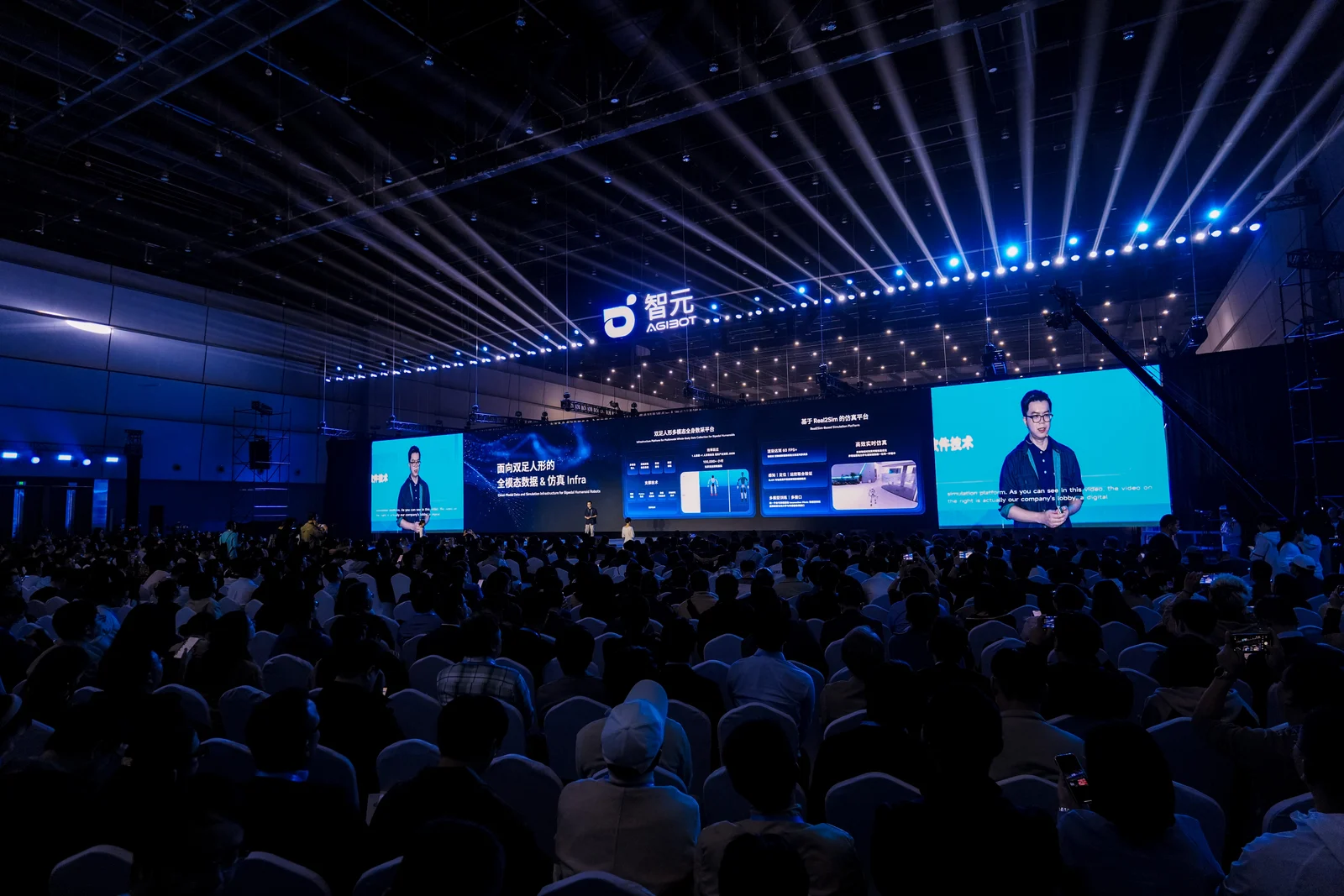
AGIBOT introduced Worken, a proposed measure of productive robot work, at its Innovation Day 2026 event in Shanghai on October 29. The company paired the proposal with announcements spanning humanoid hardware, AI models, industrial robots and an operating system it plans to open source by the end of the year.
The common thread is deployment: how robots perform useful tasks over time, and how operators can measure that performance beyond the number of machines delivered.
Worken asks how much work a robot actually delivers
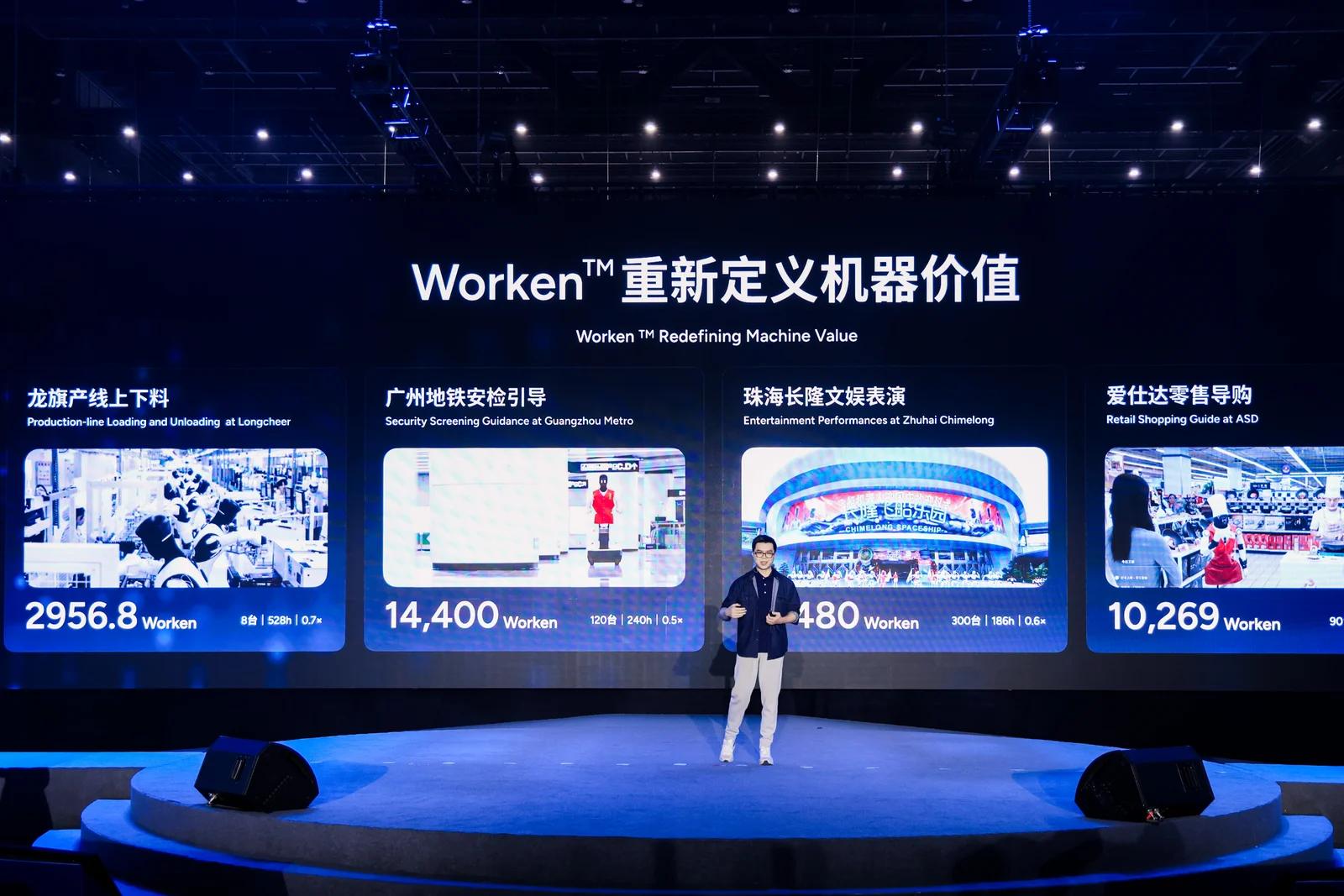
AGIBOT describes Worken—a combination of “Work” and “Token”—as “Effective Intelligent Work Hours.” Its proposed formula is:
Worken = Number of Active Robots × Autonomous Working Hours × Output Efficiency Ratio
Follow humanoid robotics without following every announcement.
Get the week’s most important launches, funding and research—and why they matter—in one email from Humanoids Daily.
Once a week. Unsubscribe anytime.
Read recent issuesEach term addresses a different part of a deployment. Active robots are machines performing tasks, rather than units manufactured or held in inventory. Autonomous working hours count time spent working independently, rather than simply being powered on. The output efficiency ratio compares acceptable task output with a defined reference benchmark, such as a human worker operating to established standards.
That distinction matters when comparing deployments of similar size. Two fleets can contain the same number of robots yet produce different results if one requires more frequent intervention or completes less acceptable work per hour.
AGIBOT co-founder, president and CTO Peng Zhihui framed the question this way: “As robots begin working in factories, warehouses and service environments, we need to answer a more practical question: how much productive work are they actually delivering?”
The company presents Worken as an evolving framework, with task-specific benchmarks to be refined using operational data. It is a proposed measurement approach, rather than an established industry standard. Factory material handling and a visitor-service interaction produce different kinds of output, so meaningful comparisons depend on how each task and its acceptable results are defined.
Worken also appears in the “2026 Embodied Intelligence Industry Innovation Report,” released at the event. Compiled by China Economic Information Service and the Shanghai Industrial Innovation Center of the China Academy of Information and Communications Technology (CAICT), the report includes Worken and AGIBOT's deployment examples in its industry analysis.
AGIBOT also connects the idea to deployment economics: software and model improvements may let an existing machine perform more useful work during its operating life, even as its hardware depreciates. Measuring that output alongside lifecycle costs could give operators another way to evaluate a deployment.
AHA3 integrates the hardware for movement, interaction and tasks
The company unveiled AHA3, the third generation of its AGIBOT Humanoid Architecture. It describes the platform as an integrated hardware foundation for locomotion, interaction and task-execution intelligence.
The architecture combines motor-drive technology, integrated computing and connectivity including Wi-Fi 6 and 5G. AGIBOT says the aim is to reduce integration complexity and improve responsiveness when these capabilities operate together.
Supporting hardware announcements included a joint liquid-cooling system intended for sustained operation, specialized IP67-rated joints, and a new manipulation lineup: OmniHand 3 Lite, OmniHand 3, OmniHand 3 Ultra and the OmniPicker 3 tactile gripper.

For movement, AGIBOT highlighted updates to AGILE, its motion intelligence framework. These include a self-evolving agent capability designed to help robots improve through experience and adapt to the layouts and changing conditions of deployment sites.
GO-3 Preview connects reasoning, prediction and action
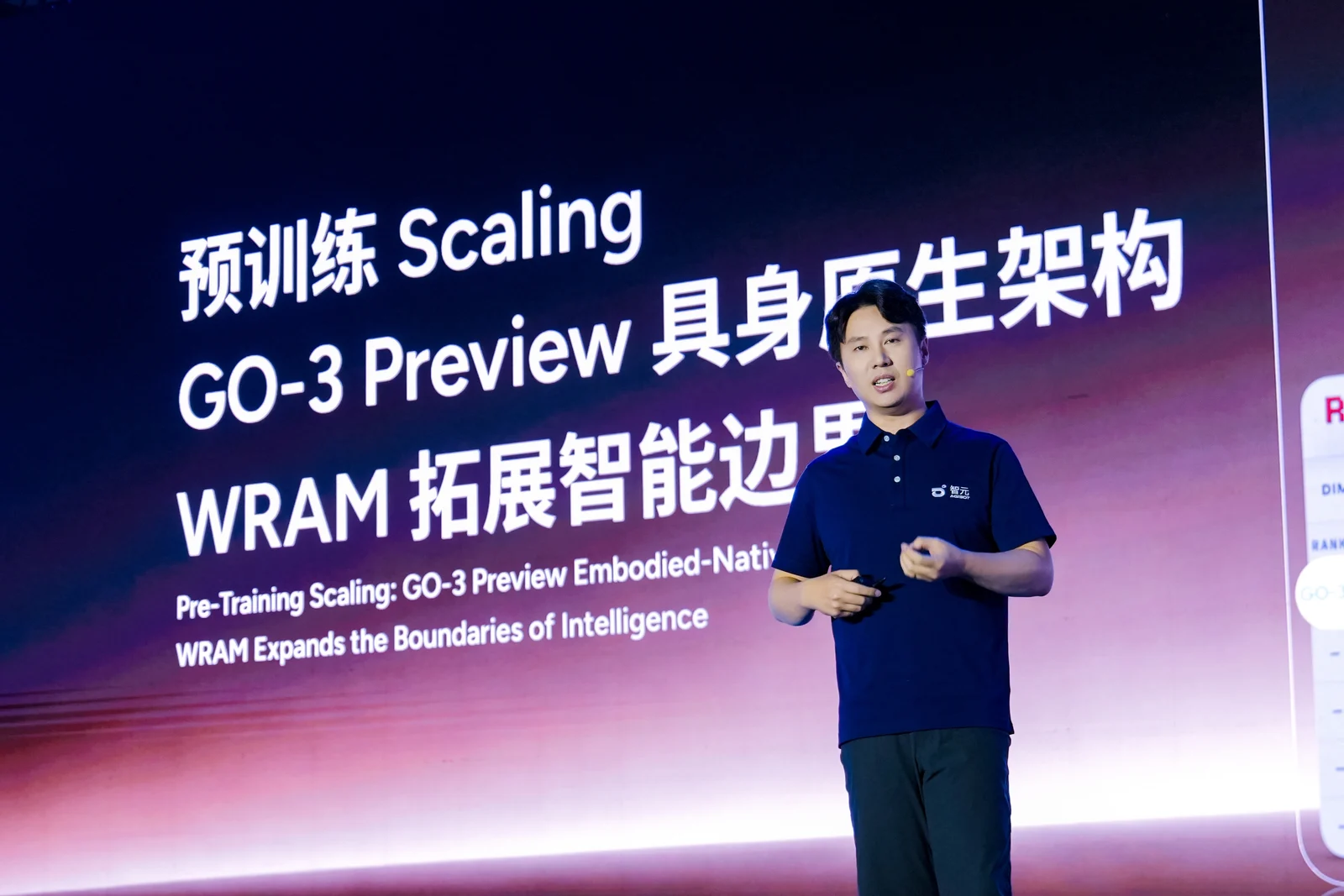
GO-3 Preview is AGIBOT's next-generation embodied foundation model. It uses a framework the company calls WRAM, or World Reasoning Action Model, to connect reasoning about a task, predicting what may happen and choosing an action.
AGIBOT demonstrated zero-shot and few-shot capabilities and described a training approach that combines pre-training, post-training and continued improvement after deployment. The intended result is a robot that can generalize beyond previously learned task sequences.
The company reported leading results on RoboDojo, RoboTwin and RoboColiseum, including first place in RoboDojo task success rate and process score. These are AGIBOT's reported evaluation results; Humanoids Daily has not independently verified the benchmark comparisons.
A related announcement was MEgo Glove, a wearable device for gathering human manipulation data. Both Air and Ultra versions capture finger poses, while Ultra adds three-dimensional fingertip and palm force data and torque information. The system is intended to turn human task demonstrations into training data for embodied AI.
The company also highlighted its broader data and training efforts, including AGIBOT WORLD 2026, the MEgo product family and Genie Sim 3.0.
WITA-Omni 1.0 focuses on human–robot interaction
WITA-Omni 1.0 addresses interaction rather than manipulation alone. AGIBOT describes it as an omni-modal model combining visual perception, speech, real-time dialogue, facial expressions and physical actions.
The model supports full-duplex conversation, coordinated speech and movement, and on-device deployment. AGIBOT says these capabilities are intended to make robots more responsive in environments where a conversation and a physical action need to happen together.
AGIBOT says WITA-Omni 1.0 currently ranks first on several embodied-interaction benchmarks, including Daily-Omni. As with GO-3, these are the company's reported results and have not been independently verified.
G2 Max takes the announcements into industrial handling
AGIBOT launched G2 Max for manufacturing and logistics applications. The company lists 21 degrees of freedom, a dual-arm handling capacity of up to 40 kg, and an adjustable working height of 0.1–2.5 meters.
The robot combines force-controlled manipulation and omnidirectional mobility for tasks such as material transport, warehouse handling and pallet-related operations.
Alongside the new model, AGIBOT highlighted deployments of its broader G2 family in tablet production at Longcheer, semiconductor packaging and testing, CNC machine tending and logistics. It identified cycle time, sustained operation and successful task completion as relevant measures for factory work.
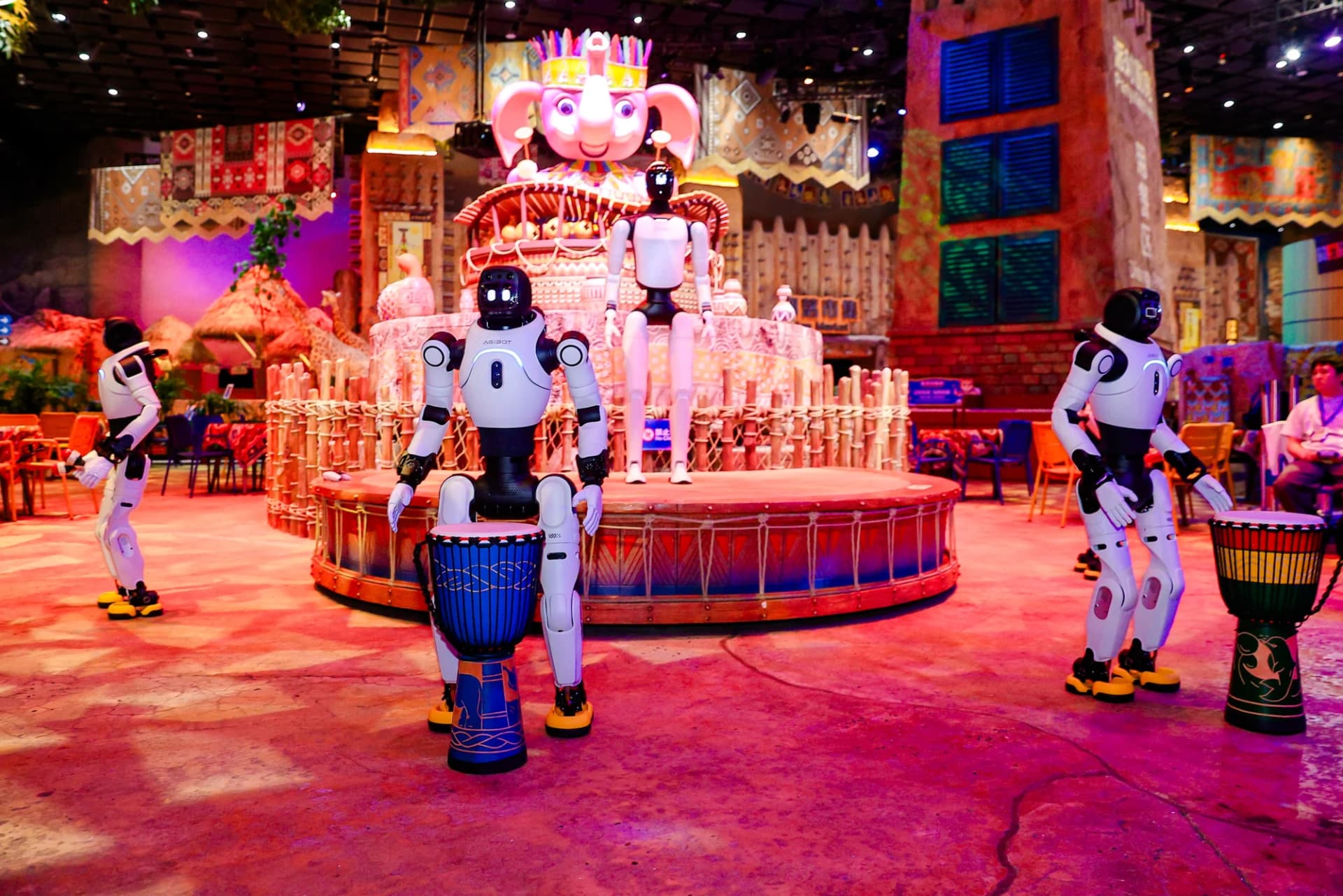
The company also pointed to service deployments at Guangzhou Metro and the Chimelong tourism and entertainment complex, where robots guide visitors, answer questions and provide interactive services. Those environments put different demands on a robot, particularly speech understanding and responsiveness—another reason Worken relies on task-specific benchmarks.
Link-U OS 1.0 has a wider open-source plan
AGIBOT announced Link-U OS 1.0, an operating system intended to connect robot hardware with higher-level intelligent applications. Selected ecosystem partners are now trialing it. Its architecture includes a hardware abstraction layer, an embodied-intelligence kernel and a service framework. The company says it has been validated on mass-produced robots.
AGIBOT plans to make it fully open source by the end of 2026. The company also became a Platinum sponsor of the OpenAtom Foundation, donated the Link-U OS project to the foundation and launched a joint initiative with it to build an open-source humanoid community. AGIBOT says its ecosystem now spans 255 universities, 511 companies and more than 80,000 developers.
Taken together, the Innovation Day announcements link a proposed measure of robot productivity with the hardware, models and operating tools AGIBOT intends to use in deployments. Worken's practical value will depend on how clearly task benchmarks are defined and how consistently real deployments can supply the data needed to measure them.
Share this article
Follow humanoid robotics without following every announcement.
Get the week’s most important launches, funding and research—and why they matter—in one email from Humanoids Daily.
Once a week. Unsubscribe anytime.
Read recent issuesRead next
- Published on
- Reading time
- 3 min read
AGIBOT Coordinates 110 Production Humanoids in Guinness-Certified Dance Performance
- Published on
- Reading time
- 3 min read
AGIBOT Releases Physical Reasoning Dataset to Connect Robot Decisions With Actions
- Published on
- Reading time
- 3 min read
IDC Puts H1 Humanoid Shipments Near 25,000, With AGIBOT Leading
- Published on
- Reading time
- 4 min read
AGIBOT Says 100 X2 Humanoids Are Working Across 100 ASD Retail Stores
- Published on
- Reading time
- 5 min read
AGIBOT Has Built 20,000 Robots—Twice Its March Total
- Published on
- Reading time
- 4 min read
AGIBOT Brings 300-Plus Robots to Chimelong Theme Park