- Published on
Anthropic Says Claude Fable 5.2 More Than Doubles GPT-6 Astra on a Robot-Control Benchmark
One tap, and our reporting appears more often in your Google Top Stories. It makes a real difference to a small newsroom.

Anthropic released Claude Fable 5.2 on Monday, and robotics is one of the areas the company highlighted. On RoboDojo, a public benchmark in which a model controls a simulated two-arm robot from camera images, Anthropic reports that Fable 5.2 scored 64.9%. That is more than double the 29.8% it measured for OpenAI's GPT-6 Astra, the model that has set the pace for frontier language models in robotics since its release on 3 September.
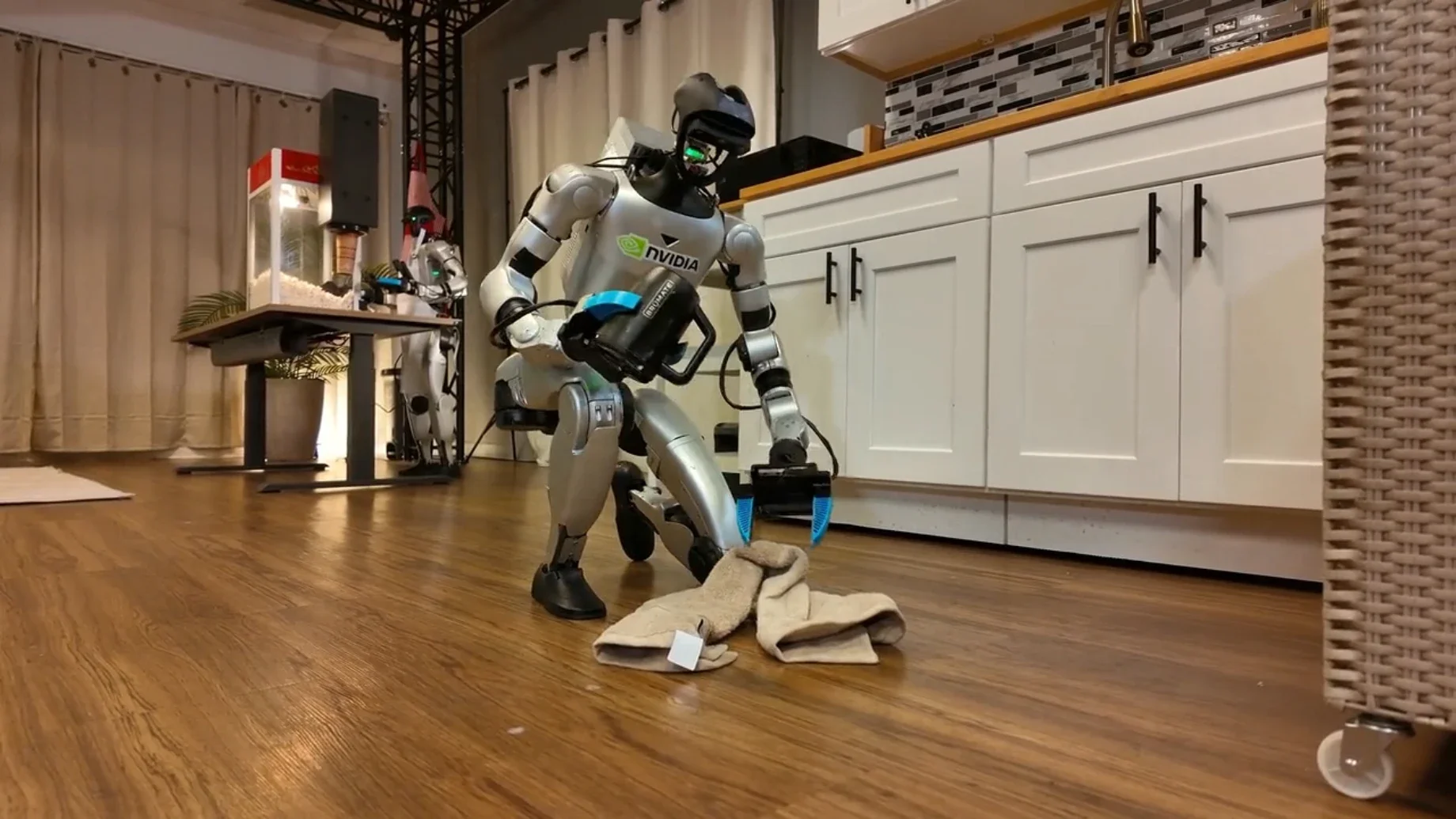
The launch landed on the same day NVIDIA presented GR00T 2 at CoRL in Austin, where Jim Fan, NVIDIA's director of robotics, opened his talk by describing the "five stages of grief" Astra had sent roboticists through.
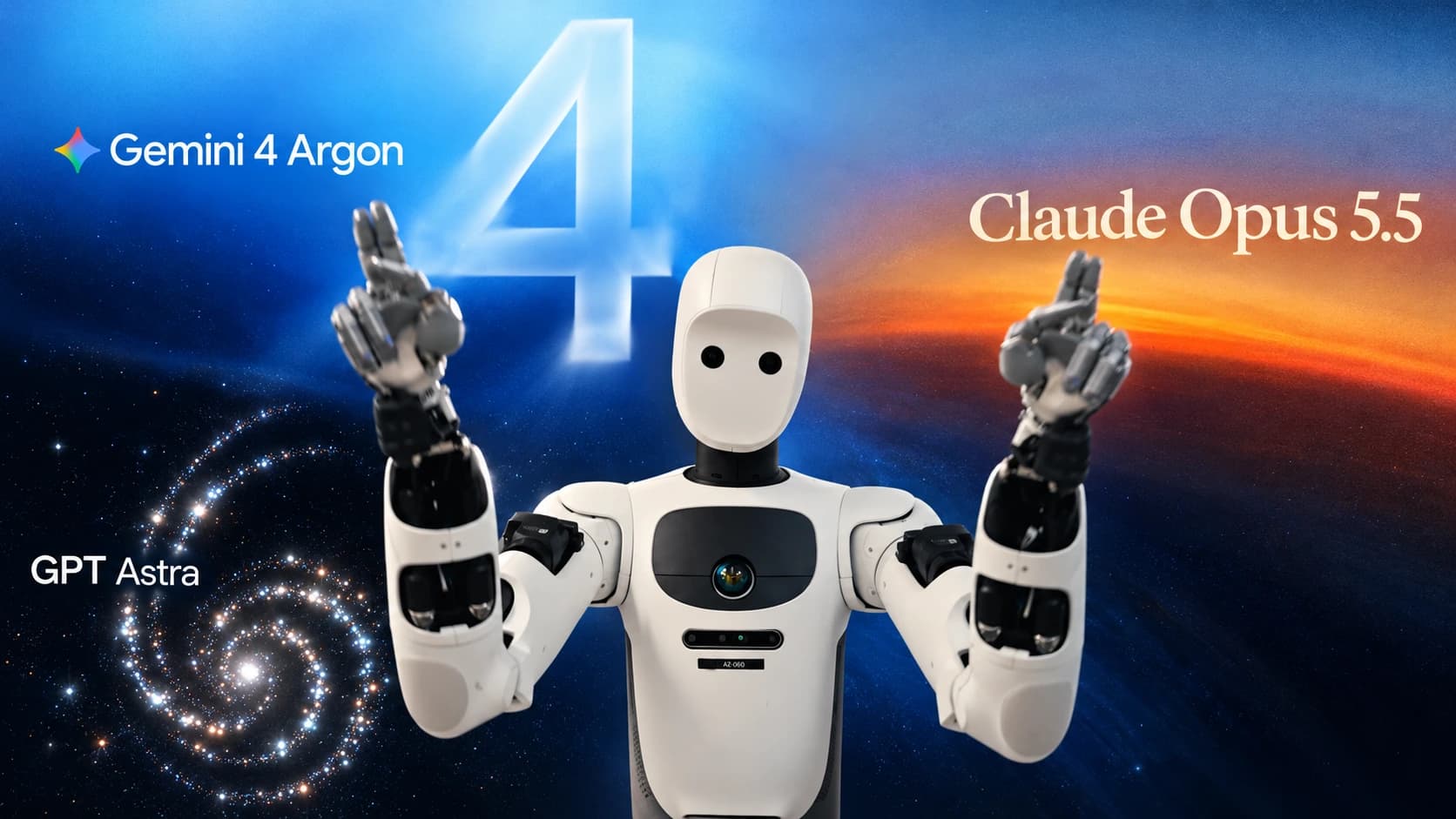
- Anthropic reports Fable 5.2 at 64.9% on RoboDojo Sim, ahead of Opus 5.5 (39.4%), Gemini 4 Argon (34.2%), GPT-6 Astra (29.8%) and Fable 5.1 (27.6%). Anthropic ran every model itself.
- The company says Fable 5.2 beat "most AI systems built specifically to control robots" on the benchmark, without naming them.
- On RoboDojo's own leaderboard, only Qoo Tech's Q0-Preview agent scores above 64.9%. The best ranked robot policy, X Square Robot's WALL-OSS-1.0-lite, scores 42.59.
- A launch video shows robots controlled by Fable 5.2 solving a puzzle cube, unscrewing a bottle cap and drawing a robot.

What Anthropic claims
In its launch post, Anthropic says that compared with earlier Claude models, Fable 5.2 "shows substantially improved skills in controlling physical robots," including on robotics tasks it was never explicitly trained on. The accompanying video shows robots running on Fable 5.2 solving a puzzle cube, unscrewing a bottle cap and drawing a picture of a robot. Anthropic has not published task counts, trial numbers or success rates for the physical demonstrations.
The quantitative claim rests on RoboDojo Sim. Anthropic's results, all at each model's highest available effort setting:
Follow humanoid robotics without following every announcement.
Get the week’s most important launches, funding and research—and why they matter—in one email from Humanoids Daily.
Once a week. Unsubscribe anytime.
Read recent issues| Model | RoboDojo Sim |
|---|---|
| Claude Fable 5.2 | 64.9% |
| Claude Opus 5.5 | 39.4% |
| Gemini 4 Argon (High effort) | 34.2% |
| GPT-6 Astra | 29.8% |
| Claude Fable 5.1 | 27.6% |
Source: Anthropic. All runs were performed internally by Anthropic on the same harness. Gemini 4 Argon was run at High effort, the others at Max.
Anthropic adds that Fable 5.2 outperformed "most AI systems built specifically to control robots" on the benchmark. It does not say which systems those are, or which ones still score higher.
What RoboDojo measures
RoboDojo was published in July by a group of more than 40 researchers from HKU's MMLab, UC Berkeley, Tsinghua, Peking University, Stanford, MIT and other universities. Its leaderboard is run by a non-profit, and the paper states that no commercial company is involved.
The simulation track has 42 tasks on an ARX X5 bimanual arm setup built in NVIDIA Isaac Sim. The tasks are grouped into five categories: generalization, precision, long-horizon, memory and open-ended. The robot sees through a head camera and two wrist cameras. Each policy is run on every task 50 times per random seed, and the leaderboard reports two numbers: a success rate for full task completion and an average score that gives partial credit for progress. A real-world track runs 18 further tasks on three types of physical arm.
The benchmark was built to rank vision-language-action models and other learned robot policies, which are typically fine-tuned on demonstrations of the tasks. The live leaderboard, last updated on 3 November, ranks those policies and lists systems it labels as agents separately, shown but unranked. Each entry reports an average score and a success rate. The top ranked policy is X Square Robot's WALL-OSS-1.0-lite, with a score of 42.59 and a success rate of 34.97%, followed by RobotEra's VPP2 at 39.26 and 32.26%.
The agent entries score higher. Qoo Tech's Q0-Preview leads the whole table at 74.20 and 68.87%, followed by AGIBOT's GO-3 Nano Preview at 61.90 and 56.42% and PKU DAGroup's PyRUA-Lean at 55.26 and 50.35%.
Fable 5.2 is not on the leaderboard, and Anthropic has not said whether its 64.9% is a score or a success rate. Read either way, the result would place it second, behind Q0-Preview and ahead of every ranked robot policy, which matches Anthropic's claim that it beat "most" systems built to control robots. Anthropic ran its tests on its own harness, so the leaderboard comparison is approximate. The comparison with the other frontier models is direct: all five were run in the same setup, and Fable 5.2 leads the next model, Opus 5.5, by 25.5 points.
NVIDIA said on Monday that GR00T 2 ranks in the top three on RoboDojo among both vision-language-action models and world action models. The leaderboard's 3 November update, which predates the announcement, does not show GR00T 2 among its top entries.
Other physical-world results
Anthropic also reports gains on hardware design. On BenchCAD 2.1, a hardware engineering benchmark, Fable 5.2 scored 83.5 out of 100, against 65.3 for Opus 5.5 and 44.4 for Fable 5.1. In a separate test, Anthropic gave the model a one-paragraph request to design three electronic devices: a home voice-assistant hub, a USB speakerphone and a handheld virtual pet. The model wrote the specifications, picked components from US distributors, routed four-layer circuit boards, modeled 3D-printed enclosures and wrote the software. Diode, a circuit-board design and manufacturing company, built the boards. Anthropic says each board was ready for manufacturing in under a day and all three devices worked without electrical modifications.
Vision improved as well. On Chartography, a chart-reading benchmark run without tools, Fable 5.2 scored 73.4%, up from 44.8% for Fable 5.1.
How frontier models are entering robotics
The launch follows two months in which robotics researchers have tested what general-purpose language models can do with robots. Shortly after Astra's release, an OpenAI roboticist had it paint the Golden Gate Bridge with a robot arm, and third-party tests by RoboCurve put Astra at 95% on gross pick-and-place but 10% on sub-millimeter insertions. Researchers have also used Astra and Claude Opus 5.5 to build simulation environments and train controllers in hours. Google showed its Gemini 4 Argon model, which also appears in Anthropic's RoboDojo table, coaching Apptronik's Apollo humanoid to seven consecutive cornhole shots after practice in simulation and adjustments on the real robot. In SuperCLUE's September embodied-brain evaluation, Astra led ten models with a wide margin in planning.
NVIDIA's answer at CoRL was to treat frontier models as the reasoning layer on top of a dedicated skill model. In Fan's demos, Astra directed GR00T 2 by marking up camera images or correcting its actions mid-task, and NVIDIA reported that the combination assembled 292 of 300 toys, against 71 to 84 per toy for GR00T 2 alone. Anthropic's video shows Fable 5.2 controlling robots, but the launch post does not say whether it drove the arms directly or worked through lower-level skill models or code, as Astra did in NVIDIA's setup.
Fable 5.2 is available through the Claude API and on AWS, Google Cloud and Microsoft Azure at $8 per million input tokens and $40 per million output tokens, with a faster mode at $16 and $80. Anthropic says it is cheaper than Fable 5.1, without giving the old price. Claude Mythos 5.2, which Anthropic describes as the same underlying model with fewer safeguards in cybersecurity and biology, is limited to vetted organizations in those fields.
Share this article
Follow humanoid robotics without following every announcement.
Get the week’s most important launches, funding and research—and why they matter—in one email from Humanoids Daily.
Once a week. Unsubscribe anytime.
Read recent issuesRead next
- Published on
- Reading time
- 6 min read
OpenAI’s GPT-6 Astra Hits 95% on Physical Manipulation Benchmark, But Precision Tasks Expose Familiar Bottlenecks
- Published on
- Reading time
- 9 min read
"Robotics Is No Longer an Elitist Sport": NVIDIA Unveils GR00T 2 and Open-Sources the Stack Behind It
- Published on
- Reading time
- 4 min read
Astra, Opus and Argon Show How Frontier AI Models Are Speeding Up Robotics Development
- Published on
- Reading time
- 3 min read
GPT-6 Astra Rarely Refused Unsafe Robot Commands in New Test
- Published on
- Reading time
- 7 min read
GPT-6 Is Beating Specialist Models in Robotics Tests
- Published on
- Reading time
- 6 min read
HD Hyundai Robotics Builds Its Own Robot Brain, as Skild AI Pitches Korea on Building the Bodies