- Published on
Boston Dynamics’ Atlas Lead on the Humanoid Form as a ‘Software Problem’
One tap, and our reporting appears more often in your Google Top Stories. It makes a real difference to a small newsroom.


Your guide
Rich Robinson
Jee Chee Ren · Executive tour
See China’s AI and robotics ecosystem first-hand.
Six days exploring AI, robotics and advanced manufacturing.
With Rich Robinson, Clinical Professor of Entrepreneurship at Peking University
Beijing · Guangzhou · Shenzhen
29 November–4 December 2026
Referral partnership · We earn a commission on referred bookings.
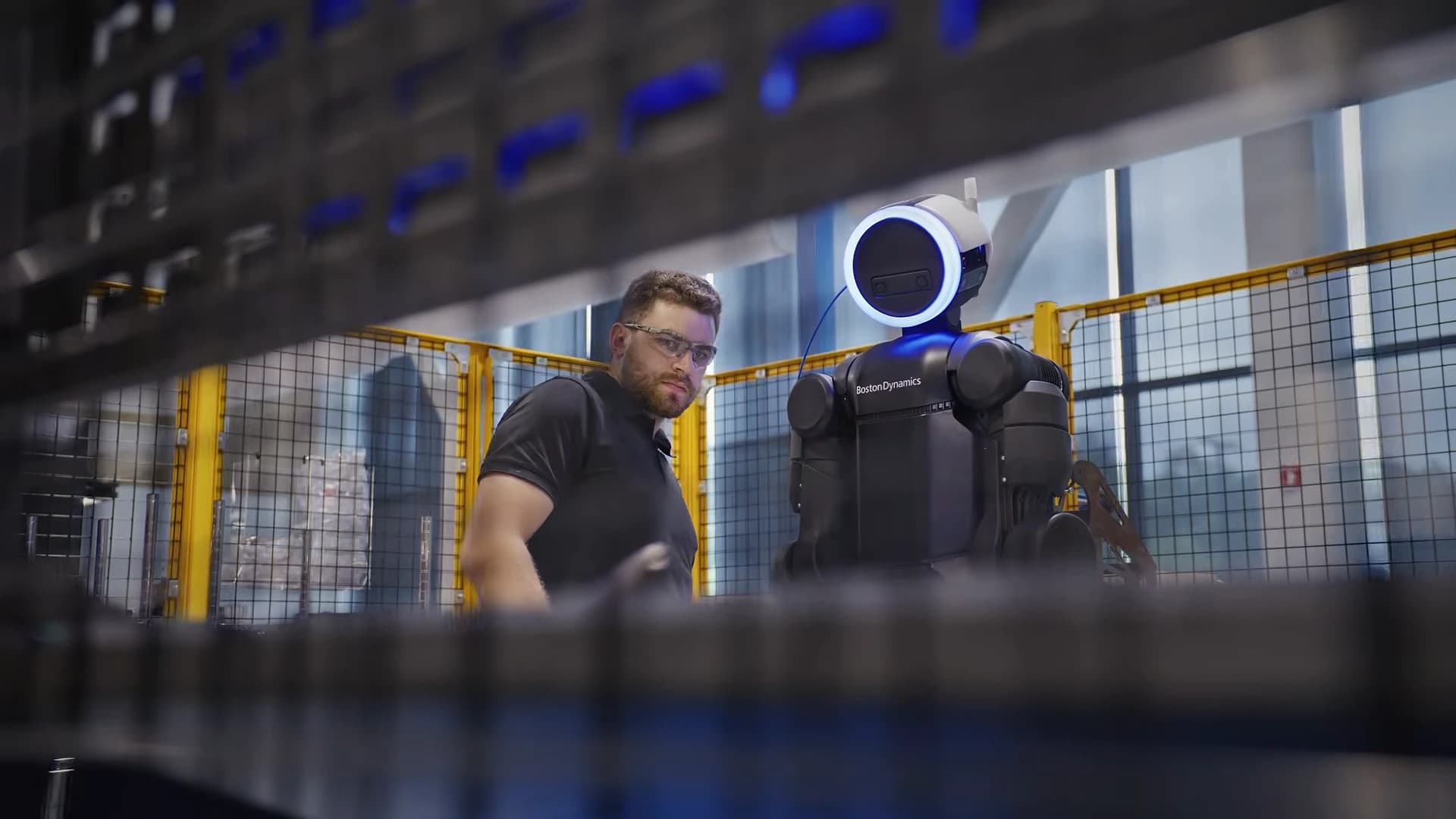
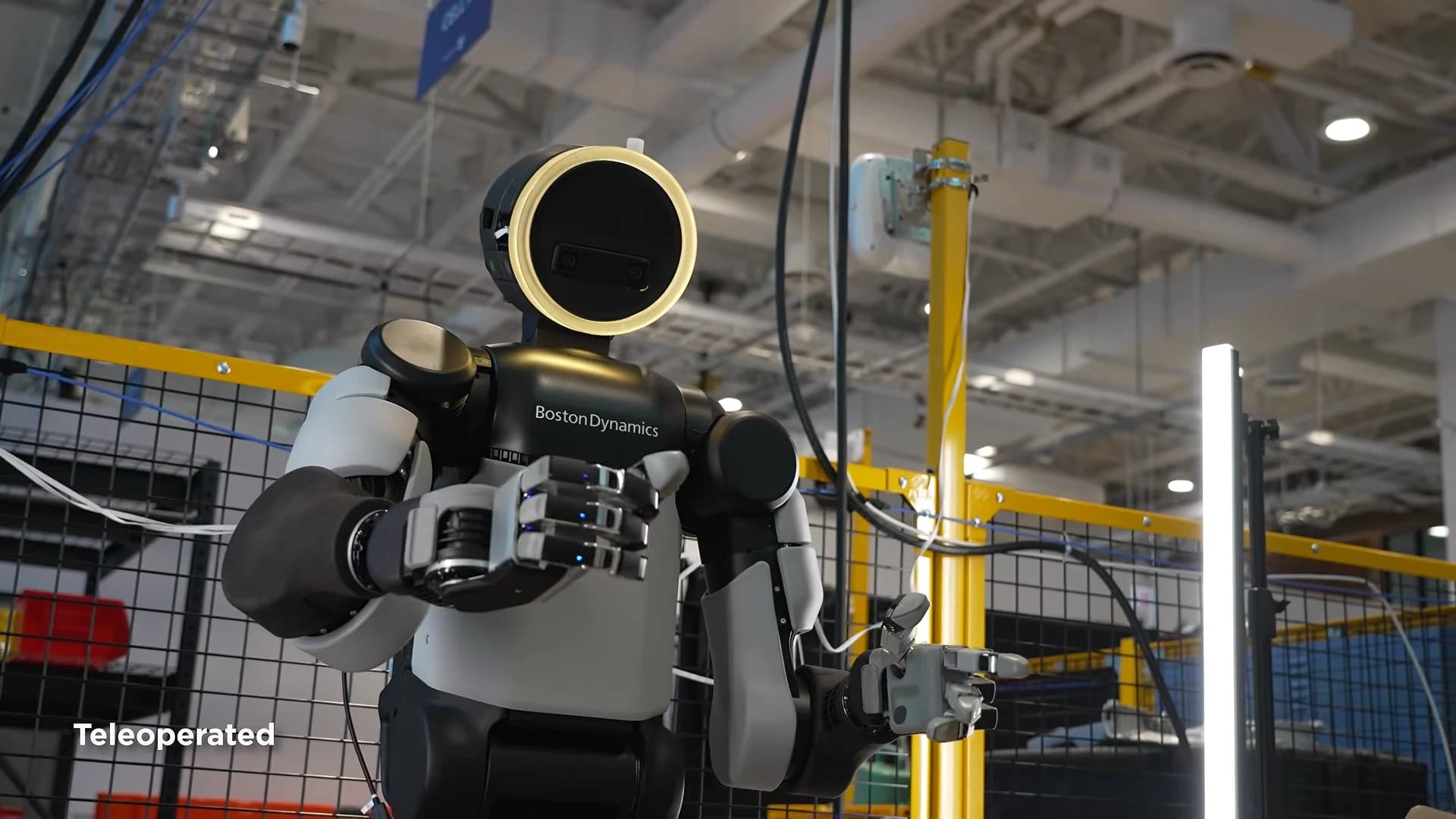
In a wide-ranging interview with @TheHumanoidHub , Boston Dynamics’ Atlas Product Management Lead, Mario Bollini, provided key insights into the company’s strategy, framing the humanoid form not as an end in itself, but as a way to "shunt complexity" from hardware to software. Bollini touched on the robot’s superhuman capabilities, the pivotal shift to electric actuation, and the lessons learned from commercializing its quadruped, Spot.
The Humanoid as a General Platform
Addressing the ongoing industry debate about the utility of the humanoid form factor, Bollini argued that it provides crucial generality, especially in the early stages of product development. "For us, having a humanoid form factor allows us to turn...customer to customer requirements into a software problem," he explained.
This approach gives Boston Dynamics the "maximum aperture" to explore commercial opportunities and find the shortest path to value for customers. While more specialized robots with wheels or different arm configurations might eventually prove superior for specific, mature tasks, the bipedal, two-armed humanoid is the ideal platform for discovering those applications in the first place.
Superhuman by Design
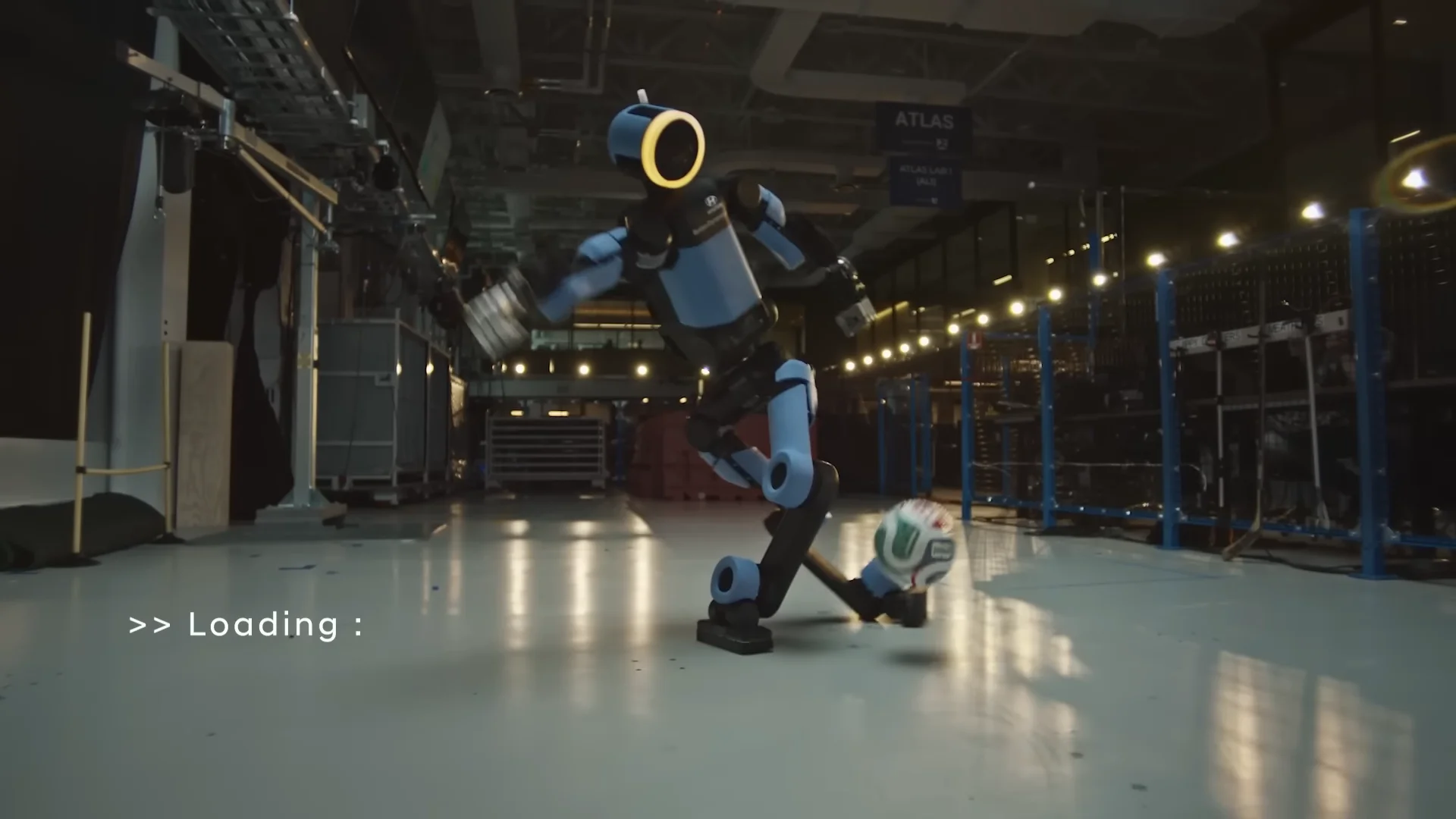
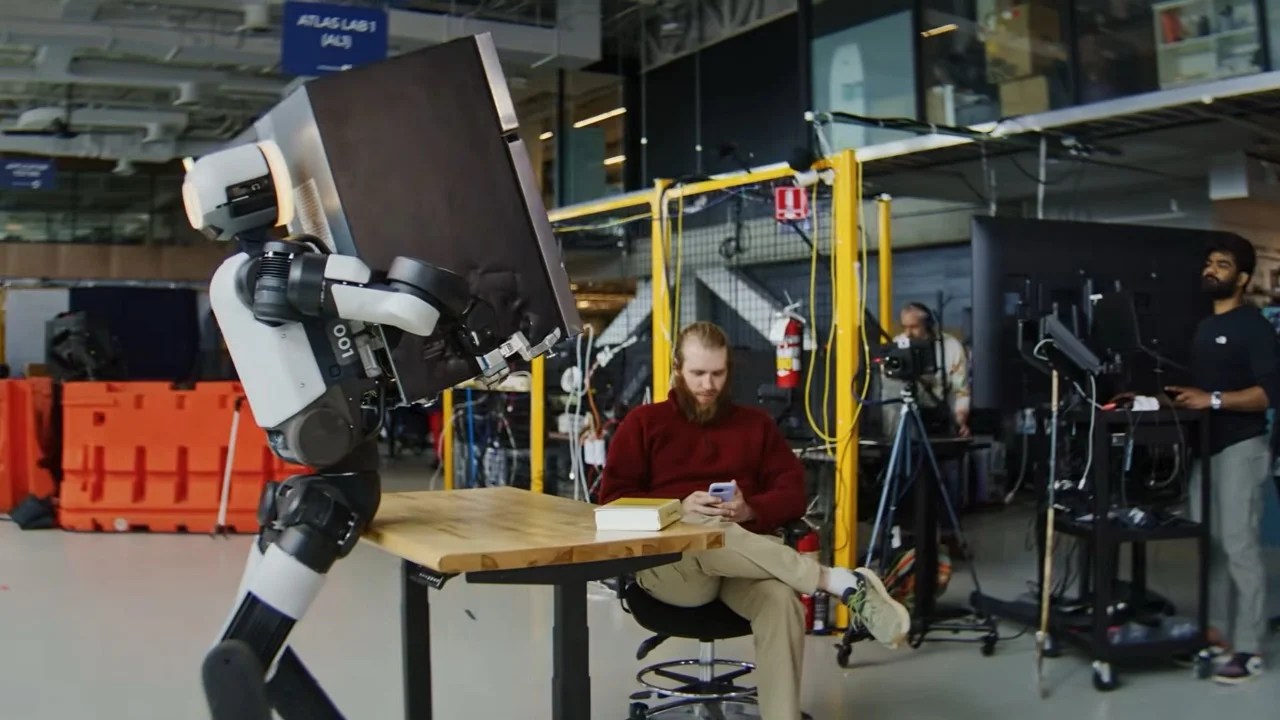
A key theme of the discussion was that the new electric Atlas is not strictly bound by human limitations. Bollini highlighted features like the robot's ability to rotate its torso and legs with a range of motion far exceeding a person's. This was not an accident, but a "deliberate engineering decision."
The weekly humanoid robotics briefing
One email a week: the launches, funding and research that mattered, with context from Humanoids Daily.
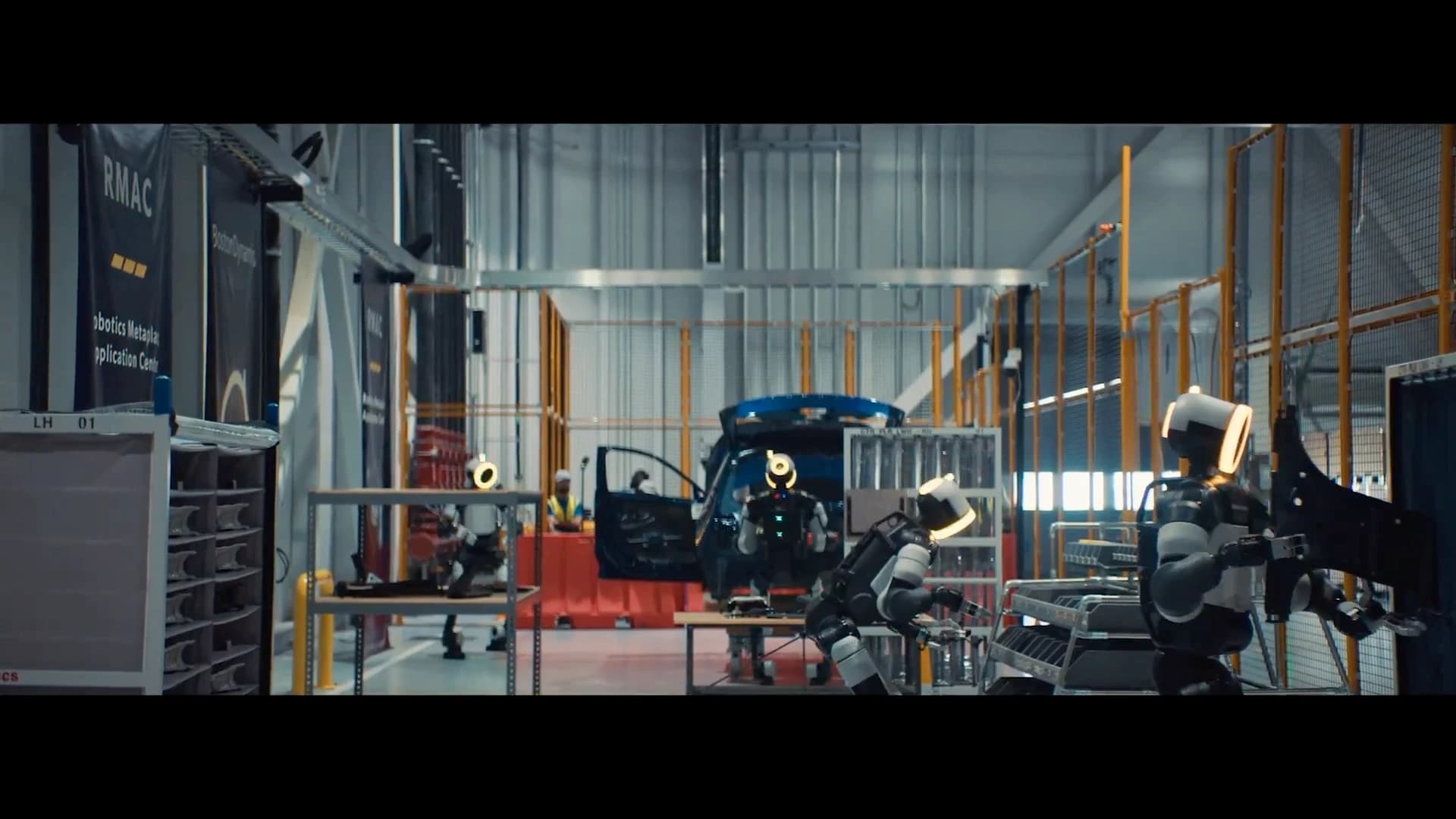
Read recent issuesThese "superhuman" capabilities create tangible product advantages. For example, a robot that can spin its torso 180 degrees instead of taking several steps can reduce cycle times in a manufacturing setting, directly adding value for a customer. "It's having a huge impact on our product pipeline by allowing Atlas to move faster than a person," Bollini noted.
An Evolution in Brains and Brawn
The development of the new Atlas was enabled by what Bollini described as a "point of convergence" in technology. Advances in battery density and the company's decision to design its own high-performance electric motors and actuators in-house finally made it possible to move away from the powerful but messy and potentially dangerous hydraulic systems of the previous generation.
The control software has seen an equally dramatic paradigm shift. While the old Atlas relied on classical control approaches like Model Predictive Control (MPC), the new platform has fully embraced modern machine learning. Bollini said that reinforcement learning (RL) and behavior cloning have "dramatically accelerated the timeline" for developing both locomotion and manipulation skills.
This philosophy of pragmatic, application-driven design extends all the way to the robot's end-effectors. As we recently covered, the company opted for a three-fingered hand that balances dexterity and reliability, another decision that prioritizes real-world utility over mimicking human anatomy.
Watch the Full Interview
Bollini's discussion offers a clear window into the strategic thinking that is shaping one of the industry's most-watched humanoid projects. For a deeper dive into these topics, you can watch or listen to the full interview below.
Share this article
Read next
- Published on
- Reading time
- 4 min read
Boston Dynamics Says Atlas Takes a Day to Build—and Wants to Cut That to an Hour
- Published on
- Reading time
- 4 min read
Boston Dynamics Gives Atlas Four-Finger Hands Built for Tools and AI Training
- Published on
- Reading time
- 4 min read
Boston Dynamics Makes Its Case for Atlas and a Two-Year Payback Target
- Published on
- Reading time
- 7 min read
Hyundai Says Atlas Will Not Replace Workers — One Day After Settling a Strike Over Exactly That
- Published on
- Reading time
- 4 min read
Hyundai to Take Full Ownership of Boston Dynamics in $325 Million SoftBank Buyout
- Published on
- Reading time
- 5 min read
Bear Hugging a Fridge: Inside Boston Dynamics’ Push for "Whole-Body" Physical AI
The weekly humanoid robotics briefing
One email a week: the launches, funding and research that mattered, with context from Humanoids Daily.
Read recent issues