- Published on
Boston Dynamics Makes Its Case for Atlas and a Two-Year Payback Target
One tap, and our reporting appears more often in your Google Top Stories. It makes a real difference to a small newsroom.


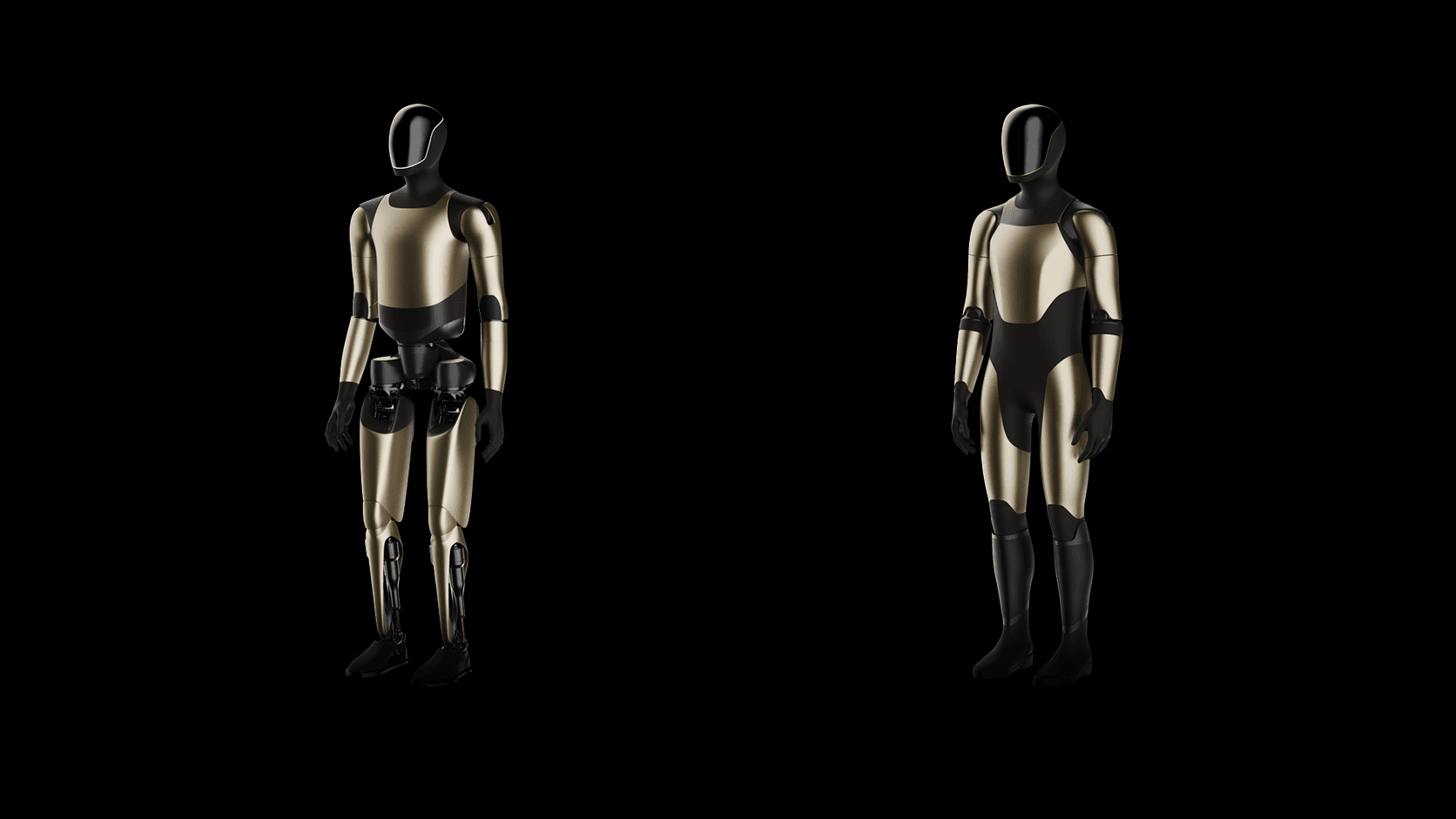
Boston Dynamics is making an unusually direct pitch for its place in the humanoid race. In a short film shared on September 30, the company argues that its experience selling Spot and Stretch, combined with Hyundai Motor Group’s manufacturing resources, gives Atlas the foundations to succeed commercially.
The most concrete ambition: robots that pay back their cost in under two years. Boston Dynamics says it already achieves that with Spot and is aiming for the same with Atlas.
- Boston Dynamics makes commercial experience with Spot and Stretch central to its argument for Atlas, citing more than 500 Spot customers across 46 countries.
- The company is targeting a payback period of under two years for Atlas, but the film does not present an Atlas customer case demonstrating that result.
- Hyundai provides both a place to train the humanoid and a route toward manufacturing scale, with previously announced plans for 25,000 Atlas deployments and a U.S. robot factory.
A commercial argument for Atlas
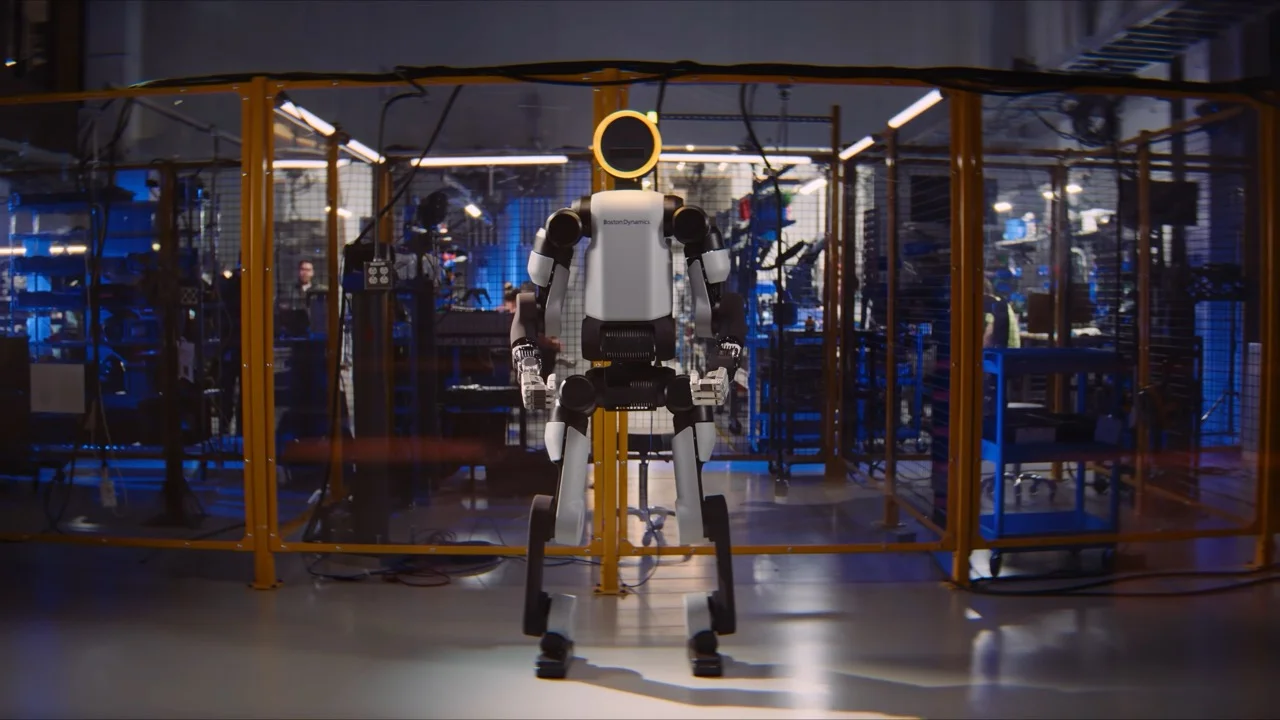
The nearly six-minute film follows our coverage of Boston Dynamics’ drone tour through Atlas production. Where that video offered a look at the workshop, this one explains the company’s argument for turning the hardware into a business.
Boston Dynamics points to lessons learned deploying mobile robots for industrial customers. Spot, its quadruped inspection robot, has reached more than 500 customers in 46 countries, according to the film. Stretch supplies another source of experience in commercial automation, handling boxes in logistics operations.
The weekly humanoid robotics briefing
One email a week: the launches, funding and research that mattered, with context from Humanoids Daily.
Read recent issuesThe implication is that Atlas can benefit from existing customer relationships and experience supporting robots outside the lab. Those are relevant advantages, even though the economics of inspection and box handling do not automatically carry over to a general-purpose humanoid.
The film is branded content, with closing credits for Hyundai Motor Group, Boston Dynamics and Bloomberg Media Studios. It presents the companies’ case for Atlas rather than an independent assessment of who will win.
Learning the work before taking the job
The film describes Atlas’ intelligence through a two-part framework. Physical intelligence handles movement, balance and reaching; reasoning intelligence handles complex instructions and understanding what a task requires.
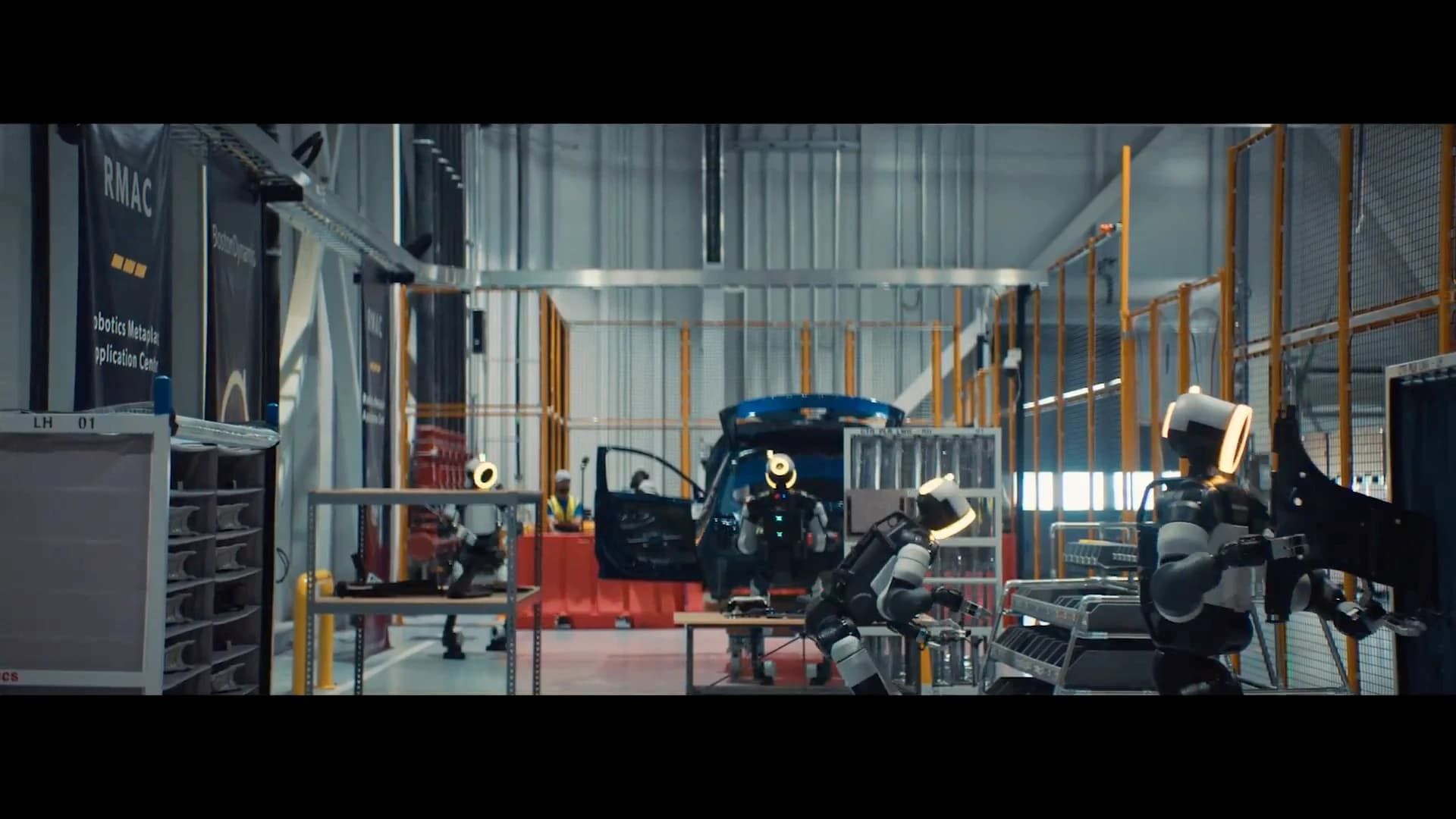
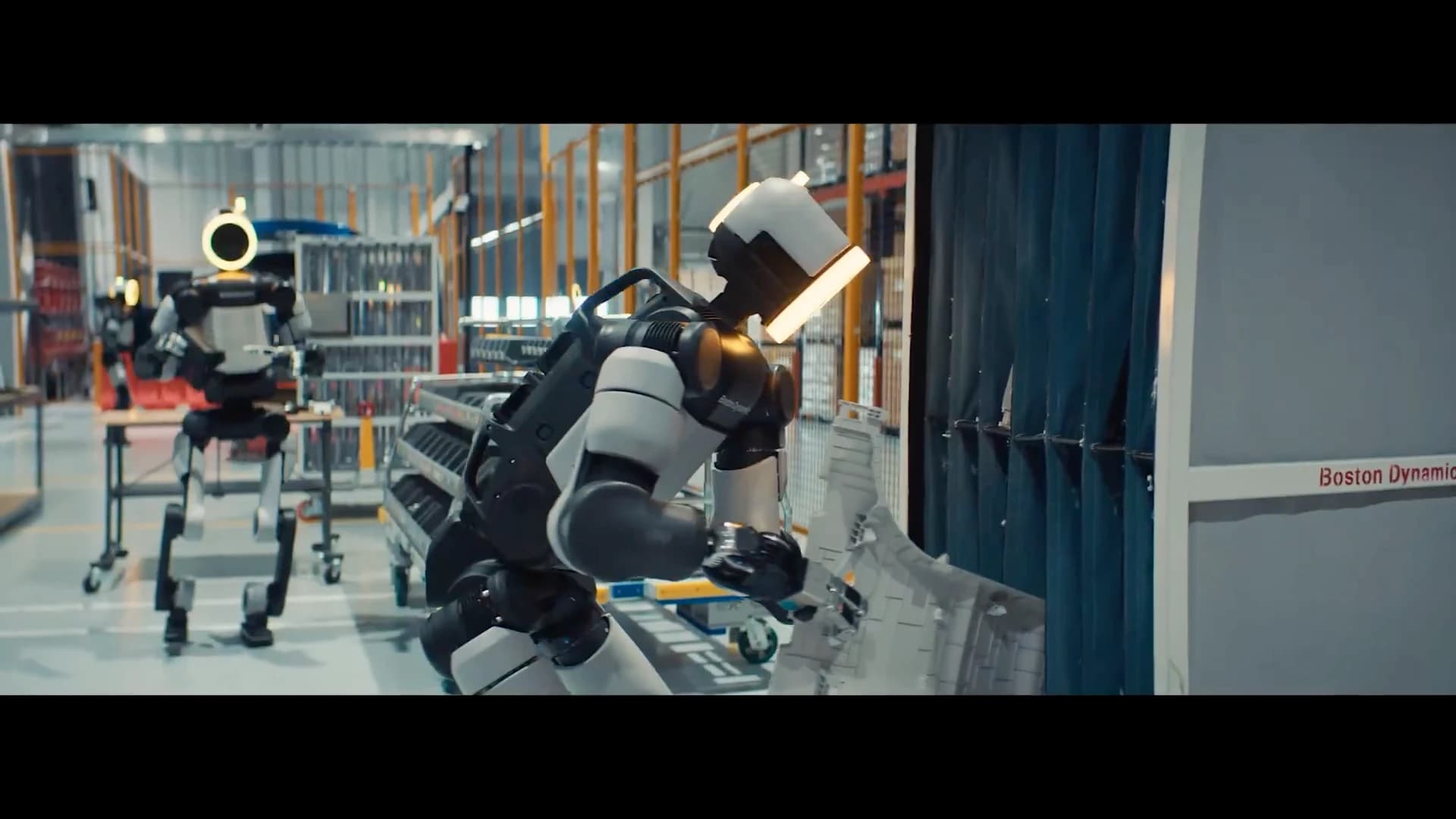
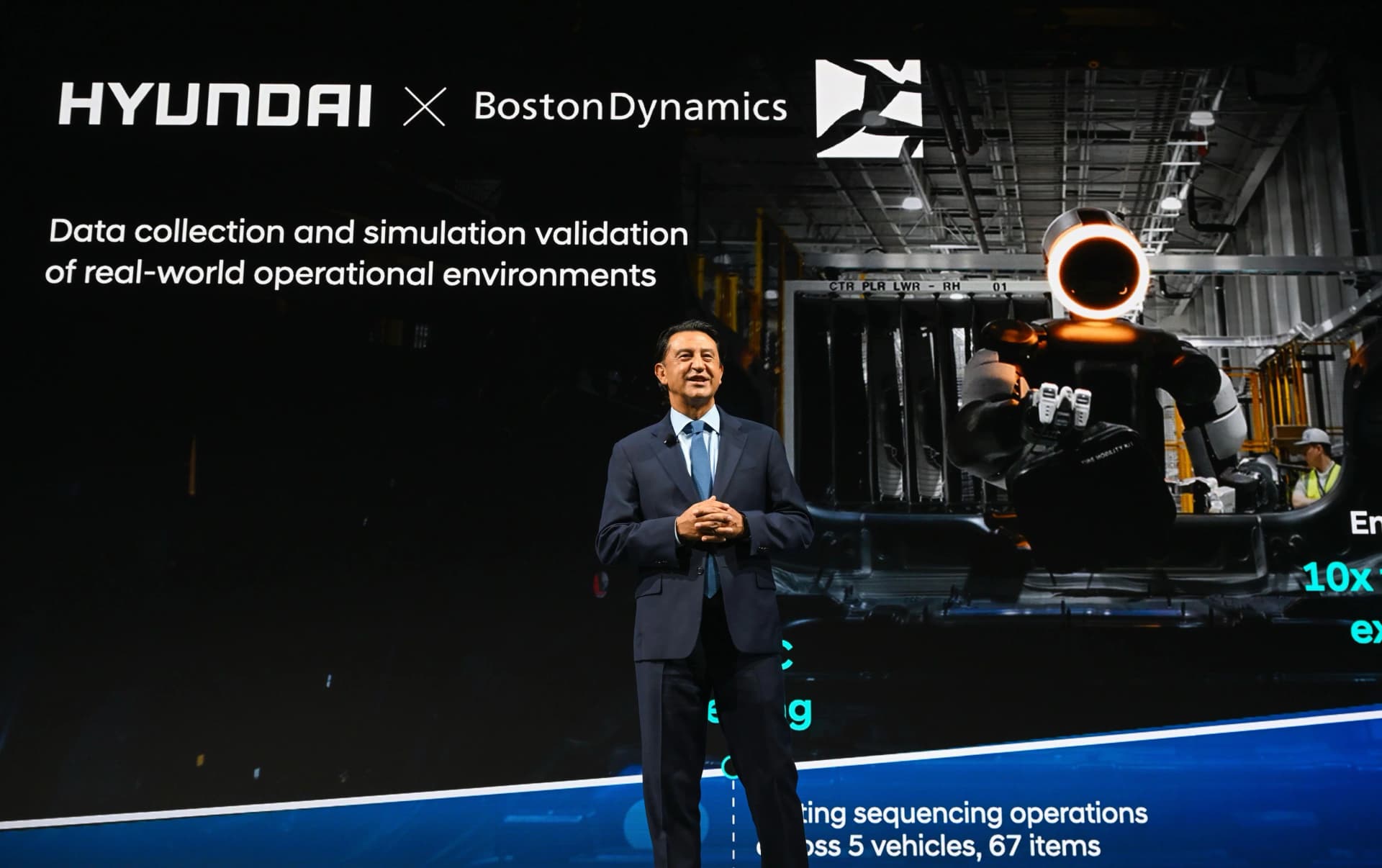
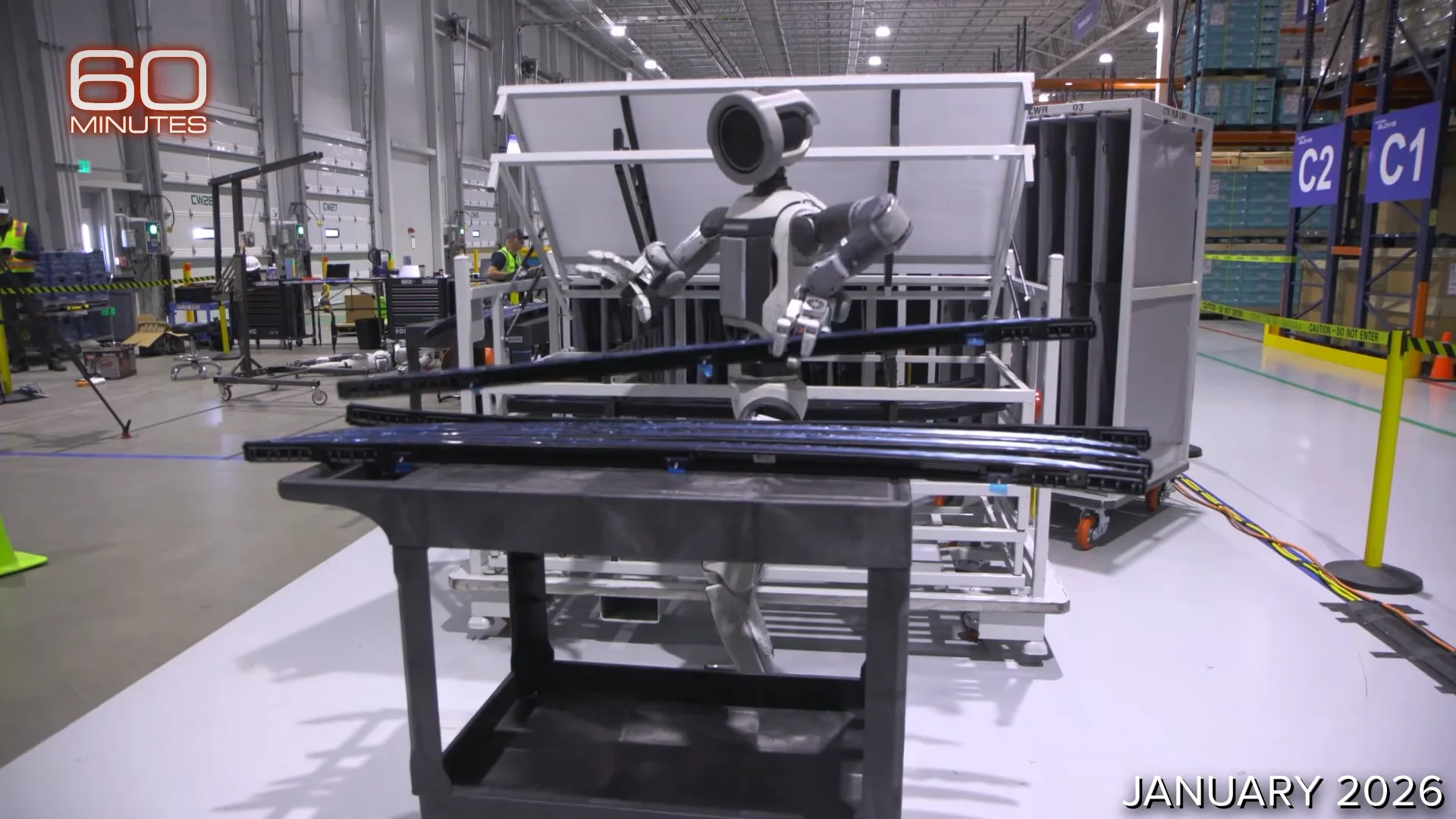
Putting those capabilities to work is the purpose of the Robotics Metaplant Application Center, which recently opened at Hyundai’s Georgia manufacturing campus. In the film, the center is described as a place to learn automotive tasks and validate reliability before deployment into production operations.
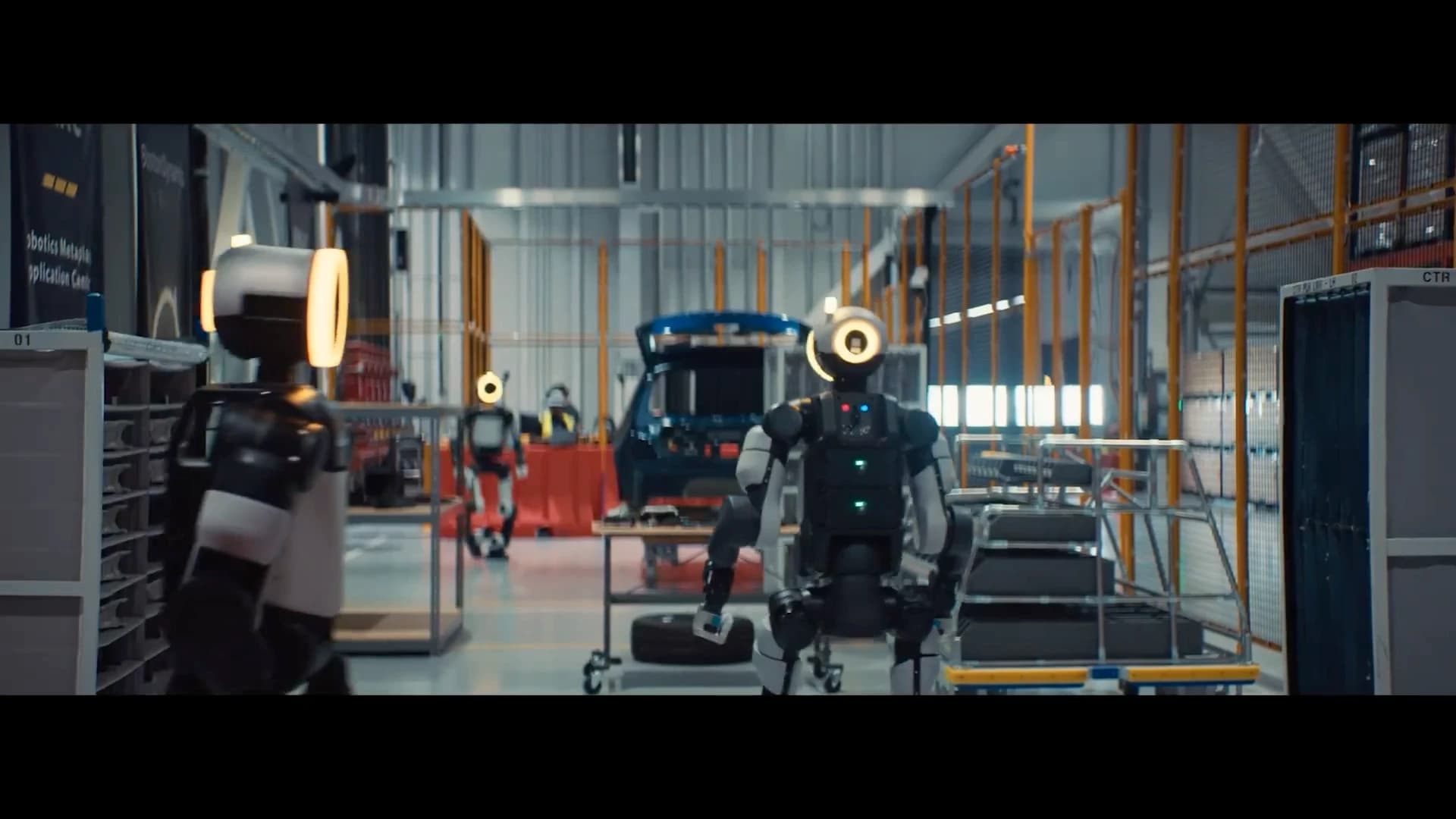
Automotive manufacturing offers demanding safety, security and reliability requirements. The company sees it as a starting point for proving Atlas can do useful industrial work, with food and beverage and semiconductor manufacturing among the other settings discussed.
Hyundai supplies the route to scale
Hyundai’s role extends beyond providing a training environment. The film emphasizes supplier relationships, manufacturing costs and the certainty of demand needed to build a supply chain.
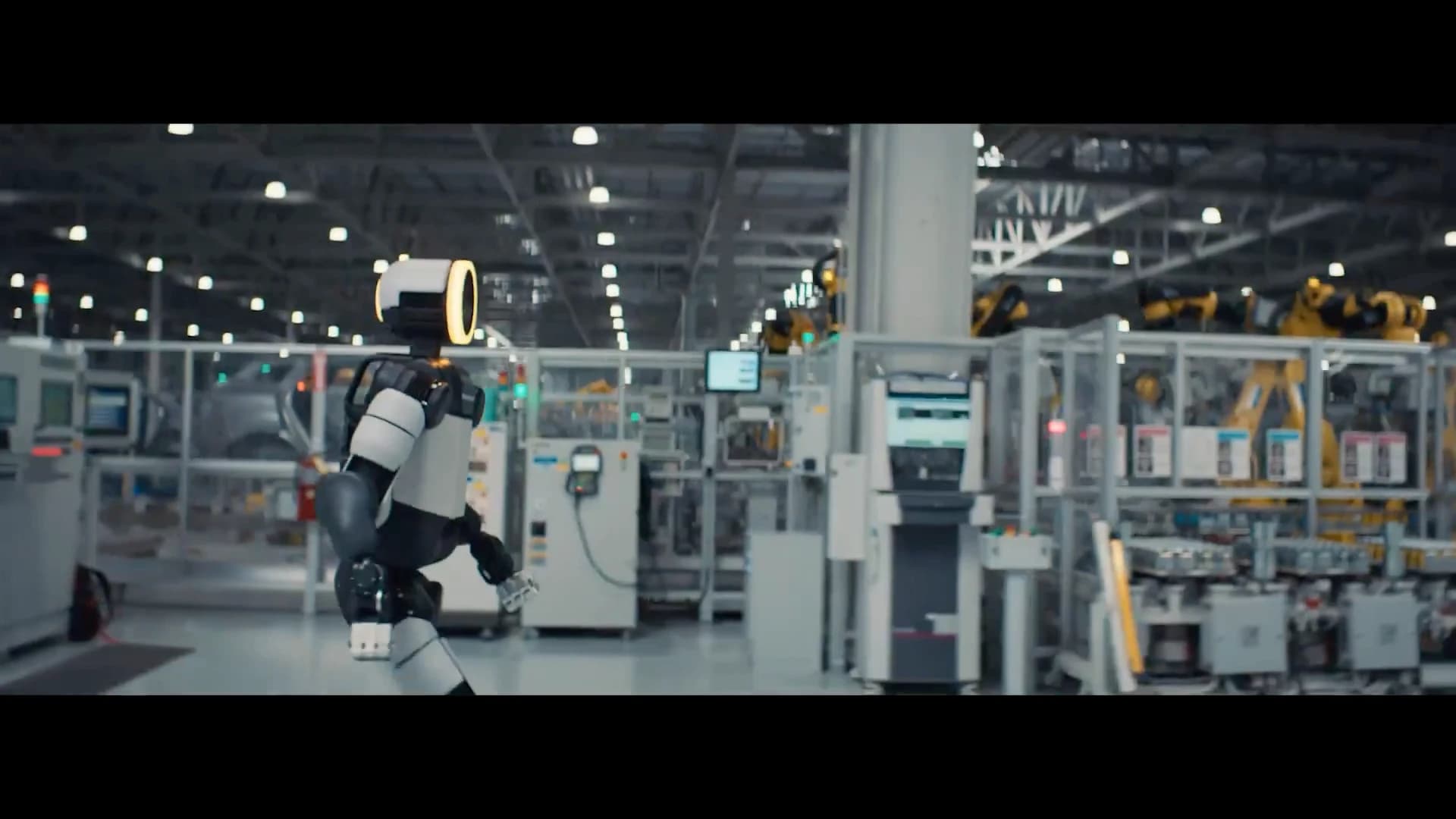
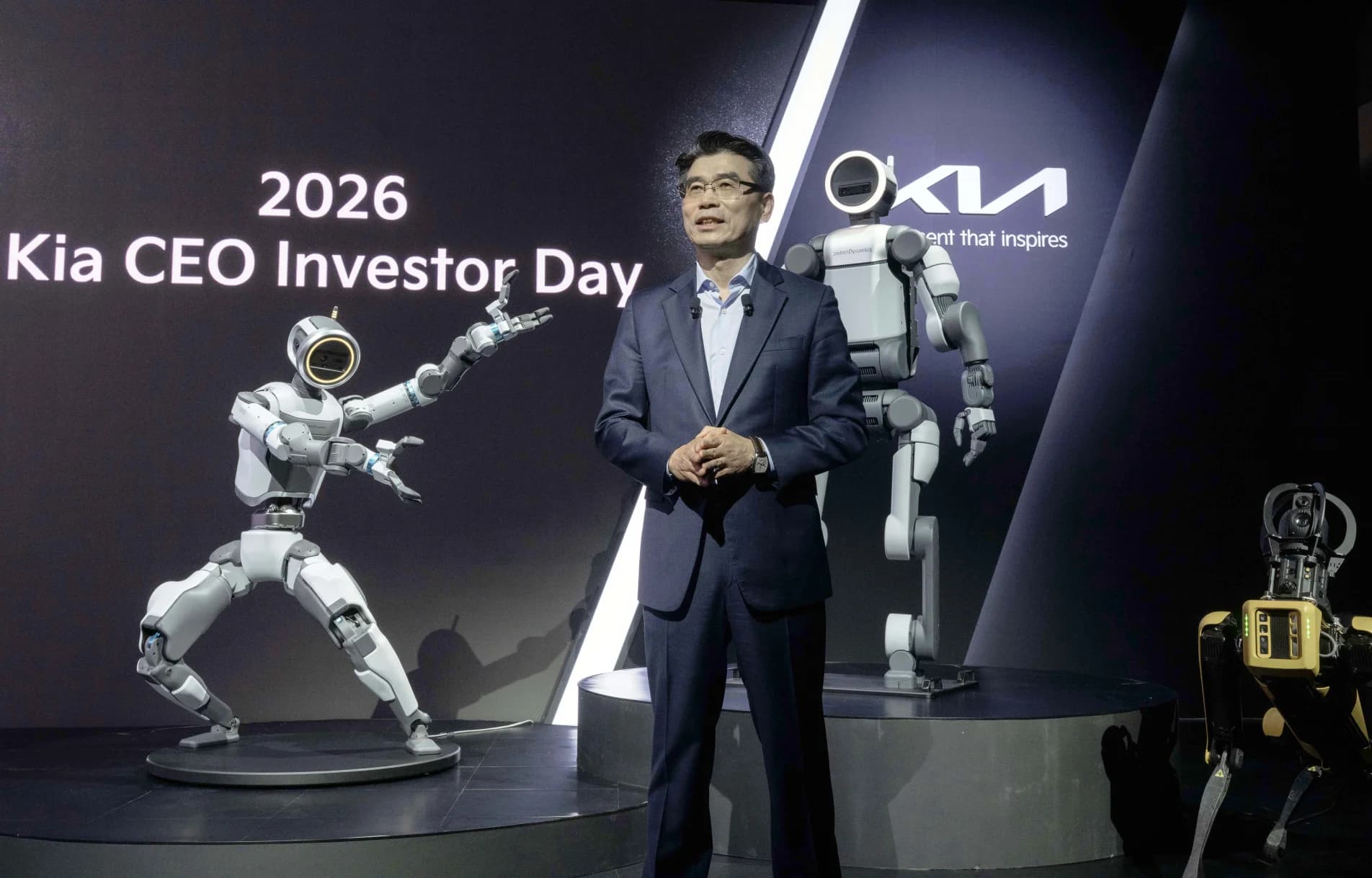
It reiterates plans for 25,000 Atlas deployments and a new U.S. facility capable of producing up to 30,000 robots annually. Boston Dynamics’ September 21 announcement places the planned Atlas deployments at Hyundai Motor and Kia plants over the next few years. These are future plans, not current production or deployment totals.
That combination gives the film its central argument: Boston Dynamics has experience commercializing robots, Hyundai has factories and manufacturing scale, and Atlas is learning tasks where the two can meet.
The under-two-year payback ambition gives readers something more concrete to watch than a declaration of victory. Achieving it will depend on how much useful work Atlas completes, how consistently it operates and what customers ultimately pay to deploy and support it. The film lays out the strategy; customer results will show how well it works.
Share this article
Read next
- Published on
- Reading time
- 7 min read
Hyundai Says Atlas Will Not Replace Workers — One Day After Settling a Strike Over Exactly That
- Published on
- Reading time
- 4 min read
Hyundai to Take Full Ownership of Boston Dynamics in $325 Million SoftBank Buyout
- Published on
- Reading time
- 4 min read
The Production Pivot: Leadership Exodus and Internal Pressure at Boston Dynamics
- Published on
- Reading time
- 4 min read
The Blueprint for a Bipedal Workforce: Kia Details Atlas Deployment Roadmap
- Published on
- Reading time
- 5 min read
Form as Function: Boston Dynamics Details the Industrial Design Logic Behind the Production Atlas
- Published on
- Reading time
- 5 min read
From Viral Clips to the Factory Floor: 60 Minutes Goes Inside Boston Dynamics’ Industrial Shift
The weekly humanoid robotics briefing
One email a week: the launches, funding and research that mattered, with context from Humanoids Daily.
Read recent issues