- Published on
Hyundai Says Atlas Will Not Replace Workers — One Day After Settling a Strike Over Exactly That
One tap, and our reporting appears more often in your Google Top Stories. It makes a real difference to a small newsroom.

- CEO José Muñoz told investors that Hyundai's US robot plant will start production in 2028 with 30,000 units of annual capacity, calling it "the world's first large-scale commercial robotics manufacturing facility"
- 25,000 of those units are already committed, beginning with Hyundai Motor Group Metaplant America — meaning roughly 83 percent of first-year output is destined for Hyundai's own factories, not external customers
- Muñoz devoted a scripted passage to insisting "robots are not replacing humans," one day after Hyundai's Korean union reached a tentative wage deal following a walkout that demanded job protections against AI and automation
- The settlement's automation clause commits the two sides only to discuss employment when new businesses roll out — a process, not a protection, and it still faces a member ratification vote
- Hyundai floated selling robots through its car dealer network and financing them through Hyundai Capital, but both were framed as exploratory, with no product, timeline, or price attached
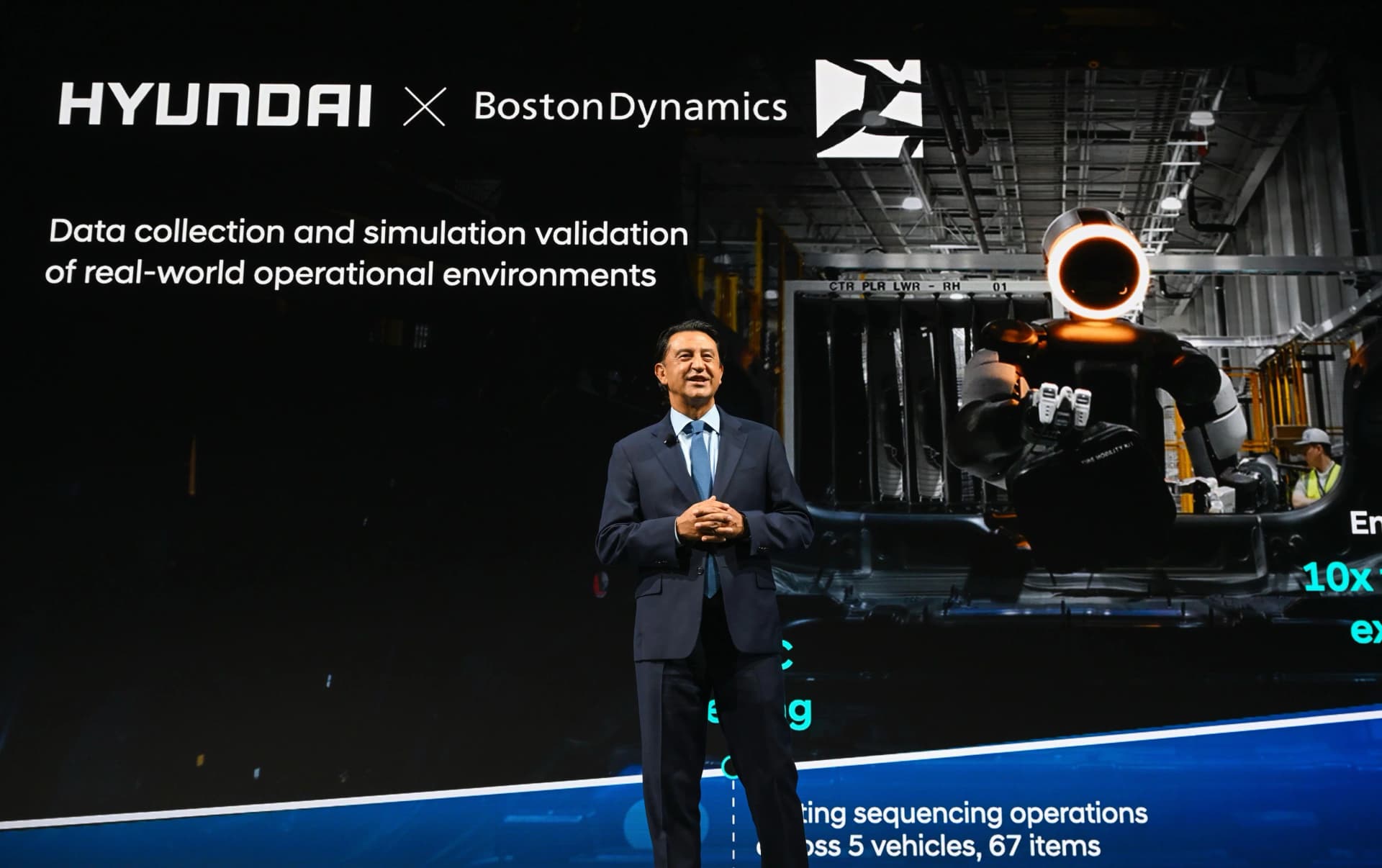
Roughly forty minutes into Hyundai Motor Company's 2026 CEO Investor Day at the Conrad Seoul on Wednesday, President and CEO José Muñoz paused the roadmap of vehicle launches and margin targets to make a point that had nothing to do with cars.
"Let me be clear about our utilization of robots," he said. "Robots are in service of humans. They do the work that is difficult and repetitive." Then, more directly: "Robots are not replacing humans. We are creating new categories of jobs like robot maintenance, all while maximizing human potential."
It is the kind of line that appears in a lot of robotics presentations. What made it notable was the calendar. Muñoz delivered it one day after Hyundai's South Korean union reached a tentative agreement ending its longest walkout in a decade — a dispute in which automation was an explicit grievance.
The numbers behind Atlas
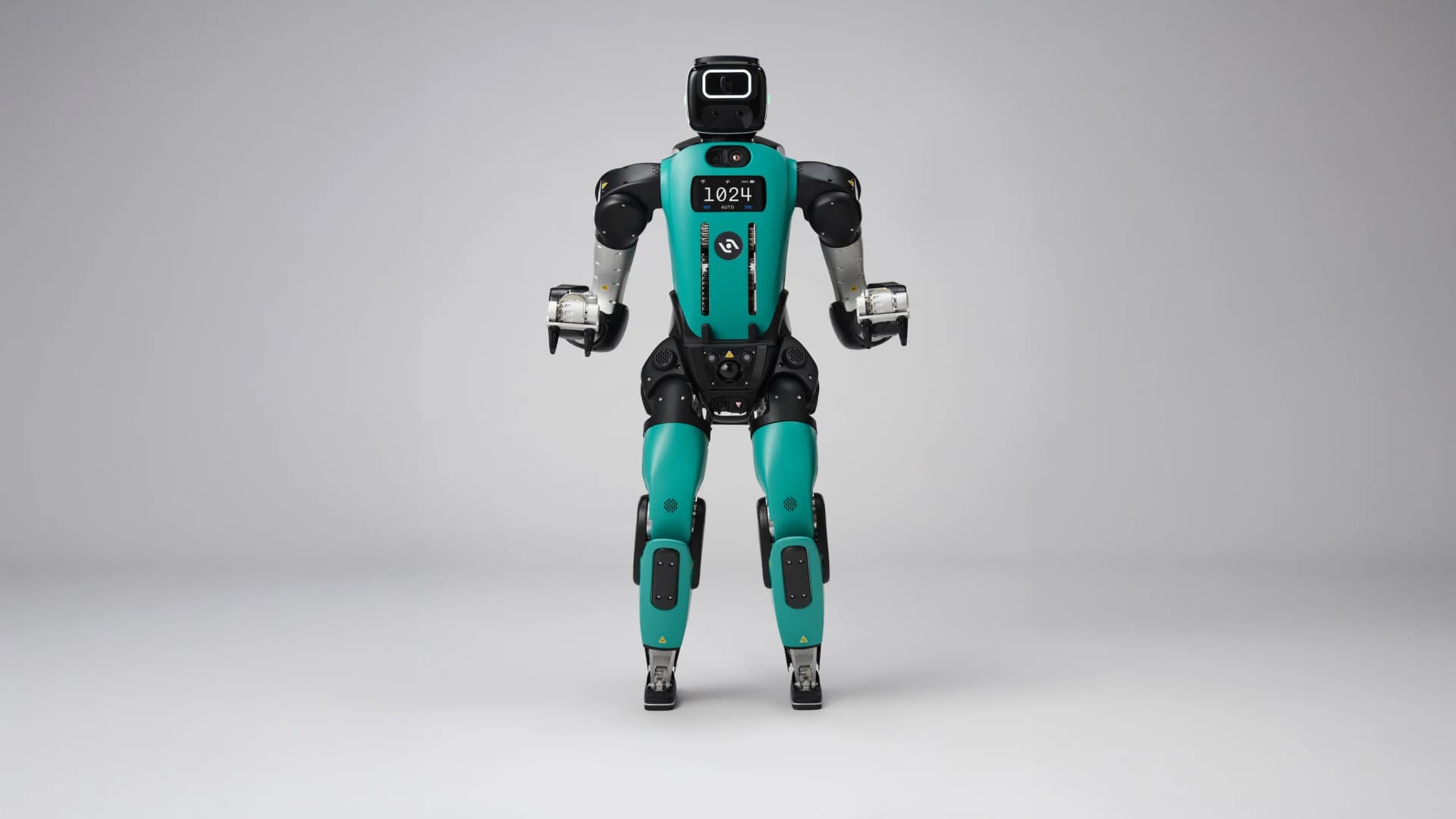
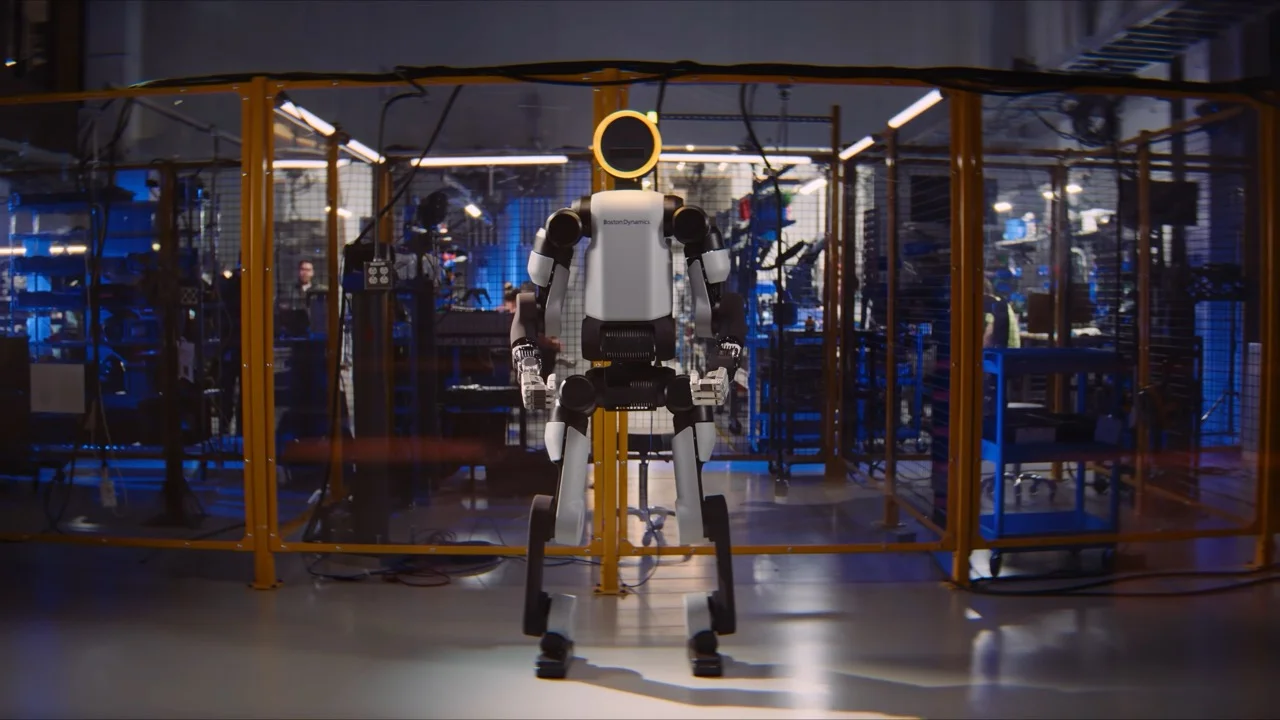
Stripped of the framing, the investor day was the most concrete public accounting Hyundai has given of what it intends to do with Boston Dynamics' humanoid.
The weekly humanoid robotics briefing
One email a week: the launches, funding and research that mattered, with context from Humanoids Daily.
Read recent issuesThe company will build a robotics manufacturing facility in the United States, with production starting in 2028 at 30,000 units of annual capacity. Muñoz described it as "the world's first large-scale commercial robotics manufacturing facility" — a superlative worth holding lightly, given that Tesla, Figure, and several Chinese manufacturers have made overlapping claims about their own lines.
More revealing than the capacity figure is what is already spoken for. "The first 25,000 commercial units are already confirmed," Muñoz said, "starting with the Metaplant, and we are utilizing additional industrial and logistics partners." That accounts for roughly 83 percent of the plant's first-year output, and it points inward. Hyundai is, for now, overwhelmingly its own customer.
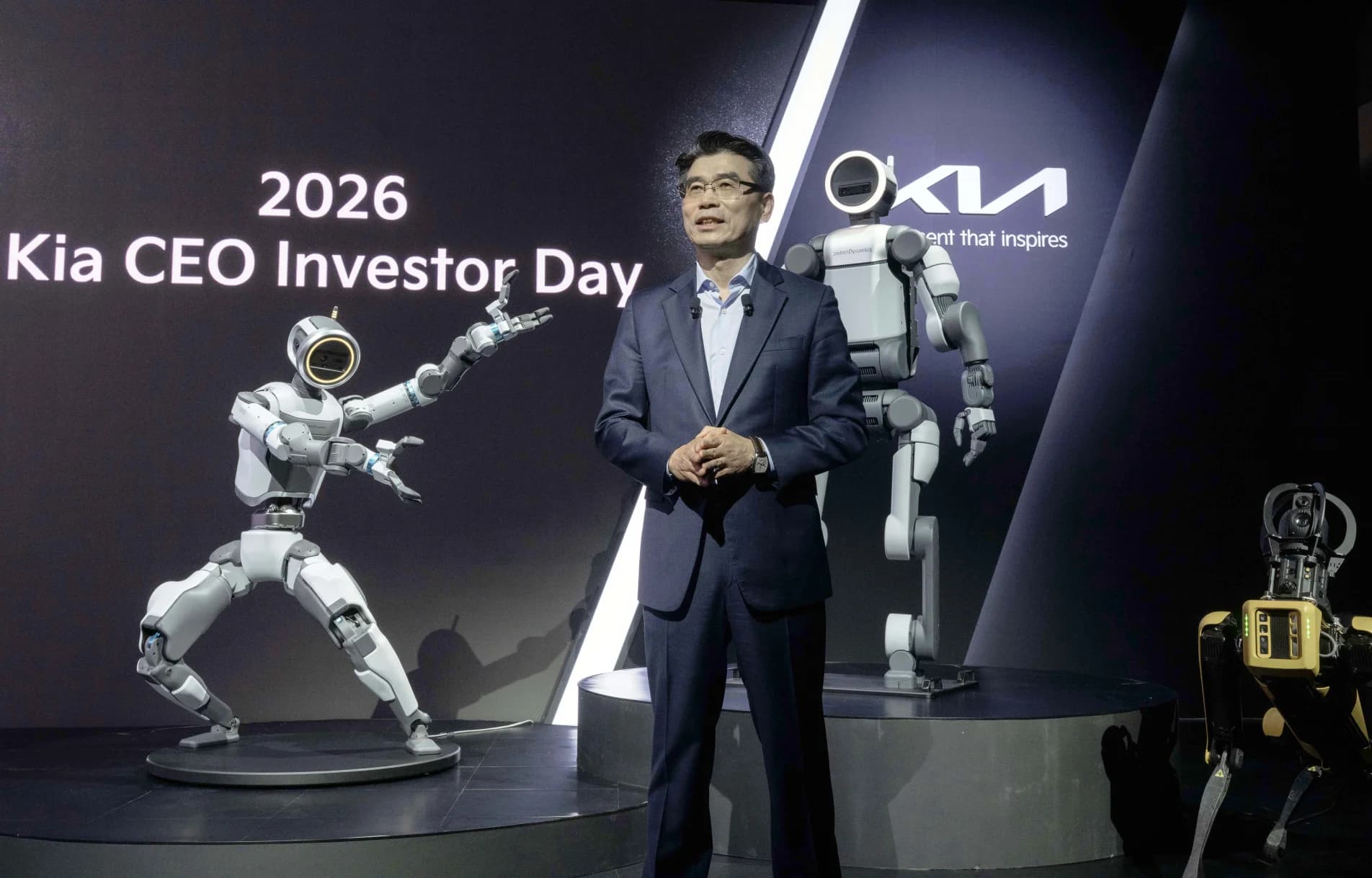
The deployment sequence tracks what Kia laid out at its own investor day in April: Atlas arrives at Hyundai Motor Group Metaplant America in Georgia at scale in 2028, with broader global deployment from 2030.
Feeding that is the Robot Metaplant Application Center, which opened in the United States in June and will expand "more than ten-fold" by the end of this year. Muñoz called RMAC "ground zero for commercialization of robotics," describing it as the place where robots are validated "against real factory conditions before they ever touch a production line." That positioning has been consistent since Atlas went production-ready at CES 2026, where RMAC was pitched as a data factory for training manufacturing skills.
Muñoz also sketched a commercial channel that does not yet exist. "We have existing potential distribution for selling robots through our dealer partners," he said. "And Hyundai Capital is exploring the feasibility to finance sales of robots." Development, production, distribution, sales, finance — "this is the power of the Group."
The hedging in that sentence deserves attention: potential distribution, exploring the feasibility. No dealer has been named, no robot has been priced, and no timeline was given. What Hyundai is actually claiming is that it owns more of the stack than its competitors do — a vertical-integration argument aimed at investors, not a product announcement. Boston Dynamics became a wholly owned subsidiary in June, when Hyundai bought out SoftBank's remaining stake for $325 million.
The labor context Hyundai did not mention
None of this was presented against the backdrop that gives it weight.
According to Reuters, which reported the settlement on August 24 and updated it the following day, Hyundai's Korean union staged its first full strike in ten years on Friday, August 21, after a series of partial stoppages beginning in July. Among its demands, alongside higher bonuses and a higher retirement age, were job protections against artificial intelligence and automation.
The tentative agreement includes a 4.1 percent base salary increase, a performance bonus equal to 400 percent of base pay, additional cash payouts, an extension of the retirement age beyond 60 pending a change in Korean law, and 500 new technical hires between next year and 2028.
On automation, the deal is considerably thinner. Reuters, which reviewed the agreement, reports that the two sides "agreed to discuss matters related to employment when it comes to rolling out new businesses." That is a commitment to a conversation. It is not a guarantee about headcount, and it is not the written veto over humanoid deployment the union had sought.
Hyundai's own statement kept the frame broad: "Both parties recognize that advanced technologies such as physical AI and robotics are essential part of the future of mobility."
What is still unresolved
Three things are worth watching.
The agreement is not final. It requires ratification by union members in a vote scheduled for Monday, August 31 — five days after Muñoz stood onstage and described a 30,000-unit robot factory to investors. The investor day landed squarely inside the ratification window, which makes the "not replacing humans" passage read less like boilerplate and more like a message with a specific audience.
The geography is doing work. Atlas deploys first in Georgia in 2028, with global rollout from 2030. Whatever the Korean Metal Workers' Union secures applies to Korean plants; the initial deployment is not one of them. Hyundai has not said how the Korean agreement, once ratified, would govern deployment at facilities outside Korea.
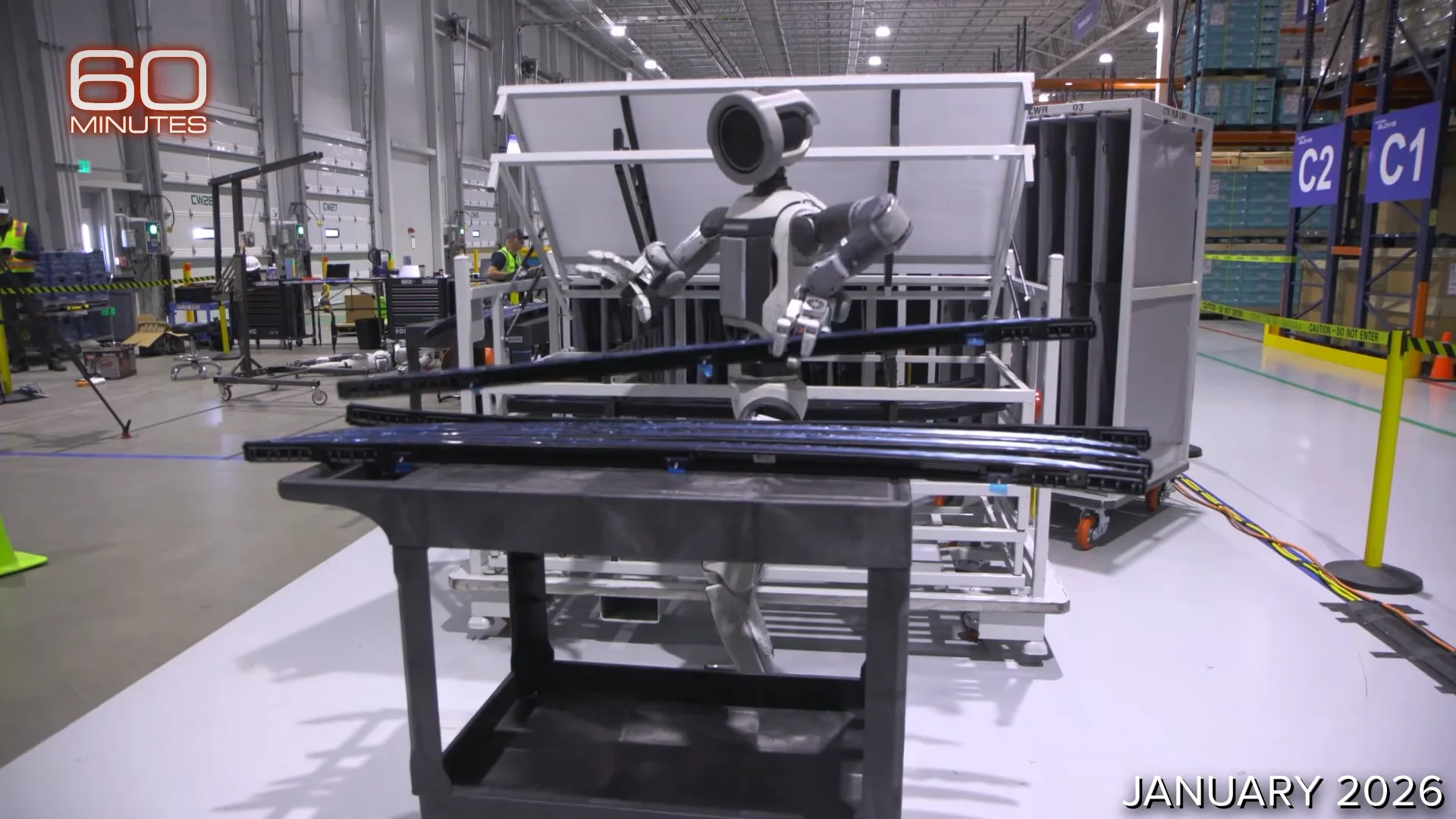
And the substitution question remains genuinely open. "Robot maintenance" is a real job category, but Hyundai has offered no estimate of how many such roles the 25,000 committed units would create, against how many existing tasks they would absorb. The company has previously described Atlas starting with parts sequencing and moving toward component assembly by 2030 — a trajectory that runs from logistics support toward work that people currently do. Muñoz's promise is directionally plausible and, at present, unquantified.
Share this article
Read next
- Published on
- Reading time
- 4 min read
The Blueprint for a Bipedal Workforce: Kia Details Atlas Deployment Roadmap
- Published on
- Reading time
- 4 min read
Hyundai to Take Full Ownership of Boston Dynamics in $325 Million SoftBank Buyout
- Published on
- Reading time
- 4 min read
The Production Pivot: Leadership Exodus and Internal Pressure at Boston Dynamics
- Published on
- Reading time
- 5 min read
Form as Function: Boston Dynamics Details the Industrial Design Logic Behind the Production Atlas
- Published on
- Reading time
- 5 min read
From Viral Clips to the Factory Floor: 60 Minutes Goes Inside Boston Dynamics’ Industrial Shift
- Published on
- Reading time
- 3 min read
End of an Era: Boston Dynamics CEO Robert Playter to Retire
The weekly humanoid robotics briefing
One email a week: the launches, funding and research that mattered, with context from Humanoids Daily.
Read recent issues