- Published on
CMU Introduces Pixel, a Sub-$15,000 Wheeled Robot Designed to Learn From Human Demonstrations
One tap, and our reporting appears more often in your Google Top Stories. It makes a real difference to a small newsroom.

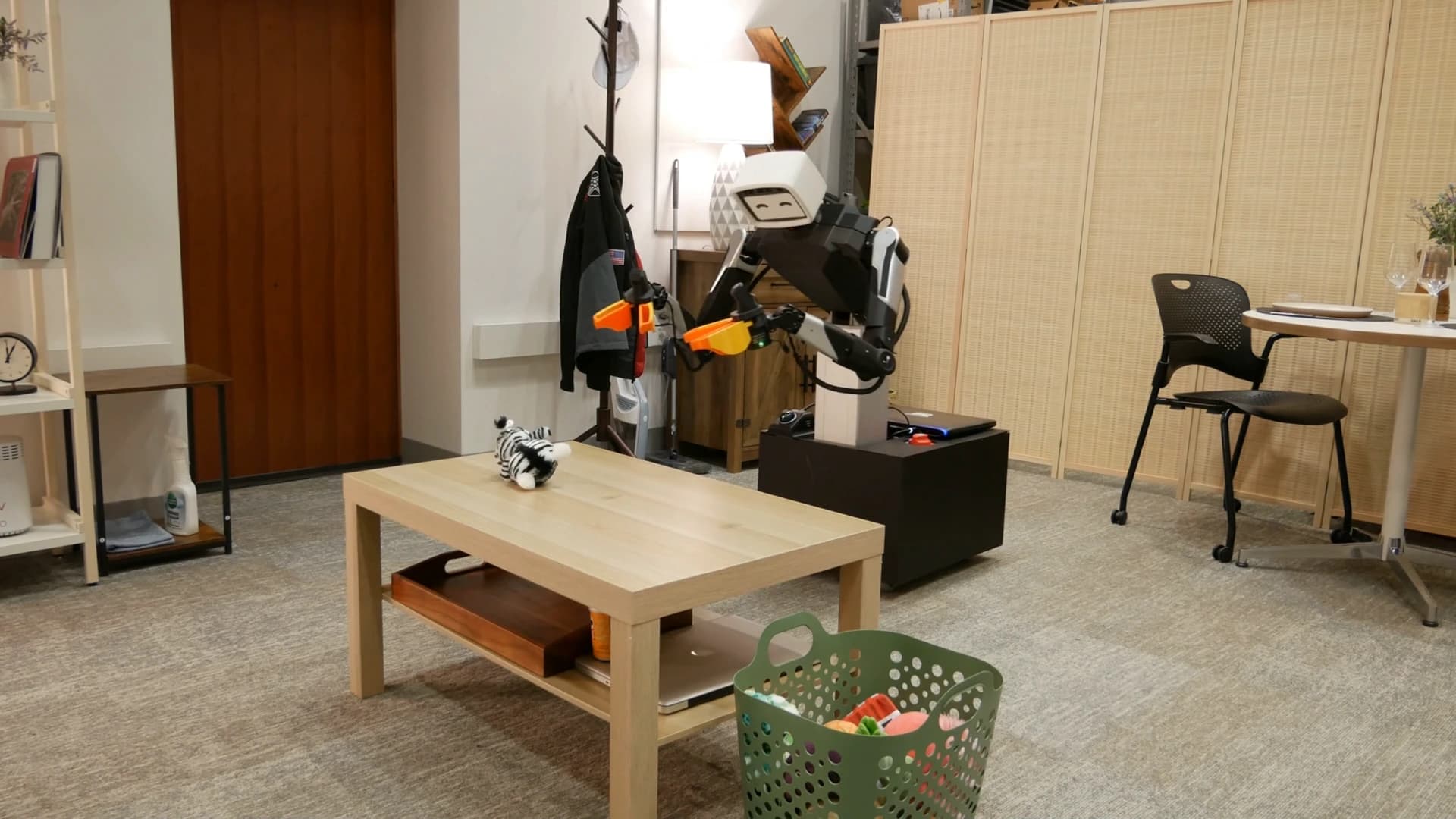
Carnegie Mellon University researchers have introduced Pixel, a wheeled, two-armed robot they say costs under $15,000 to build, alongside a learning system designed to turn human demonstrations into coordinated robot movement. The project combines affordable hardware with a practical research question: how much easier does teaching a robot become when its body, controls and data-collection tools are designed together?
- Pixel is a CMU research platform with a reported build cost below $15,000, rather than an announced consumer robot at that price.
- Its demonstrations include autonomous tidying, vacuuming and retrieving snacks, with teleoperated examples labeled separately.
- The companion Pixel-UMI paper reports 87% average task progress across five tasks. That metric gives credit for intermediate steps, rather than counting only completed tasks.
- The project website says an open-source release is coming soon.
The work is led by Tony Tao and Jason Jingzhou Liu, with Ruslan Salakhutdinov and Deepak Pathak, and described in two papers released on November 2.
Pixel combines a 17-degree-of-freedom upper body with an omnidirectional wheeled base, a vertical lift and an articulated torso. Its compliant grippers are paired with human-worn demonstration tools, helping align what a person records with what the robot can reproduce. The system paper also describes multiple teleoperation interfaces and a shared whole-body controller.
On the project website, autonomous examples include toy cleanup, pillow tidying, vacuum cleaning and snack retrieval. Other clips, including dishwasher loading and operating a record player, are explicitly labeled as teleoperated. A higher-level vision-language model can break instructions into subtasks, while a lower-level learned policy generates movement.
Follow humanoid robotics without following every announcement.
Get the week’s most important launches, funding and research—and why they matter—in one email from Humanoids Daily.
Once a week. Unsubscribe anytime.
Read recent issuesThe demonstrations make the design choice tangible: a household task can require the robot to look around, reposition its base, change its height and use both arms in sequence. Pixel brings those movements into one teaching and execution system.
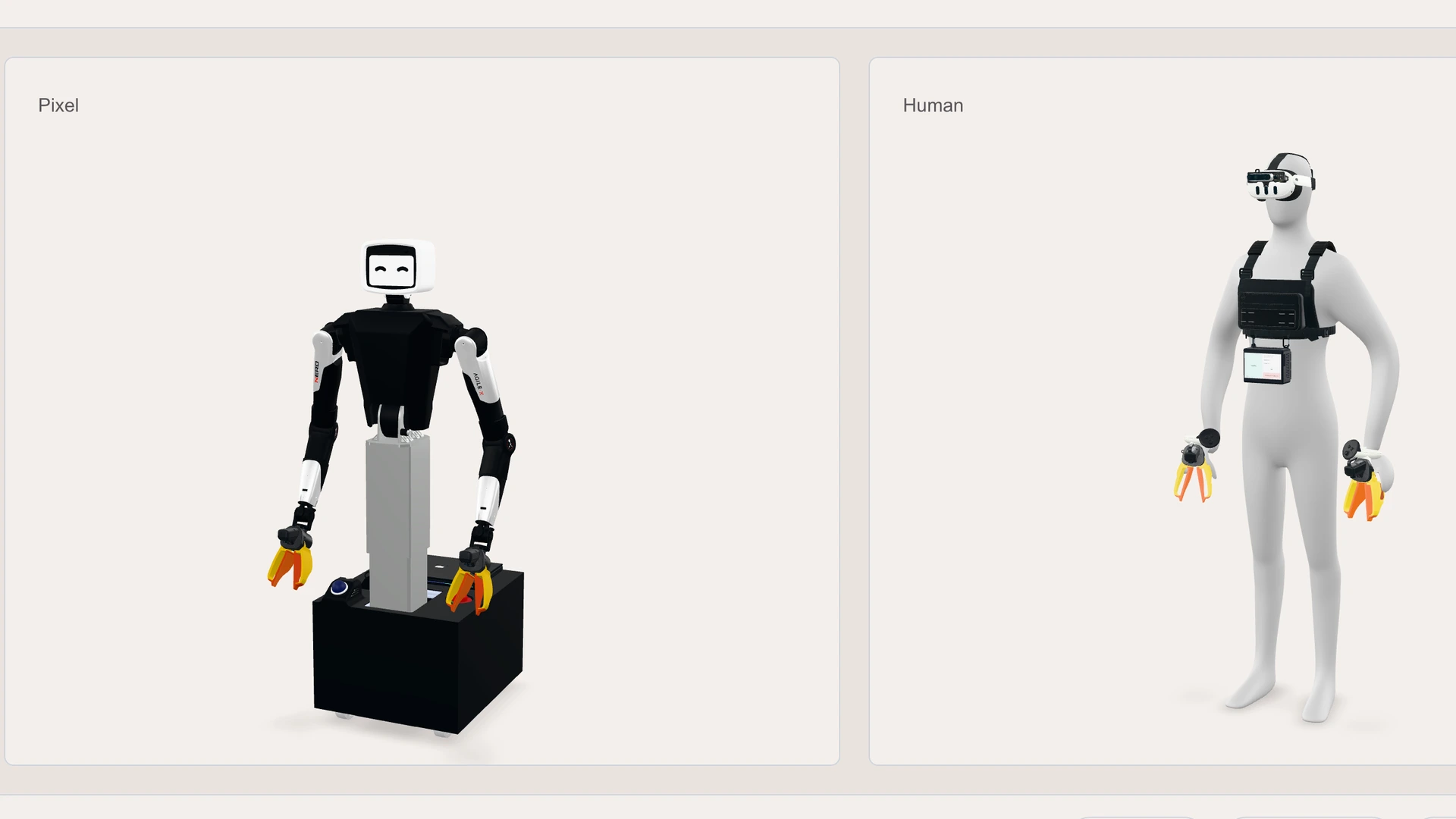
The companion Pixel-UMI paper tackles a difficulty in learning from human demonstrations: matching hand movements does not tell a robot where to put the rest of its body. Reaching into a deep box, for example, requires keeping an elbow clear of the rim.
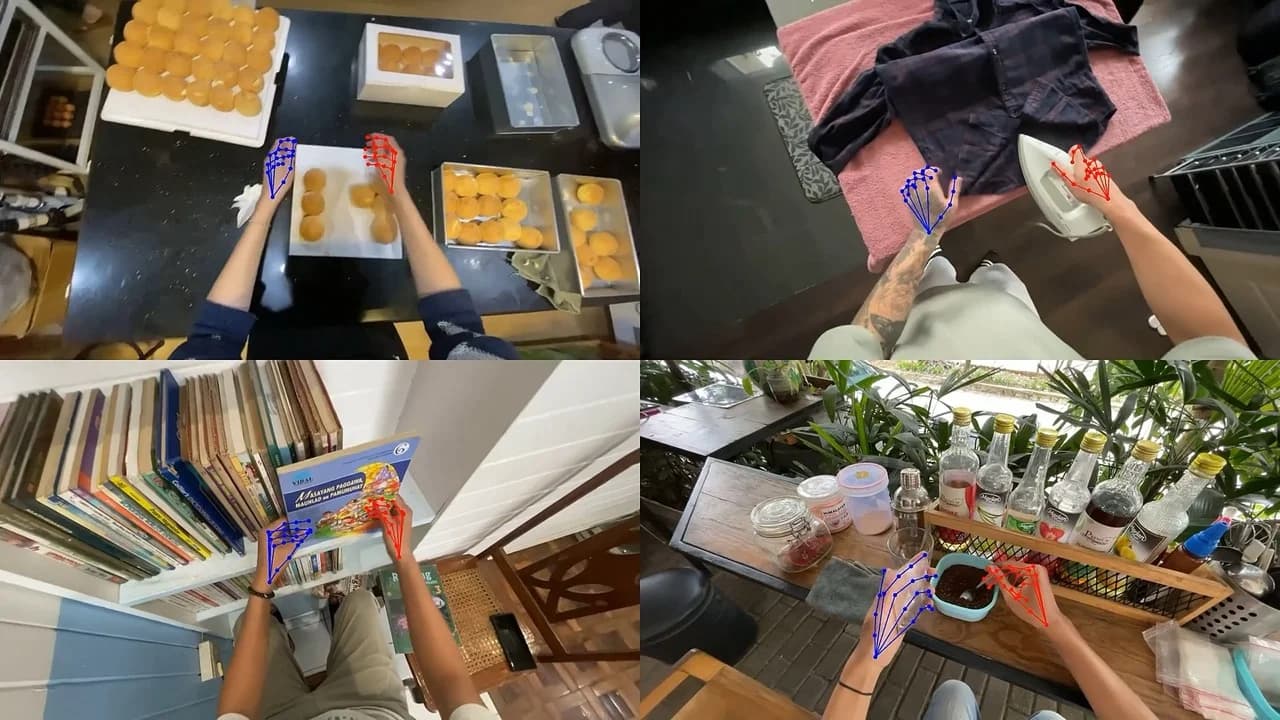
Its approach reconstructs the surrounding scene from demonstration recordings and uses that geometry to translate human movements into robot postures that avoid collisions. It also adjusts training for differences between human and robot camera viewpoints. People can record demonstrations with sensorized grippers and a head-mounted camera without taking the robot to every location.
The researchers report 87% average task progress across five tasks, covering challenges such as handling deformable objects and working in confined spaces. They also use human corrections during robot execution to improve contact-heavy tasks, so the research includes learning from subsequent robot interaction as well as initial human recordings.
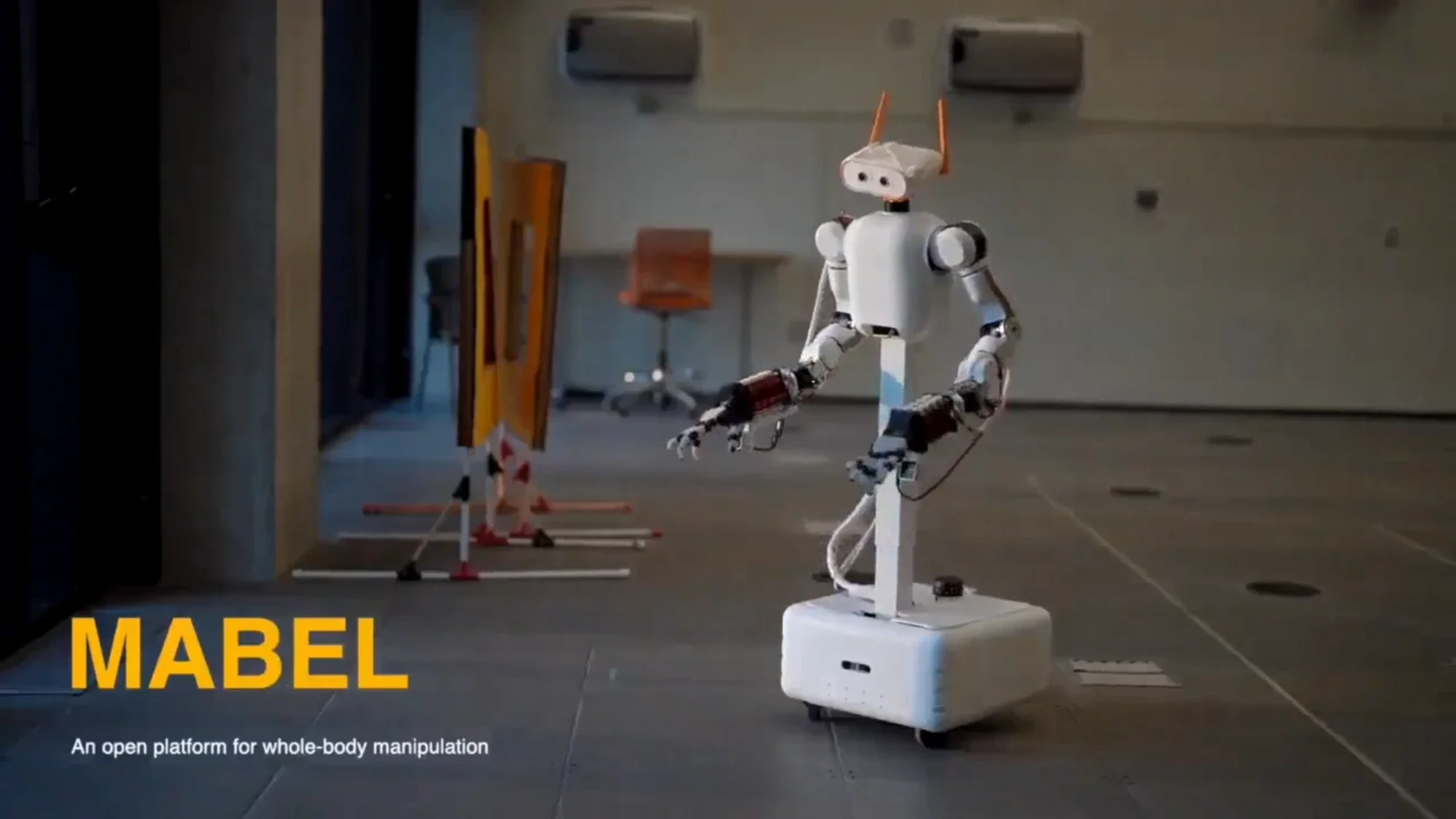
Pixel joins a growing group of accessible mobile manipulation platforms. We recently covered NYU's MABEL, whose lowest-cost configuration has an $8,056 parts list and dexterous hands. On the commercial side, Feather launched a wheeled developer robot at a promotional $29,990. Research build costs and assembled commercial products are different purchasing propositions, but all three broaden access to two-armed robots that can move around a workspace.
The authors say Pixel's high-level planner currently relies on a predefined skill library, limiting which tasks it can carry out. The website's promised open-source release will be the next step toward letting other labs build on the system.
Share this article
Follow humanoid robotics without following every announcement.
Get the week’s most important launches, funding and research—and why they matter—in one email from Humanoids Daily.
Once a week. Unsubscribe anytime.
Read recent issuesRead next
- Published on
- Reading time
- 6 min read
Apple's HALO Teaches a Unitree G1 to Navigate Unseen Rooms With Simulation-Generated Data
- Published on
- Reading time
- 8 min read
NYU's MABEL Puts a 56-DOF Mobile Bimanual Robot on an $8,056 Open-Source Parts List
- Published on
- Reading time
- 3 min read
HALO Teaches Humanoids to Coordinate With Human Partners During Shared Carrying Tasks
- Published on
- Reading time
- 4 min read
Don’t Forget the Salt: Physical Intelligence Equips Robots with 15-Minute "Multi-Scale" Memory
- Published on
- Reading time
- 4 min read
The Human Scale: NVIDIA’s EgoScale Unlocks High-Dexterity Robotics via 20,000 Hours of Human Video
- Published on
- Reading time
- 3 min read
NVIDIA "Supersizes" Humanoid Control: SONIC Open-Sources Whole-Body Tracking at Scale