- Published on
NEURA Robotics Partners With E.ON and enviaM on Grid Robotics, With Trials Expected in 2027
One tap, and our reporting appears more often in your Google Top Stories. It makes a real difference to a small newsroom.

NEURA Robotics, E.ON and the enviaM Group are partnering to develop robots for electricity-grid operations, targeting inspections, asset monitoring and support for workers carrying out demanding or potentially hazardous tasks. Initial practical experience is expected during 2027, with enviaM’s grid subsidiary MITNETZ STROM serving as the pilot partner.
The partnership announced on November 5 will start with identifying suitable workflows and training robotic skills under controlled conditions. Those skills will then be tested in real-world grid operations.
- NEURA, E.ON and enviaM will develop robotic applications for inspections, critical-asset monitoring and support for grid workers.
- Training will take place at TUM RoboGym in Munich, combining human demonstrations, real robot data and simulation.
- MITNETZ STROM is the pilot partner, with initial practical experience expected in 2027; the announcement does not specify fleet size or commercial rollout targets.
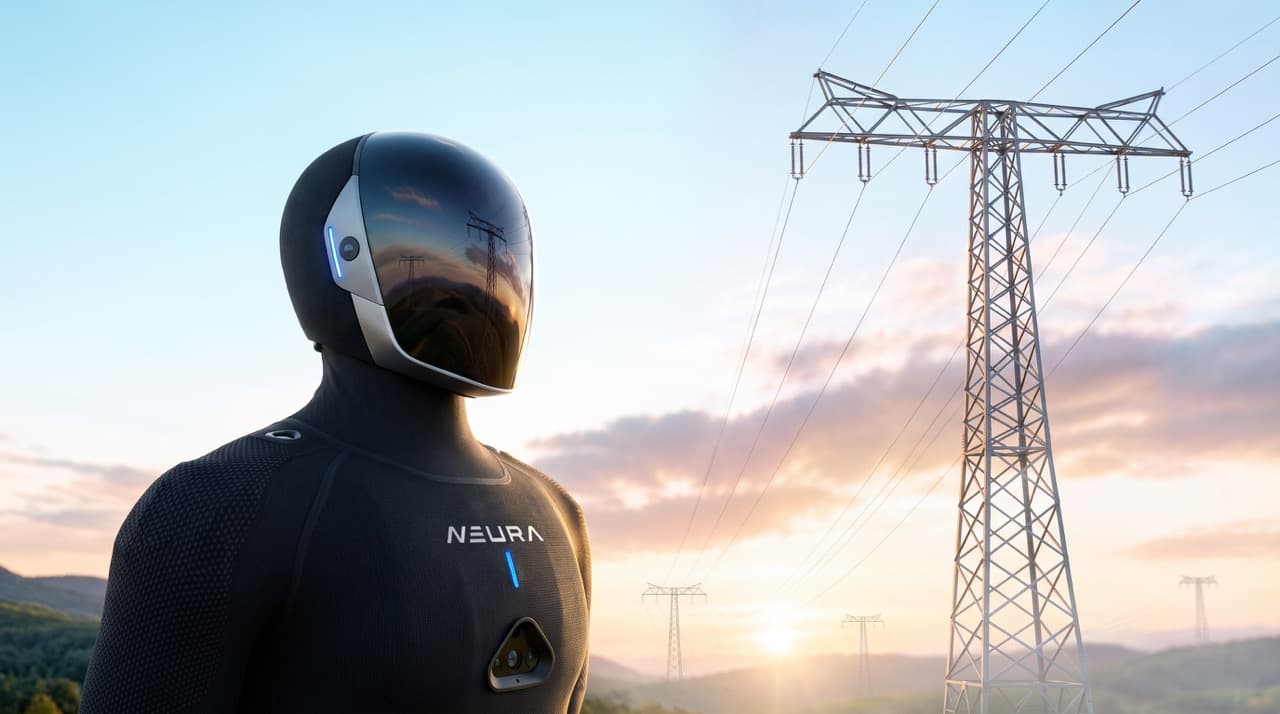
Training for substations and other grid facilities
The initial focus includes inspecting equipment, monitoring critical assets such as substations, and supporting site security. The partners will also assess tasks in potentially hazardous environments as possible applications.
Grid specialists will help define the use cases and demonstrate their workflows. The aim is to capture practical knowledge that experienced workers use when assessing equipment and conditions on site.
Follow humanoid robotics without following every announcement.
Get the week’s most important launches, funding and research—and why they matter—in one email from Humanoids Daily.
Once a week. Unsubscribe anytime.
Read recent issuesIn a video accompanying the announcement, NEURA’s VP Technology & Innovation Arne Nordmann described the division of responsibilities: NEURA supplies the humanoid and training infrastructure, while “enviaM and E.ON have the domain knowledge.” He framed autonomous work in grid infrastructure as a capability the partners intend to enable over the coming years.
“Humanoid robots can provide targeted support, particularly for physically demanding tasks or those with specific safety requirements,” enviaM CEO Stephan Lowis said in the announcement. “They can take on routine tasks and work in potentially hazardous areas, allowing skilled workers to focus on the tasks that require their expertise.”
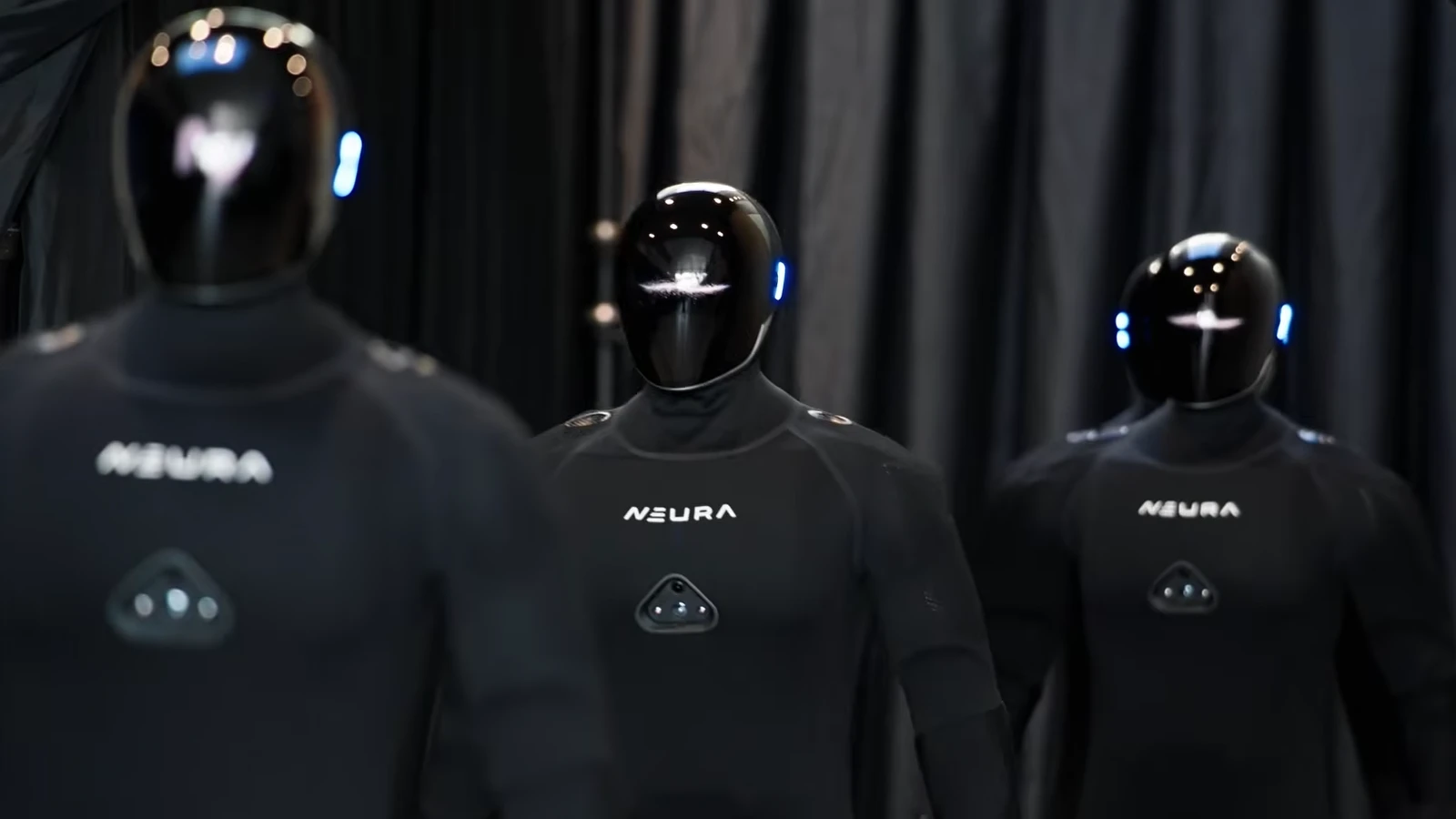
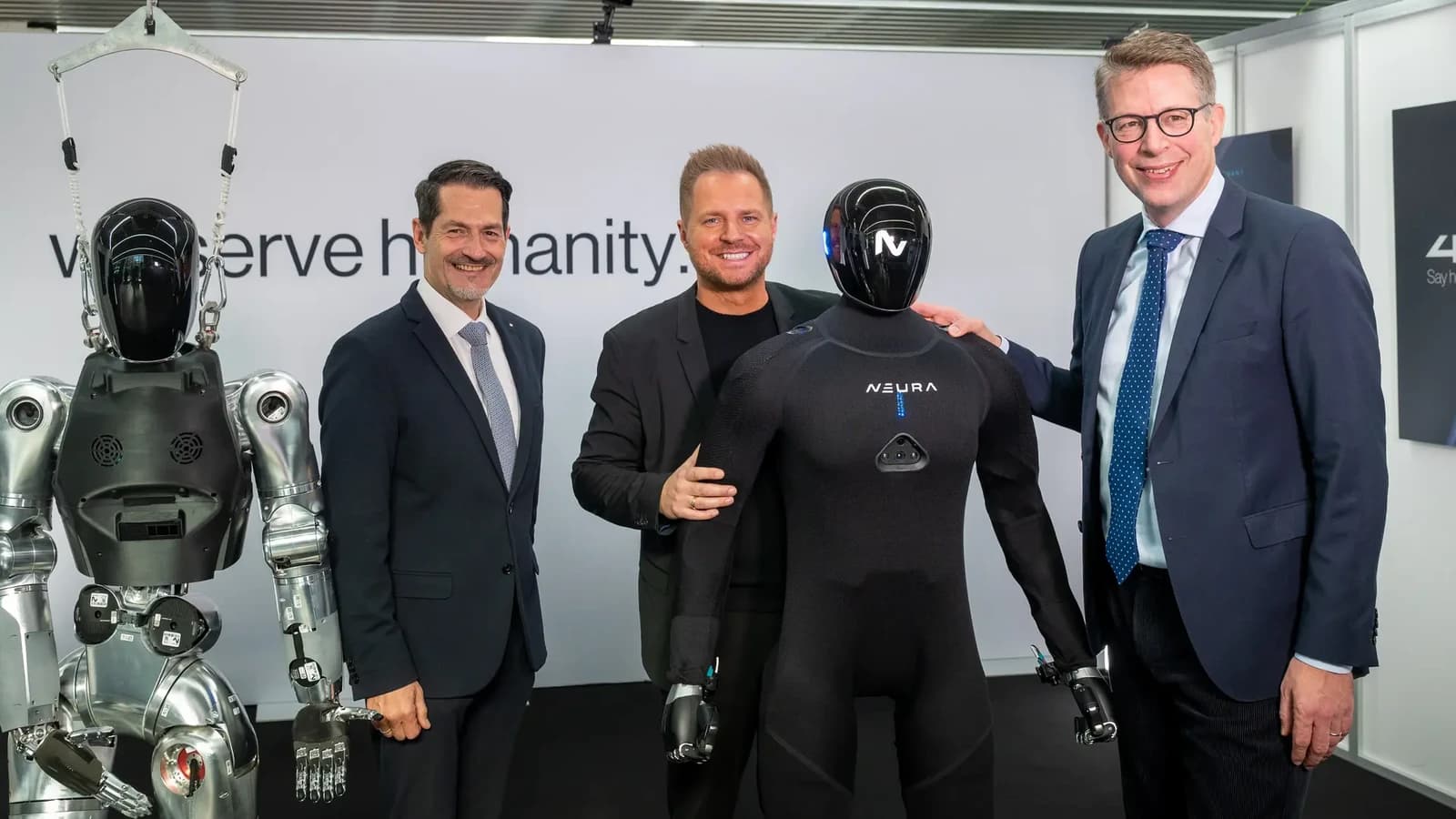
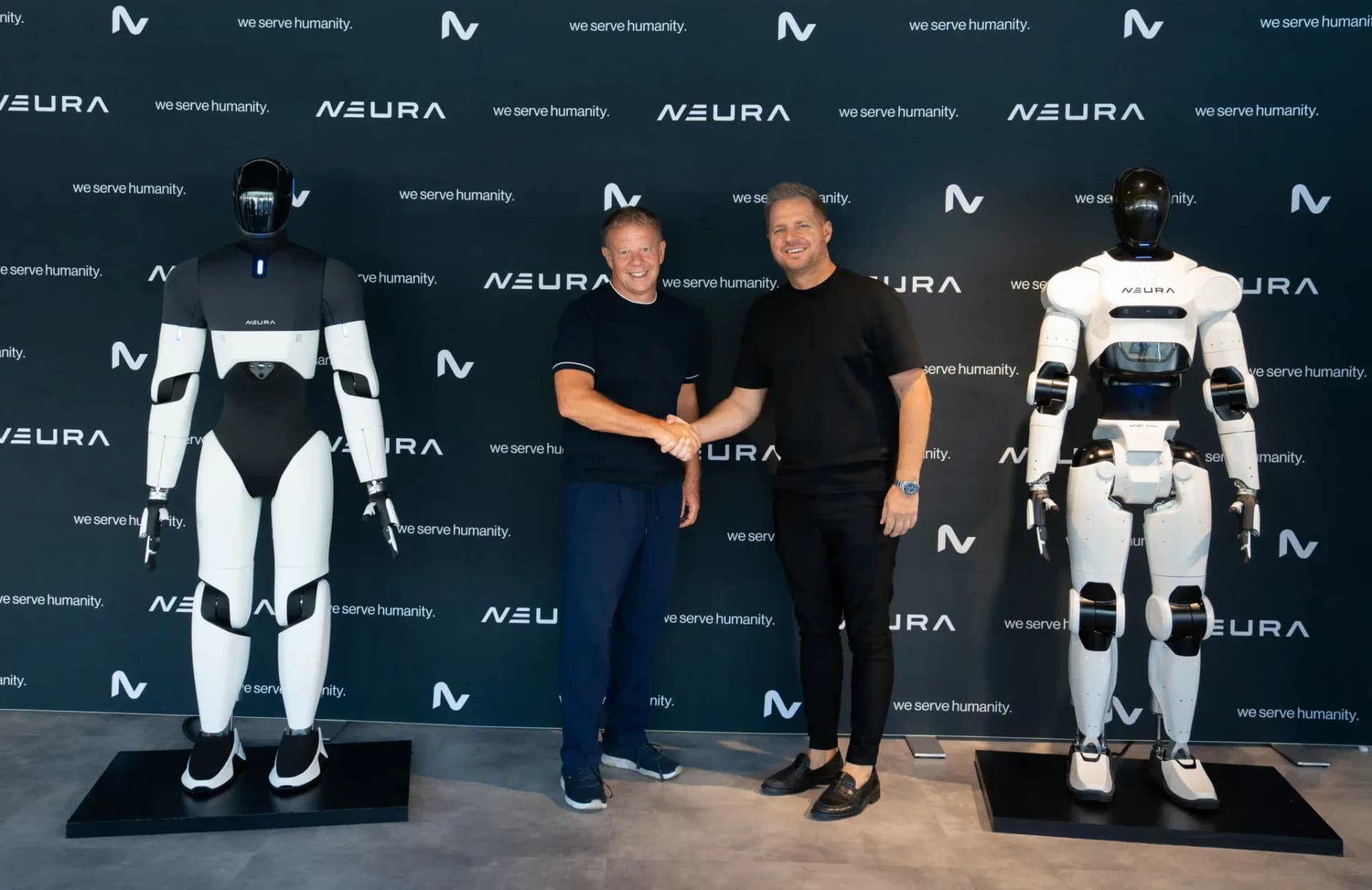
The partners point to the design of existing facilities as a reason to explore humanoids. Stairs, doors, control cabinets and tools are built around human access. Their ambition is for robots such as NEURA’s 4NE1 to navigate those environments without requiring facilities to be modified.
From RoboGym to field trials
E.ON is joining TUM RoboGym powered by NEURA, which opened at Munich Airport’s LabCampus in October. The more than 2,300-square-metre centre brings together robot training, research and industrial workflows.
The training process will combine demonstrations captured through sensor-equipped suits, motion capture and teleoperation with data recorded as robots attempt tasks. Simulation will add variations and scenarios, followed by validation on physical robots.
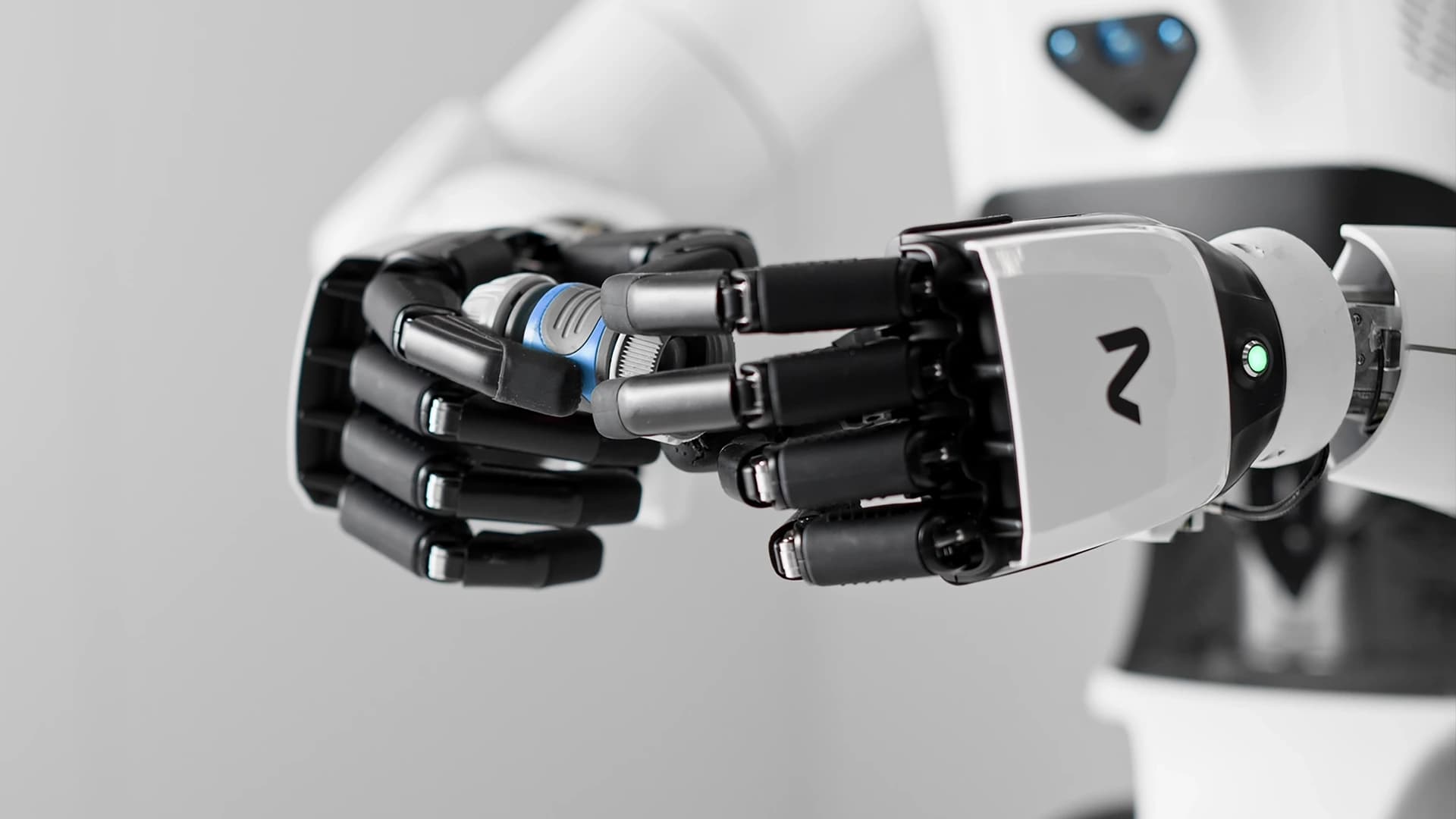
NEURA says its Neuron AI model combines information from 3D vision, touch, audio, robot state and language, alongside memory. For inspections, the intended benefit is a robot that can use sounds and physical feedback as well as images to assess its surroundings.
Neuraverse will connect training with deployment, allowing skills to be managed and refined. The longer-term goal is to turn a workflow developed for one application into a reusable skill for compatible robots at other sites. According to the announcement, E.ON and enviaM retain control over their data and trained skills, including decisions about sharing them.
Lioudmila Simon, Managing Director of E.ON Innovation, outlined the longer-term ambition in the video: “Over time, humanoid robotics will become an integral part of the automated and digital operating platform, connected with grid assets, AI and predictive maintenance.” The video shows robot demonstrations inside NEURA’s facilities, rather than work at a substation or another grid site.
For now, the next step is selecting concrete use cases. The partners have not disclosed robot numbers, deployment sites or performance thresholds for the pilots. The 2027 tests should provide an initial indication of which tasks can move from controlled training into day-to-day grid operations.
Share this article
Follow humanoid robotics without following every announcement.
Get the week’s most important launches, funding and research—and why they matter—in one email from Humanoids Daily.
Once a week. Unsubscribe anytime.
Read recent issuesRead next
- Published on
- Reading time
- 3 min read
Neura CEO David Reger Explains Why He Rejects Military Robotics
- Published on
- Reading time
- 3 min read
NEURA Unveils Lighter 4NE1 Gen 4 as TUM RoboGym Opens in Munich
- Published on
- Reading time
- 3 min read
NEURA Gives Its Robot AI Touch, Sound and Memory Ahead of 11-Minute Laundry Demo
- Published on
- Reading time
- 3 min read
NEURA Launches HealthTech Unit, With MiPA on Its Healthcare Roadmap
- Published on
- Reading time
- 25 min read
The Humanoids of Europe: Built by Their Customers
- Published on
- Reading time
- 5 min read
NEURA Robotics and SECO Team Up to Scale European Physical AI Hardware