- Published on
LG Targets Home Humanoids Around 2030, With Robots and Appliances Designed to Work Together
One tap, and our reporting appears more often in your Google Top Stories. It makes a real difference to a small newsroom.

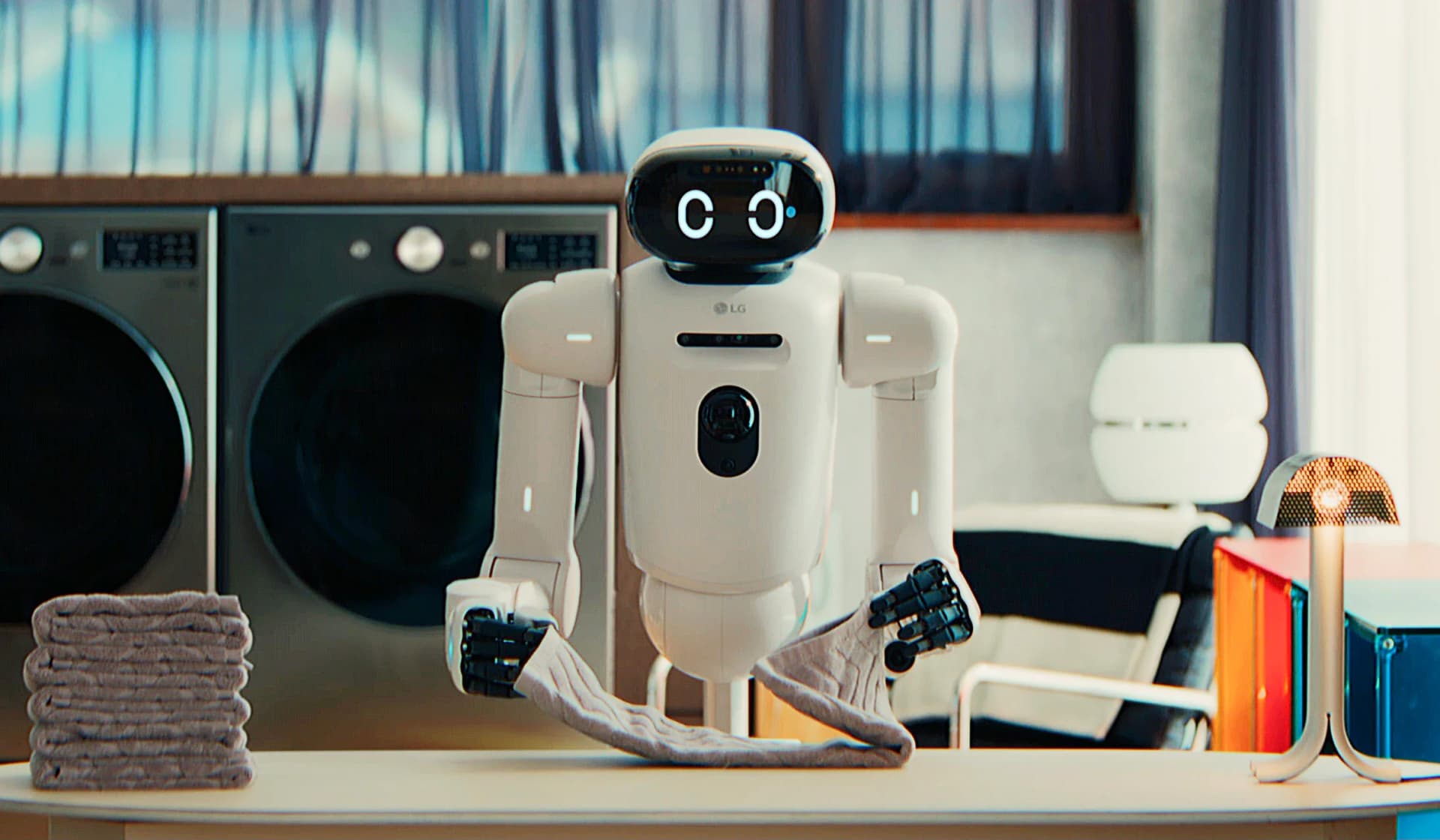
LG Electronics is targeting an expansion into home humanoids around 2030, with a strategy that includes designing household appliances and robots to work together. The company outlined the approach during its October 28 third-quarter earnings call, according to Chosun Biz’s reporting.
- LG plans to build its robotics business in research, public-sector and industrial markets before expanding into home humanoids around 2030.
- Affordability is central to its approach, including developing appliances that robots can more easily use.
- LG confirms its robotics data factory has begun partial operations, while actuator production preparations and efforts to secure customers continue.
Making the home easier for robots
Lee Jae-mo, LG’s executive responsible for robotics strategy, said the company expects the humanoid market to develop more fully around 2030. Its initial focus will be on academic, public-sector and manufacturing customers, building component capabilities and deployment experience before expanding into households.
According to Chosun, Lee emphasized reaching prices at which households would actually consider buying a robot. He described preparing robots designed for appliances and appliances designed for robots, drawing on LG’s existing home-appliance expertise.
The implication is that LG could simplify household automation by changing the equipment a robot interacts with, as well as improving the robot itself. The call did not establish a consumer price or a firm home-humanoid launch date.
Follow humanoid robotics without following every announcement.
Get the week’s most important launches, funding and research—and why they matter—in one email from Humanoids Daily.
Once a week. Unsubscribe anytime.
Read recent issuesData and components come first
There are more immediate developments behind that longer-term ambition. LG’s official earnings announcement confirms that its robotics data factory has begun partial operations. The company also says preparations for actuator mass-production infrastructure are proceeding, alongside efforts to win orders from prospective global customers.
Financial Post’s account of the call adds that LG built an actuator pilot line in Changwon during the first half of the year and is carrying out production preparations, including equipment automation, in the second half. Full operation of the Seoul data factory is planned for the fourth quarter.
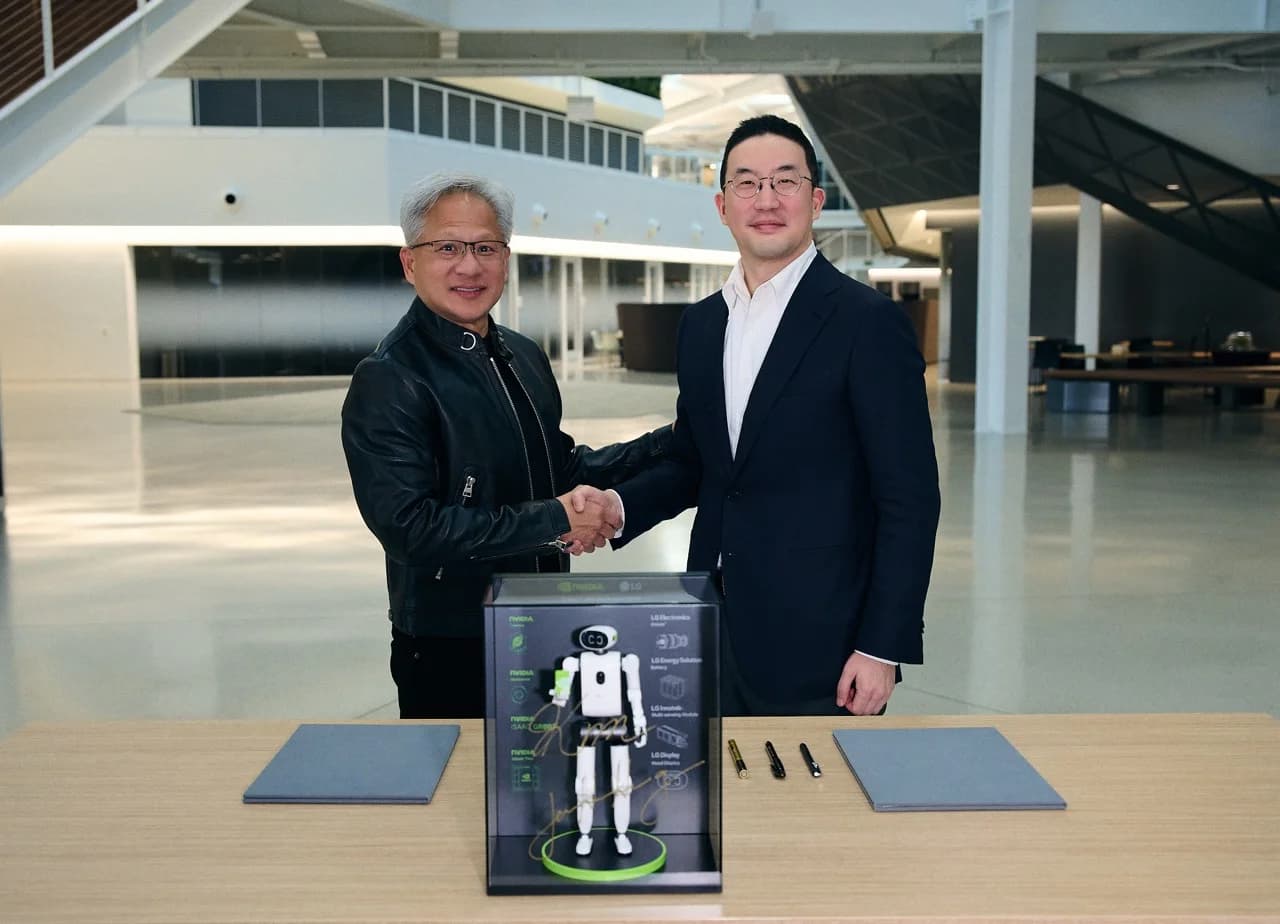
The data effort extends beyond physical demonstrations. Popcorn News reports that LG is building a system combining real and simulated robot-training data, aiming to accumulate roughly 500,000 hours. Its collaboration with NVIDIA covers simulation, world models and robot-development platforms. That figure describes a data-building ambition, rather than confirmation of an already completed dataset.
The same report describes a staged business model: research hardware and actuators first, followed by industry-specific hardware-and-software packages and data-based services. Paid testing services for outside customers are a longer-term possibility; improving LG’s own robots remains the immediate priority.
A strategy, not a launch announcement
As we reported in August, LG is targeting an early-2027 unveiling of a next-generation bipedal humanoid built on NVIDIA Isaac GR00T and Jetson Thor. That planned unveiling and the home-market ambition discussed on this call are different milestones: showing a new platform does not establish when households will be able to buy it.
For humanoid developers, the interesting part is LG’s ability to work on both the robot and its surroundings. An appliance manufacturer can potentially reduce the difficulty of a household task through product design, rather than relying entirely on increasingly capable manipulation software.
Whether that translates into an affordable, useful home robot remains unproven. This update sets out the sequence LG intends to follow: build data, components and industrial experience, then pursue the household market as the economics improve.
Share this article
Follow humanoid robotics without following every announcement.
Get the week’s most important launches, funding and research—and why they matter—in one email from Humanoids Daily.
Once a week. Unsubscribe anytime.
Read recent issuesRead next
- Published on
- Reading time
- 5 min read
LG to Unveil Next-Gen Humanoid Built on NVIDIA Isaac GR00T in Early 2027
- Published on
- Reading time
- 4 min read
The "One LG" Play: How the Korean Giant is Engineering a Humanoid Supply Chain
- Published on
- Reading time
- 3 min read
Boston Dynamics Taps Korean Suppliers for Atlas, With 10,000-Robot Preparations Reported
- Published on
- Reading time
- 2 min read
From Moonwalking to Heavy Lifting: KAIST Humanoid v0.9 Moves 35 kg Objects
- Published on
- Reading time
- 4 min read
Boston Dynamics Says Atlas Takes a Day to Build—and Wants to Cut That to an Hour
- Published on
- Reading time
- 3 min read
South Korea Approves 20-Robot Robros Trial Across Industrial Sites