- Published on
Reward AI Shows OM-1 Handling Deliveries, Stairs and Household Chores
One tap, and our reporting appears more often in your Google Top Stories. It makes a real difference to a small newsroom.

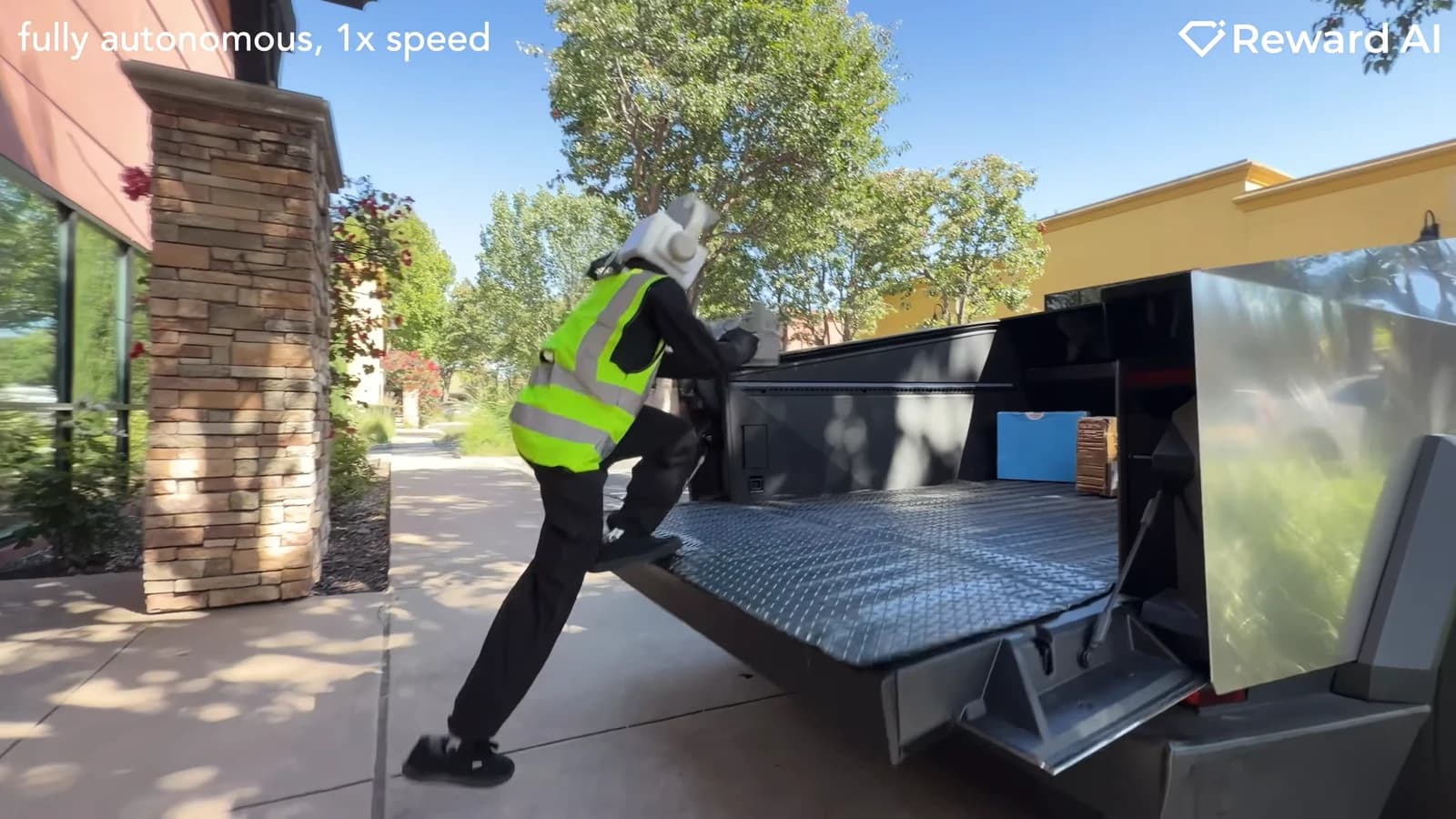
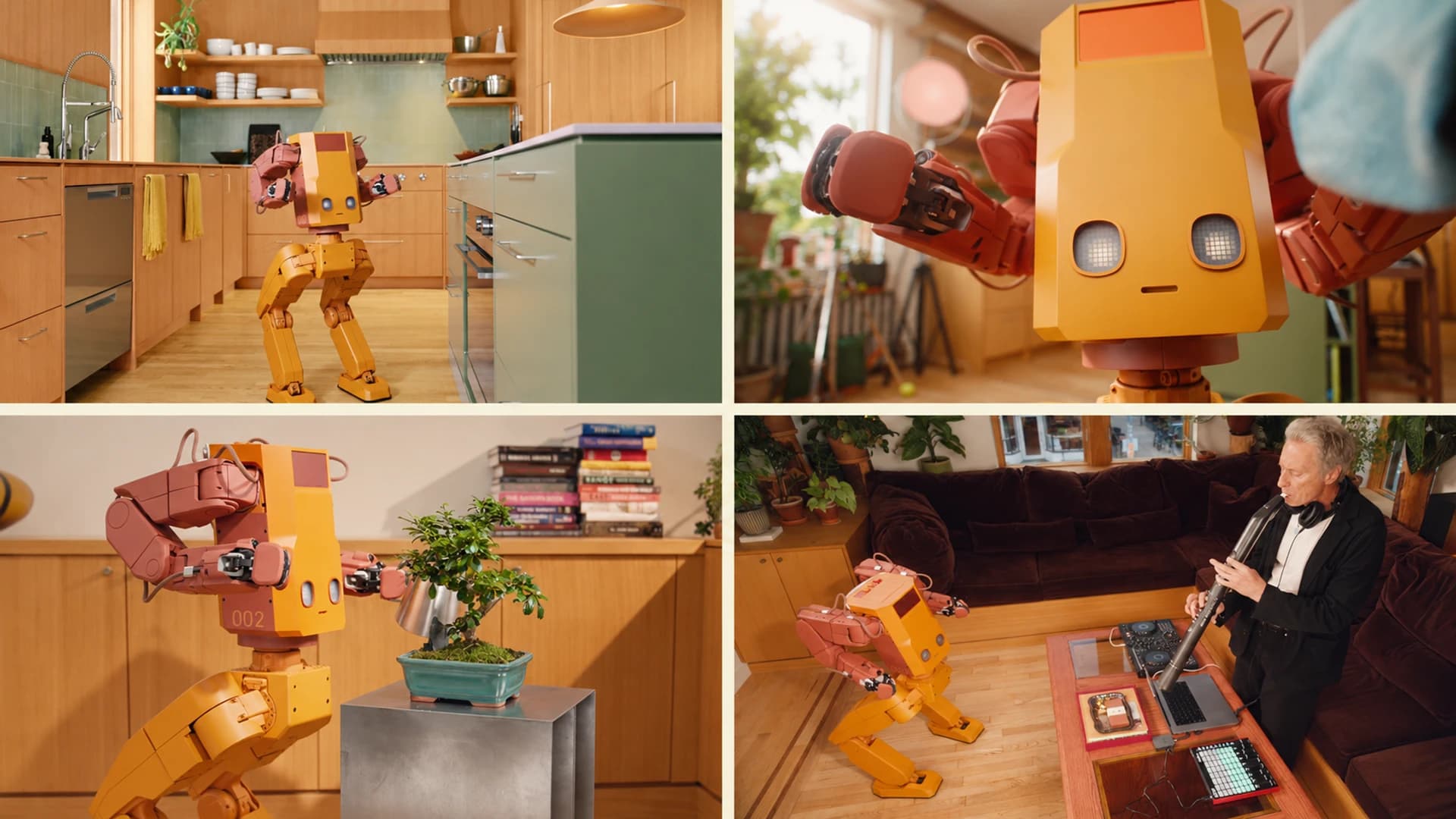
Reward AI has released a new OM-1 demonstration featuring last-mile delivery, package handling on stairs and household chores. Published on October 27, the video brings together tasks that put manipulation alongside the practical challenges of moving through everyday spaces.
It follows the company’s September emergence from stealth, when Reward AI introduced its approach to transferring human manipulation skills across different robot bodies.
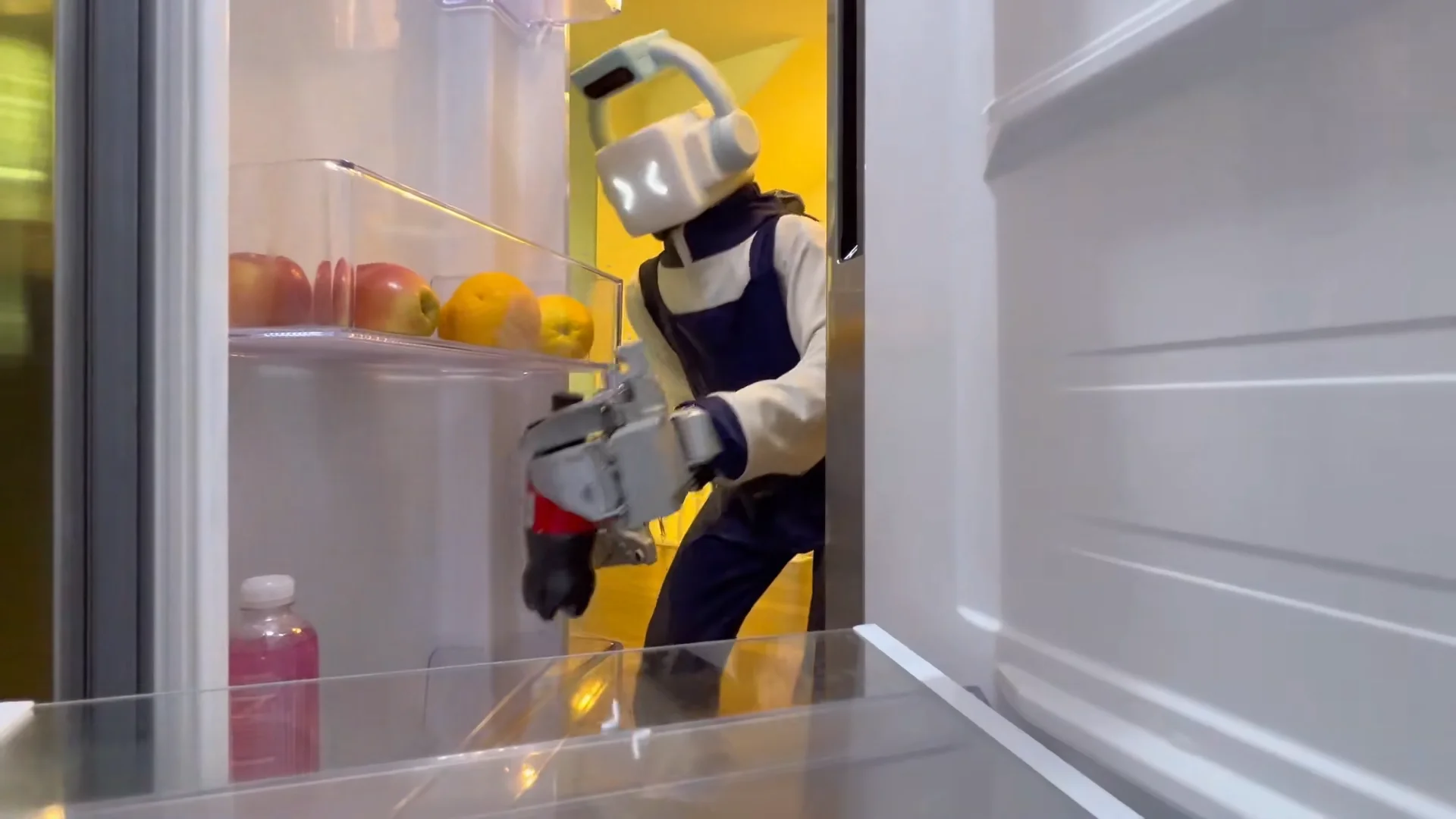
- The new video features delivery, package and sock picking on stairs, mopping and refrigerator opening.
- Reward AI presents its demonstrations as fully autonomous and running at normal speed.
- OM-1’s central claim remains learning manipulation from human demonstrations, with a separate control layer trained in simulation to execute actions on robots.
Delivery, stairs and household work
The YouTube video opens with a last-mile delivery segment, followed by package picking on stairs at 00:28. Mopping begins at 00:43, sock picking on stairs at 00:51, and refrigerator opening at 01:06, according to the company’s chapter list.
That mix makes the demonstration interesting for humanoids. A package, a loose sock and a refrigerator door present different manipulation problems: supporting a load, grasping flexible material and applying force against resistance. Stairs add constraints on where a robot can position itself to reach an object.
Follow humanoid robotics without following every announcement.
Get the week’s most important launches, funding and research—and why they matter—in one email from Humanoids Daily.
Once a week. Unsubscribe anytime.
Read recent issuesReward AI’s website labels its footage fully autonomous and at 1x speed. Those are the company’s descriptions; the clips should not be read as an independent evaluation of reliability.
Human demonstrations, robot execution
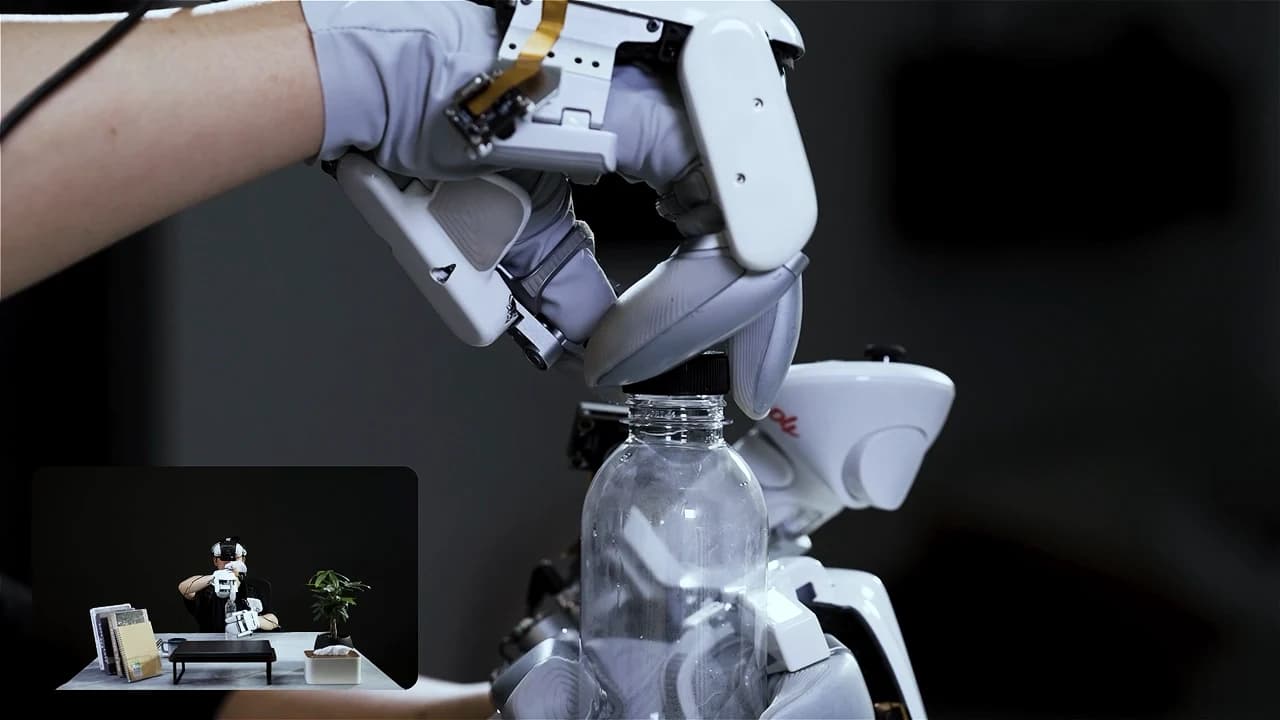
In its technical overview, Reward AI describes OM-1 as a shared policy trained on human demonstrations captured through its wearable Omnibody Hand. The device combines hand-motion tracking with visual, tactile, proximity and force information. The aim is to preserve how people handle objects, including the contact cues that ordinary video cannot fully capture.
The company says the policy uses neither teleoperation nor on-robot experience as training data. That does not mean the entire system is trained without simulation: a lower-level controller learns through reinforcement learning in simulation, translating policy outputs into actions suited to the robot’s dynamics.
This controller runs independently of the policy’s inference cycle, with transitions between predictions adjusted to keep motion continuous. Reward AI also claims a new task can be learned from less than 30 minutes of human demonstration data. That is a claim about demonstration requirements, not total training time or the amount of data behind the general model.
The next test is repetition
The video gives viewers concrete examples of the behaviors Reward AI is pursuing. It does not, by itself, establish how often those tasks succeed, how many attempts were recorded or how well performance holds up with unfamiliar objects and locations.
For delivery and household work, those questions matter as much as a successful sequence. Repeated trials across different stairways, packages and door mechanisms would help show how far the demonstrated skills extend beyond the selected clips.
Share this article
Follow humanoid robotics without following every announcement.
Get the week’s most important launches, funding and research—and why they matter—in one email from Humanoids Daily.
Once a week. Unsubscribe anytime.
Read recent issuesRead next
- Published on
- Reading time
- 7 min read
Reward AI Exits Stealth with OM-1, Pitching Zero-Shot Human-to-Robot Manipulation
- Published on
- Reading time
- 9 min read
The UMI Effect: Why Robotics Companies Are Building the Data Collector First
- Published on
- Reading time
- 4 min read
DeepMind Pairs Genie 4 With Gemini Argon to Simulate Apollo Playing Checkers
- Published on
- Reading time
- 4 min read
Luxonis Launches OAK 4 FFC to Put Five Robot Cameras on One Vision Computer
- Published on
- Reading time
- 2 min read
Tesla’s Lars Moravy Floats Optimus as a Cybercab Charging Helper
- Published on
- Reading time
- 3 min read
Boston Dynamics Taps Korean Suppliers for Atlas, With 10,000-Robot Preparations Reported