- Published on
LG to Unveil Next-Gen Humanoid Built on NVIDIA Isaac GR00T in Early 2027
One tap, and our reporting appears more often in your Google Top Stories. It makes a real difference to a small newsroom.



- Strategic AI Alliance: LG and NVIDIA signed a memorandum of understanding to transition their robotics collaboration from strategic blueprints to full-scale execution.
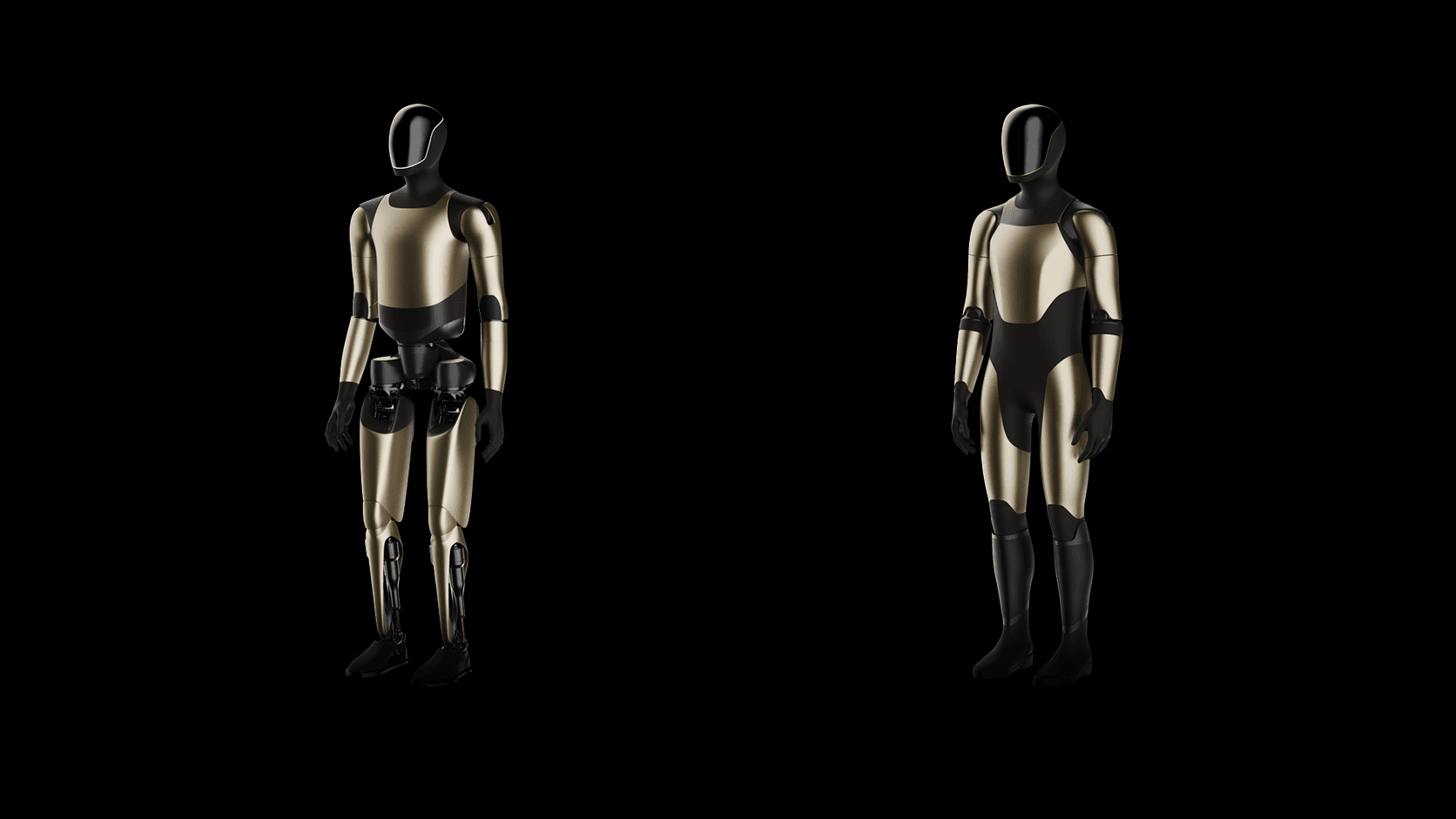
- New Bipedal Humanoid: LG is developing a next-generation humanoid powered by the NVIDIA Isaac GR00T foundation model and Jetson Thor compute platform, targeting a Q1 2027 public unveiling.
- Internal Supply Chain Synergy: The hardware will leverage the "One LG" strategy, incorporating actuators, sensors, and batteries developed in-house by LG Electronics, LG Innotek, and LG Energy Solution.
- Factory Floor Deployment: LG will validate its wheel-based CLOiD robots at its Tennessee washing machine manufacturing plant this year to gather real-world training data.
- Massive Infrastructure Push: The partnership extends beyond robots, with LG planning to build an 80 MW AI factory in Cheonan by 2028 to process physical AI datasets.
LG Corp. is escalating its push into physical AI, announcing a sweeping partnership with NVIDIA to co-develop a next-generation bipedal humanoid robot. The collaboration, formalized in an August 13 memorandum of understanding between LG CEO Kwang Mo Koo and NVIDIA CEO Jensen Huang in Santa Clara, signals that LG is ready to move its robotics ambitions from the research lab to full commercial execution.
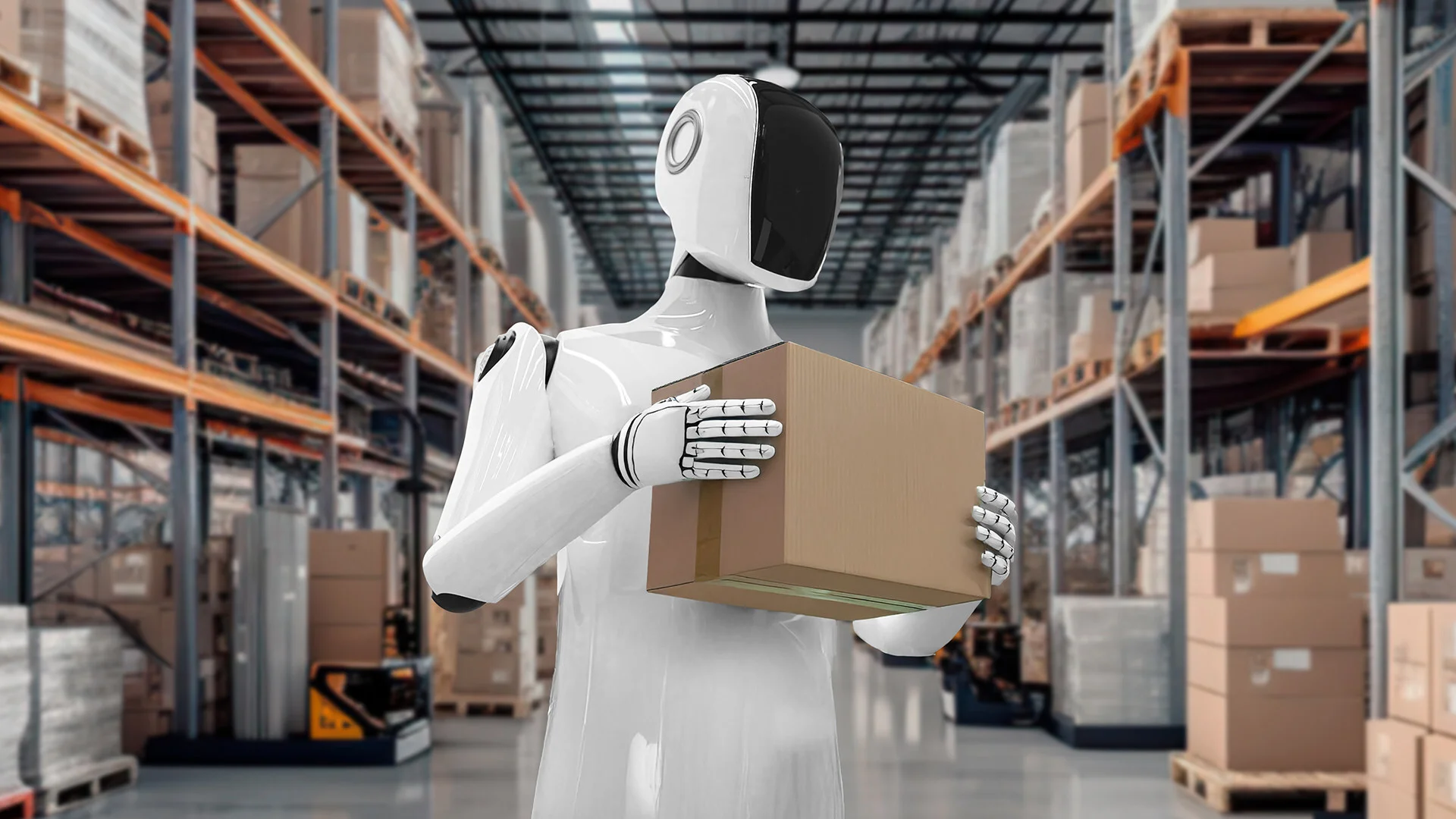
The centerpiece of the announcement is a new bipedal humanoid, slated for a public unveiling in the first quarter of next year. While LG has previously worked on platforms like the KAPEX humanoid in conjunction with the Korea Institute of Science and Technology, this upcoming machine is built directly on NVIDIA's latest enterprise robotics architecture.
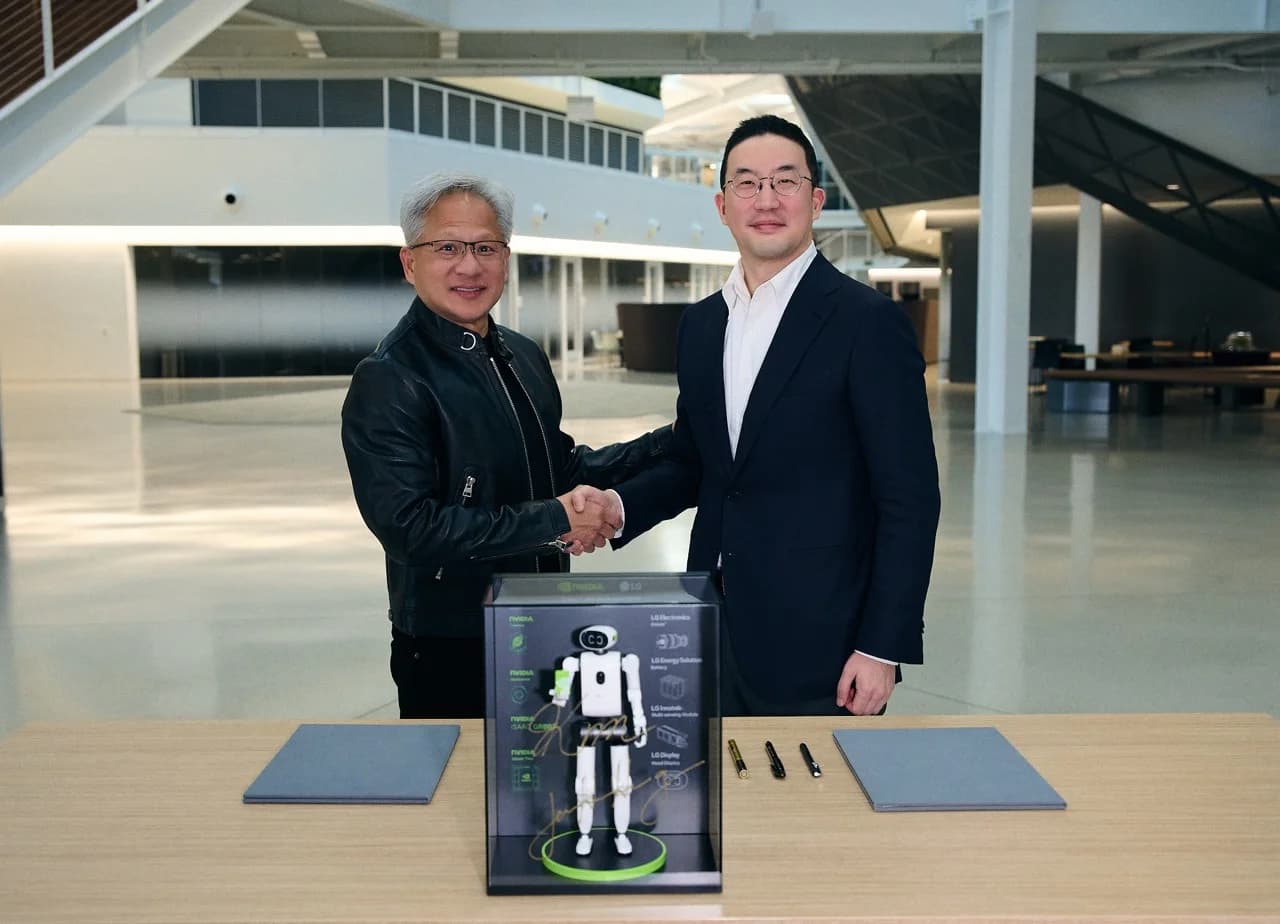
Brains by NVIDIA, Body by "One LG"
According to the joint release, the upcoming robot will utilize NVIDIA's Jetson Thor system-on-module for onboard compute. At the software level, it will be driven by NVIDIA's Isaac GR00T open humanoid foundation model and protected by NVIDIA Halos for Robotics, a full-stack safety system.
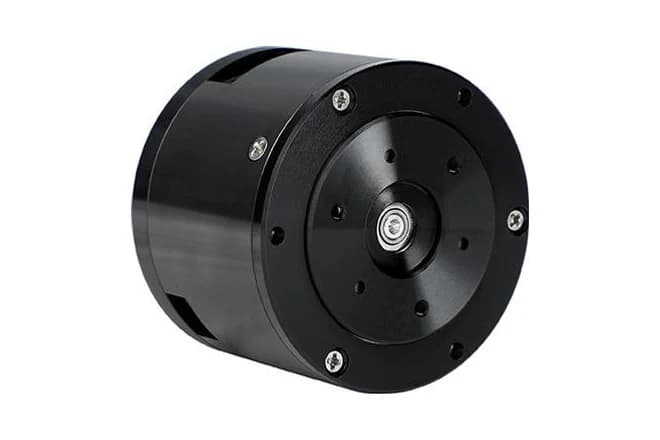
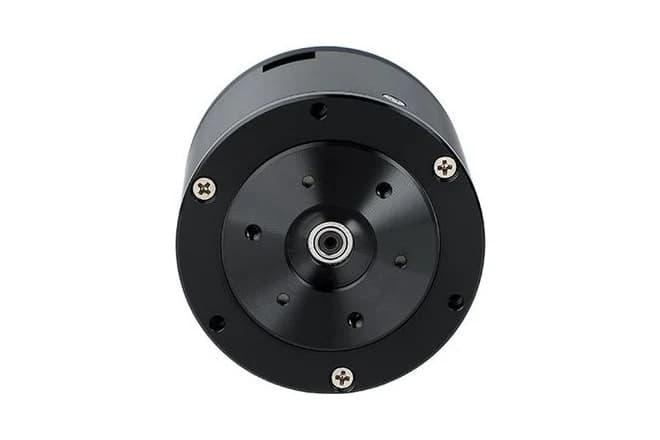
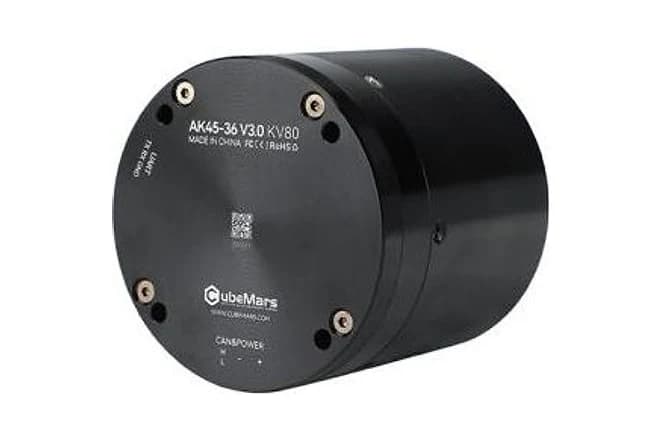
While NVIDIA provides the cognitive and computational foundation, LG is deploying its massive industrial scale to build the physical machine. The project will serve as a flagship for the so-called "One LG" supply chain strategy. Rather than sourcing parts from external vendors, LG will integrate actuators from LG Electronics, advanced sensor arrays from LG Innotek, and specialized battery cells from LG Energy Solution.
The weekly humanoid robotics briefing
One email a week: the launches, funding and research that mattered, with context from Humanoids Daily.
Read recent issuesThis vertically integrated approach aims to solve the high bill-of-materials costs that traditionally bottleneck humanoid commercialization, leveraging an ecosystem that already generates over $140 billion in annual revenue.
Sim-to-Real: Tennessee Plant as a Proving Ground
Beyond the bipedal platform, LG and NVIDIA are prioritizing real-world data collection using wheeled systems. Later this year, LG will deploy its CLOiD wheel-based robots to its washing machine manufacturing line in Tennessee.
This deployment is not merely an automation upgrade; it functions as a live data ingestion engine. The operational data gathered in Tennessee will be fed into LG CNS PhysicalWorks, the company's proprietary robot data platform. This system will act as an on-site physical AI data factory, managing continuous data collection, synthetic data generation, and verification.
LG explicitly noted that the insights gained from integrating NVIDIA's GR00T model will also be used to strengthen its own proprietary in-house Robot Foundation Model (RFM), which remains under active development. This dual-track strategy ensures LG is not entirely dependent on a single software vendor for its long-term physical AI operations.
The Infrastructure to Power Physical AI
Training robust foundation models for physical environments requires immense computational resources. To support these robotics initiatives, LG is making a substantial investment in AI infrastructure based on the NVIDIA DSX AI factory architecture.
The consumer electronics giant plans to build an AI factory reference site powered by NVIDIA Vera Rubin in the first half of 2027. Following that, LG aims to construct a massive 80-megawatt AI factory in Cheonan, South Korea, by early 2028. This facility is specifically intended to accelerate the development of physical AI and robot foundation models.
The partnership also extends into the automotive sector, with LG planning to develop a high-performance computing platform for next-generation AI-Defined Vehicles (AIDVs) utilizing the NVIDIA DRIVE Hyperion framework.
By unifying its robotics, automotive, and data center operations under a single collaborative umbrella with NVIDIA, LG is positioning itself as a formidable heavyweight in the global race to commercialize intelligent physical automation.
Share this article
Read next
- Published on
- Reading time
- 4 min read
The "One LG" Play: How the Korean Giant is Engineering a Humanoid Supply Chain
- Published on
- Reading time
- 7 min read
NVIDIA Buys Hugging Face for $12.9B as Open-Source Robotics Scales Up
- Published on
- Reading time
- 4 min read
NVIDIA and Hugging Face Standardize Open-Source Robotics Pipeline via LeRobot
- Published on
- Reading time
- 6 min read
NVIDIA and Agility Team Up on "Halos," the First Full-Stack Safety Architecture for Humanoids
- Published on
- Reading time
- 4 min read
From Prosthetics to Pixels: PSYONIC and NVIDIA Bridge the Robotics "Data Gap" with Real-to-Real Transfer
- Published on
- Reading time
- 3 min read
From Pixels to Production: Texas Instruments and NVIDIA Partner to Harden Humanoid Safety


The weekly humanoid robotics briefing
One email a week: the launches, funding and research that mattered, with context from Humanoids Daily.
Read recent issues