- Published on
Lumos Robotics Launches Project EDGE, Offering 100 Free Humanoids to Developers
One tap, and our reporting appears more often in your Google Top Stories. It makes a real difference to a small newsroom.


Your guide
Rich Robinson
Jee Chee Ren · Executive tour
See China’s AI and robotics ecosystem first-hand.
Six days exploring AI, robotics and advanced manufacturing.
With Rich Robinson, Clinical Professor of Entrepreneurship at Peking University
Beijing · Guangzhou · Shenzhen
29 November–4 December 2026
Referral partnership · We earn a commission on referred bookings.
- Lumos Robotics has announced "Project EDGE," a program granting 100 free, permanently owned LUMOS NIX humanoid robots to selected research teams and developers.
- The LUMOS NIX platform features a Rockchip RK3588 compute unit and Lumos P60 Series actuators, designed specifically for dynamic whole-body motion and real-time inference.
- Heavy computational lifting, such as training foundation models, will require external compute infrastructure, as the onboard NPU is limited to ~6 TOPS.
- Applications are evaluated on a rolling basis, with priority consideration given to teams that apply before July 31, 2026.
In the race to commercialize humanoid robots, hardware is only half the battle; the real bottleneck lies in developing robust, generalized software. Lumos Robotics, a startup founded in 2024, is attempting to brute-force a solution to this problem by seeding the developer ecosystem directly.
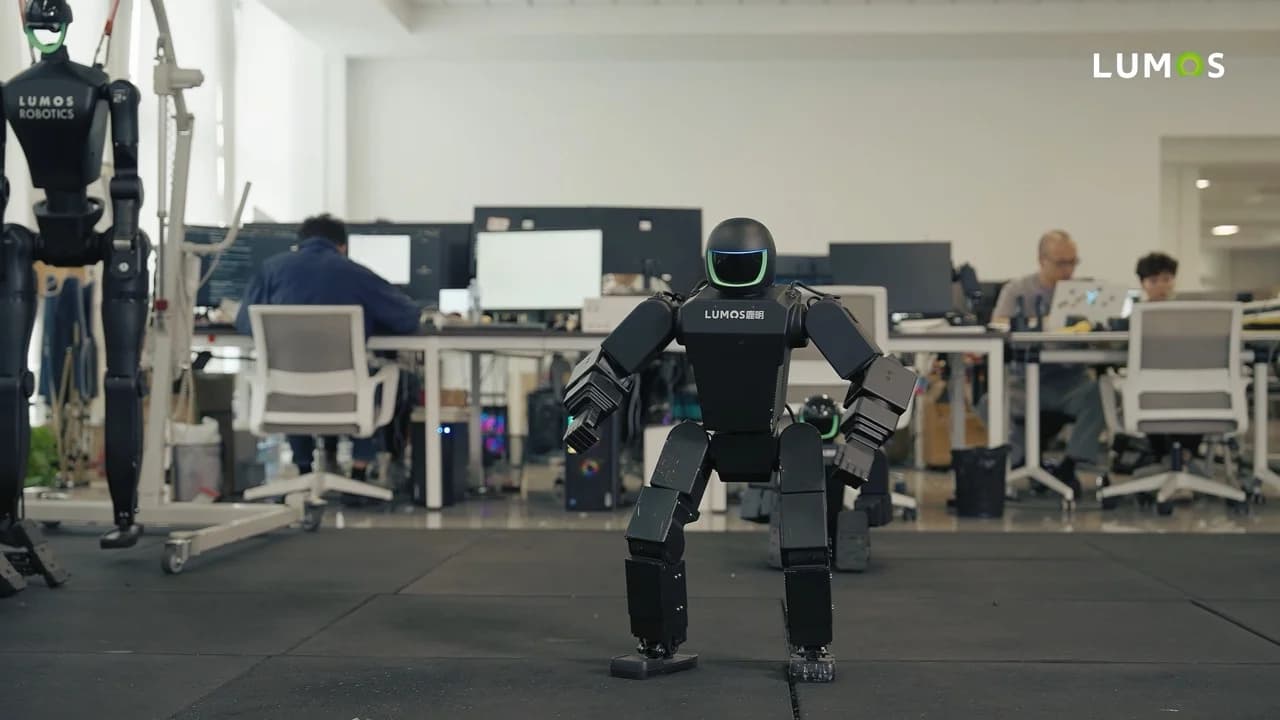
Through a new initiative dubbed "Project EDGE," Lumos CEO Yu Chao announced that the company is giving away 100 of its LUMOS NIX humanoid robots to global universities, robotics labs, and creative technologists. The goal is to accelerate breakthroughs in embodied AI, dynamic motion control, and real-world human-robot interaction by putting capable hardware directly into the hands of researchers.

The Hardware: Built for the Edge
The LUMOS NIX platform is positioned as an accessible but capable research tool. According to the company's published specifications, the robot is driven by Lumos’s own P60 Series high-speed actuators, capable of a peak rotational speed of 160 RPM (at 48V) and a peak joint torque of 102 N·m. This places the NIX firmly in the category of robots designed for dynamic, whole-body motion rather than heavy industrial payload lifting.
On the compute side, the NIX relies on an onboard Rockchip RK3588 platform. While the RK3588 is a proven, energy-efficient system-on-chip for edge devices, its integrated Neural Processing Unit (NPU) tops out at around 6 TOPS. Lumos explicitly notes this is sufficient for real-time inference, state estimation, and safety monitoring. However, teams looking to run or train massive Vision-Language-Action (VLA) foundation models will need to route operations through external compute infrastructure via the robot's RJ45 Ethernet port.
The weekly humanoid robotics briefing
One email a week: the launches, funding and research that mattered, with context from Humanoids Daily.
Read recent issuesTo bridge the gap between hardware and algorithmic development, Lumos is providing a full-stack open SDK with support for C++ and Python. The promise is a highly abstracted interface that allows researchers to bypass low-level hardware debugging and focus directly on application deployment.
Bootstrapping an Ecosystem
Giving away high-value hardware is a calculated expense. Lumos Robotics, whose core R&D team hails from prominent institutions like Tsinghua University, Shanghai Jiao Tong University, and The Chinese University of Hong Kong, understands the academic research pipeline. By permanently granting these units to labs—rather than leasing them—Lumos is essentially crowdsourcing its software ecosystem.
In exchange for the hardware, open SDK access, and direct technical support, Lumos expects selected partners to maintain periodic communication regarding project progress. Furthermore, the company retains the right to co-promote successful applications and demonstrations. It is a symbiotic arrangement: researchers get free, high-torque robotic platforms to test their algorithms, and Lumos generates vital real-world data and promotional material to validate its hardware stack.
Timelines and Limitations
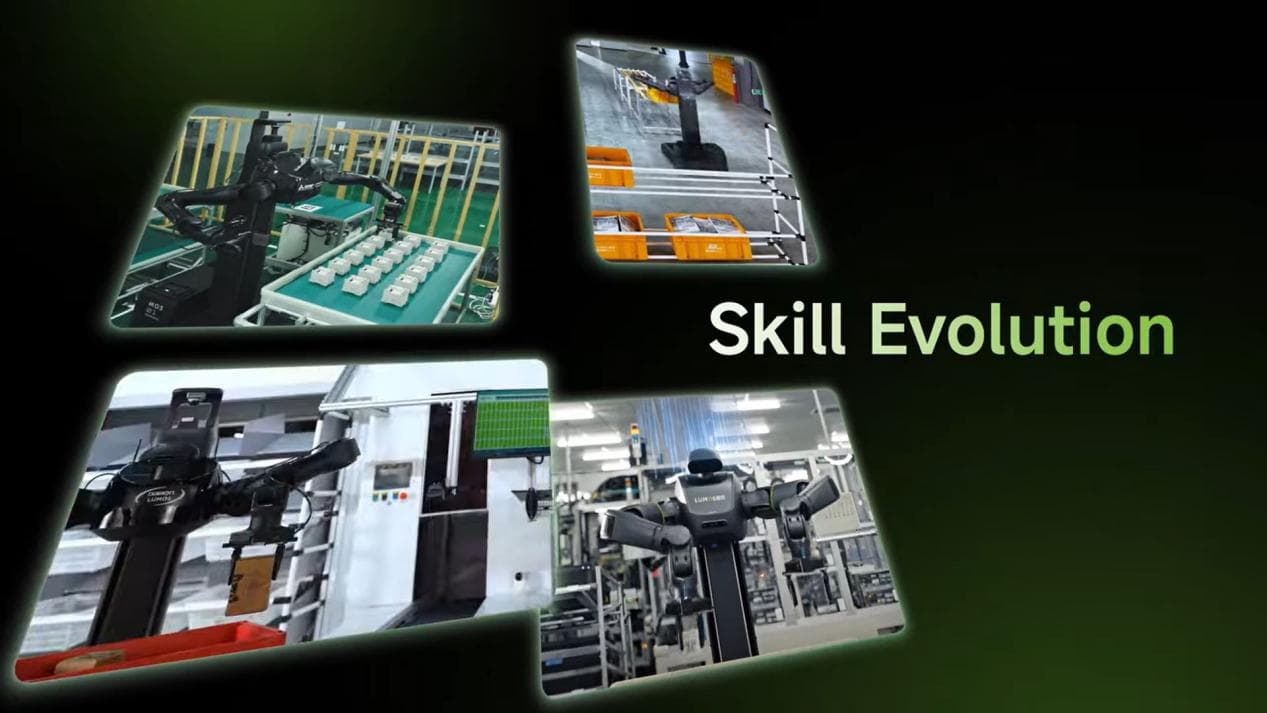
While the prospect of a free humanoid platform is highly enticing for underfunded research labs, the hardware remains unproven at scale. Lumos's broader product lineup, which includes the LUS and MOS series of industrial robots, has laid a foundation, but deploying 100 humanoids globally will be a significant test of the company's manufacturing consistency and technical support bandwidth.
The program is currently open to universities, independent AI labs, open-source contributors, and creative studios. Applications are being reviewed on a rolling basis until all 100 spots are filled, though Lumos has set a priority consideration deadline of July 31, 2026.
For the broader robotics industry, Project EDGE represents a shifting paradigm. As actuator costs drop and hardware designs standardize, companies are increasingly recognizing that the ultimate winner in the humanoid race will not necessarily be the team with the strongest robot, but the one with the most active and innovative developer community behind it.
Share this article
Read next
- Published on
- Reading time
- 3 min read
Lumos Says NexCore Can Teach Robots New Skills in Days
- Published on
- Reading time
- 5 min read
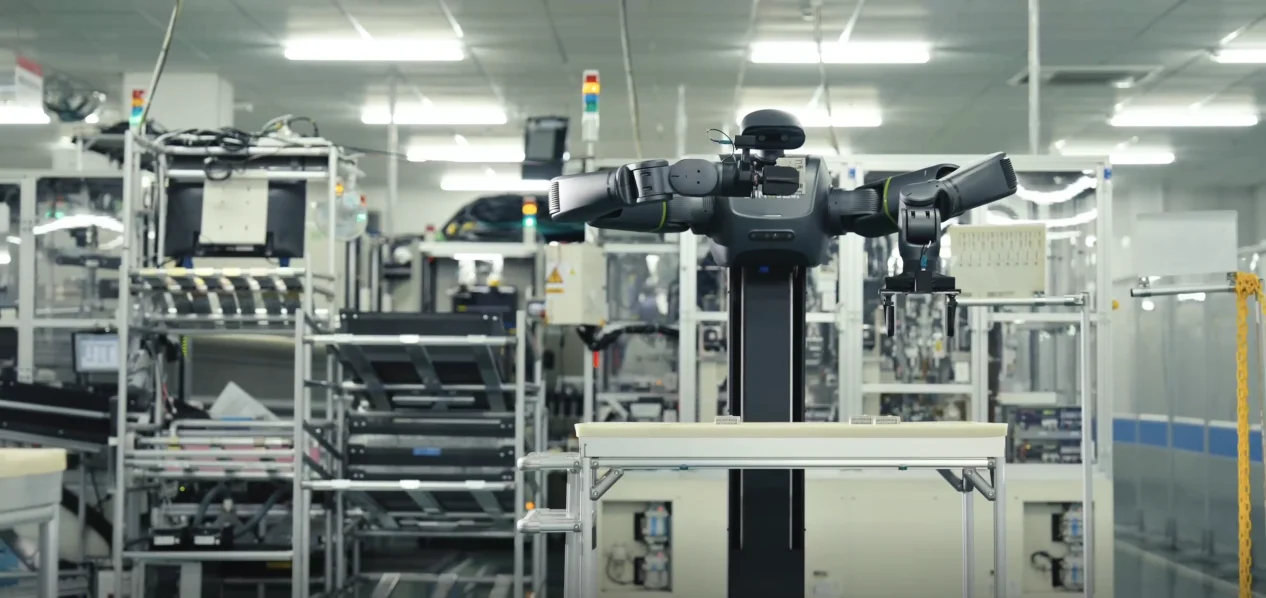
Lumos Robotics Unveils MOS 2 Mobile Manipulator Backed by Mitsubishi Factory Deployment
- Published on
- Reading time
- 3 min read
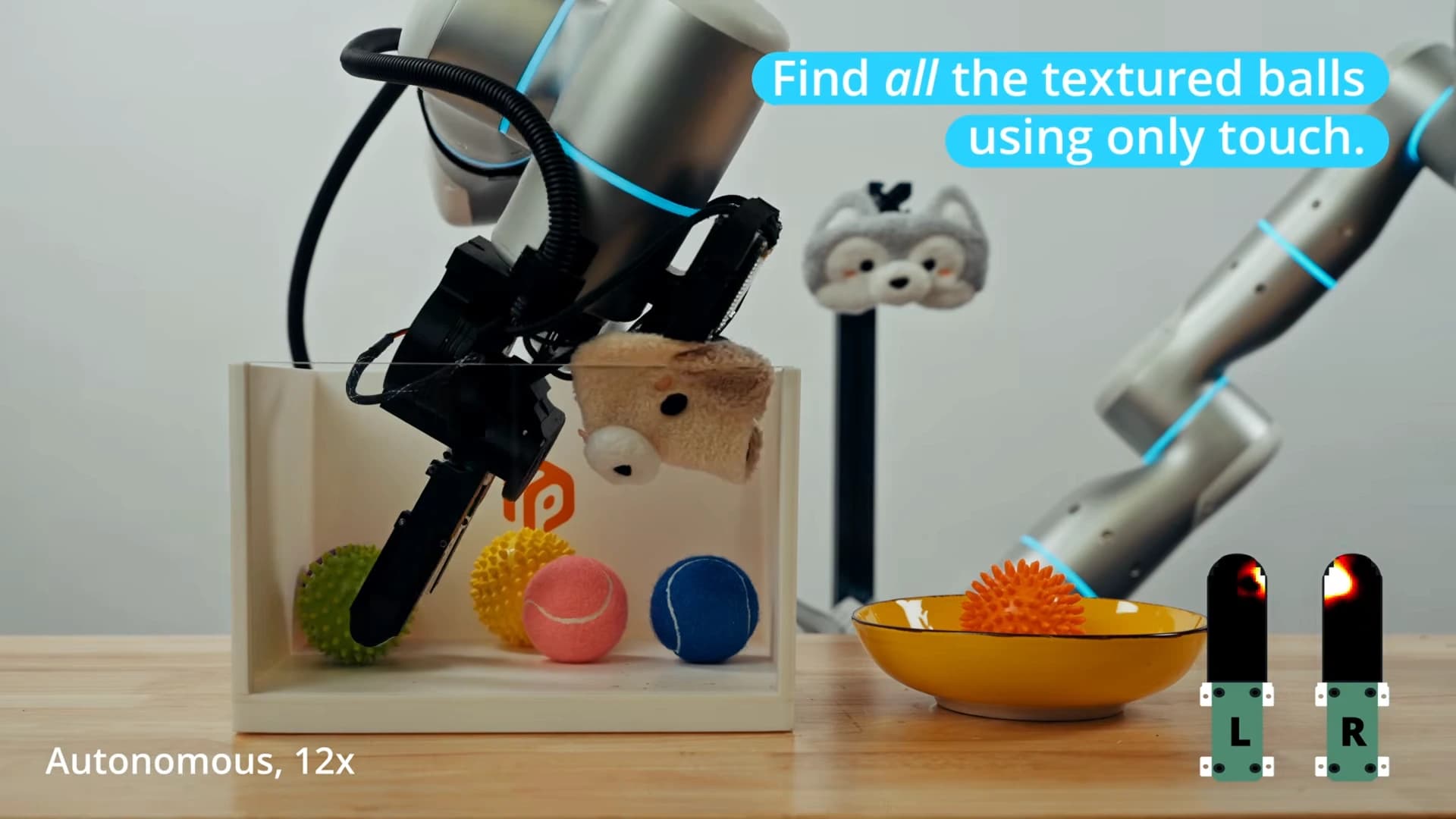
Rhoda Blindfolds Its Robot—and Lets Touch Guide the Search
- Published on
- Reading time
- 3 min read
RoboParty Opens RP1 Humanoid Designs, From Mechanical Parts to Motion Policies
- Published on
- Reading time
- 2 min read
Agility Moves Closer to Nasdaq as Merger Vote Is Set for November 2
- Published on
- Reading time
- 2 min read
Shanghai Wants 8,000 Humanoid Robots in Factories by 2028



The weekly humanoid robotics briefing
One email a week: the launches, funding and research that mattered, with context from Humanoids Daily.
Read recent issues