- Published on
The Physical AI Bottleneck: Comparing the Data Strategies of 1X, Figure, Tesla, and Neura
One tap, and our reporting appears more often in your Google Top Stories. It makes a real difference to a small newsroom.


Your guide
Rich Robinson
Jee Chee Ren · Executive tour
See China’s AI and robotics ecosystem first-hand.
Six days exploring AI, robotics and advanced manufacturing.
With Rich Robinson, Clinical Professor of Entrepreneurship at Peking University
Beijing · Guangzhou · Shenzhen
29 November–4 December 2026
Referral partnership · We earn a commission on referred bookings.
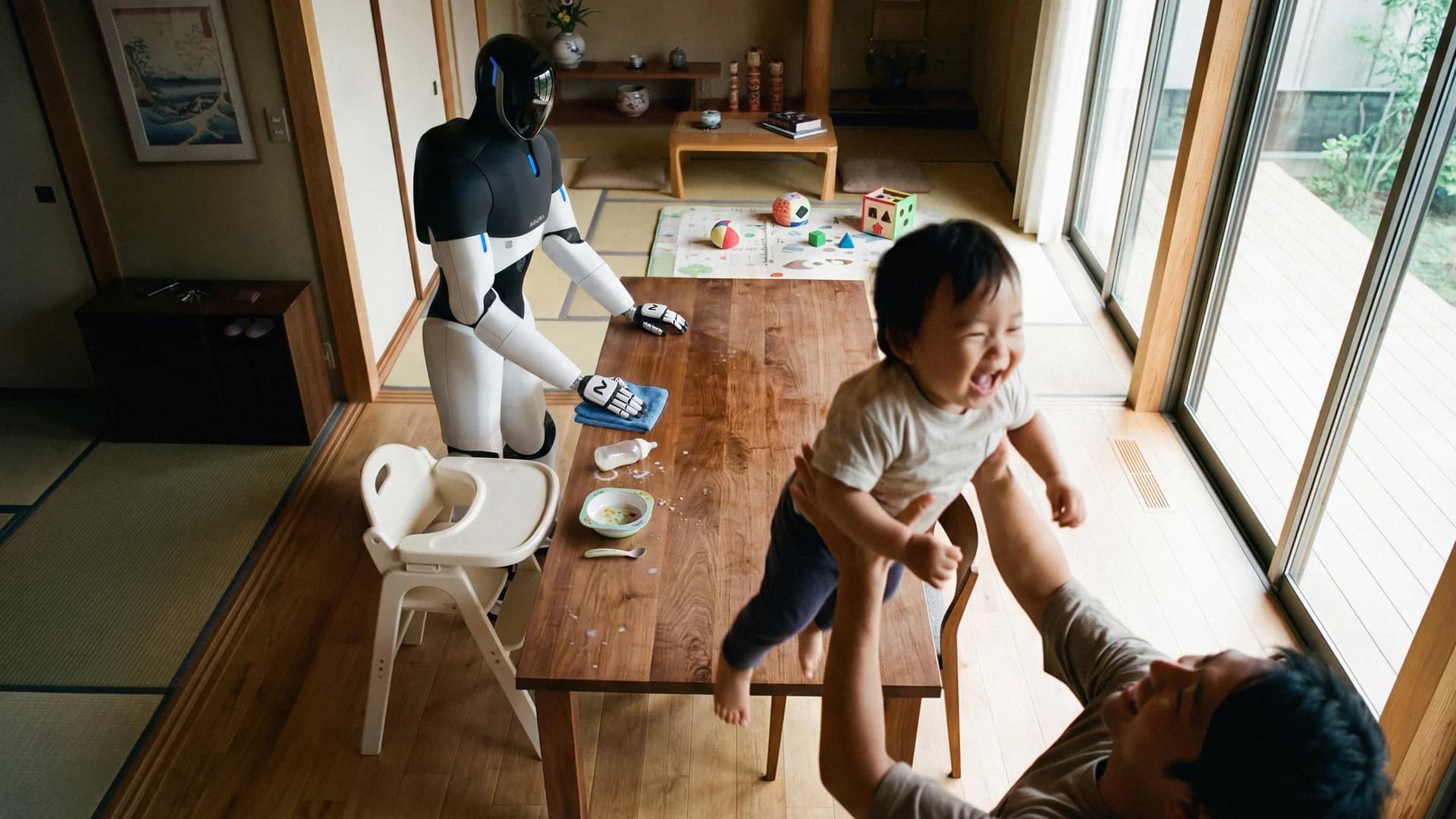
The biggest challenge in robotics today isn't just building better hardware; it's teaching that hardware how to understand the messy, physical world. While AI models have mastered language by ingesting the entire internet, they remain "illiterate" when it comes to the basic physics of folding a towel or the "soft intent" required to navigate a kitchen.
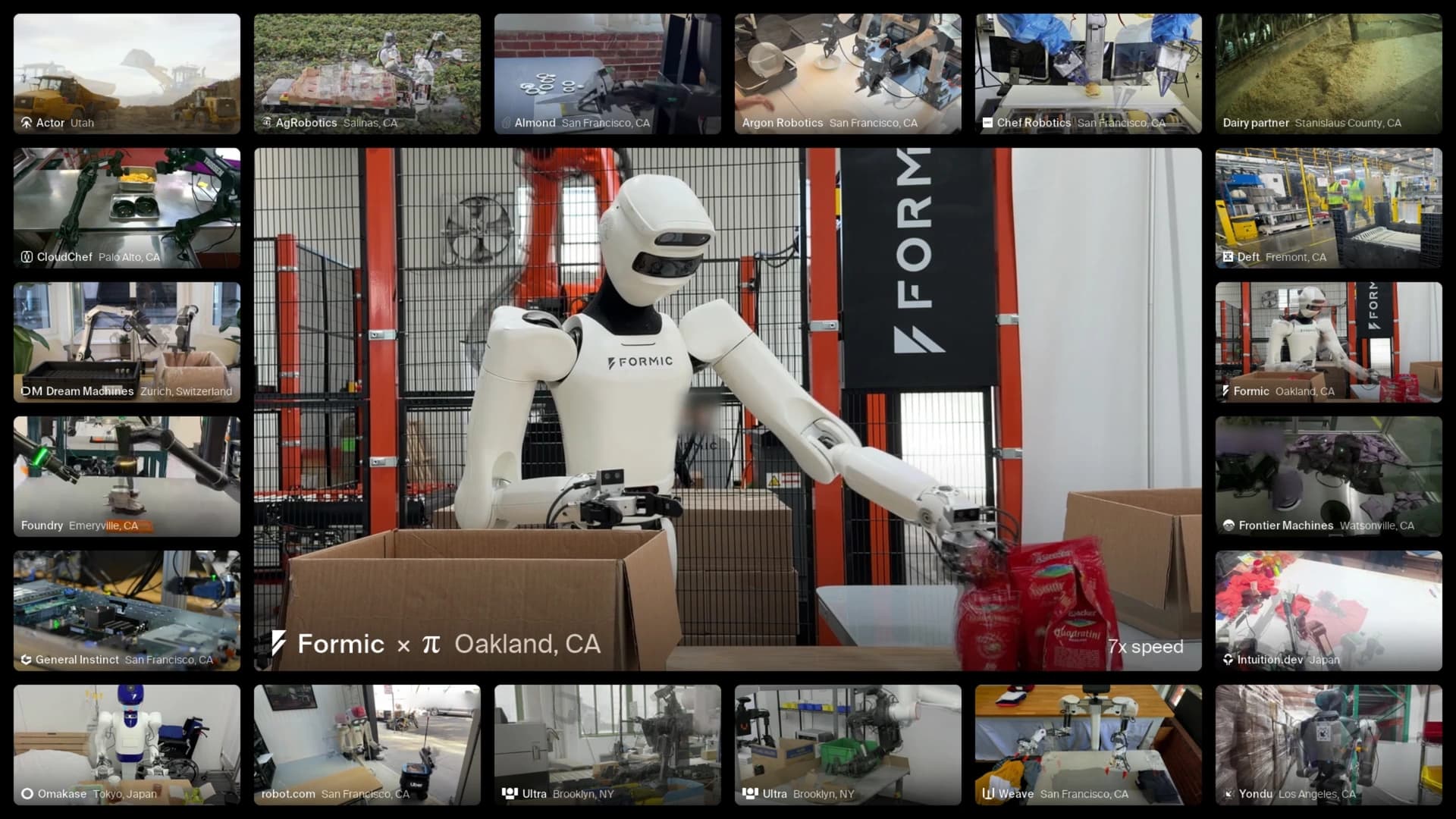
A recent, fascinating report from the Los Angeles Times, "Inside the race to train AI robots how to act human in the real world," shines a light on the massive, often low-tech global effort to create this "physical AI" data. The article details how workers in India are paid to wear GoPros while meticulously folding towels, and how "arm farms" may soon be filled with operators remotely guiding robots in other countries—all to generate the foundational data that today's AI lacks.
This data bottleneck is the industry's central problem. As the LA Times story illustrates, the race is on to build a "foundation model for the physical world." This has created a deep philosophical and strategic split among the leading humanoid robot companies, each placing a high-stakes bet on a different way to solve the same problem.
Here’s a comparison of some of the distinct strategies we've been covering, contextualized by this global data rush.
The weekly humanoid robotics briefing
One email a week: the launches, funding and research that mattered, with context from Humanoids Daily.
Read recent issues1. The Human-Video Bet: Figure's 'Project Go-Big'
The LA Times report describes data-labeling firms capturing first-person video of humans performing tasks. This is the exact strategy Figure is betting on at an immense scale with its "Project Go-Big".
Figure's hypothesis is that the best way to teach a robot to act like a human is to let it watch humans. The company is building a massive dataset of people performing tasks in a wide variety of real homes, accelerated by a partnership with real estate manager Brookfield.
The goal is to achieve "zero-shot human-to-robot transfer"—meaning the AI can learn to perform a task, like navigating a cluttered room, only from watching human video, without ever having seen a robot do it. This approach bets that human video is a rich-enough data source to bypass the need for direct robot training.
2. The Teleoperation Bet: 1X's 'Expert Mode'
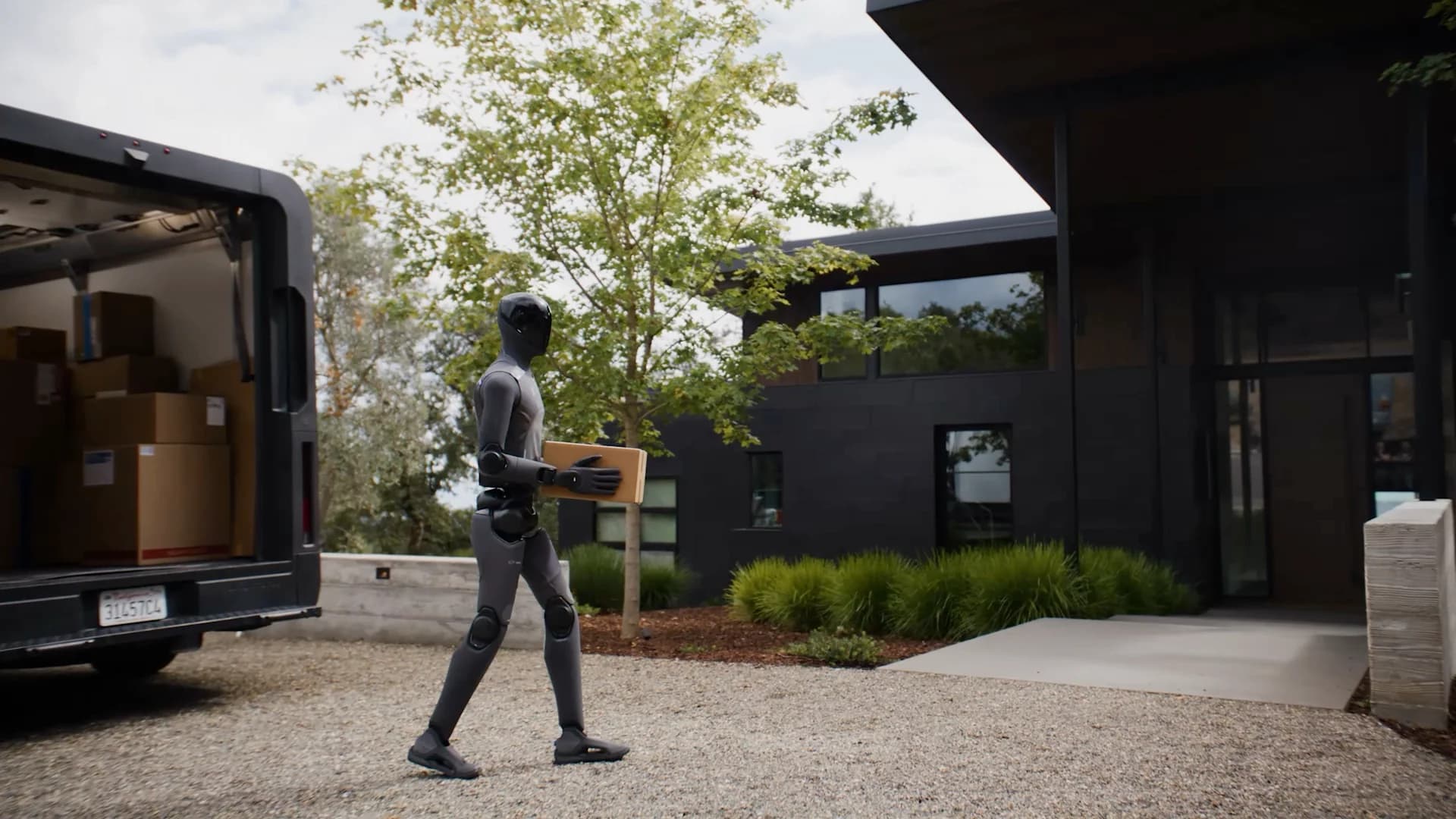
The other method highlighted by the LA Times is teleoperation, where human operators remotely control robots to gather data. This is precisely the strategy 1X has publicly embraced with its NEO robot.
While critics, including Figure CEO Brett Adcock, have dismissed this "human-in-the-loop" model as a sign of an unfinished product, 1X argues this is the entire point. As we've detailed, this isn't a pivot but a "decade-old bet".
1X's plan is to use teleoperation, which it calls "Expert Mode," as the engine to create autonomy. The "social contract" with its first customers is that they are knowingly providing the real-world data needed to train the AI. This bet is enabled by 1X's hardware philosophy: its "passively safe," low-energy robots are designed to be safe enough to deploy among humans, allowing them to "live and learn" in the field.
3. The Simulation Bet: Tesla's 'World Simulator'
A third, distinct path attempts to bypass this messy physical data collection almost entirely: massive simulation. Tesla is the clear leader here, betting that the "Niagara Falls of data" from its millions of vehicles can solve the problem.
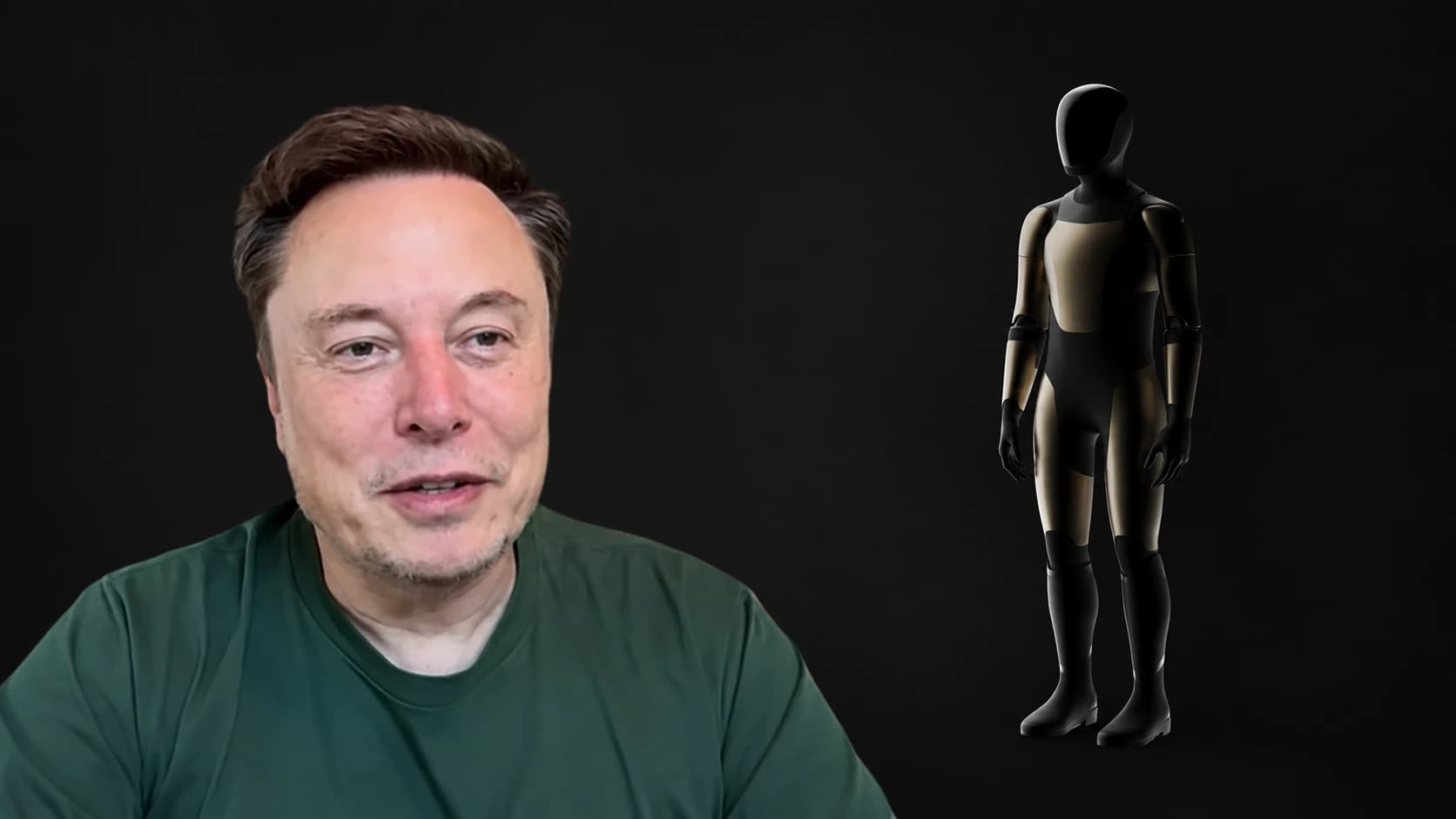
As Tesla AI chief Ashok Elluswamy recently detailed, the company has built a single, "unified 'world simulator'" for both its cars and its Optimus robot.
Tesla's bet is that its "neural world simulator," trained on real-world driving video, understands physics and "soft intent" so well that its intelligence can be "seamlessly transferred" to Optimus. Rather than watching humans fold towels (Figure) or teleoperating a robot to do it (1X), Tesla is betting it can train its AI in a high-fidelity virtual world, massively reducing the need for real-world robot data.
4. The Hybrid Bet: Neura's 'Sim-to-Real Gym'
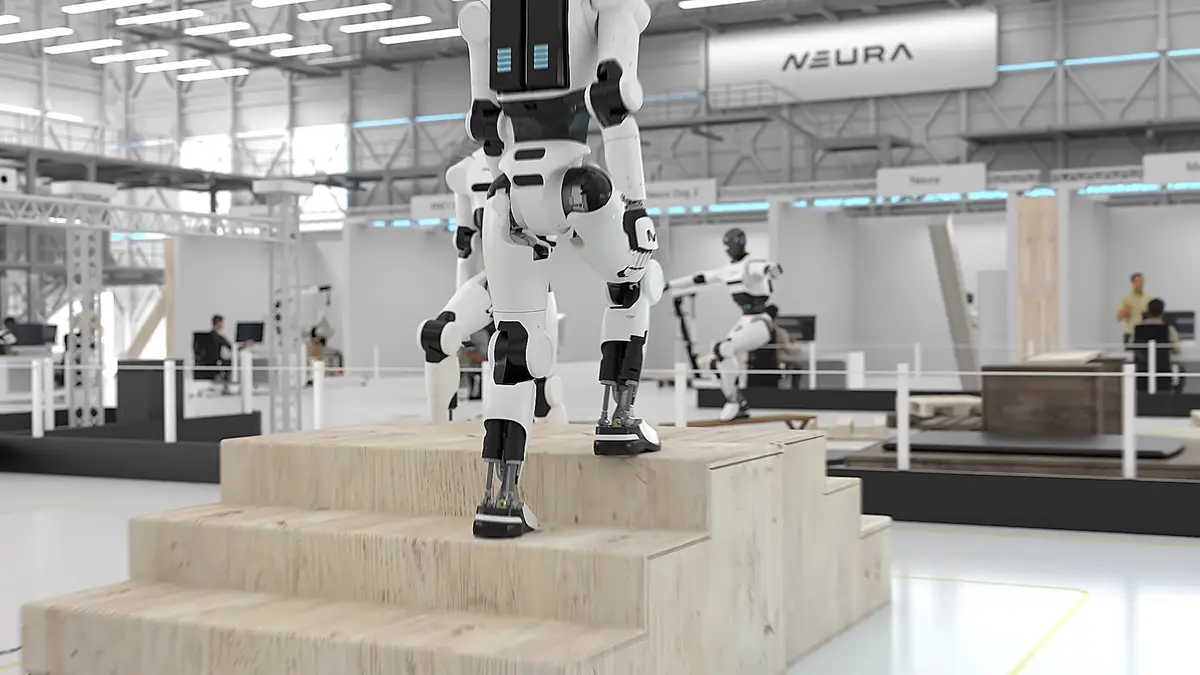
Finally, Germany's Neura Robotics is placing a bet that bridges the gap between simulation and the physical world. The company is addressing the "sim-to-real gap"—the problem where AI trained in a perfect simulation fails in the real world.
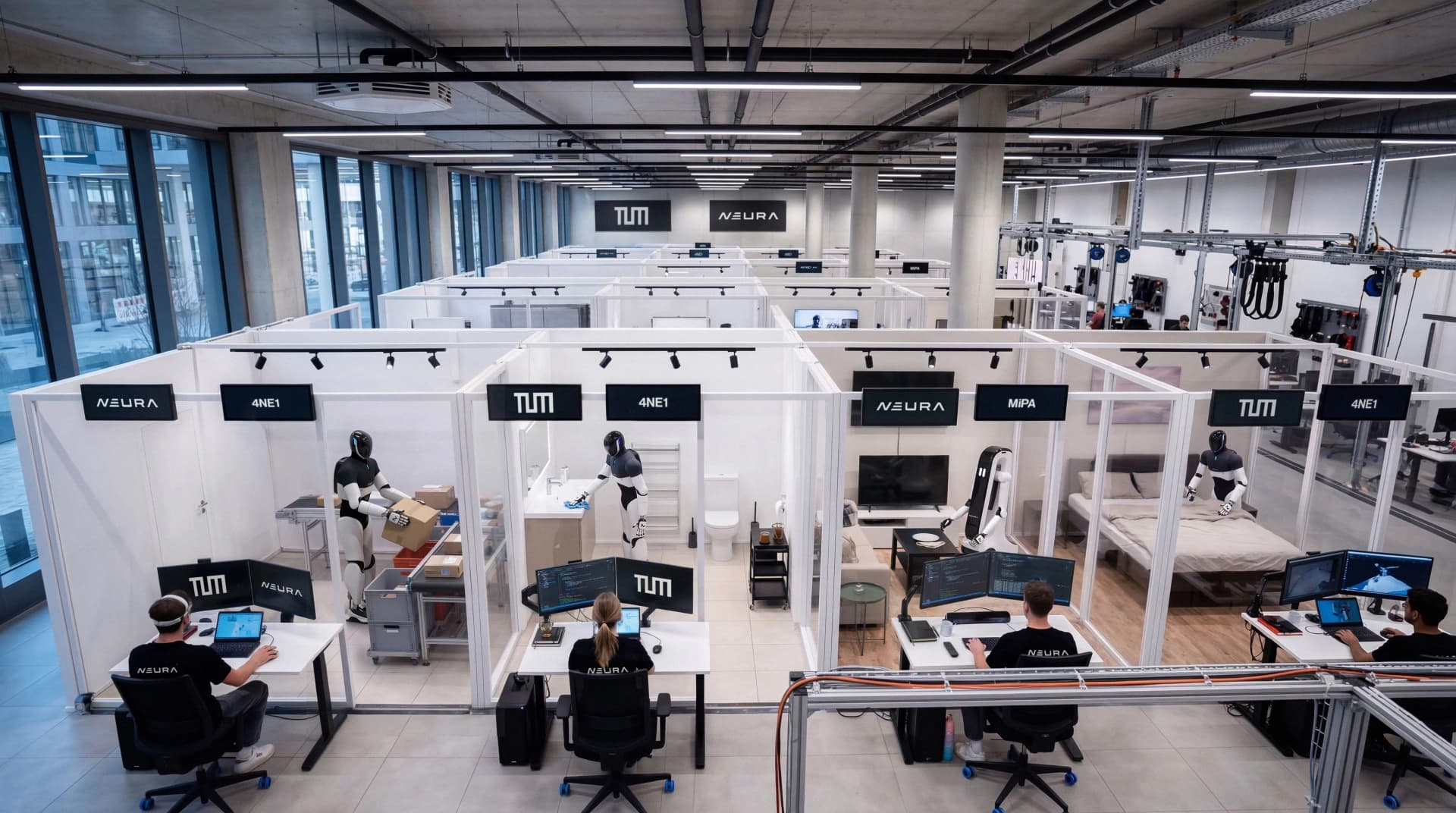
Its solution is the "NEURA Gym," a large-scale physical training center where robots can gather real-world data in a controlled environment.
Neura's process is a hybrid loop: an AI is trained in simulation, then tested on physical robots in the Gym. The system identifies weaknesses, and more physical data is collected to capture the nuances of real-world physics—like momentum and grip—that simulation misses. This data is then used to improve the simulation, creating a flywheel effect.
The LA Times article reveals the sheer scale of the data-collection challenge that is just beginning. While the hardware is impressive, the ultimate winner in the humanoid race will likely be the company that solves this "physical AI" bottleneck first. The industry's top players have now drawn clear, divergent battle lines: watch humans, embody robots, simulate the world, or build a gym.
Share this article
Read next
- Published on
- Reading time
- 4 min read
Neura Robotics Unveils ‘Neura Gym’ to Bridge AI’s Simulation-to-Reality Gap
- Published on
- Reading time
- 10 min read
The Great Valuation Chasm: A 2025 Guide to the Humanoid Robotics Capital Race
- Published on
- Reading time
- 6 min read
Humanoid Hype vs. Hardware Reality: New Report Scrutinizes Startup IP Strength
- Published on
- Reading time
- 6 min read
NEURA Robotics Secures Record $1.4 Billion Series C, Led by Tether, to Build the "Machine Economy"
- Published on
- Reading time
- 4 min read
NEURA Robotics and TUM Launch Europe’s Largest Physical AI Training Center
- Published on
- Reading time
- 4 min read
Podcast Recap: Inside the Rotary-vs-Linear Actuator Showdown Shaping Humanoid Robots
The weekly humanoid robotics briefing
One email a week: the launches, funding and research that mattered, with context from Humanoids Daily.
Read recent issues