- Published on
Neura CEO David Reger Explains Why He Rejects Military Robotics
One tap, and our reporting appears more often in your Google Top Stories. It makes a real difference to a small newsroom.

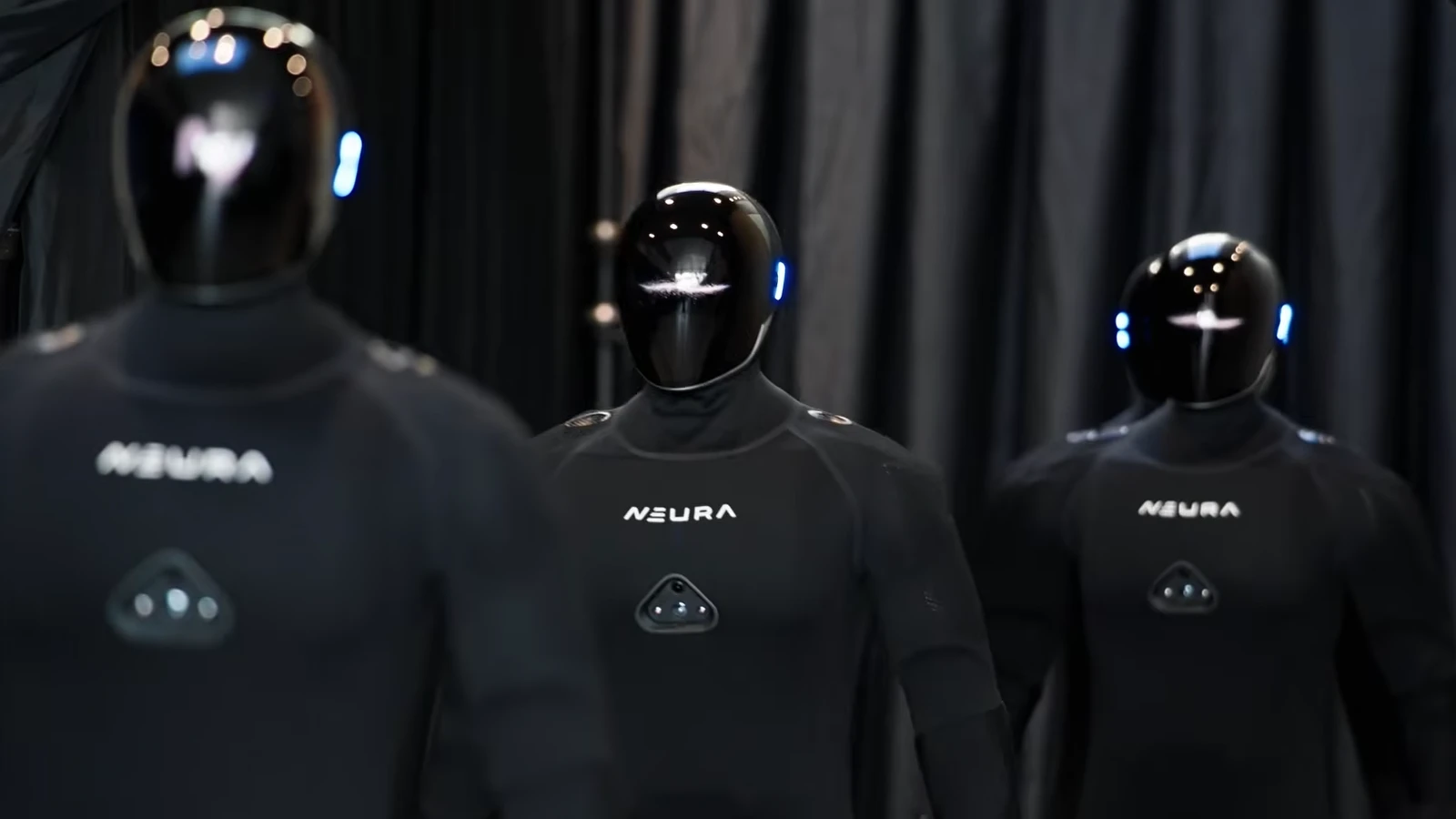
Neura Robotics CEO David Reger says he is staying out of military robotics because he sees civilian automation as a better way to strengthen Europe’s economy and international relevance. In a DW Business interview, he argues that Europe should concentrate on building technologies other countries need, with robots taking on physical work in factories and eventually homes.
- Reger frames Neura’s decision to avoid military robotics around civilian productivity and Europe’s technological relevance.
- He argues that sensitive hands, perception and responsive control matter more for everyday work than running and jumping demonstrations.
- He says Neura has shipped thousands of robots across several form factors, without giving a separate humanoid shipment count.
A different argument for strengthening Europe
Asked why Neura is not pursuing military work despite the money flowing into defense technology, Reger says his motivation is to contribute to Europe’s future. His argument is that supplying useful, complex technologies creates economic strength and international interdependence, which he sees as foundations for lasting prosperity and peace.
DW interviewer Kai Steinecke challenges that position by pointing to defense-AI company Helsing, whose argument for entering the military market also centers on securing Europe. Reger maintains that Europe should rebuild its influence through the technologies and capabilities it supplies to the world.
That outlook shapes his commercial priorities. He identifies physical labor as the larger opportunity for robotics, including industrial automation and personal assistance in homes. His stated ambition is for Neura to become “the largest taxpayer in Europe.”
Follow humanoid robotics without following every announcement.
Get the week’s most important launches, funding and research—and why they matter—in one email from Humanoids Daily.
Once a week. Unsubscribe anytime.
Read recent issuesUseful hands over athletic demonstrations
Reger also pushes back on the suggestion that Chinese humanoid makers have already established an unassailable lead. He argues that speed and acrobatics are poor measures of a robot’s ability to perform useful everyday work.
Instead, he emphasizes sensing, dexterous hands and what he calls a robot’s nervous system: the ability to perceive the physical world and respond quickly enough to interact with it naturally. He presents these as Neura’s strengths, although the interview does not provide comparative performance results to substantiate that competitive claim.
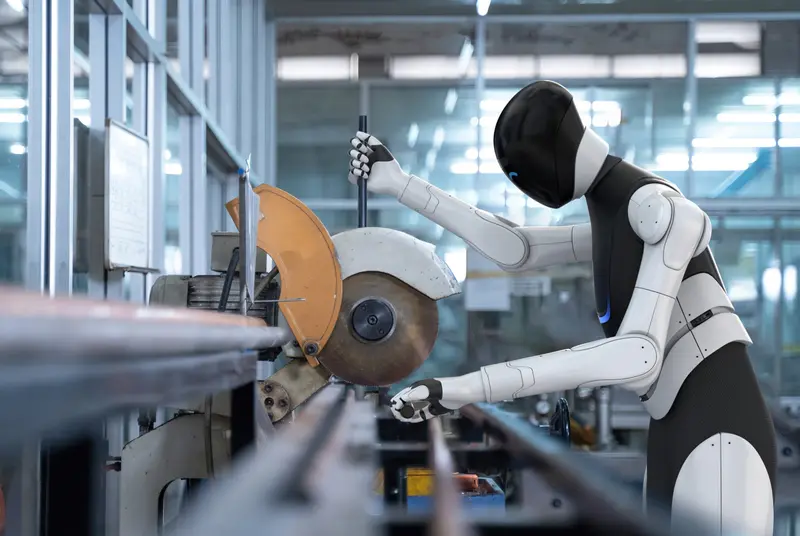
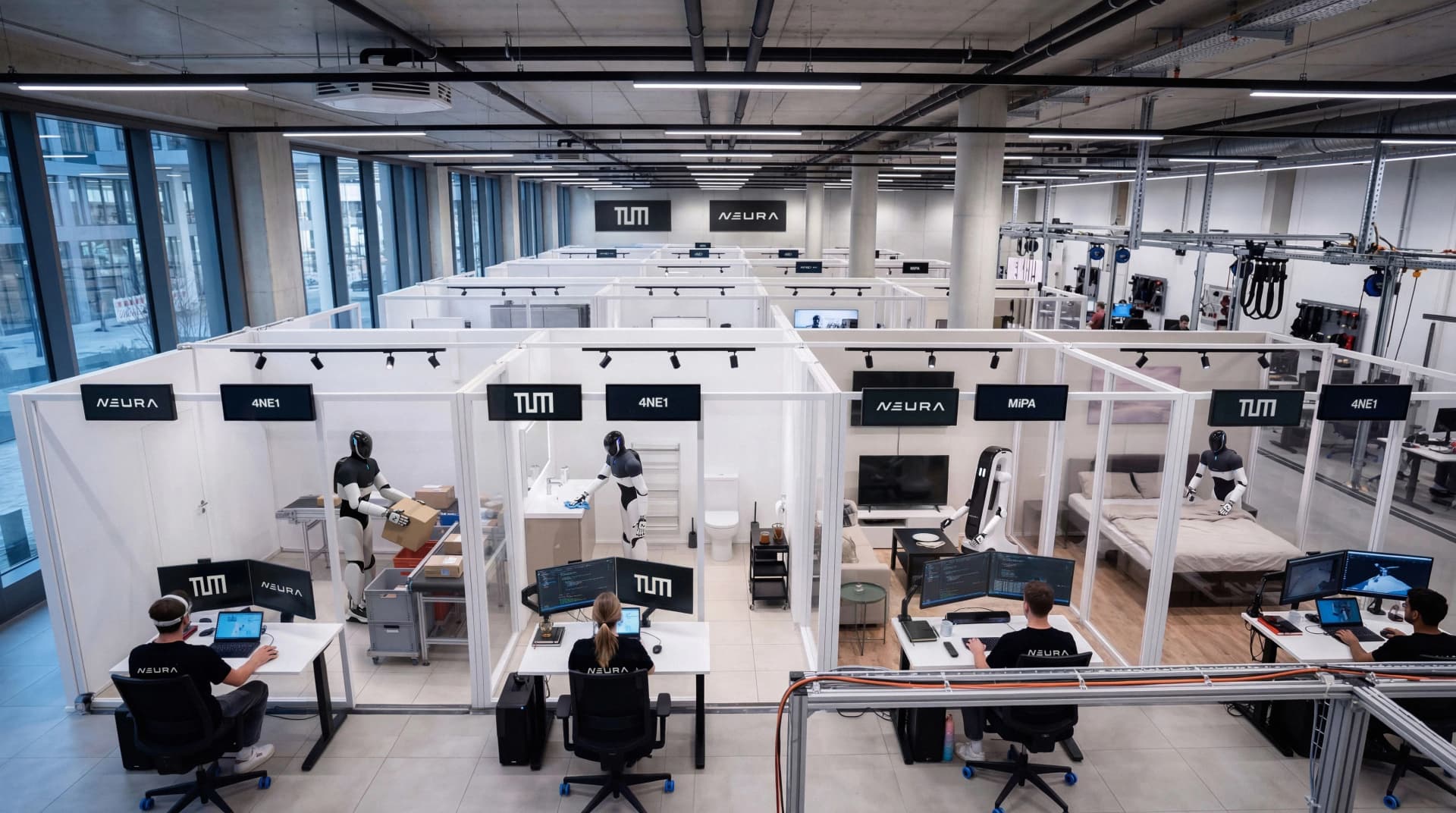
The nearer-term applications he describes are relatively straightforward industrial jobs: pressing buttons, turning switches, loading parts into machines and handling packages. He says external companies are developing real use cases at Neura’s robot-training facilities.
Shipments span more than humanoids
Asked about earlier delivery promises, Reger says Neura has already shipped thousands of robots. He describes roughly 80% of its most-shipped robots as arms and mobile vehicles, with the remaining share covering humanoids and platforms. He does not give a separate humanoid unit count or a precise reporting period.
The distinction matters for understanding Neura’s business today. Reger’s broader humanoid ambitions sit alongside an existing industrial robotics operation, and his case for avoiding military work rests on expanding that civilian market.
Share this article
Follow humanoid robotics without following every announcement.
Get the week’s most important launches, funding and research—and why they matter—in one email from Humanoids Daily.
Once a week. Unsubscribe anytime.
Read recent issuesRead next
- Published on
- Reading time
- 5 min read
Neura Robotics CEO David Reger on Cognitive Platforms, Humanoid Design, and the Path to Physical AI
- Published on
- Reading time
- 6 min read
NEURA Robotics Secures Record $1.4 Billion Series C, Led by Tether, to Build the "Machine Economy"
- Published on
- Reading time
- 25 min read
The Humanoids of Europe: Built by Their Customers
- Published on
- Reading time
- 4 min read
NEURA Robotics and TUM Launch Europe’s Largest Physical AI Training Center
- Published on
- Reading time
- 4 min read
Neura Robotics Moves Humanoid R&D to Zurich, Tapping into Europe’s "Robotics Valley"
- Published on
- Reading time
- 4 min read
Schaeffler Commits to Thousands of Neura Humanoids in Deep Component and AI Partnership