- Published on
NEURA Robotics Secures Record $1.4 Billion Series C, Led by Tether, to Build the "Machine Economy"
One tap, and our reporting appears more often in your Google Top Stories. It makes a real difference to a small newsroom.


Your guide
Rich Robinson
Jee Chee Ren · Executive tour
See China’s AI and robotics ecosystem first-hand.
Six days exploring AI, robotics and advanced manufacturing.
With Rich Robinson, Clinical Professor of Entrepreneurship at Peking University
Beijing · Guangzhou · Shenzhen
29 November–4 December 2026
Referral partnership · We earn a commission on referred bookings.
- NEURA Robotics has announced a Series C funding round of up to $1.4 billion, the largest ever for a full-stack robotics company, led by stablecoin issuer Tether.
- The capital will accelerate the global deployment of the Neuraverse platform and NEURA Gyms, aiming for multi-million robot production by 2030.
- Tether's involvement brings decentralized financial infrastructure to the robots via its Wallet Development Kit (WDK), enabling autonomous machines to execute micropayments and transact independently.
- Strategic investors include Amazon, NVIDIA, Qualcomm, and Schaeffler, highlighting a massive convergence of cloud compute, edge AI, and industrial hardware.
- The announcement arrives shortly after a NEURA 4NE-1 humanoid suffered a public hardware failure, collapsing on stage during a Qualcomm presentation at Computex 2026.
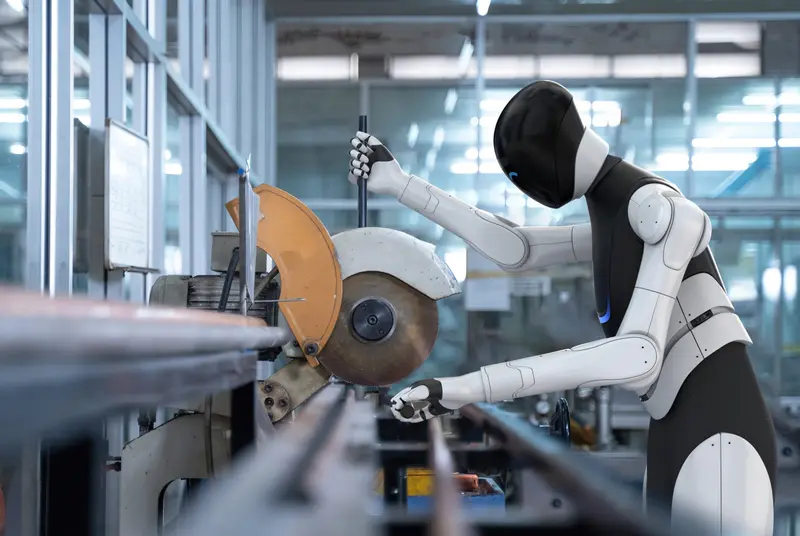
The capital race in the humanoid robotics sector has reached a new threshold. German cognitive robotics firm NEURA Robotics announced today the closing of a Series C financing round of up to $1.4 billion. The landmark raise stands as the largest ever for a full-stack robotics company, signaling immense global confidence—and deeply pooled resources—backing the push for general-purpose "Physical AI."
The round transforms previous rumors of a massive capital injection into a concrete reality. Led by Tether, the issuer of the world's largest stablecoin, the round also drew a formidable syndicate of strategic and financial investors. The capitalization table now reads like a who's who of global technology and industry, including Qualcomm Technologies, Amazon, NVIDIA, imec.xpand, Bosch, Schaeffler, the European Investment Bank (EIB), Lingotto Horizon, and InterAlpen Partners.
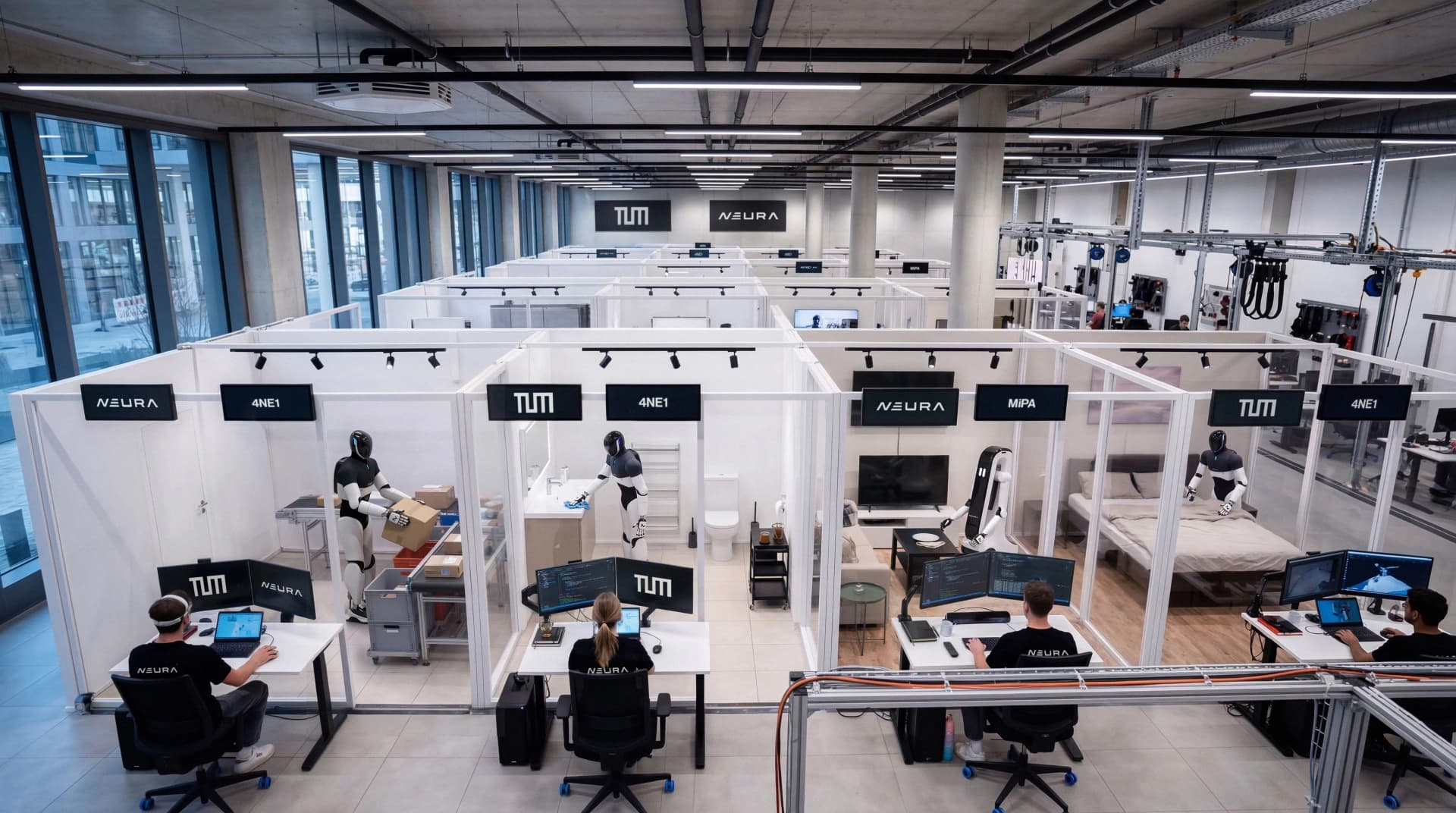
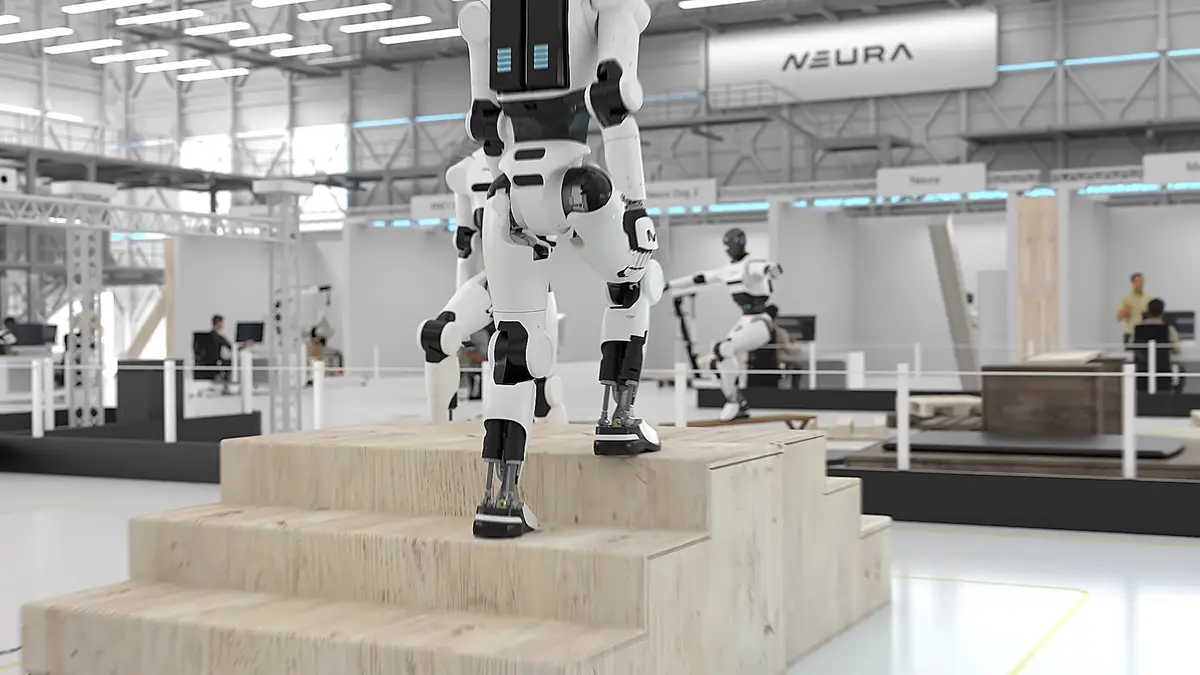
With an order book already exceeding $1 billion , NEURA aims to use the fresh capital to drive serial production, targeting multi-million robot deployments by 2030. The funds will also support the global expansion of its NEURA Gyms—large-scale physical training environments designed to bridge the simulation-to-reality gap.

Tether and the Dawn of the "Machine Economy"
While the size of the investment is staggering, Tether's strategic integration is arguably the most radical element of the announcement. Tether is not merely providing capital; it is embedding its financial infrastructure directly into NEURA's robots.
The weekly humanoid robotics briefing
One email a week: the launches, funding and research that mattered, with context from Humanoids Daily.
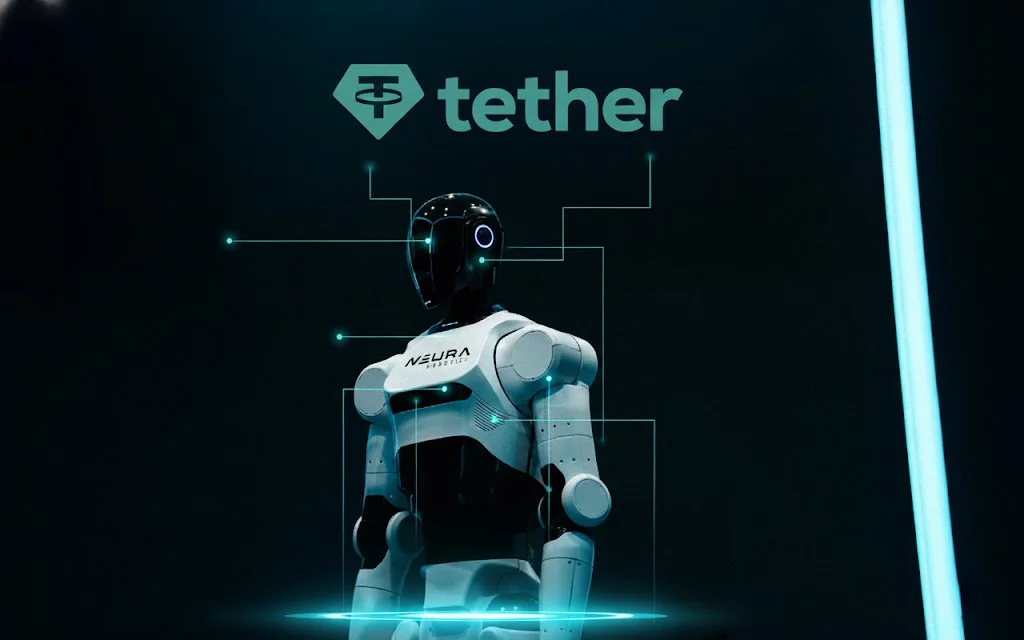
Read recent issuesAccording to a statement from Tether, NEURA's platforms will integrate the Wallet Development Kit (WDK), which embeds self-custodial wallet functionality into the robotic systems. This effectively gives the machines a bank account.
"As robotics moves beyond scripted automation and into true autonomy, the infrastructure behind it must evolve as well," said Paolo Ardoino, CEO of Tether. "Autonomous machines need the ability to process information locally, make decisions, and transact without relying on centralized intermediaries."
By utilizing the WDK, a NEURA robot could theoretically earn micropayments for completing tasks, independently pay for replacement parts, or execute economic actions without requiring human approval for every transaction. To support this autonomy, the companies will also deploy QVAC, Tether’s edge-first AI runtime, enabling the robots to process complex AI models locally with minimal latency.
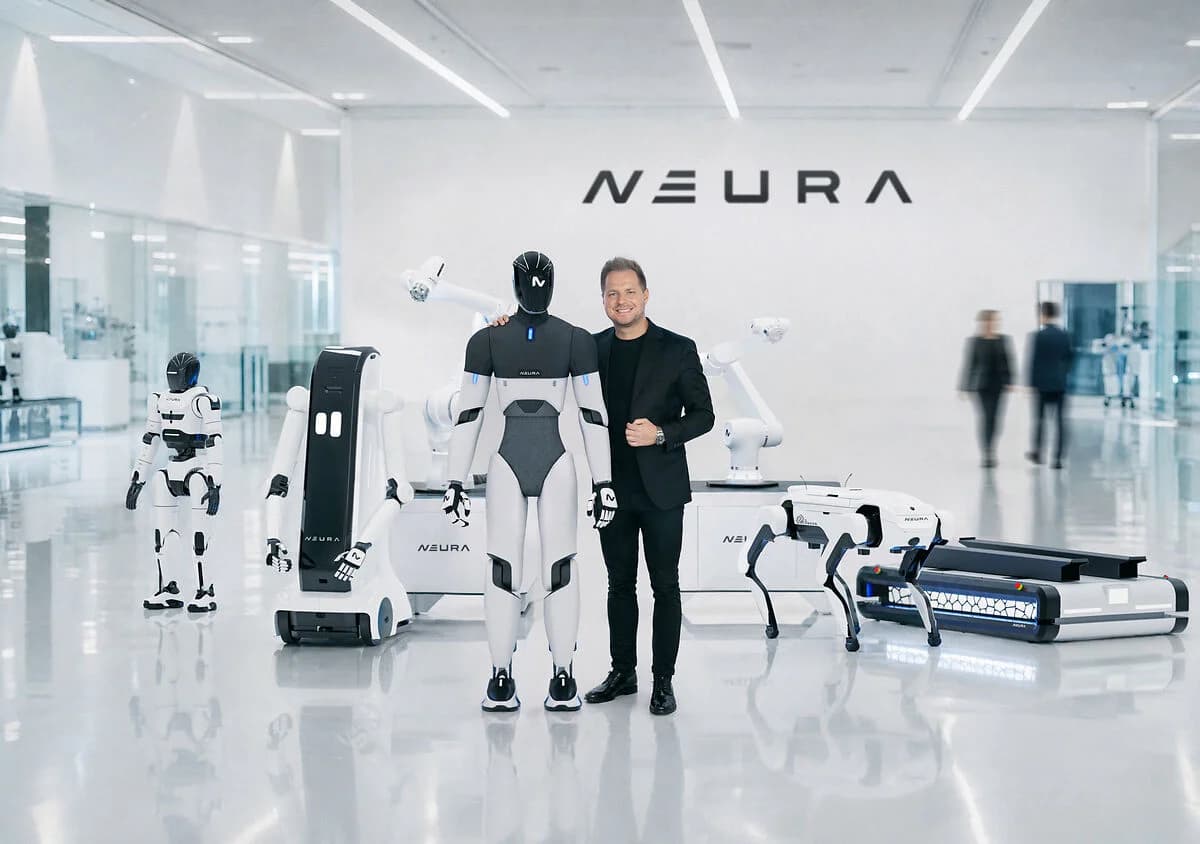
Big Tech and Industrial Convergence
The inclusion of Amazon, NVIDIA, and Qualcomm underscores the massive computing infrastructure required to make humanoid robotics viable. Amazon is bringing its AWS Trainium chips and Bedrock AI stack to the table, providing the cloud backbone necessary for large-scale model training.
Qualcomm, continuing its existing strategic collaboration with NEURA to develop standardized "nervous systems", emphasizes the need for high-performance edge compute. Industrial giants like Bosch and Schaeffler—the latter of which previously committed to deploying thousands of NEURA robots and supplying their high-torque actuators —anchor the hardware and manufacturing scaling required to hit NEURA's ambitious 2030 targets.
“Many believed globally relevant AI infrastructure companies could only emerge from Silicon Valley,” said David Reger, Founder and CEO of NEURA Robotics. “With this financing, NEURA is firmly among the global leaders in the robotics race, alongside the best in the US and China.”
Reality Check: The Fragility of Hardware
Despite the record-breaking valuation and profound technological promises, the reality of deploying bipedal robots remains fraught with physical challenges.
Just weeks prior to this funding announcement, NEURA suffered a highly visible hardware malfunction. During Computex 2026, Qualcomm's Nakul Duggal was on stage unveiling the Dragonwing IQ10 Robotics Reference Design (RRD)—a platform capable of 700 TOPS of AI performance and designed in part for humanoids. While standing on stage during the presentation, a NEURA 4NE-1 humanoid suddenly collapsed and had to be hurriedly covered with a blanket by staff.
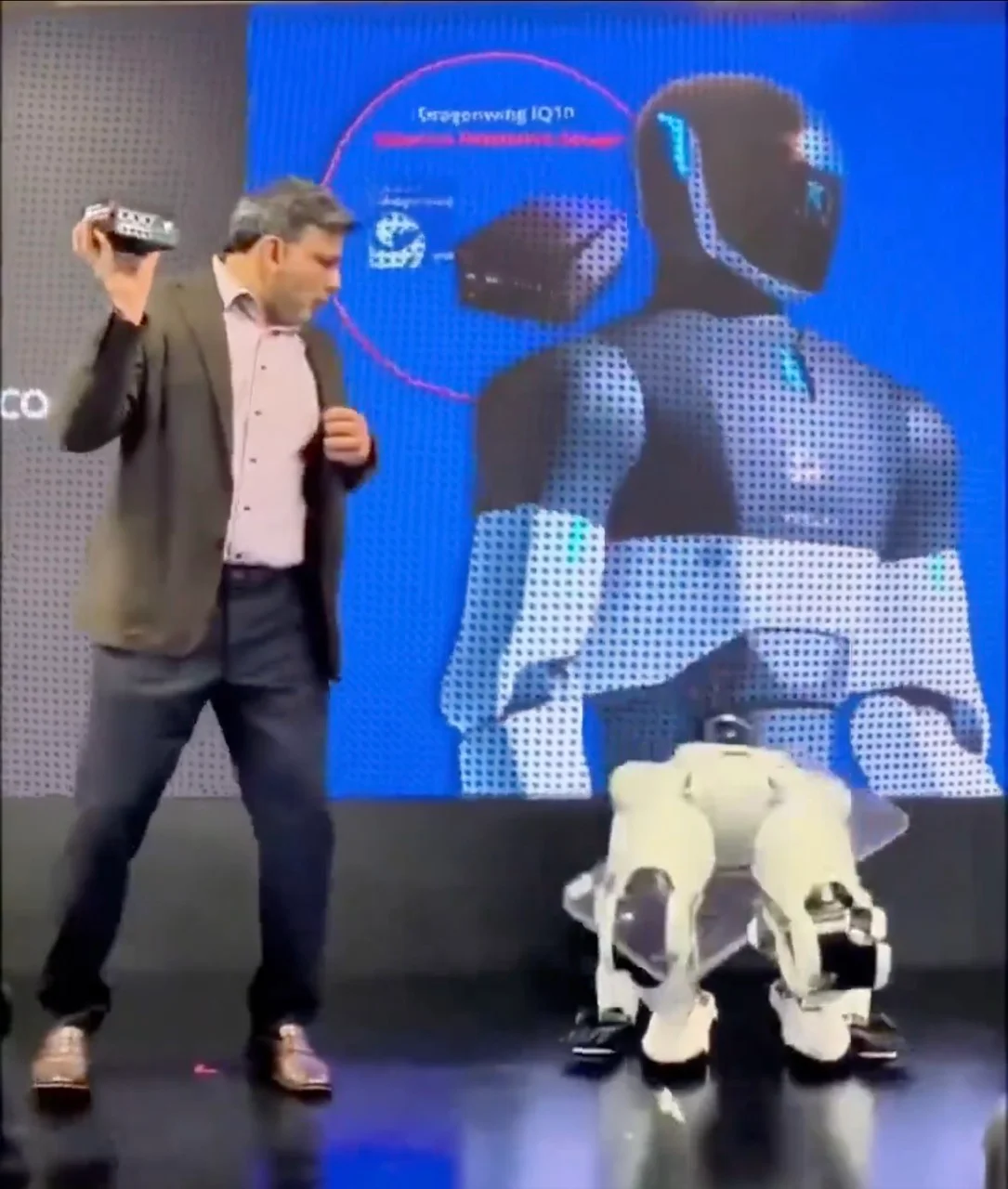
The incident serves as a reminder of the "sim-to-real" gap that NEURA's own gyms are designed to solve. While the software, capital, and silicon ecosystems are rapidly maturing into a trillion-dollar industry, the physical mechanics of bipeds are still catching up.
With $1.4 billion in new capital, NEURA Robotics now has unprecedented runway to solve those mechanical bottlenecks and prove that the era of Physical AI—and the machine economy—has truly arrived.
Share this article
Read next
- Published on
- Reading time
- 4 min read
Neura Robotics Reportedly Secures €1 Billion from Tether to Scale Humanoid Vision
- Published on
- Reading time
- 3 min read
Report: Crypto Giant Tether in Talks to Lead €1B Funding Round in Neura Robotics
- Published on
- Reading time
- 5 min read
Neura Robotics CEO David Reger on Cognitive Platforms, Humanoid Design, and the Path to Physical AI
- Published on
- Reading time
- 4 min read
NEURA Robotics and TUM Launch Europe’s Largest Physical AI Training Center
- Published on
- Reading time
- 4 min read
Neura Robotics Unveils ‘Neura Gym’ to Bridge AI’s Simulation-to-Reality Gap
- Published on
- Reading time
- 5 min read
The Physical AI Bottleneck: Comparing the Data Strategies of 1X, Figure, Tesla, and Neura
The weekly humanoid robotics briefing
One email a week: the launches, funding and research that mattered, with context from Humanoids Daily.
Read recent issues