- Published on
NEURA Robotics and TUM Launch Europe’s Largest Physical AI Training Center
One tap, and our reporting appears more often in your Google Top Stories. It makes a real difference to a small newsroom.


Your guide
Rich Robinson
Jee Chee Ren · Executive tour
See China’s AI and robotics ecosystem first-hand.
Six days exploring AI, robotics and advanced manufacturing.
With Rich Robinson, Clinical Professor of Entrepreneurship at Peking University
Beijing · Guangzhou · Shenzhen
29 November–4 December 2026
Referral partnership · We earn a commission on referred bookings.
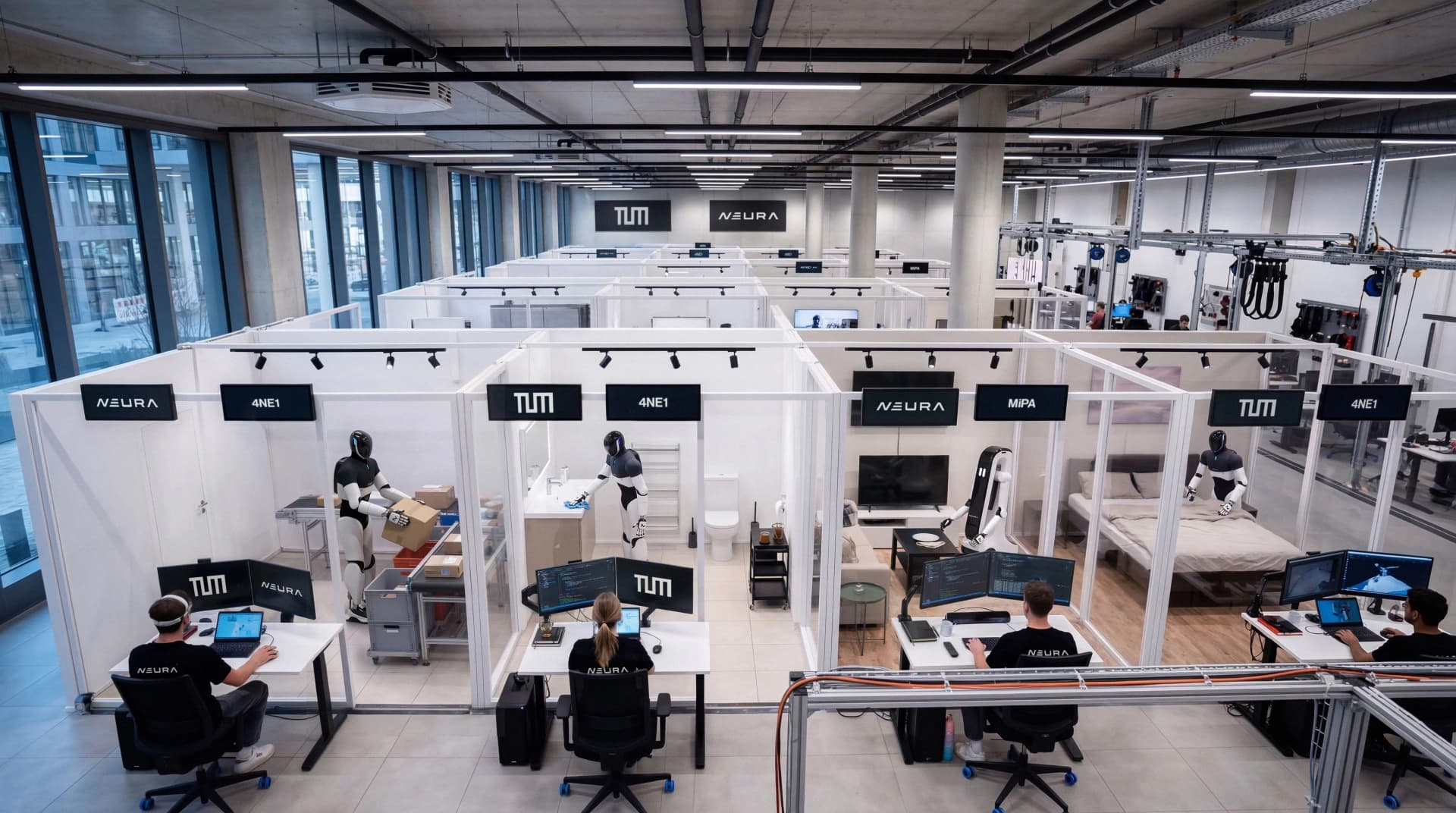
The bottleneck for the next generation of humanoid robotics is no longer just high-torque actuators or battery density—it is data. To address the scarcity of high-quality training sets for embodied intelligence, NEURA Robotics and the Technical University of Munich (TUM) announced today the launch of the TUM RoboGym (powered by NEURA), which will be the largest scientific training center for Physical AI in Europe.
Located at the TUM Convergence Center at Munich Airport, the facility represents a joint investment of approximately €17 million ($18.5 million). NEURA is contributing the majority share of roughly €11 million ($12 million) to the project. Starting in mid-2026, the 2,300-square-meter space will host a large fleet of humanoid robots training under real-world conditions to refine the cognitive models required for industrial and domestic deployment.
Solving the "Sim-to-Real" Crisis
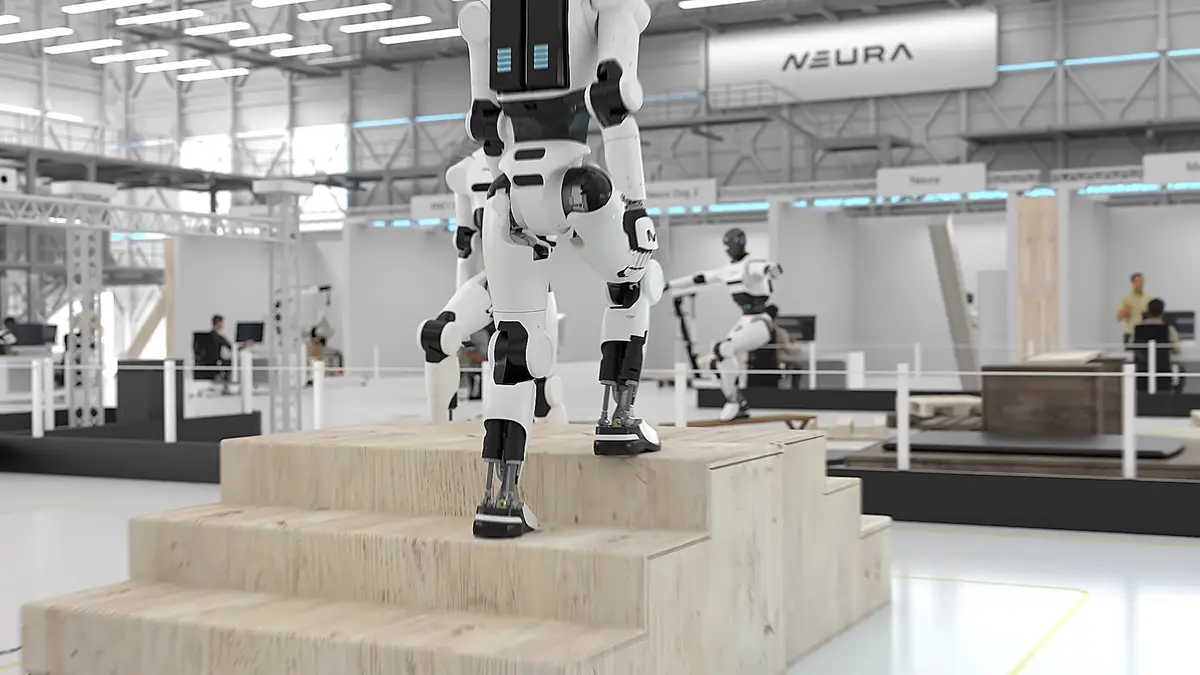
The partnership aims to solve the "sim-to-real" gap—the difficulty AI models face when transitioning from clean, simulated environments to the messy, unpredictable physics of the real world. While NEURA has previously utilized NVIDIA’s Isaac Sim software for virtual training, the RoboGym serves as the physical "water" where robots must learn to "swim," according to a philosophy often touted by CEO David Reger.
"For the advancement of intelligent robotics, the biggest challenge today is no longer the hardware, but access to high-quality, realistic training data," said Reger. The data harvested from these physical sessions will be fed directly into the Neuraverse, the company’s cloud-based shared intelligence network.
The weekly humanoid robotics briefing
One email a week: the launches, funding and research that mattered, with context from Humanoids Daily.
Read recent issuesThe RoboGym follows the blueprint of the company's previously announced NEURA Gyms, but adds a heavy layer of academic rigor through TUM’s Munich Institute of Robotics and Machine Intelligence (MIRMI). By providing a standardized environment for data collection, the partners hope to establish a global foundation for a robotic "operating system."
Scaling Amidst a Capital Influx
The announcement comes during a period of rapid-fire expansion for the Metzingen-based firm. Just yesterday, NEURA announced a partnership with Qualcomm to standardize robotic "Brain and Nervous System" architectures. These initiatives are being fueled by a massive capital injection; NEURA recently reportedly secured €1 billion ($1.2 billion) in funding from Tether to transition from research to large-scale industrialization.
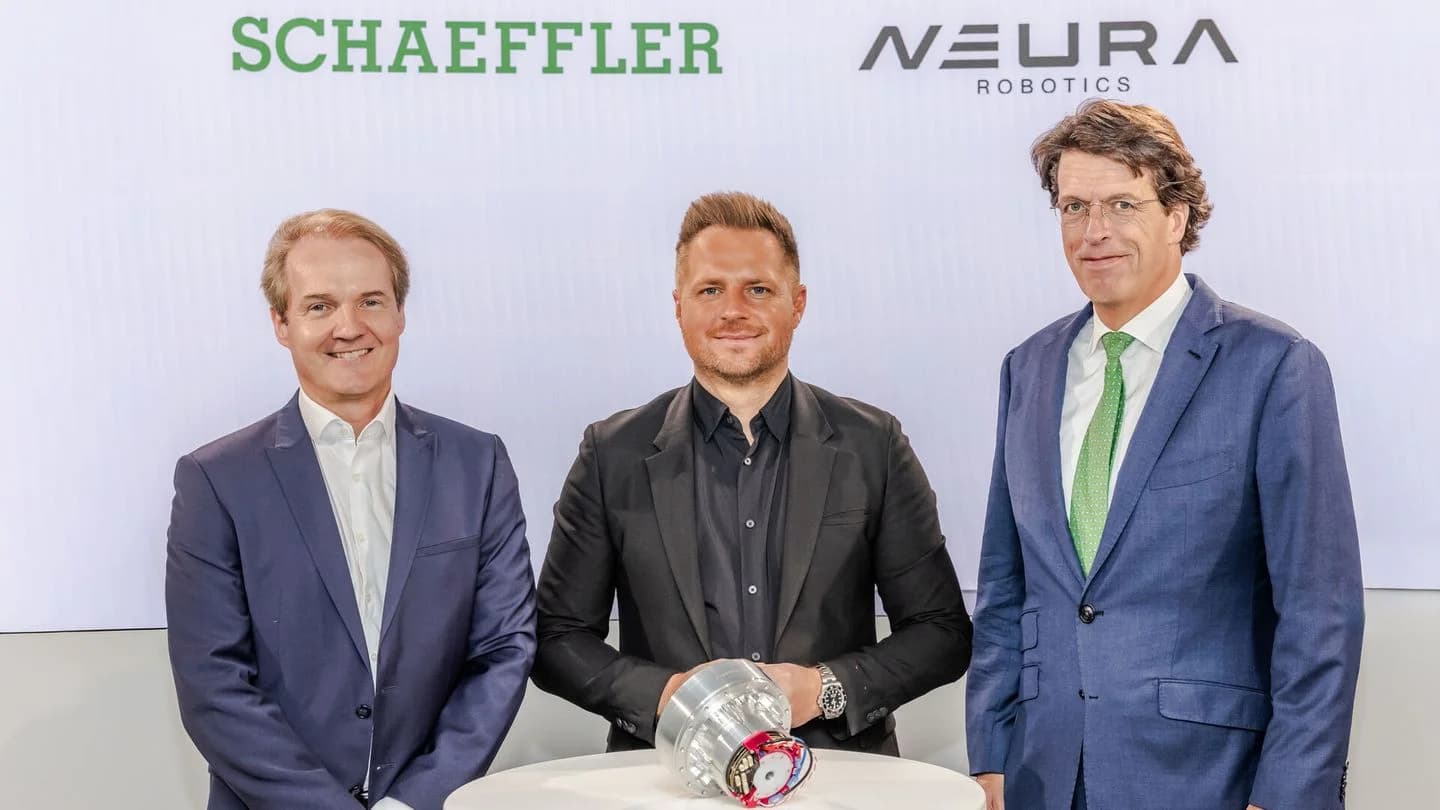
While the "brain" of the 4NE-1 humanoid is being refined in Munich and R&D centers in Zurich, the company is simultaneously de-risking its physical supply chain. This includes securing high-torque actuators from Schaeffler and establishing manufacturing hubs in India and China.
A Shared Ecosystem for European Sovereignty
Professor Lorenzo Masia, Director of the TUM RoboGym, framed the facility as a necessity for "European sovereignty" in the global AI race. Unlike proprietary silos found in some Silicon Valley labs, the partners intend to eventually open the RoboGym to industry partners and startups.
The goal is to create a "democratic innovation engine" where the Neuraverse acts as an app store for physical tasks. By making training data available through this ecosystem, NEURA is betting that a hardware-agnostic platform—rather than just a single robot model—will be what ultimately scales Physical AI across the global economy.
Questions remain regarding exactly how "open" the data will be for competitors, but for now, the RoboGym signals that the battle for humanoid supremacy is shifting from who has the best motors to who has the best data pipeline.
Share this article
Read next
- Published on
- Reading time
- 6 min read
NEURA Robotics Secures Record $1.4 Billion Series C, Led by Tether, to Build the "Machine Economy"
- Published on
- Reading time
- 4 min read
Neura Robotics Unveils ‘Neura Gym’ to Bridge AI’s Simulation-to-Reality Gap
- Published on
- Reading time
- 25 min read
The Humanoids of Europe: Built by Their Customers
- Published on
- Reading time
- 4 min read
Neura Robotics Moves Humanoid R&D to Zurich, Tapping into Europe’s "Robotics Valley"
- Published on
- Reading time
- 4 min read
Schaeffler Commits to Thousands of Neura Humanoids in Deep Component and AI Partnership
- Published on
- Reading time
- 4 min read
NEURA Robotics Partners With Sona Comstar to Scale Humanoid Production in India



The weekly humanoid robotics briefing
One email a week: the launches, funding and research that mattered, with context from Humanoids Daily.
Read recent issues